Blog

Your blog category

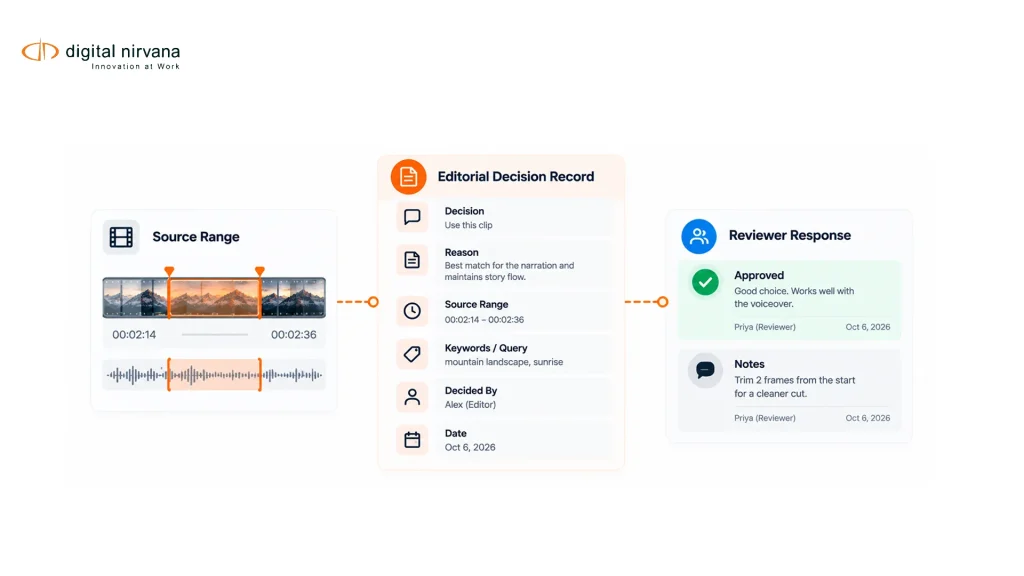
An editorial decision card links the instruction and source range to a human review decision.

Why AI Video Editing Needs Explainable Editorial Decisions

The proposed cut looks persuasive until a producer asks why a qualifying sentence disappeared. A note saying the edit improves pacing does not answer whether the omission changes the speaker’s meaning. AI video editing needs inspectable editorial evidence: the selected source, the rejected alternatives, the constraint being followed, and a way to correct the choice. […]

Why AI Video Editing Needs Explainable Editorial Decisions Read More »
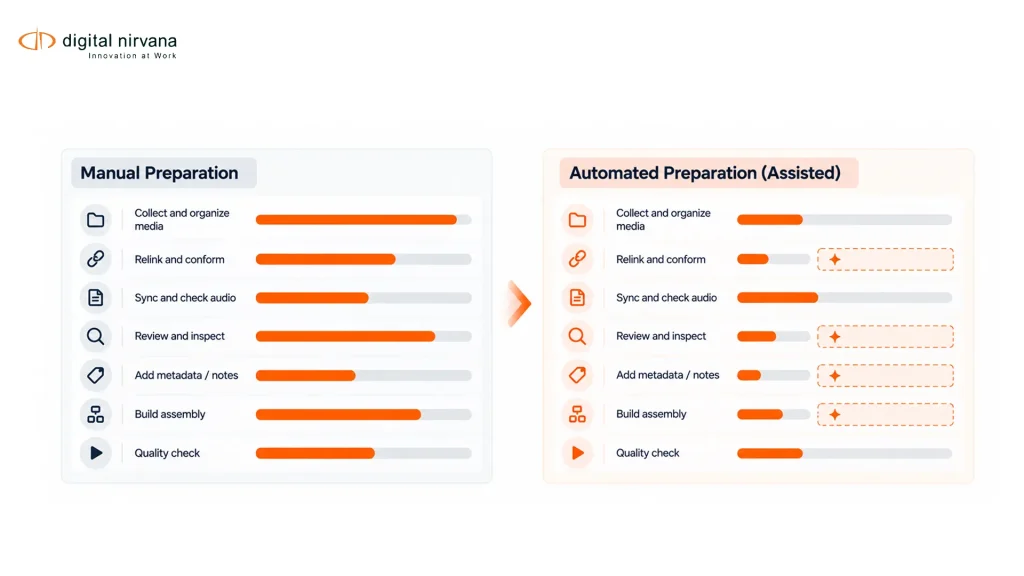
Two workflow columns compare manual preparation tasks with AI-assisted tasks requiring review.

AI Video Editing: Rough Cuts Vs Traditional Logging And Where Teams Save Time

An AI system finishes its first assembly quickly, but the editor spends the afternoon checking omitted statements and repairing source links. Did the team save time? AI video editing creates a useful gain only when the accepted deliverable requires less total work. Comparing automated assembly time with manual logging time alone measures different tasks and

AI Video Editing: Rough Cuts Vs Traditional Logging And Where Teams Save Time Read More »

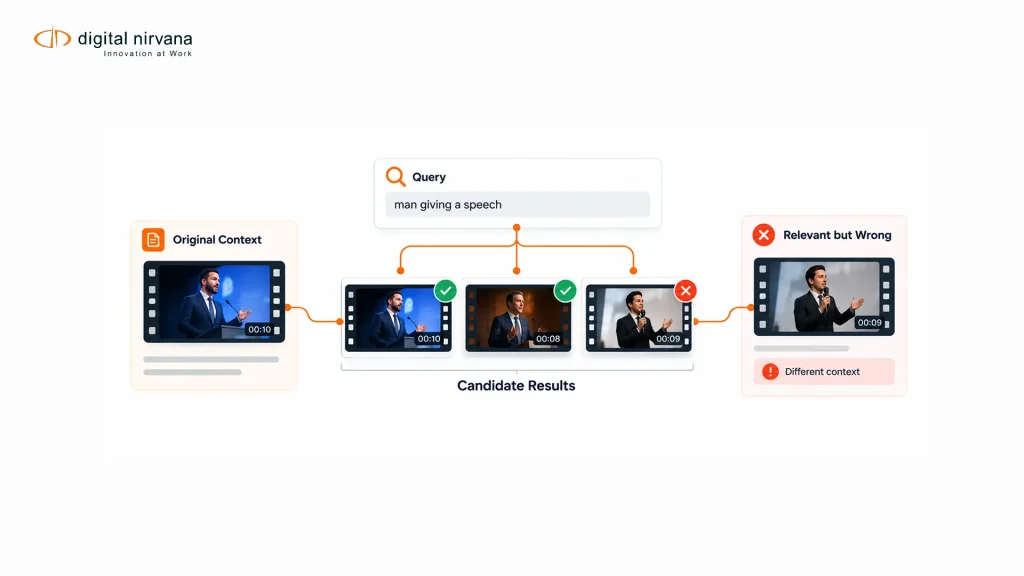
A visual search result is checked against the event context of its original footage.

Semantic Video Search: How Editors Find Moments Without Manual Logging

You need a quiet reaction after a tense exchange. Nobody logged that description, and the transcript contains no useful phrase. Semantic video search can retrieve moments related to a description’s meaning, giving an editor candidates beyond exact words or filenames. The result still needs source verification: a visually suitable reaction can belong to the wrong

Semantic Video Search: How Editors Find Moments Without Manual Logging Read More »

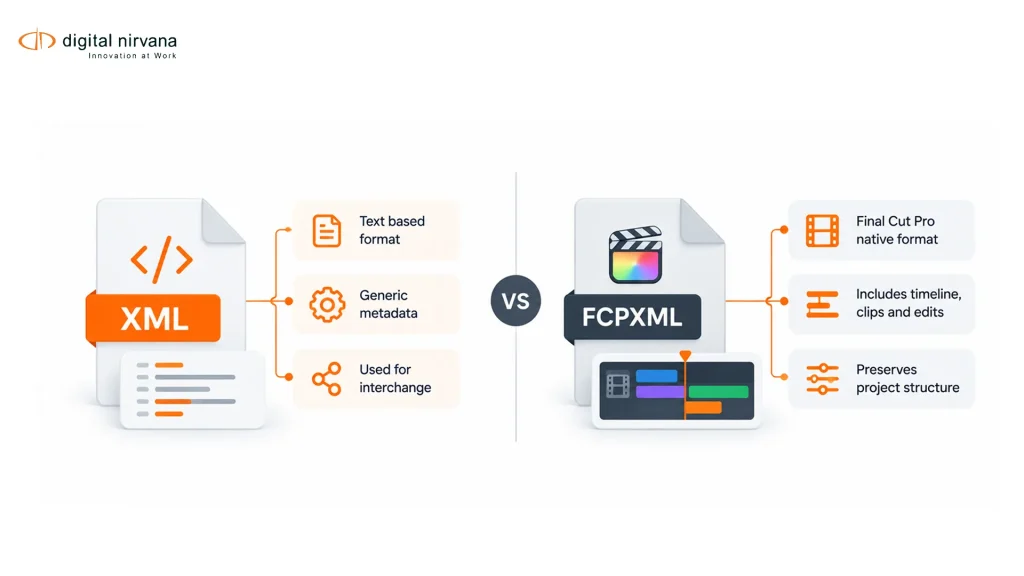
Two distinct export labels show that XML and FCPXML require separate compatibility checks.

Premiere Pro AI Video Editing: From Automated Rough Cut To Final Edit

Your producer approves a rough cut, but opening it in Premiere reveals a different problem: the sequence exists, yet its media, notes, and audio do not line up as expected. Premiere Pro AI video editing works best when you distinguish native assistance from imported editorial work. Use Premiere’s tools for the tasks they perform directly,

Premiere Pro AI Video Editing: From Automated Rough Cut To Final Edit Read More »

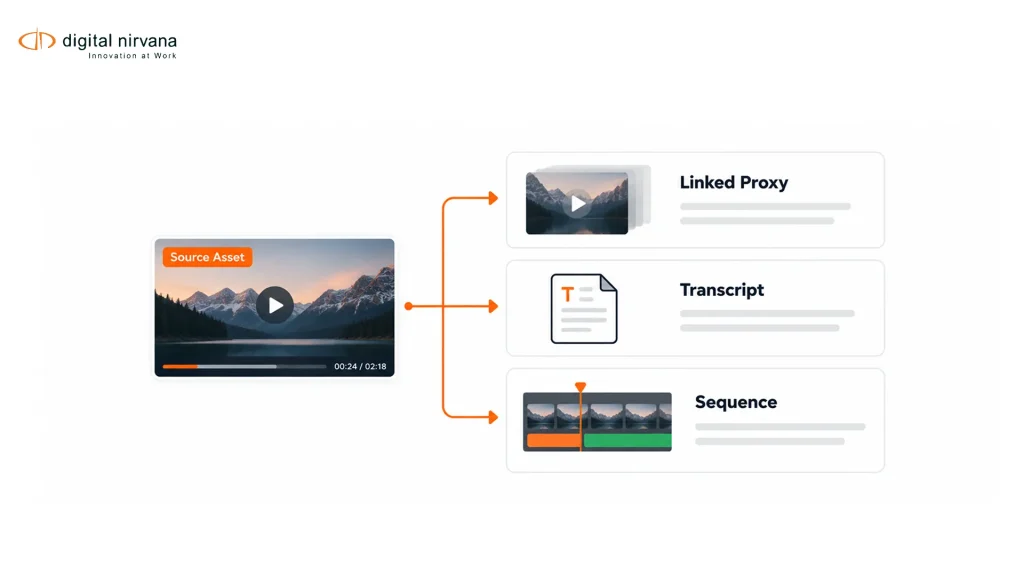
A source asset connects to its proxy, transcript, and editorial sequence.

How AI Changes the Post-Production Workflow: From Raw Footage To Rough Cut

An automatically assembled timeline can arrive before anyone has checked which camera original it references. That creates speed at one stage and uncertainty at the next. A useful AI-assisted post-production workflow moves through verified source intake, searchable preparation, supervised assembly, and accepted handoff. Each stage needs an owner and an output the next person can

How AI Changes the Post-Production Workflow: From Raw Footage To Rough Cut Read More »

An editor compares an imported sequence with its reference render and source list.

AI Video Editing Platforms For Professional Media Teams: What Actually Matters?

A polished demo can hide an expensive handoff. The cut plays perfectly in a browser, but your finishing editor receives missing media, flattened audio, or notes that no longer match the sequence. AI video editing platforms should therefore be evaluated on the usable editorial handoff, including source traceability, correction effort, and compatibility with your production

AI Video Editing Platforms For Professional Media Teams: What Actually Matters? Read More »

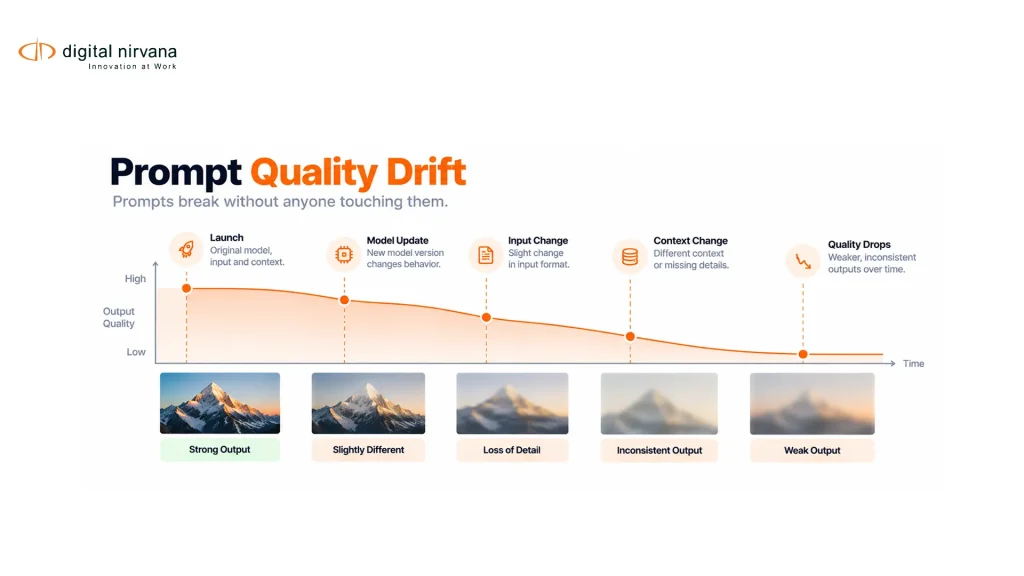
A timeline shows prompt output quality declining as the model, user inputs, and retrieved context change.

Your AI Was Working Last Month. Why Prompt and Response QA Keeps It That Way

Here is a scenario every team shipping AI eventually lives through. You launch a feature built on a carefully tuned prompt. It works beautifully. Everyone moves on. Then, weeks later, the outputs start getting a little off. Nobody changed the prompt. Nobody deployed anything. And yet the quality has quietly slipped. This is one of

Your AI Was Working Last Month. Why Prompt and Response QA Keeps It That Way Read More »

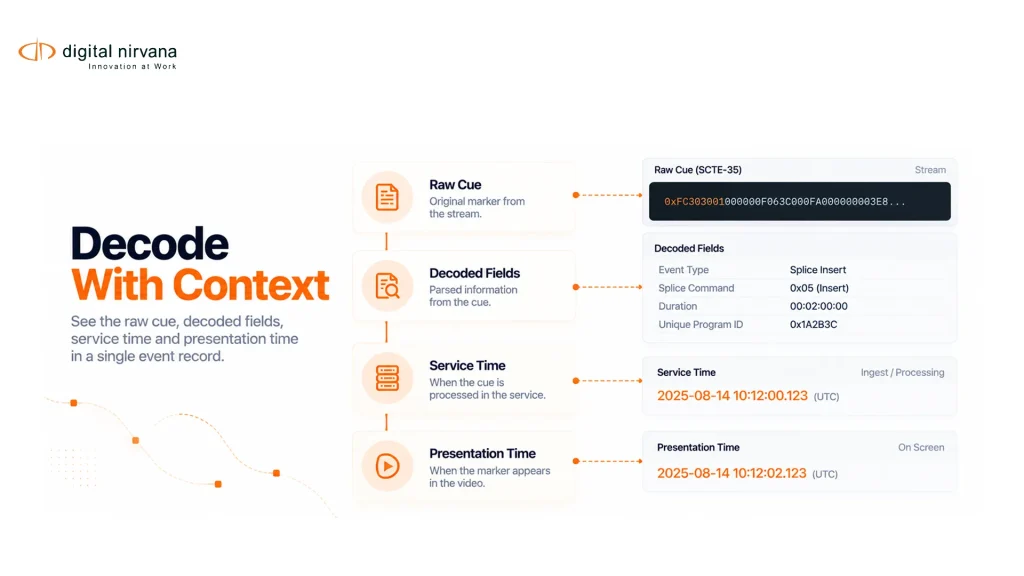
Decode With Context

SCTE-35 Monitoring: How To Detect, Verify And Troubleshoot Ad Insertion Events

Introduction SCTE-35 carries timed cue messages that distribution systems can use to mark ad opportunities, program boundaries and other events. Detecting the binary message is only the first monitoring step. Operations teams must verify that the cue appeared in the right service, carried expected fields, aligned with presentation time, survived packaging and produced the intended

SCTE-35 Monitoring: How To Detect, Verify And Troubleshoot Ad Insertion Events Read More »

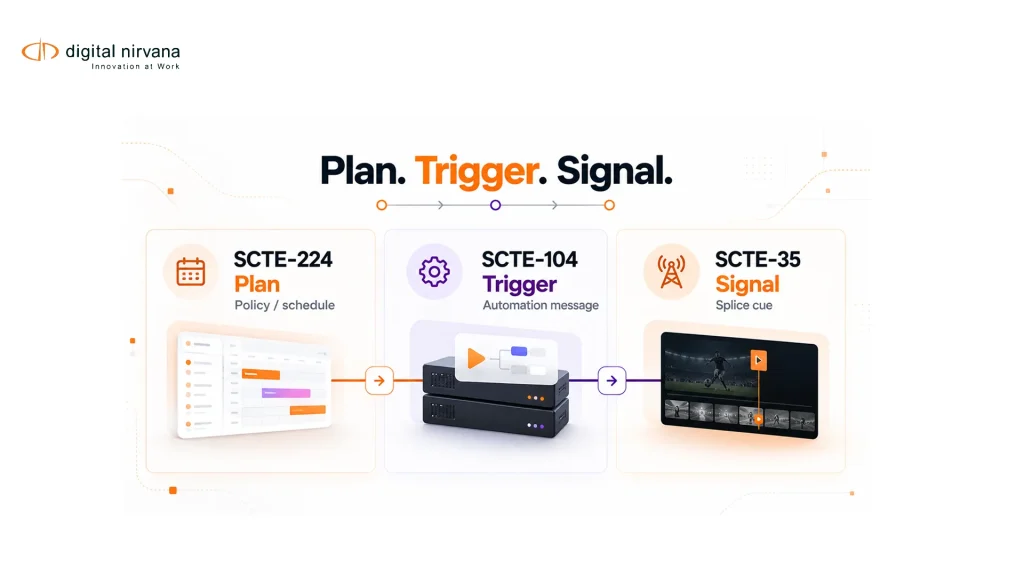
Plan. Trigger. Signal.

SCTE-224 Explained: How It Works With SCTE-35 And SCTE-104 In Broadcast Workflows

Introduction SCTE-224 is an event scheduling and notification interface used to exchange information about media events and policies outside the program stream. It can provide context that distribution systems use when applying regional, availability or other event-based rules. SCTE-35 and SCTE-104 serve different positions in the signaling chain, so the three standards should not be

SCTE-224 Explained: How It Works With SCTE-35 And SCTE-104 In Broadcast Workflows Read More »

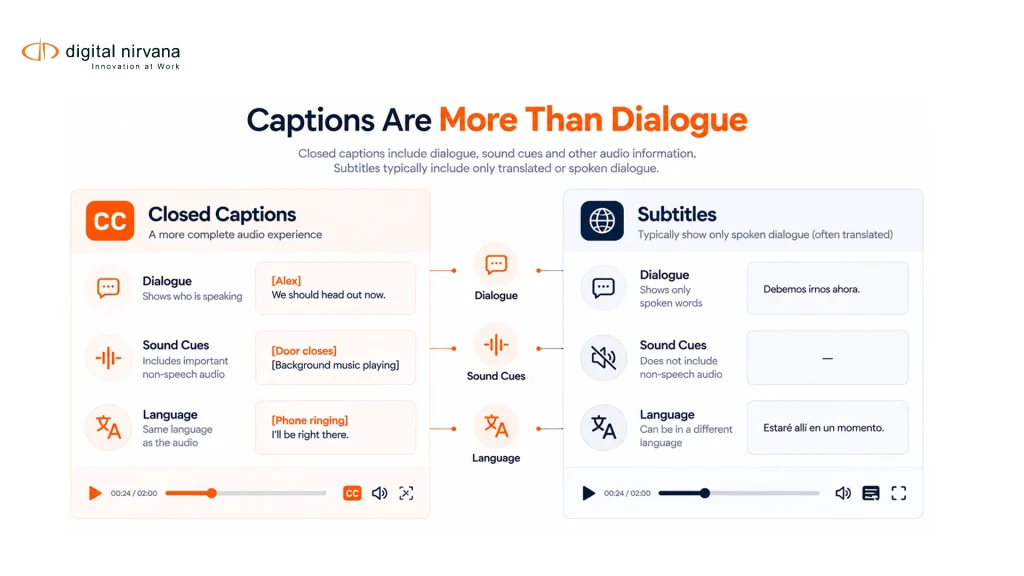
Captions Are More Than Dialogue

What Is Closed Captioning? A Guide For Broadcast And Streaming Teams

Introduction Closed captions are timed text that represents speech and meaningful audio information, and that viewers can turn on or off. They support people who are deaf or hard of hearing and also help viewers in noisy, quiet or language-learning situations. For media teams, captioning is both an editorial workflow and a technical delivery process.

What Is Closed Captioning? A Guide For Broadcast And Streaming Teams Read More »

Products

MetadataIQ

The intelligence layer for your Avid, Grass Valley, or custom MAM systems

MonitorIQ

Next-Gen Broadcast compliance monitoring

MediaServicesIQ

Collection of AI microservices that watches your video and tells you what’s inside

TranceIQ

Smart transcription, captioning, and localization

RoughCut

AI-Powered Rough Cuts for Editors

Media Enrichment

Expand your media’s reach with seamless localization

Cloud Engineering

Scalable, secure, and optimized cloud

Data Intelligence

Actionable insights from complex data

Investment Research

Timely intelligence for informed investing

Learning Management

Smart automation for digital learning

Managed AI

Operate, govern, and scale AI systems in production

Managed Talent

Managed Talent Solutions 'Skilled teams for workflow support

Got a question for us?

Ask away. We’ll find the best person on our team to answer it for you.

Thank you for your details.

We’ll connect your question to the best person - no spam, ever.

Required skill set:

Required skill set:

Required skill set:

Required skill set: