A team publishes a genuinely strong piece of video content. Good production, clear message, solid topic. Weeks later, the view count barely moves. Nothing about the video itself was the problem. The metadata around it never gave search engines, platforms, or recommendation systems a reason to surface it.
This happens constantly, and it’s one of the more frustrating gaps in content strategy, because it’s entirely fixable and almost entirely invisible until someone goes looking for the cause. Search engines and recommendation algorithms can’t watch a video the way a person can. They read the data surrounding it. If that data is thin, generic, or missing entirely, even excellent content stays buried.
What Video Metadata Actually Includes
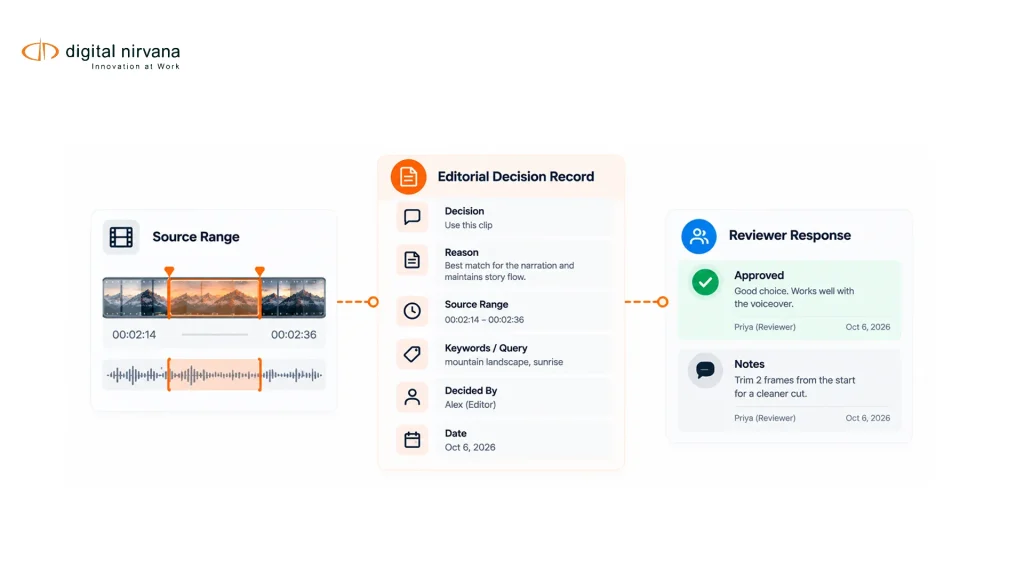
Video metadata is the structured information that describes a video to platforms, search engines, and viewers before they ever press play. It includes the obvious elements, title, description, and tags, but it extends well beyond that into more technical territory: chapters, segment markers, structured schema data, transcripts, captions, and rights information.
Each of these pieces plays a different role. A title and description tell a viewer and a search engine what the video is about at a glance. Tags and structured data help platforms categorize content correctly and match it to relevant searches. Transcripts and captions turn spoken content into indexable text, since search engines can’t parse audio directly. Chapter and segment data help platforms surface specific moments within longer content, which increasingly drives click-through on modern search results.
Why Metadata Is the Actual SEO Layer for Video
Text-based SEO is a familiar discipline for most content teams. Video SEO works on the same underlying principle, but it depends entirely on metadata to function, because a search engine genuinely cannot watch a video to understand what’s in it.
Search engines and recommendation systems rely on the text data surrounding a video to determine relevance, ranking, and audience match. When that data accurately reflects what viewers are actually searching for, and matches the real content of the video, discoverability improves measurably. When it doesn’t, even outstanding content effectively becomes invisible to the systems responsible for surfacing it to an audience.
Choosing Keywords That Actually Match Search Behavior
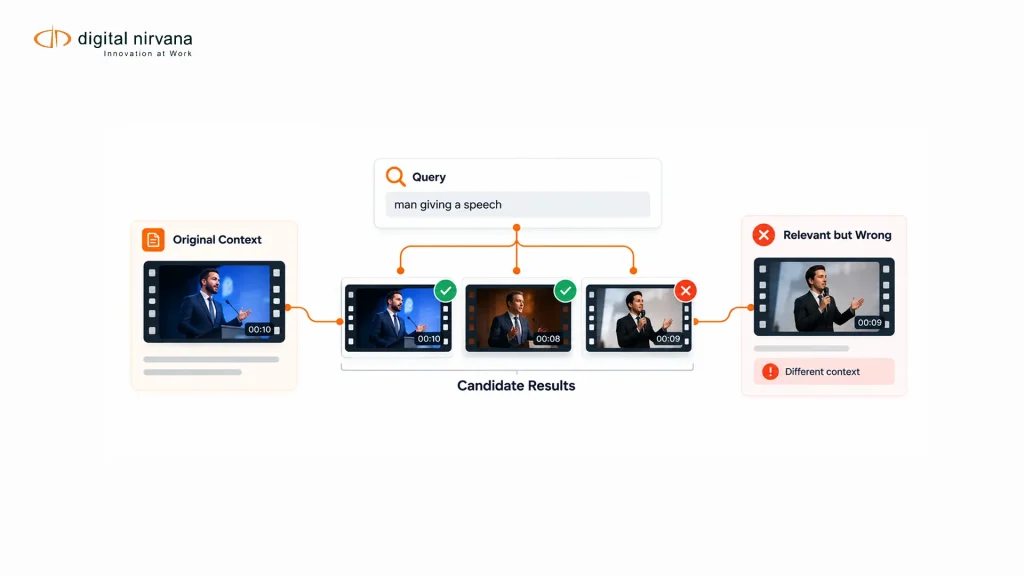
Effective video metadata starts with understanding what your audience actually searches for, not what internal teams assume they search for. These are often meaningfully different.
A practical approach focuses on a small set of terms, typically five to eight, drawn from tools like keyword research platforms, platform-native autocomplete suggestions, and competitor analysis. The goal is language that mirrors how real viewers phrase their searches, matches the actual focus of the specific video, and avoids internal jargon that confuses both viewers and the algorithms trying to match content to search intent. Quality consistently outperforms quantity here. A handful of precisely matched terms works better than a long list of loosely related ones.
Transcripts and Captions as a Discoverability Layer, Not Just Accessibility
Transcripts and captions get discussed most often in the context of accessibility, and that’s a genuinely important reason to produce them. But they carry a second function that gets less attention: they’re the primary way search engines actually understand spoken content inside a video.
A full transcript converts speech into searchable text, which search engines can index directly. This means the words spoken in a video become part of what makes that video discoverable, not just the title and description surrounding it. For non-native speakers and viewers watching without sound, that same transcript also improves comprehension and engagement, which feeds back into the platform signals that drive further recommendation and reach.
Thumbnails and Visual Metadata Matter More Than Teams Expect
Thumbnails function as visual metadata, and they carry real weight in whether a viewer actually clicks through to watch. High-contrast imagery and readable text draw attention quickly, particularly important given that most thumbnails render at a small, postage-stamp size on mobile devices, where a large share of video discovery now happens.
Pairing thumbnail imagery with descriptive alt text that reflects the video’s primary keyword adds another layer of accessibility and discoverability at once, since alt text serves both search engines and viewers using screen readers.
Structured Data: The Metadata Layer Most Teams Skip
Embedding structured data, using formats like JSON-LD or schema markup, tells search engines specific technical details about a video: its duration, upload date, and content type, among other fields. This is a step many content teams skip entirely, often because it requires more technical implementation than writing a title or description.
The payoff is meaningful. Rich results, like key-moment callouts that let a viewer jump directly to a relevant segment from a search results page, have been associated with significantly higher click-through rates. Structured data also helps voice assistants and smart TV interfaces surface relevant video content in interactive guides, an increasingly important discovery path as viewing habits fragment across more devices and interfaces.
Putting It Together: A Practical Metadata Checklist
| Metadata Element | What It Does | Common Mistake |
| Title | Signals topic and relevance at a glance | Vague, generic, or keyword-stuffed |
| Description | Provides context for search engines and viewers | Left blank or duplicated across videos |
| Tags | Helps platforms categorize and match content | Overloaded with irrelevant or jargon terms |
| Transcript | Makes spoken content indexable | Skipped, or generated but never reviewed |
| Captions | Accessibility plus discoverability | Missing sound cues, poor timing |
| Thumbnail and alt text | Drives click-through and accessibility | Cluttered design, missing alt text |
| Structured data (schema) | Enables rich results and voice/TV discovery | Skipped due to technical complexity |
Measurable Impact of Getting Video Metadata Right
Organizations that invest in comprehensive, accurate video metadata typically see change across a few consistent areas.
Search rankings for video content improve as platforms gain a clearer, more accurate understanding of what each video actually contains. Click-through rates rise when rich results and well-designed thumbnails give viewers a stronger reason to choose a specific video over competing options. And audience reach expands without additional promotional spend, since better metadata alignment leads to more organic recommendation and suggested-view placement across platforms.
A Realistic Workflow: From Publish to Discoverable
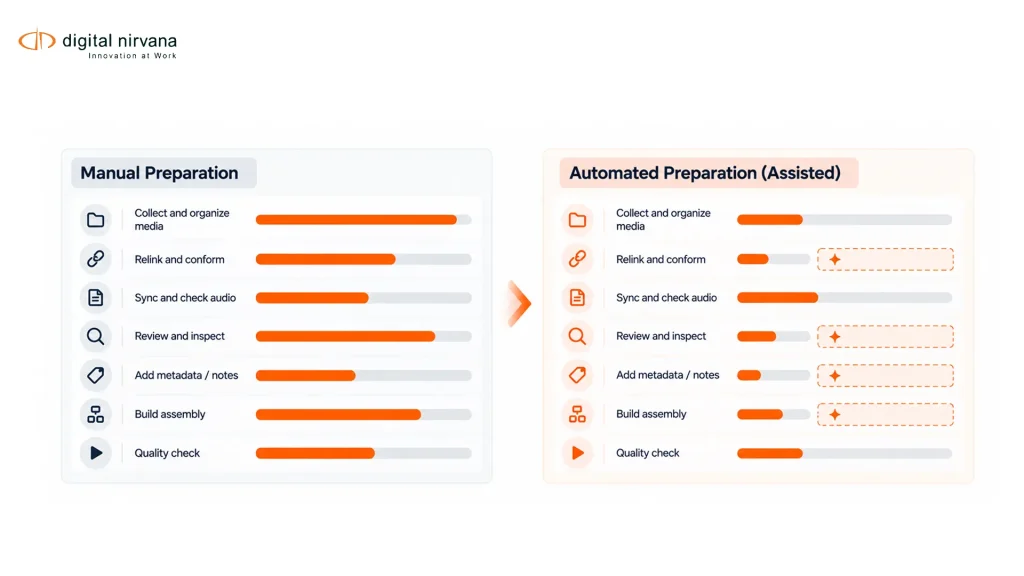
A media team publishes a long-form interview. Instead of relying on a generic title and a one-line description, the team generates an accurate, full transcript first. That transcript becomes searchable text search engines can index directly, and it also feeds chapter markers that break the video into distinct, findable segments.
Thumbnail options get tested for contrast and clarity at mobile size, paired with descriptive alt text built around the primary keyword. Structured data gets embedded to flag duration, upload date, and content type. None of this changes the video itself. It changes whether the audience who would genuinely want to watch it ever finds it in the first place.
Key Capabilities Worth Prioritizing
- Accurate, searchable transcription generated automatically and reviewed for accuracy
- Compliant, well-timed captions that serve both accessibility and discoverability
- Keyword research grounded in actual audience search behavior, not internal assumptions
- Structured data implementation (JSON-LD or schema) to enable rich search results
- Thumbnail and alt text strategy designed for both accessibility and click-through
- Chapter and segment markers for longer-form content
Addressing the Common Objections
“Our content is strong enough to find an audience without this.” Strong content still depends on discovery systems that can’t evaluate quality directly. Without metadata that accurately describes what’s in a video, even excellent content can remain effectively invisible to the algorithms responsible for surfacing it.
“Transcripts and structured data feel like a lot of extra work for uncertain payoff.” The payoff shows up specifically in search visibility and click-through rates, both of which compound over time as a library of properly tagged content grows. Skipping this step means competing purely on production quality in a crowded field where most competitors are already investing in metadata.
“We don’t have the technical resources for structured data.” This is exactly where automated tools built for media metadata generation remove the barrier, generating structured, schema-ready metadata without requiring a dedicated technical implementation for every single video.
How Digital Nirvana Supports Discoverability at Scale
MetadataIQ automates the generation of accurate, structured metadata across a video library, including the transcription and tagging layer that feeds directly into search discoverability, without requiring a manual process for every asset.
For teams needing accurate, timecode-indexed transcripts and compliant captions as part of that same discoverability strategy, TranceIQ handles both the accessibility and search-indexing layer together. Organizations extending detection into faces, logos, and on-screen text for richer metadata often layer in MediaServicesIQ, while teams managing this alongside broadcast compliance connect it to MonitorIQ.
Why This Matters as Video Competition Keeps Intensifying
The volume of video content published across every platform keeps growing, which means the gap between content that gets found and content that doesn’t is widening too. Strong production quality is no longer enough on its own to guarantee an audience finds what a team has made.
Metadata is the layer that closes that gap, giving search engines and recommendation systems the information they need to match great content to the audience actually looking for it. Teams that treat metadata as a core part of production, not an afterthought handled after publish, are the ones seeing organic reach grow without a matching increase in promotional spend. Digital Nirvana’s success stories show how media organizations have used this exact approach to expand audience reach across broadcast and digital platforms alike.
Frequently Asked Questions
Does video metadata actually affect search rankings, or just organization? Both. Accurate, keyword-aligned metadata directly informs how search engines and platforms rank and recommend video content, in addition to making a library easier to organize and manage internally.
Do transcripts really help with discoverability, not just accessibility? Yes. Since search engines can’t parse audio directly, an accurate transcript is often the primary way spoken content inside a video becomes indexable and searchable at all.
Is structured data (schema markup) worth the extra implementation effort? For teams competing for visibility in a crowded content space, yes. It enables rich search results, including key-moment callouts, which have been linked to significantly higher click-through rates.
Conclusion
A great video with weak metadata is still, functionally, an unfound video. Search engines and recommendation systems don’t watch content the way an audience does. They read the data around it, the title, description, transcript, structured markup, and thumbnail, to decide what to surface and to whom. Treating metadata as core production work, not a task to rush through after publishing, is what turns strong content into content that actually reaches the audience it deserves.
Key Takeaways
- Search engines and recommendation systems rely entirely on metadata to understand video content, since they can’t watch it directly
- Keyword selection should reflect actual audience search behavior, not internal assumptions about phrasing
- Transcripts and captions serve accessibility and discoverability at once, since they make spoken content indexable
- Thumbnails and alt text function as visual metadata that directly affects click-through rates
- Structured data (schema markup) enables rich results and expands discovery across voice assistants and smart TVs
- Metadata quality compounds over time, growing organic reach without a matching increase in promotional spend