A single spoken sentence inside an old interview, a player’s post-match reaction, or a breaking news clip can hold enormous value years after it was recorded. But finding the exact same recording amidst thousands of other content is the real deal.
The global AI transcription market is rapidly expanding. It is projected to hit $19.2 billion by 2034. Media companies now prefer choosing modern AI-powered transcription systems like MetadataIQ by Digital Nirvana.
They create a searchable metadata layer that helps broadcasters, media houses, and even content teams instantly locate specific people, topics, quotes, moments, and other elements within massive archives. This can be a true turning point for organizations dealing with high-volume media assets. Let’s decode this further.
What is AI Transcription Software Doing Behind the Scenes?
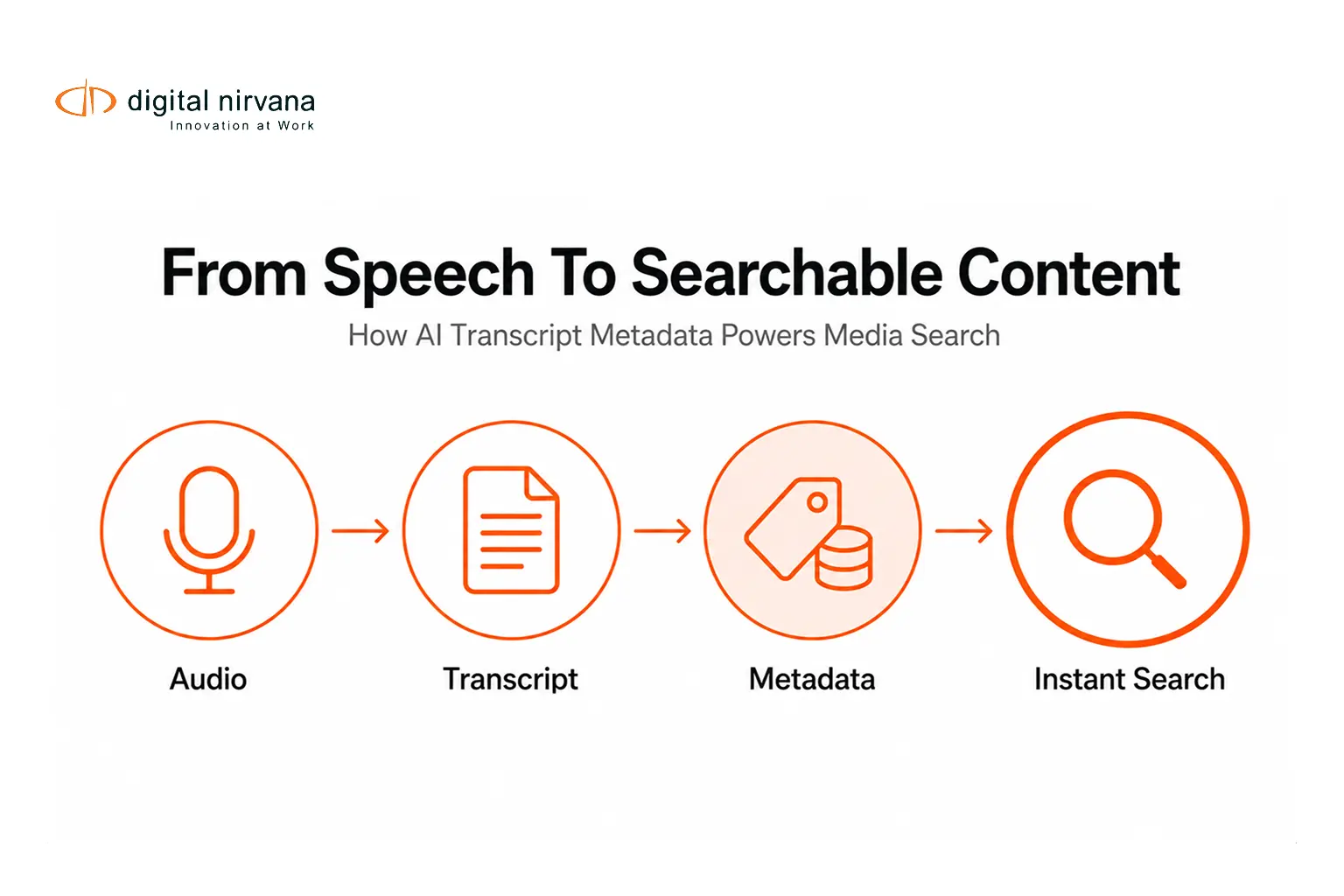
AI transcription software uses artificial intelligence and advanced speech recognition technology to convert spoken audio into searchable text. But there’s more to it.
The software can also:
- Generate time-coded transcripts
- Detect speakers
- Identify keywords and topics
- Enable phrase-level media search
- Support multilingual indexing
- Improve content categorization
- Create searchable metadata for archived assets
This metadata becomes a searchable intelligence layer across the entire archive.
Instead of manually reviewing hours of footage, editors and archivists can instantly search for:
- A politician’s statement
- A commentator’s reaction
- A player interview
- Brand mentions
- Historical references
- Emotional moments
- Specific events or locations
This dramatically reduces archive retrieval time while improving opportunities for content reuse.
Why Do Traditional Media Archives Become Difficult to Search?
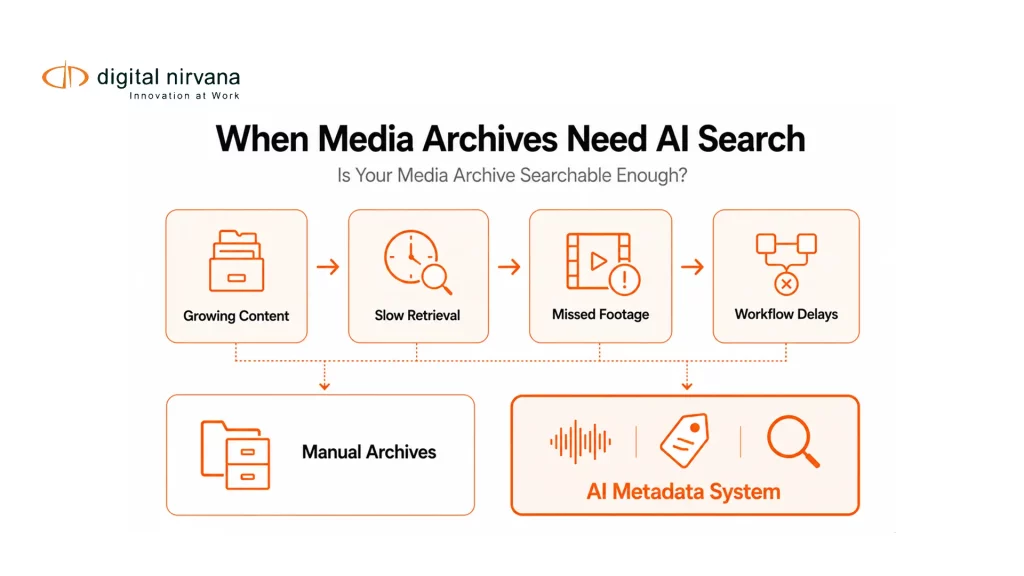
For years, broadcasters relied on manual metadata entry and basic file-naming systems.
That process created several long-term problems:
- Inconsistent Tagging
Different teams often use different naming conventions, making archives difficult to standardize.
- Time-Consuming Retrieval
Editors may spend hours searching footage manually just to find a short clip or quote.
- Underutilized Historical Content
Large portions of valuable archive footage remain unused because discovering relevant moments is too difficult.
- Scalability Issues
As content volume grows across digital channels, traditional indexing systems cannot keep pace.
Modern broadcasters and OTT platforms now generate enormous amounts of raw content daily. Manual logging alone is no longer sustainable.
How Does AI Transcript Metadata Make Media Search Faster and Smarter?
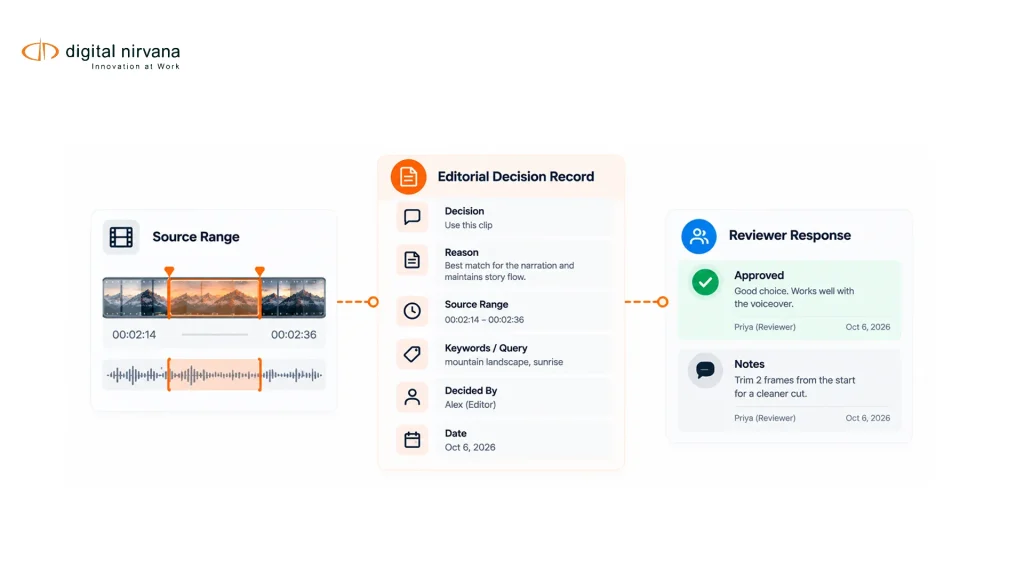
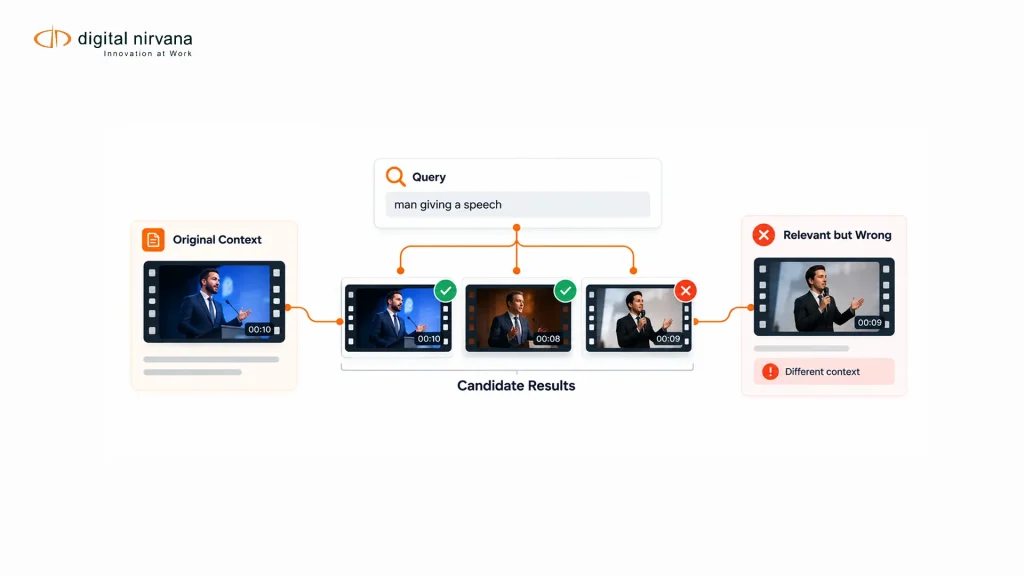
An AI transcript transforms spoken dialogue into searchable archive intelligence. This allows media teams to search for content using natural language rather than relying solely on manually assigned tags.
For example, an editor could search:
- “World Cup final crowd reaction”
- “Election debate healthcare statement”
- “Actor interview about upcoming movie”
- “Coach discussing injury update.”
The system can immediately surface matching clips with timestamps.
Advanced AI transcription software can also connect transcripts with:
- Facial recognition
- Object recognition
- Scene detection
- Topic extraction
- Speaker identification
- Closed caption indexing
How Are Newsrooms Using AI Transcription Software Today?
Starting from journalists to producers and other team members. There are so many teams that always need rapid access to news clips and other video content.
Let’s not forget the constant pressure of deadlines as well. AI transcription software streamlines all of these by enabling:
- Instant Quote Retrieval
Search transcripts to locate exact statements from interviews or speeches within seconds.
- Faster News Packaging
Editors can quickly identify archive footage relevant to current stories.
- Improved Investigative Research
Large-scale archives become quickly searchable just through keywords, topics, or individuals.
- Better Compliance Monitoring
Broadcasters can now track everything in video content, such as mentions, claims, and regulatory-sensitive language.
- Multilingual News Search
AI transcript systems can support multiple languages and regional broadcasts.
Modern newsroom workflows increasingly rely on automated metadata enrichment to reduce dependence on manual archives.
Why Are Sports Broadcasters Depending More On AI Transcript Workflows?
Sports broadcasters produce huge volumes of content every season.
This includes:
- Live matches
- Press conferences
- Commentary feeds
- Athlete interviews
- Analysis shows
- Social clips
- Historical game archives
Without intelligent metadata, finding specific moments becomes extremely difficult.
AI transcription software helps sports media teams by enabling:
- Highlight Discovery: Editors can locate critical moments through commentary keywords and crowd reactions.
- Player-Based Search: Search archives by athlete names, interviews, or match discussions.
- Sponsor Mention Tracking: Track sponsor references and branded moments across broadcasts.
- Faster Social Media Publishing: AI transcript indexing helps teams quickly create clips for digital channels.
- Historical Archive Monetization: Older sports footage becomes reusable and searchable for documentaries, promotions, and anniversary content.
Several sports media platforms now combine transcription with AI metadata tagging to improve archive accessibility and production efficiency.
How Does AI Transcription Help Entertainment Teams Find the Right Content Faster?
Entertainment companies manage vast libraries of:
- TV shows
- Movies
- Interviews
- Celebrity appearances
- Reality content
- Behind-the-scenes footage
- Promotional assets
Traditionally, much of this material remained difficult to search beyond title-level metadata. AI transcription software changes that by enabling discovery at the scene and dialogue levels.
Teams can search:
- Character conversations
- Emotional scenes
- Topic references
- Actor appearances
- Product mentions
- Dialogue themes
This supports:
- Faster editing workflows
- Better content repurposing
- Improved recommendation systems
- Archive monetization
- Promotional campaign creation
As streaming platforms continue to expand their content libraries, searchable AI transcript metadata is becoming increasingly valuable.
Why Does Metadata Accuracy Make Such a Big Difference in Archive Search?
Not all transcription systems deliver the same results. Poor transcription quality creates inaccurate metadata, which directly affects archive search performance.
Media organizations should evaluate:
- Speech recognition accuracy
- Noise handling capability
- Speaker differentiation
- Multi-language support
- Time-coded transcript precision
- Scalability
- Integration with existing PAM/MAM systems
- Security and compliance support
For enterprise media operations, metadata quality determines whether archives become genuinely useful or remain difficult to navigate.
How Does Digital Nirvana’s MetadataIQ Help Media Teams Manage Smarter Archives?
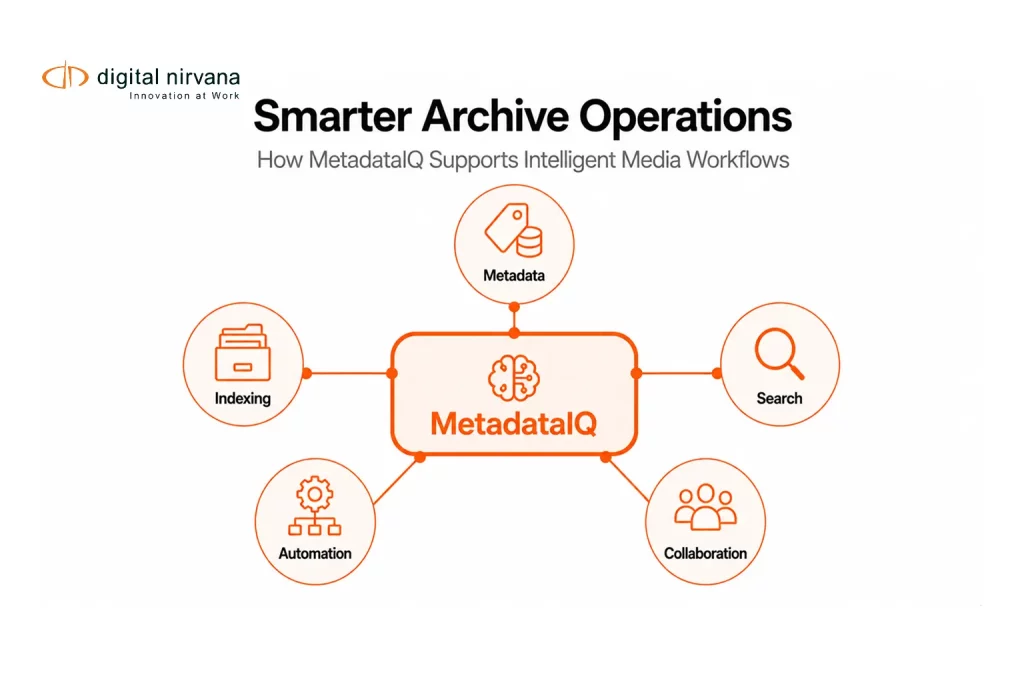
MetadataIQ Media Indexing & PAM/MAM by Digital Nirvana helps broadcasters and media enterprises manage growing media libraries through intelligent indexing and metadata-driven workflows.
The platform supports:
- Automated media indexing to effectively process and categorize large volumes of video, audio, and broadcast content in real time.
- AI-powered metadata generation that effectively converts any spoken dialogue into searchable information within seconds.
- Advanced archive search optimization helps team members find the relevant media assets just through keywords, topics, etc.
- Comprehensive production asset management capabilities to simplify collaboration between newsroom teams, post-production departments, and other teams.
- Media asset management integration to effectively connect metadata workflows with different kinds of existing PAM and MAM infrastructures.
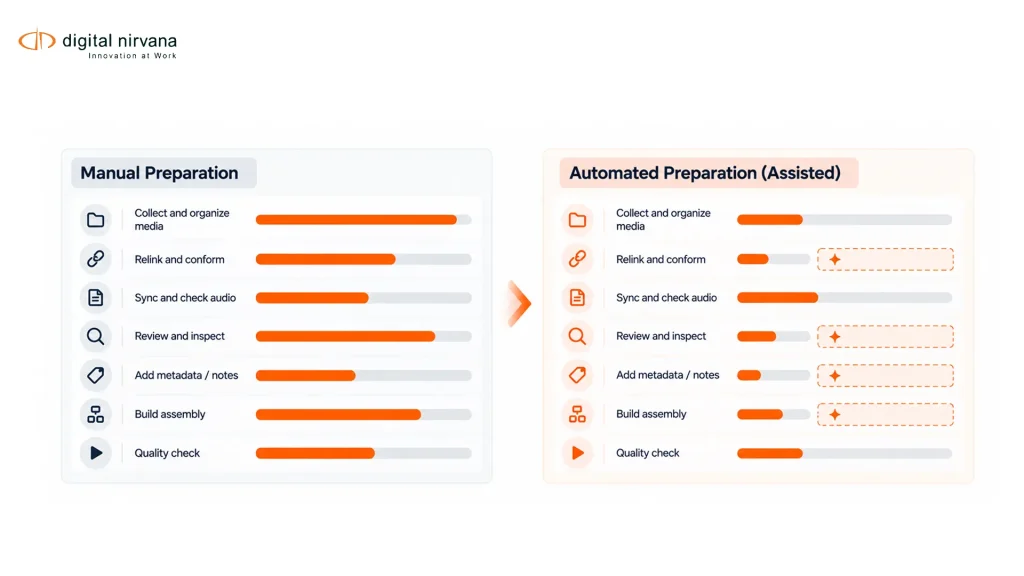
- Comprehensive workflow automation features that actively reduce any kind of repetitive manual task and improve operational efficiency.
For organizations handling news, sports, and entertainment content at scale, intelligent metadata management improves both operational speed and long-term archive value.
Instead of treating archives as passive storage repositories, media companies can transform them into searchable content intelligence systems.
FAQs
AI transcription software converts spoken audio into searchable text while generating metadata for faster media search and archive management.
An AI transcript makes spoken dialogue searchable, allowing teams to instantly locate clips, quotes, interviews, and important moments.
Metadata improves content organization, searchability, retrieval speed, workflow efficiency, and archive monetization opportunities.
Yes. Sports broadcasters use AI transcript systems for highlight discovery, interview search, sponsor tracking, and social media content creation.
Absolutely. Entertainment companies use AI transcription software to search dialogue, scenes, actor appearances, and thematic content across large media libraries.
MetadataIQ helps broadcasters automate indexing, improve archive discoverability, and streamline media asset management workflows.
Modern enterprise-grade systems are designed to process and manage large-scale news, sports, and entertainment archives.
Conclusion
Media archives are no longer just storage systems. They are becoming searchable intelligence repositories powered by AI transcription software and metadata automation. As broadcasters and content companies continue generating massive amounts of media, the ability to instantly discover, retrieve, and repurpose content is becoming a competitive advantage.
AI transcript technology helps transform unstructured media into searchable, reusable, and monetizable assets across news, sports, and entertainment workflows. Platforms like MetadataIQ Media Indexing & PAM/MAM by Digital Nirvana are helping media organizations modernize archive operations with intelligent metadata layers designed for faster discovery and smarter content management.
Key Takeaways:
- AI transcription software helps media organizations turn spoken content into searchable metadata, improving archive accessibility. This allows editors, producers, and researchers to retrieve clips much faster without manually reviewing hours of footage.
- Modern AI transcript systems do far more than speech-to-text conversion by supporting keyword extraction, speaker identification, and time-coded indexing. These capabilities create a smarter archive structure for news, sports, and entertainment workflows.
- Broadcasters and OTT platforms can significantly improve content reuse through AI-powered metadata enrichment. Historical footage, interviews, and highlight moments become easier to rediscover and repurpose across digital channels.
- Sports and entertainment companies benefit from faster highlight generation, sponsor tracking, and scene-level search using AI transcription software. This improves production speed while supporting better audience engagement and content monetization.
- Platforms like MetadataIQ Media Indexing & PAM/MAM help media enterprises manage growing content libraries through intelligent indexing and workflow automation. Strong metadata layers ultimately transform archives from passive storage into valuable content intelligence systems.