Introduction
A video analysis API can turn speech, faces, objects, text and scene boundaries into timed data that other systems can search or act on. That promise is useful, but an API comparison based only on a feature checklist misses the hard questions. Media teams also need to know how accurately each signal is timed, how results behave across their content mix, how exceptions reach a reviewer and how the output fits an existing MAM, PAM or DAM.
The right choice is not the service with the longest list of model labels. It is the option that produces usable evidence for a defined workflow at an acceptable operational cost.
Key Takeaways
- Start with the decisions the API must support, then work backward to the required insights.
- Test representative content, including poor audio, busy graphics, multilingual speech and fast cuts.
- Evaluate time alignment, confidence data and error patterns, not only whether a feature exists.
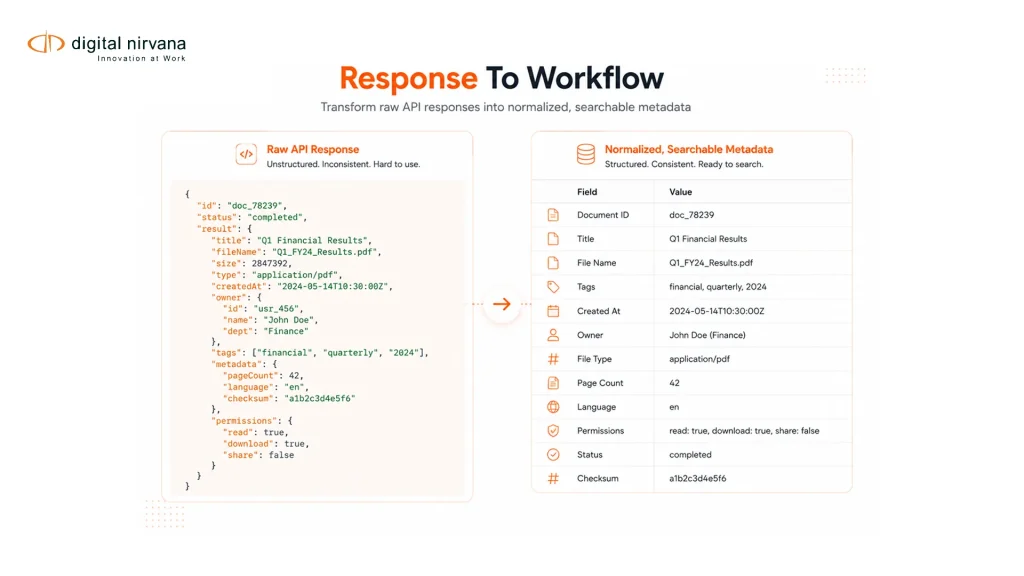
- Plan how raw API results will become normalized, searchable metadata.
- Include review effort, storage, retries and integration maintenance in total cost.
Table Of Contents
- What a video analysis API returns
- Nine evaluation criteria
- A practical proof of concept
- API services and workflow products
- Common integration mistakes
- FAQs
What Does A Video Analysis API Return?
Most services accept a media file or accessible URI, run selected models and return structured results. Depending on the service, the response may include transcription, optical character recognition, labels, object tracks, faces, named entities, shot boundaries, summaries or content-safety signals. Results commonly carry timestamps, confidence values and model-specific identifiers.
The important word is structured. A detected object is not automatically useful metadata. The result must still be mapped to a controlled vocabulary, linked to an asset and time range, deduplicated and made available to the system where a producer, archivist or compliance team works.
Google Cloud’s feature overview and the Azure Video Indexer insights overview illustrate how broad these output families can be. Their documentation also shows why teams should inspect the exact response and limits of each selected model.
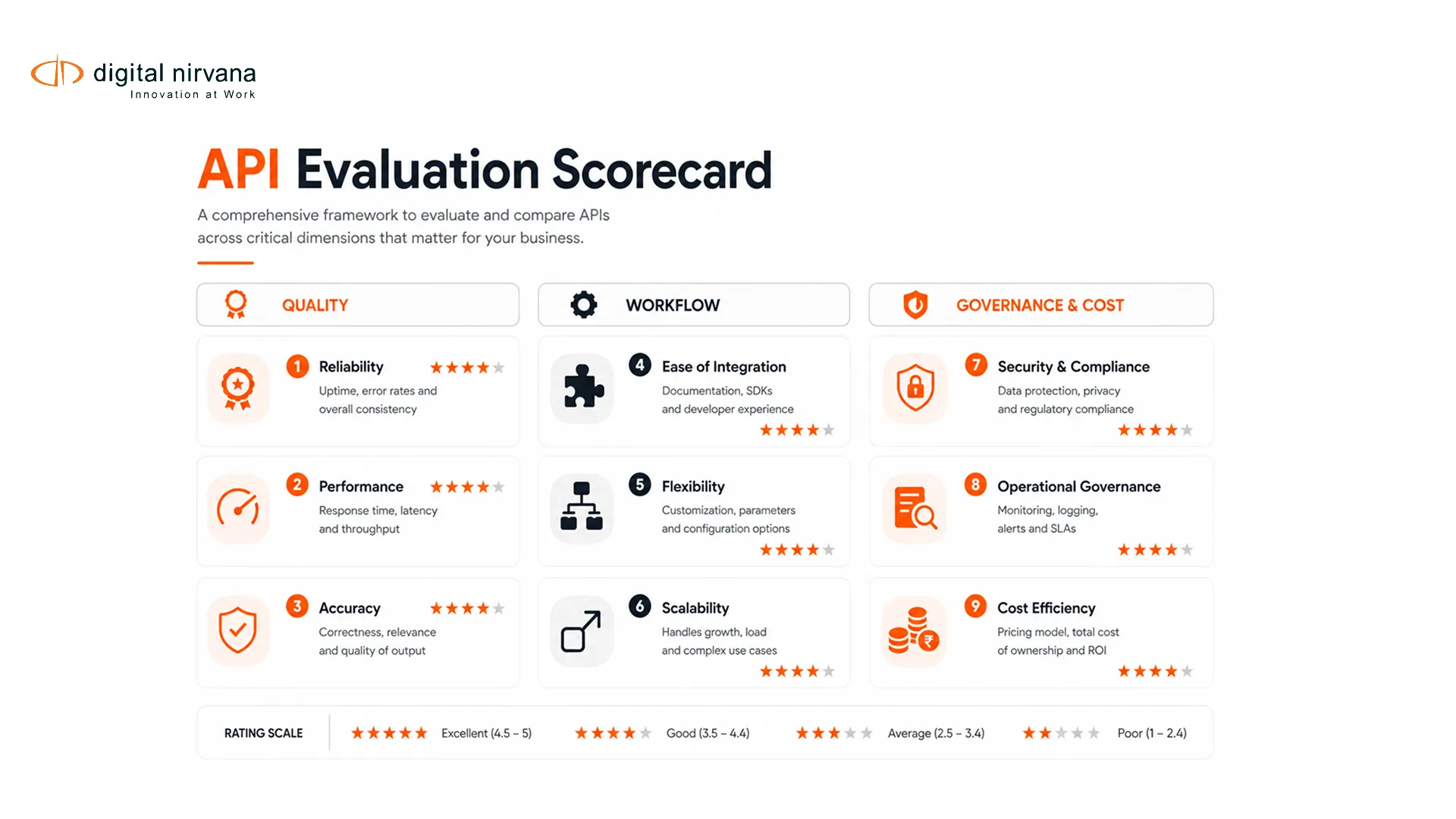
Nine Criteria For Comparing Video Analysis APIs
| Criterion | Questions To Test | Evidence To Capture |
| Content coverage | Does it handle our codecs, durations, languages and visual styles? | Accepted inputs and failed-job log |
| Insight quality | Are the returned labels and transcripts useful for our decisions? | Reviewed sample with false positives and misses |
| Time alignment | Are insights tied to frames or time ranges precisely enough? | Offset distribution against known events |
| Confidence | Are confidence scores available and meaningful? | Quality by confidence band |
| Output structure | Can results map cleanly to our metadata model? | Sample normalized record |
| Processing model | Is work synchronous, asynchronous, batch or streaming? | Job timing and retry behavior |
| Scale and limits | What quotas, file limits and regional constraints apply? | Load-test results and service limits |
| Security and governance | Where is media processed and retained? | Approved architecture and data-flow review |
| Cost to operate | What costs arise beyond API calls? | API, storage, egress, review and support estimate |
Accuracy should be measured against the content that matters. A news archive with lower thirds and rapid speaker changes has different failure modes from a studio interview. A sports workflow may care more about scoreboards, logos and scene transitions than named entities.
Time alignment deserves its own test. If an editor needs to jump to an exact quote, a transcript tied only to broad segments may not be sufficient. If the goal is archive discovery, a slightly wider range may be acceptable. Define the tolerance before scoring vendors.
How To Run A Useful Proof Of Concept
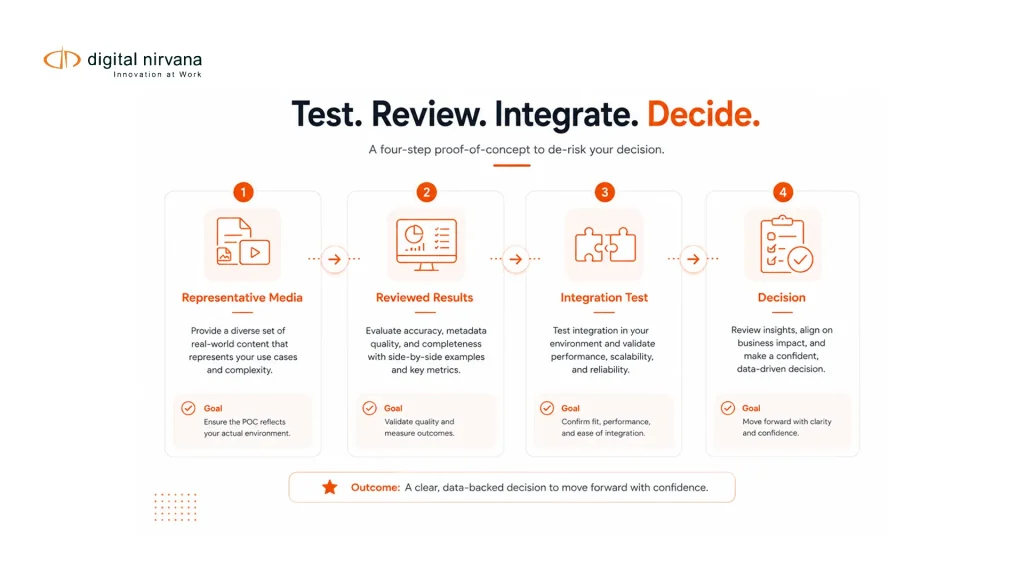
Build a small test set that represents both normal and difficult material. Include clean studio footage, noisy field audio, multiple speakers, burned-in graphics, low-contrast text, fast motion and any languages central to the operation. Keep a human-created reference for the signals being scored.
Then run the same media and feature set through each candidate. Record misses, false positives, time offsets, failed jobs, processing time and reviewer effort. Separate model quality from workflow quality. A strong detection result can still create operational work if its schema is inconsistent or difficult to reconcile with asset identifiers.
Finally, place the output in a realistic downstream flow. Can a producer find a quote? Can an archivist approve names? Can the metadata be written back without overwriting authoritative fields? A proof of concept should end with a workflow result, not a folder of JSON responses.
Digital Nirvana’s MediaServicesIQ is the relevant product family when a team needs composable AI and machine-learning services. For organizations that need an indexing workflow and searchable metadata layer, MetadataIQ addresses a different part of the problem.
API Services And Workflow Products Are Not The Same
An API exposes capabilities that developers can call. A workflow product adds orchestration, job state, normalization, review, search and connection points to media systems. Some organizations need only the first. Others underestimate how much engineering sits between an API response and a dependable daily process.
That distinction also prevents product confusion. MediaServicesIQ provides composable analysis capabilities. MetadataIQ packages content understanding into metadata and indexing workflows that complement a MAM, PAM or DAM rather than replacing it. Teams may use one or both, depending on where they want to own orchestration and review.
For a deeper view of how timed signals become findable records, see Digital Nirvana’s guide to video indexing and smarter content search.
Common Integration Mistakes
The first mistake is buying against a demo clip. A polished sample rarely exposes the edge cases that drive review cost. The second is storing every response field without a metadata model. That creates a large index whose terms are inconsistent and hard to govern.
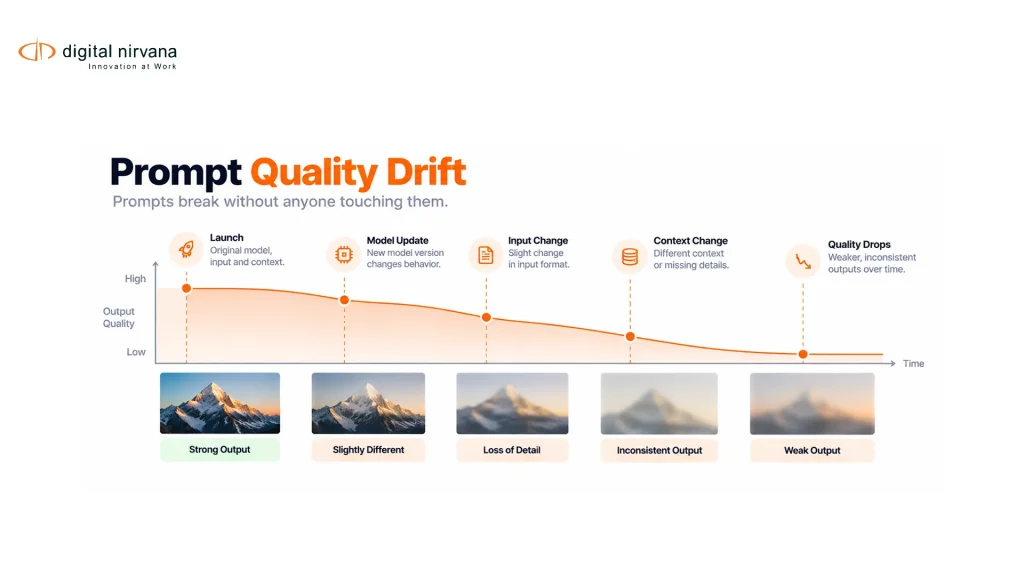
The third is treating confidence as a universal quality score. Confidence values are model-specific and must be calibrated against observed outcomes. The fourth is ignoring change management. Models, schemas and prices can change, so a production integration needs version tracking, regression samples and an owner for service updates.
FAQs
It is a programmatic service that examines video or audio and returns timed, structured insights such as speech, text, labels, objects or scene boundaries.
No. The API produces analysis results. A MAM manages media assets and workflow state. The results normally need to be mapped into or alongside the MAM’s metadata model.
Use a task-specific measure. Transcription may use word error rate, while detection work may use precision, recall and time overlap. Add reviewer effort because an error that takes minutes to fix has a different cost from one that is easy to dismiss.
Only test features tied to a defined workflow or decision. Extra models add cost and metadata noise if nobody uses their output.
There is no universal number. Use enough representative and difficult samples to expose recurring error patterns across the formats, languages and genres in scope.
Calibrate them against reviewed samples. They can support routing rules, such as accepting high-confidence low-risk results and sending uncertain or high-impact results for human review.
Conclusion
A video analysis API should be selected as one component of a media operation. The evaluation must connect model output to a searchable, reviewable and governable result. Teams that test their own content, define time and quality tolerances, and account for downstream work will make a more defensible choice.
To map the options to a specific archive, monitoring or production workflow, request a tailored discussion with Digital Nirvana.