A media company publishes a strong video explainer, embeds it on a high-traffic page, and waits for search rankings to follow. Three months later, the page still ranks for the same keywords it did before the video existed, and the video itself shows up nowhere in search. The content was good. The problem is that search engines can’t watch a video the way a person can. Without the right metadata, transcripts, and structure around it, even a great video is functionally invisible to search.
This is the gap most video marketing strategies miss. Publishing video and optimizing video for search are two different disciplines, and the second one depends almost entirely on metadata, not on the video file itself.
Why Video Doesn’t Rank on Its Own
Search engines index text. They can’t watch a video and understand what happens at the two minute mark, who’s speaking, or what the video is actually about beyond a title and description. Every signal a search engine uses to understand and rank video content comes from the metadata wrapped around it, not the video itself.
That means a video’s SEO value is really a function of how well it’s tagged, transcribed, and structured for a crawler to interpret. Skip that work and even high-quality video content sits on a page contributing almost nothing to organic visibility.
The Market Context: Why This Matters More Now
Video consumption keeps growing across nearly every industry, and search engines have adapted by surfacing video results directly in search, not just on dedicated video platforms. At the same time, AI-driven search experiences are increasingly summarizing and citing content based on structured data, which means video that isn’t transcribed or tagged properly is effectively excluded from how these systems understand and reference a page.
Sites competing for the same keywords are increasingly using video to differentiate, but only the ones treating video as a structured, metadata-rich asset are seeing it show up in featured snippets, video carousels, and AI-generated search summaries.
Where Most Video SEO Efforts Fall Short
Common gaps in video marketing strategies include:
- Publishing video with a generic title and no transcript, leaving search engines with almost nothing to index
- No structured data (VideoObject schema) telling search engines what the video contains, how long it runs, or when it was published
- Captions added only for accessibility compliance, not written or reviewed with search intent in mind
- No internal linking strategy connecting video content to related pages, which limits topical authority
- Treating video as a standalone asset instead of part of a broader content and keyword strategy
None of these gaps are about video quality. They’re about the metadata layer that surrounds the video, which is the part search engines actually read.
How Metadata Turns Video Into a Search Asset
A handful of elements do most of the work in making video discoverable:
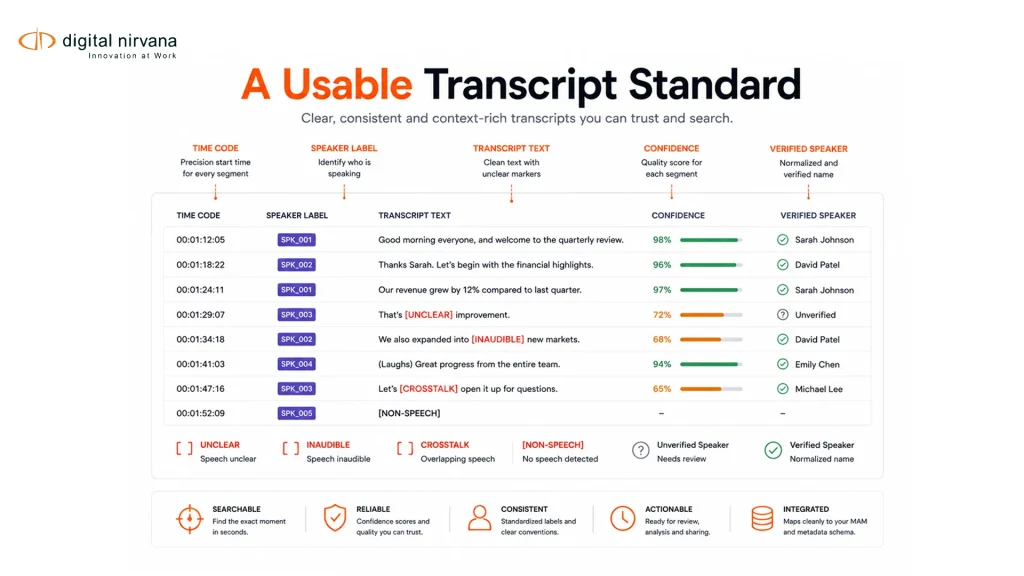
Accurate transcripts. A full transcript gives search engines the actual spoken content of a video in text form, which is the single highest-impact piece of metadata for video SEO. It also improves accessibility and often becomes usable content on its own.
Structured video schema. VideoObject markup tells search engines the title, description, duration, thumbnail, and upload date in a format they can parse directly, which is what enables rich video results in search.
Descriptive titles and file names. Both the on-page title and the actual video file name should reflect the primary keyword and topic, since search engines use both signals.
Chapter markers and timestamps. Breaking a video into labeled segments helps search engines understand structure and can surface specific timestamps directly in search results, which increases click-through for viewers looking for a specific answer.
Captions written with search intent. Captions that simply transcribe dialogue word for word are useful, but captions reviewed for clarity and keyword relevance perform better for both viewers and search visibility.
A Real-World Workflow: Turning a Video Library Into a Search Asset
Consider a media organization with an existing library of explainer and product videos that were published without SEO in mind. A practical workflow to fix this looks like:
- Generate accurate transcripts for the full video library, prioritizing the highest-traffic pages first
- Add VideoObject schema markup to each page hosting a video
- Review and refine auto-generated captions for clarity and keyword relevance rather than leaving raw automated output
- Break longer videos into chapters with timestamped markers
- Build internal links from transcript text to related content, treating the transcript as indexable content in its own right
This is where transcription and captioning infrastructure matters as much as the SEO strategy itself. TranceIQ generates accurate transcripts and captions at scale, which gives search engines the text-based foundation they need to actually understand and rank video content, rather than leaving that work to be done manually one video at a time.
Measurable Impact of Proper Video SEO
Organizations that add full transcripts and structured metadata to existing video content typically see that content start appearing in organic search results where it previously had none, since the transcript gives search engines something to index that didn’t exist before. Chapter markers and timestamps also tend to improve click-through rate on video results, since they let a searcher jump directly to the segment relevant to their query instead of guessing whether the whole video is worth watching.
Pages with well-optimized video also tend to hold visitors longer, which is itself a signal that can support broader page-level rankings, not just the video’s own visibility.
Implementation Considerations
A few things matter when rolling this out across an existing video library:
- Prioritize high-traffic or high-intent pages first rather than trying to retrofit an entire library at once
- Make sure captions and transcripts are reviewed by a person, not published as raw automated output with no quality check
- Confirm schema markup is implemented correctly and validated, since incorrect structured data can do more harm than having none
- Treat transcript text as real content that deserves the same keyword and readability attention as the rest of the page
Key Capabilities to Prioritize
| Capability | Why It Matters | Common Gap |
|---|---|---|
| Accurate, searchable transcripts | Gives search engines actual text content to index | Video published with no transcript at all |
| VideoObject schema markup | Enables rich video results and carousels | Missing or incorrectly implemented structured data |
| Chapter markers and timestamps | Improves click-through and search snippet eligibility | Long, unsegmented videos with no internal structure |
| Search-intent reviewed captions | Improves both accessibility and keyword relevance | Raw auto-captions published without review |
| Internal linking from video content | Builds topical authority across related pages | Video treated as a standalone, unlinked asset |
Common Objections, Answered
“Our videos already have auto-generated captions.” Auto-captions solve accessibility, but raw automated output often needs review for accuracy and search relevance to actually help with SEO.
“Video SEO seems like a lot of extra work for one asset type.” Most of the work, transcription and structured data, can be applied at scale across an existing library rather than repeated manually for each video.
“We don’t have the internal bandwidth to fix our whole video library.” Prioritizing the highest-traffic pages first delivers most of the SEO benefit without requiring a full library overhaul on day one.
Success Metrics to Track
Track organic impressions and clicks for pages containing video before and after adding transcripts and schema, average watch time and click-through on chapter-marked timestamps, and whether video content starts appearing in video-specific search features like carousels or “people also ask” style results. A rising share of organic traffic attributable to video pages is usually the clearest sign the strategy is working.
Where This Fits Into a Broader Content and Search Strategy
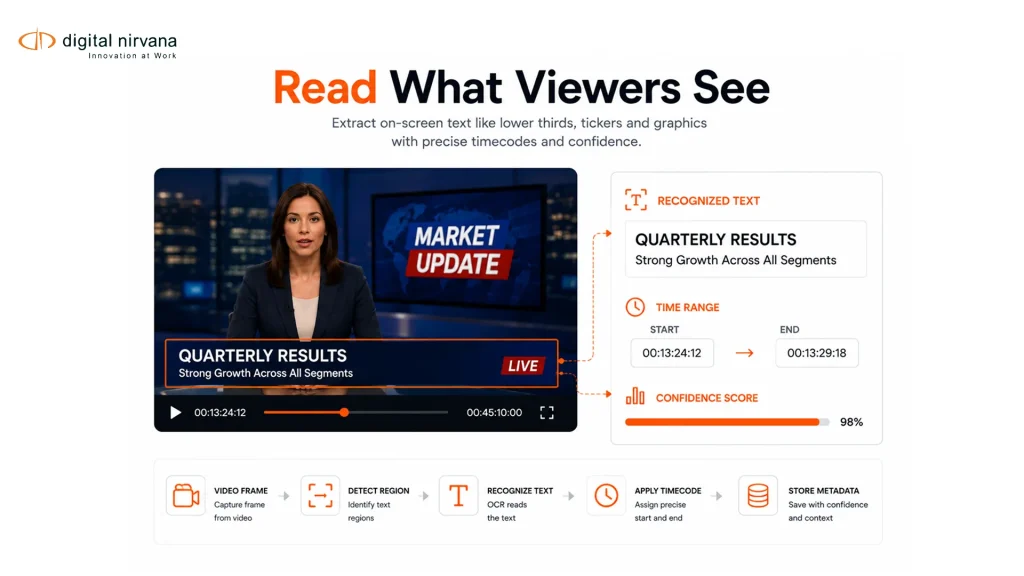
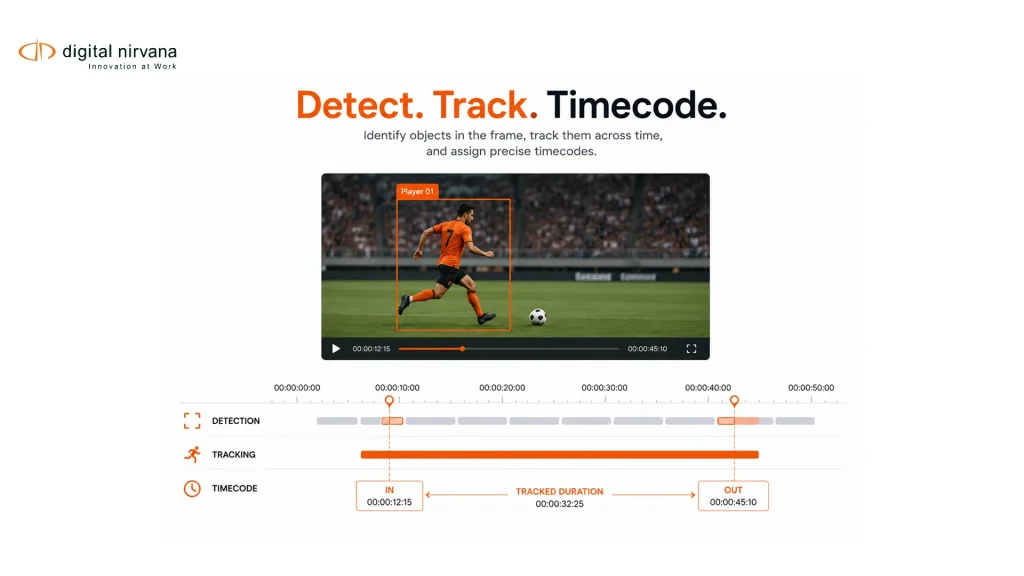
Video SEO isn’t a separate discipline from the rest of a content strategy, it’s an extension of the same principle: search engines need structured, text-based signals to understand and rank content. Accurate transcription and captioning through TranceIQ provides that foundation, while the underlying media indexing and search capabilities of MetadataIQ help organize video assets so they remain discoverable internally as a library grows. For teams also looking to extract scene descriptions, chapter markers, or object and text recognition automatically, MediaServicesIQ adds the AI layer that generates this additional structured metadata without manual review of every frame.
Why This Matters for Digital Nirvana Customers Specifically
Video SEO ultimately comes down to whether a library of video content is structured well enough for both search engines and internal teams to use it fully. Digital Nirvana’s combination of accurate transcription, AI-driven metadata generation, and searchable indexing gives organizations the foundation to make video content perform in search rather than sit as an unindexed asset on a page. This matters for media companies with large video libraries built up over years, as well as newer content teams trying to make every published video count toward organic visibility from day one. Examples of how this plays out across broadcast, OTT, and enterprise customers are available in Digital Nirvana’s success stories.
Conclusion
Video marketing only pays off for SEO when the metadata around it does the work search engines can’t do themselves. Transcripts, structured schema, chapter markers, and reviewed captions are what actually make a video discoverable, not the video file itself. Teams that treat video as a fully text-supported, structured asset consistently see it start contributing to organic search, while teams that publish video without that layer are left wondering why a strong piece of content never shows up anywhere.
Key Takeaways
- Search engines rely entirely on metadata, transcripts, and structured data to understand video content, not the video file itself
- Full transcripts are the single highest-impact piece of video SEO metadata
- VideoObject schema and chapter markers enable rich search results and improve click-through
- Raw auto-generated captions should be reviewed for accuracy and search intent, not published as-is
- Prioritize high-traffic pages first when retrofitting an existing video library for SEO
FAQ
Do transcripts actually improve video SEO? Yes. Transcripts give search engines a full text version of a video’s content to index, which is often the single most impactful factor in whether a video appears in organic search results.
What is VideoObject schema and why does it matter? It’s structured data that tells search engines a video’s title, description, duration, and other details in a machine-readable format, which enables rich video results like carousels and timestamped snippets.
Are auto-generated captions good enough for SEO? They’re a starting point, but reviewing them for accuracy and keyword relevance typically improves both search performance and viewer experience compared to unreviewed automated output.
Should every video in an existing library be optimized at once? Not necessarily. Prioritizing high-traffic or high-intent pages first usually delivers most of the SEO benefit without requiring a full library overhaul immediately.