You can live in Chennai and still enjoy Korean thrillers in Tamil. Similarly, a viewer from Mexico may enjoy the same show in Spanish.
With the rapid growth of FAST and OTT platforms, viewers are no longer limited to a certain language when it comes to their favorite shows or movies. Video dubbing is now one of the core parts of media distribution strategies. Just by video dubbing and making content accessible in different languages, creators and enterprises can witness a hike in watch time by up to 40%.
Modern dubbing services like TranceIQ by Digital Nirvana effectively combine AI-powered automation, cloud workflows, metadata integration, and other such features to help broadcasters and OTT providers have a smoother video dubbing experience across various platforms.
In this blog, we will explore how video dubbing and content localization can improve your overall workflow and deliver a superior viewing experience for your audience.
The Rise of FAST and OTT Platforms
FAST channels, or Free Ad-Supported Streaming Television services, are quite popular nowadays, considering their features. FAST channels rely solely on ad revenue rather than subscription-based models. This offers viewers free streaming access.
OTT platforms are also experiencing massive growth in both regional and international markets. They are readily available across different devices such as mobile phones, smart TVs, and connected streaming platforms.
Now, such a massive rise in content discoverability directly brings language inaccessibility. The need for dubbed content becomes much higher, especially for entertainment programs, documentaries, reality shows, and more.
What is Video Dubbing and Why Does It Matter?
Video dubbing is the process of replacing original spoken dialogue with translated audio in different languages while maintaining adequate synchronization with on-screen visuals and timing, thereby improving audience retention.
Media companies use video dubbing for:
- OTT originals
- FAST channel programming
- News and sports content
- Web series
- Films and documentaries
- Educational videos
- Promotional and advertising content
Dubbing also supports content monetization in new regions. A single content library can generate additional revenue streams when localized effectively for multiple markets.
For streaming platforms competing globally, the quality of localization directly impacts brand perception.
What Challenges Do Media Teams Face With Video Dubbing?
- Tight Release Deadlines
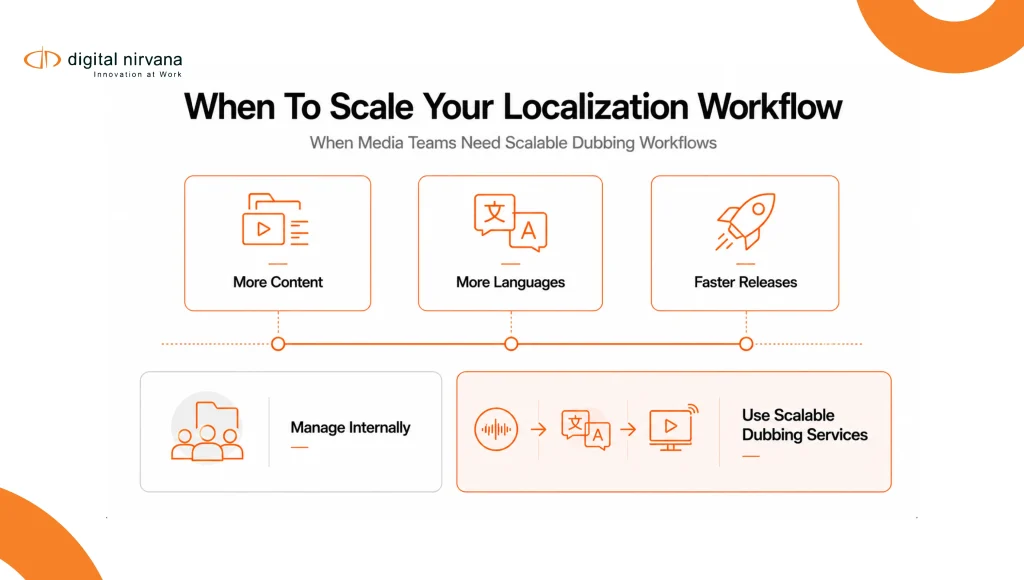
Modern OTT releases often require simultaneous launches across several countries. Media teams work under strict delivery schedules, leaving little room for delays due to manual localization. Traditional dubbing workflows can significantly slow content distribution.
- Managing Multiple Languages At Scale
There could be 10-40 languages simultaneously running for each event. Coordinating scripts, translations, voice talent, timelines, approvals, and other aspects across regions can be simplified by integrating scalable dubbing services into media workflows.
- Lip-Sync And Audio Quality Issues
Poor synchronization is one of the key factors that affect the overall viewing experience. Professional video dubbing workflows maintain consistent voice, accurate timing, and audio clarity to drive higher audience engagement and platform credibility.
- Metadata And Workflow Coordination
Disconnected workflows in localization can bring severe operational inefficiencies. Media teams need to manage subtitles, captions, transcripts, metadata, and other elements before the show airs on the platform.
- Maintaining Cultural Relevance
Direct translation is not always effective. Content often requires cultural adaptation, like tone, humor, references, etc., to sound natural for regional audiences.
Why FAST Channels Need Faster Localization Workflows?
FAST platforms operate at extremely high publishing volumes. Channels continuously refresh content libraries to maintain viewer engagement and advertising inventory. This creates pressure for rapid localization turnaround.
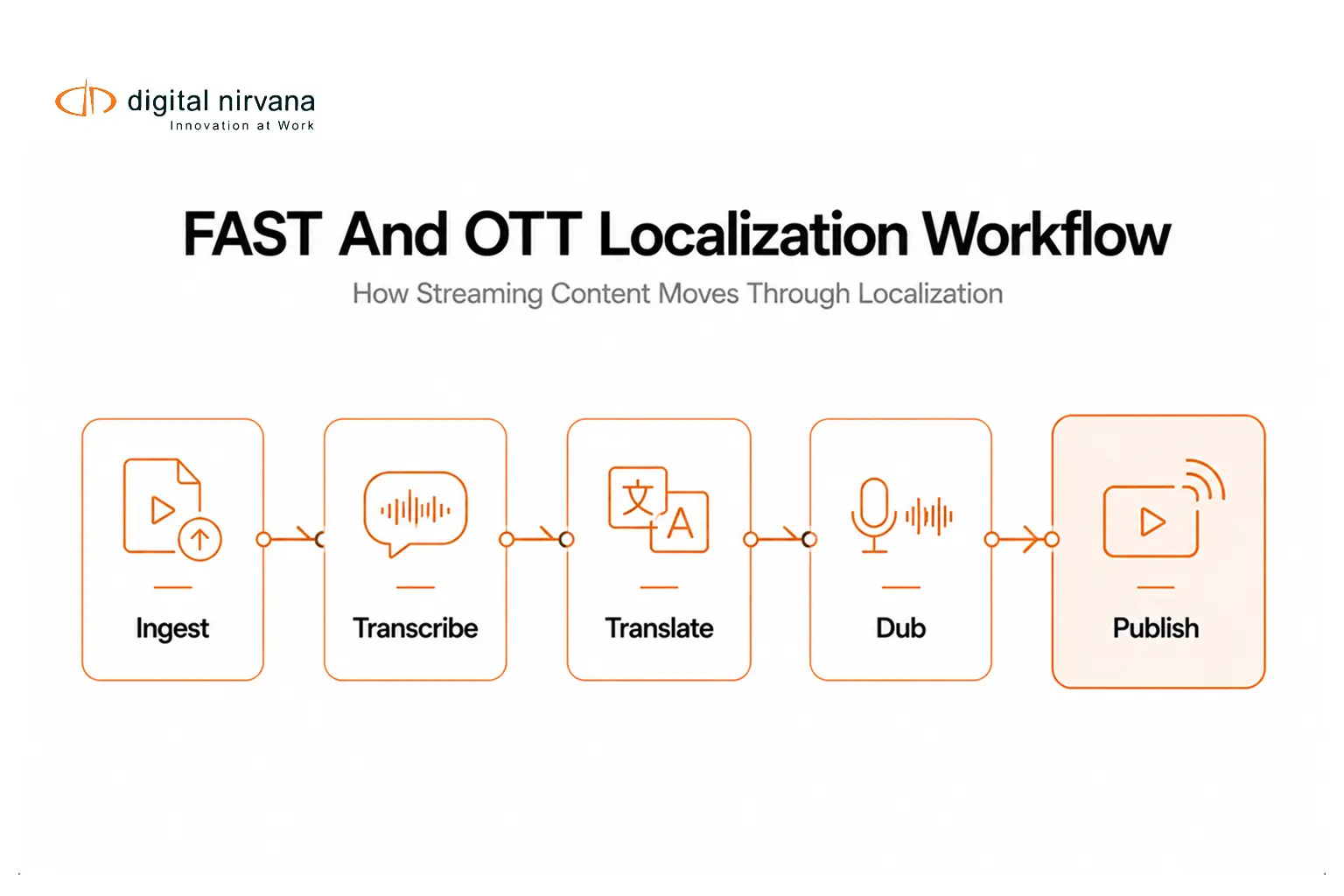
Unlike traditional television distribution cycles, FAST workflows require near real-time processing capabilities for:
- Content ingestion
- Transcription
- Translation
- Video dubbing
- Caption generation
- Metadata tagging
- Distribution packaging
Cloud-based AI workflows are helping media teams reduce turnaround time significantly while improving operational scalability.
What are the Features to Look for in Modern Dubbing Services?
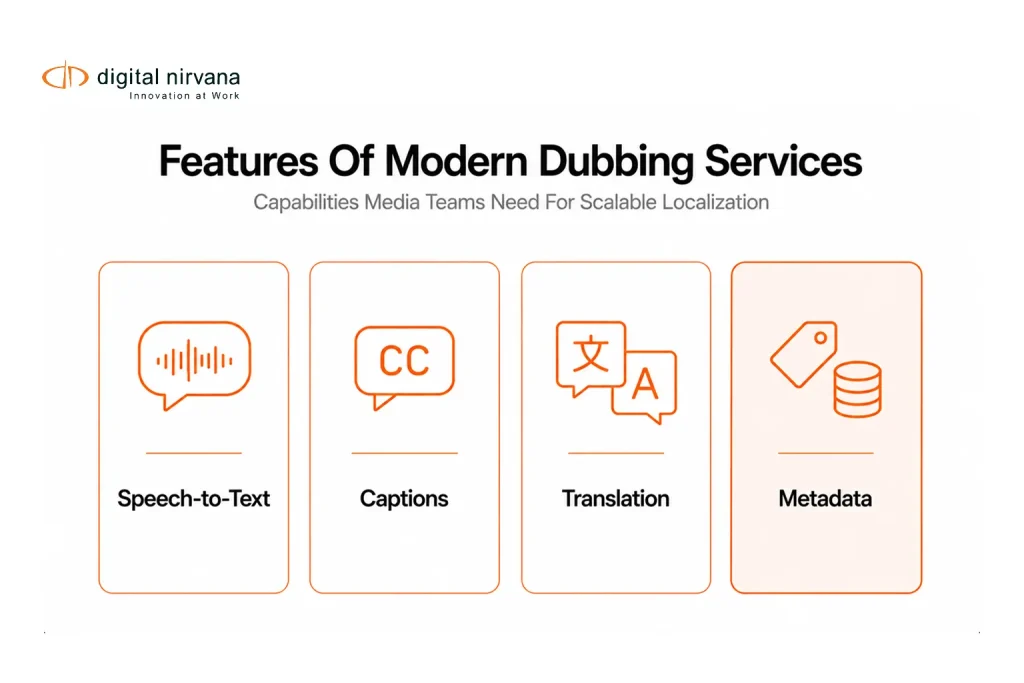
- AI-Assisted Speech-To-Text
Automated speech recognition accelerates transcript generation for localization workflows. According to Digital Nirvana’s TranceIQ, AI-powered speech-to-text capabilities support multilingual workflows and timecode-indexed transcripts for faster editing and content retrieval.
- Multi-Language Support
Modern dubbing services should support a wide range of languages and dialects to help platforms scale globally.
- Automated Captioning And Translation
Focus more on building strategic workflows that integrate different aspects of production, such as dubbing, captioning, and translation, into a unified system.
- Cloud-Based Collaboration
Distributed teams require more centralized workflows, such as cloud-native systems that support remote editing, approvals, and asset management.
- Metadata Integration
Metadata plays a critical role in content discovery and archive management. Integrated systems can automatically generate searchable metadata alongside localization workflows.
- Quality Control And Compliance
Media teams must ensure content meets platform standards for captioning, audio levels, and regional compliance requirements. Automated quality monitoring helps reduce manual review effort.
How Is AI Changing Video Dubbing Workflows?
AI is helping media organizations streamline repetitive tasks across localization pipelines.
Modern AI-powered workflows can assist with:
- Speech transcription
- Translation preparation
- Speaker identification
- Audio segmentation
- Caption generation
- Metadata extraction
- Workflow automation
However, human review still remains essential for maintaining emotional accuracy, cultural sensitivity, and final audio quality.
How Digital Nirvana Supports Modern Dubbing And Localization?
Digital Nirvana offers a wide range of AI- and ML-powered solutions carefully designed for broadcasters, OTT providers, and media operations. This centralized platform simplifies all major aspects of video dubbing while automating workflows with the right strategies.
The platform supports:
- Automated transcription workflows can convert large volumes of spoken content into searchable text much faster.
- Caption and subtitle generation capabilities ensure easy accessibility across regions and languages.
- AI-powered metadata extraction truly helps organize content information and simplify content discoverability across various OTT and FAST channels.
- The workflow integration via APIs enables the media team to connect to existing production systems and media asset management platforms without disrupting ongoing operations.
- Multi-language processing support effectively scales localization efforts across regional and international markets, delivering faster turnaround times and more consistent delivery standards.
All of these features surely make TranceIQ the ideal choice for media teams, especially those handling massive volumes of content across multiple languages on different platforms. This simplifies the entire content workflow and reduces manual workload.
FAQs
Video dubbing replaces original dialogue with synchronized translated speech, while voice-over typically overlays narration without matching lip movements.
Video dubbing improves accessibility and viewer engagement by allowing audiences to consume content in their preferred language.
AI-powered workflows can significantly improve speed and efficiency, but human review is still necessary for quality assurance and cultural accuracy.
Popular localization languages include Spanish, Hindi, Tamil, Telugu, French, German, Japanese, Korean, and Arabic, depending on audience regions.
FAST channels rely on high-volume content publishing. Efficient dubbing services help them expand regional reach while maintaining faster distribution timelines.
Metadata improves content discovery, archive management, workflow automation, and platform search functionality.
Teams can improve efficiency by using AI-assisted transcription, centralized workflow systems, standardized metadata practices, and integrated localization platforms.
Conclusion
FAST and OTT platforms are currently transforming how audiences consume media worldwide. With the increase in content availability across languages and regions, video dubbing has become even more essential in modern streaming operations.
AI-powered platforms like TranceIQ by Digital Nirvana streamline the entire process through automation, cloud collaboration, and intelligent workflow integration. This helps deliver multilingual content way faster while eliminating any operational complexity.
Key Takeaways:
- Video dubbing is a crucial aspect of OTT and FAST platforms. It directly enhances overall accessibility, viewer engagement, and content reach.
- Modern dubbing services combine AI and ML with human quality control. This helps effective localization without sacrificing accuracy or viewer experience.
- FAST channels require faster turnaround times. This is when cloud-native workflows and automation become increasingly important for operational efficiency.
- Metadata integration, captioning, transcription, etc., are all connected together. Centralized workflow management systems can effectively simplify the entire workflow.
- AI and ML-powered platforms like TranceIQ are ideal for simplifying media localization. They help with faster processing, intelligent automation, and smarter workflow integration.