It’s 6:42 PM and a story is breaking live. The assignment desk needs a 20-second clip of a mayoral press conference from three weeks ago, and the anchor wants it on air before the next segment. Somewhere in a shared drive full of unlabeled footage, that clip exists. The question is whether anyone can find it in time.
This scenario plays out in newsrooms every single day. Archive footage sits in systems that were never built for speed, and reporters end up scrubbing through hours of raw video by memory and guesswork. It is not a staffing problem. It is a metadata problem, and it is one that AI has finally made solvable.
Why News Metadata Is Different From Other Broadcast Content
News content moves faster than almost any other media category. A sports network can plan its metadata strategy around a game schedule. A streaming platform can batch-process its catalog overnight. Newsrooms do not get that luxury.
Stories break without warning, footage arrives from multiple feeds and stringers at once, and the same clip might need to be searchable by person, location, quote, and topic within minutes of ingest. Traditional logging, where a producer manually types timecodes and keywords, simply cannot keep pace with live news volume.
That gap is exactly where AI metadata tagging earns its place in the newsroom workflow.

The Real Cost of Manual Logging in a Newsroom
Manual video logging feels manageable when volume is low. It falls apart the moment a newsroom scales to multiple live feeds, syndicated content, and years of accumulated archive footage.
Here is what that cost typically looks like in practice:
- Producers spend a meaningful part of their shift searching instead of producing
- Archive footage from past broadcasts becomes effectively unusable because no one remembers where a clip lives
- Compliance-sensitive moments, like political statements or sourced claims, are hard to locate when a fact-check or retraction is needed
- Newsrooms under-license or under-monetize their own back catalog because nothing in it is searchable at scale
None of this is a talent problem. It is what happens when human logging tries to keep up with a firehose of live and archival content.
What AI Metadata Actually Detects Inside News Footage
Modern AI metadata automation does far more than transcribe audio. For a newsroom, the real value comes from what the system can identify inside the frame and the spoken word at the same time.
A well-built metadata engine can surface:
| Detection type | What it enables for newsrooms |
|---|---|
| Speech-to-text transcription | Instant keyword and quote search across every broadcast |
| Face recognition | Locate every appearance of a specific public figure or reporter |
| Scene and location description | Find footage by setting, not just by memory of when it aired |
| On-screen text and lower thirds (OCR) | Search by chyron text, names, or graphics shown on air |
| Topic and entity tagging | Group related coverage automatically, even across separate segments |
Once footage carries this kind of structured metadata, a search that used to take an assignment editor 45 minutes can return results in under a minute.
From Live Feed to Searchable Clip: How the Workflow Actually Works
A modern newsroom metadata workflow generally follows four stages, and each one matters for speed and accuracy.
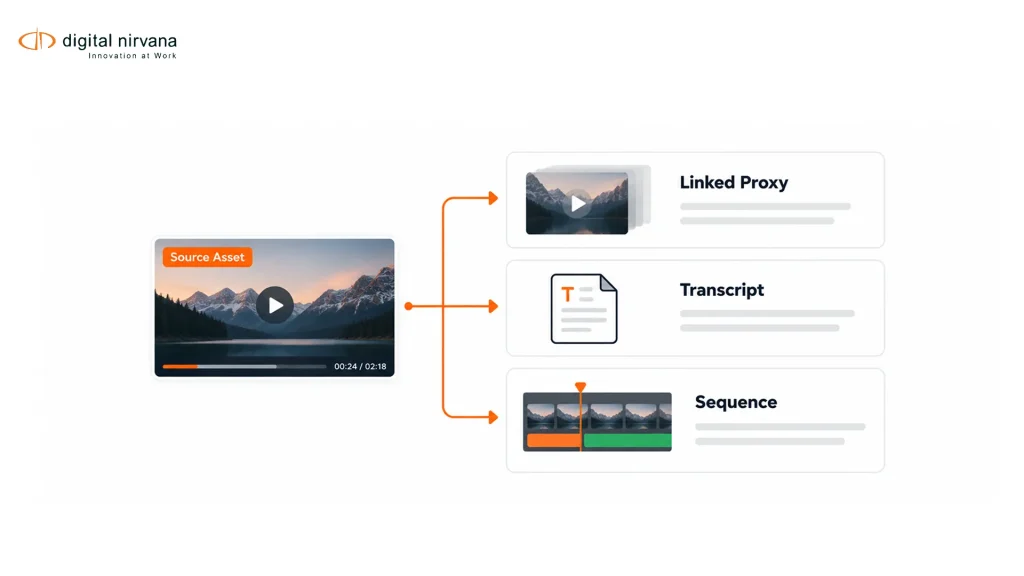
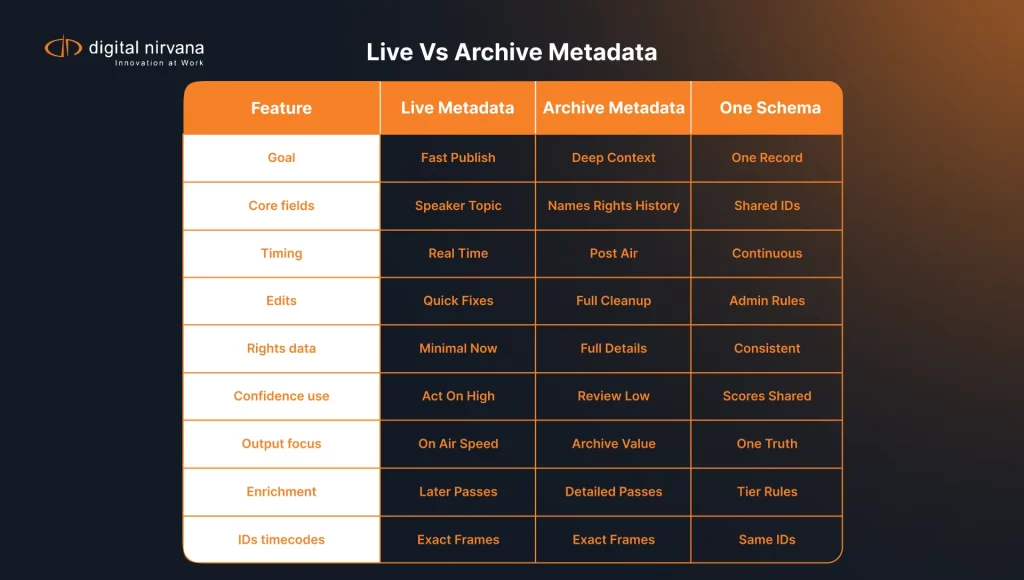
Ingest. Live feeds, field footage, and syndicated content are pulled into the system as they arrive, with no manual queue required before processing starts.
Automated tagging. AI processes the content in near real time, generating transcripts, identifying faces and locations, and flagging on-screen text as the footage is still being recorded.
Human review. For compliance-sensitive or high-profile segments, a producer or standards editor reviews and confirms tags before they go into the permanent archive. This is where a human-in-the-loop step protects accuracy without slowing down routine tagging.
Search and reuse. Reporters, producers, and archive teams query the system using natural keywords like a name, a phrase, or a location, and pull the exact moment they need without watching the full source clip.
This is the same core workflow behind MetadataIQ’s media indexing and search capabilities, which many broadcast newsrooms already use to connect live ingest with searchable archives.
Market Pressure Is Making This Urgent, Not Optional
The pressure on newsrooms to modernize metadata is not just about internal efficiency anymore. Regulatory and audience expectations are tightening at the same time.
Accessibility rules from the FCC continue to shape how broadcasters caption and document content for compliance purposes. Political advertising and sourced claims face more scrutiny, which means newsrooms need to retrieve exact footage and quotes quickly when a claim is challenged. And digital-first audiences expect clips to be published to social platforms within minutes of a story airing, not hours.
Newsrooms that still rely on manual logging are absorbing all of this pressure with the same headcount they had five years ago. AI-assisted metadata is what closes that gap without adding staff.
Traditional Archive Systems Were Not Built for This
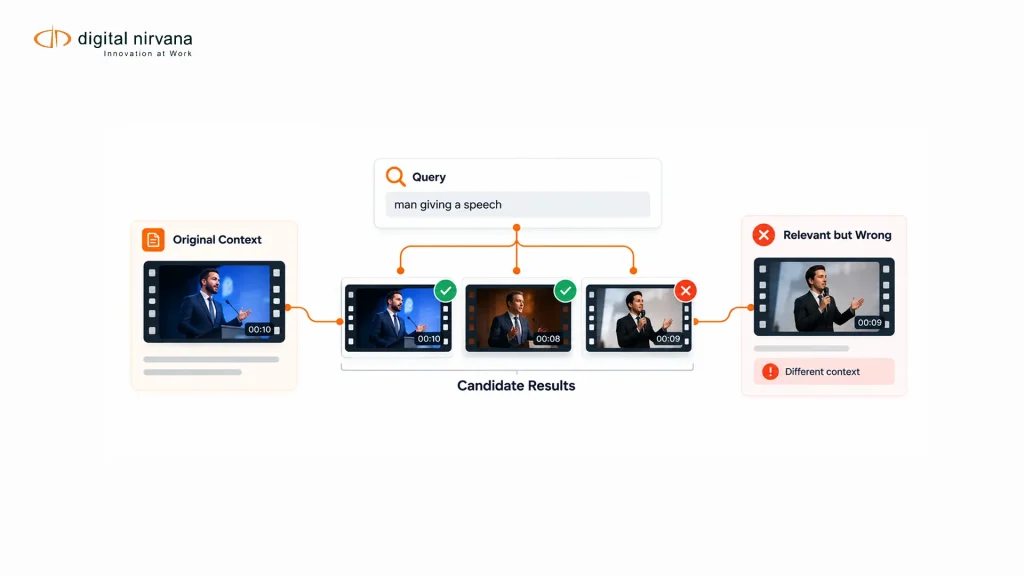
Most legacy MAM and DAM systems were designed around manual entry fields: a producer types a slug, a date, maybe a one-line description. That works for basic retrieval but fails the moment someone needs to search by something that was never typed in, like a specific phrase a source used or a face that appears in the background of a shot.
The gap between a traditional archive and a metadata-rich one is the difference between a filing cabinet and a search engine. One requires you to already know where to look. The other lets you describe what you remember and get an answer.
Measurable Impact: What Newsrooms Actually Gain
The benefits of AI-driven news metadata tend to show up in three places.
Speed. Search time for archive footage typically drops from tens of minutes to seconds once transcripts and visual tags are in place across the library.
Reuse. Archive footage that was previously invisible becomes usable again for anniversary stories, investigative follow-ups, and licensing opportunities.
Compliance readiness. When a claim needs to be verified or a segment needs to be pulled for review, teams can locate the exact moment instead of scrubbing an entire broadcast.
None of these gains require replacing a newsroom’s existing production stack. They require adding a metadata layer that understands what is inside the content, not just when it was recorded.
Key Capabilities to Prioritize When Evaluating a Metadata System
Not every AI metadata tool is built for the speed and volume a newsroom demands. When evaluating options, prioritize:
- Real-time or near-real-time processing during live ingest, not just batch processing after the fact
- Integration with existing MAM/DAM and editing systems like Avid or Grass Valley, so producers are not forced into a new interface
- Human review workflows for sensitive or high-profile content, not full automation with no oversight
- Natural-language search that lets a producer type a phrase or name instead of learning a query syntax
- Scalability for both live feeds and years of accumulated archive footage
Addressing the Common Objections
“We already have a MAM system with basic search.” Most legacy MAM search relies on manually entered fields. AI metadata adds transcript-level and visual search on top of that system rather than replacing it.
“Manual logging works fine for our volume.” It works until a breaking story requires footage from three years ago in the next ten minutes. That is the moment manual systems fail newsrooms, and it is rarely predictable in advance.
“AI tagging accuracy is a risk for a newsroom.” This is exactly why a human-in-the-loop review step matters for sensitive content. AI handles the volume, and a producer confirms accuracy before anything is published or archived as verified.
How Digital Nirvana Supports Newsroom Metadata Workflows
Digital Nirvana built MetadataIQ specifically for the kind of high-volume, time-sensitive environment newsrooms operate in every day. The platform automatically tags live and archival footage with transcripts, face recognition, scene descriptions, and on-screen text, then makes all of it searchable through existing MAM and DAM systems, including integrations with Avid and Grass Valley environments many newsrooms already run.
For newsrooms that also need to caption, translate, or localize breaking coverage for accessibility and multilingual audiences, TranceIQ and Media Enrichment services extend that same workflow into captioning and localization without adding a separate vendor relationship. And for teams that need live monitoring alongside archive search, such as tracking on-air compliance or verifying what actually aired versus what was scheduled, MonitorIQ rounds out the operational picture.
This is not about adopting a generic AI search tool. It is about a system that understands broadcast workflows, integrates with the tools newsroom teams already use, and keeps a human in the loop where accuracy matters most.
Why This Matters Beyond a Single Story Deadline
The value of AI metadata for a newsroom is not limited to hitting one air date. It compounds over time. Every piece of footage that gets tagged today becomes part of a searchable archive that pays off during anniversary coverage, investigative reporting, legal discovery requests, and licensing conversations years from now.
Newsrooms that treat metadata as a real-time production requirement, not an afterthought, end up with an archive that gets more valuable every year instead of one that quietly becomes unusable clutter. Digital Nirvana’s success stories reflect exactly this pattern across broadcast and media operations teams that made the shift.
Frequently Asked Questions
How fast can AI metadata process live news footage? Most modern systems process transcription and visual tagging in near real time as footage is ingested, meaning a clip can become searchable within minutes of airing rather than after a full editorial pass.
Does AI metadata replace human archivists and producers? No. It removes the manual burden of typing timecodes and keywords, but human review remains essential for compliance-sensitive content, accuracy checks, and editorial judgment calls.
Can AI metadata integrate with our existing Avid or Grass Valley systems? Yes. Metadata platforms built for broadcast operations are designed to plug into existing MAM/DAM and editing environments rather than requiring a full system replacement.
What happens to years of unlabeled archive footage? Batch processing can retroactively tag existing archives, turning previously unsearchable footage into a usable, monetizable library over time.
Conclusion
Breaking news does not wait for a producer to finish scrubbing through raw footage. The newsrooms that keep pace are the ones that have already made their archives searchable by quote, face, location, and topic, not just by date and slug. AI metadata does not replace editorial judgment. It removes the manual bottleneck standing between a story and the footage that proves it.
Key Takeaways
- Manual logging cannot keep pace with live news volume, multiple feeds, and years of archive footage
- AI metadata tags transcripts, faces, locations, and on-screen text automatically as content is ingested
- Human-in-the-loop review keeps accuracy intact for compliance-sensitive and high-profile segments
- Searchable archives turn dormant footage into reusable, monetizable, and legally defensible assets
- Integration with existing MAM/DAM and editing systems means no rip-and-replace is required