Introduction
Digital platforms have removed geographic barriers for your content, but language barriers remain very real for your audience. Viewers expect to experience stories, training, entertainment, and product education in their own language, with the same emotional impact and clarity as the original. If you cannot deliver that quickly and consistently, someone else will.
Digital content localization is how you close that gap. It is not just about translating text lines; it is about adapting spoken dialogue, on-screen text, and cultural nuances so your content feels native in every market. Multilingual dubbing and subtitles are at the center of this transformation, turning a single master into a portfolio of localized versions ready for global distribution.
The challenge is scale. Traditional localization workflows cannot keep up with the volume of video and the speed of release cycles. That is where AI-powered dubbing and subtitles, combined with professional quality control, create a new model: faster, more scalable, and commercially viable across many languages. In this playbook, we look at how modern digital content localization works, the role of multilingual dubbing and subtitles, and how Digital Nirvana’s Subs and Dubs solution helps you reach global audiences without losing quality or control.
What Digital Content Localization Really Means Today
Digital content localization has evolved from simple translation into a full experience design problem. It now includes:
- Language translation for audio and text
- Multilingual dubbing and voice replacement
- Subtitle and caption creation in multiple languages
- Adaptation of terminology for specific markets and industries
- Handling on-screen text, graphics, and UI elements
- Regulatory and accessibility compliance (subtitles, SDH, captions)
Localization is no longer an afterthought at the end of production. For streaming platforms, broadcasters, e-learning providers, gaming companies, and brands, it is baked into the release strategy. Global launches, day-and streaming, and simultaneous course releases all depend on reliable, repeatable localization workflows.
Why Multilingual Dubbing and Subtitles Are Now Non-Negotiable
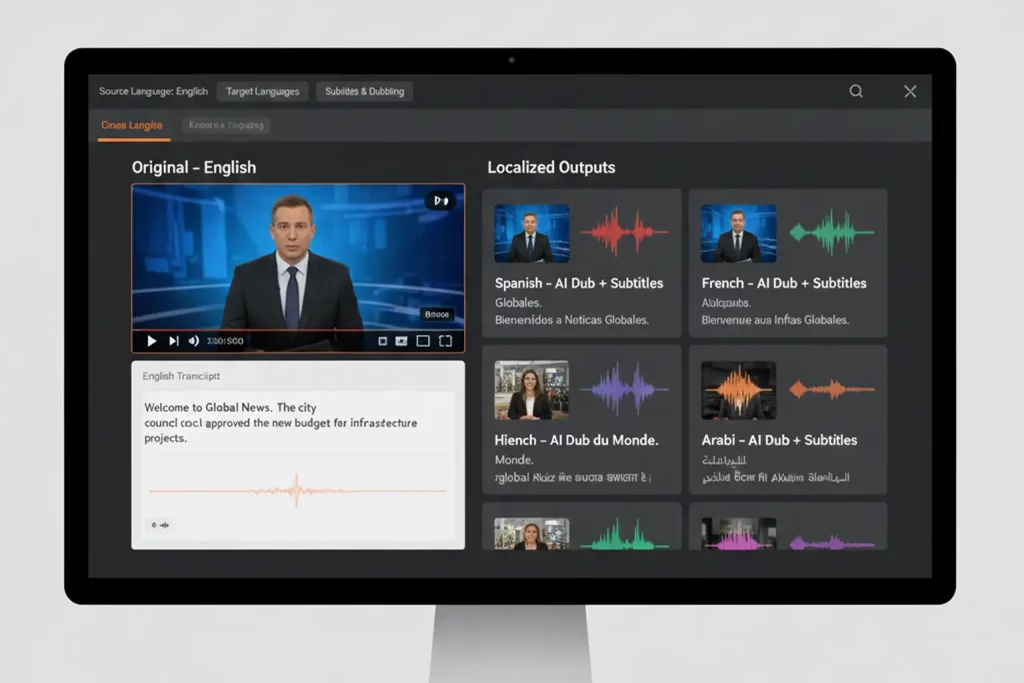
Multilingual dubbing and subtitles sit at the center of digital content localization because they directly shape how your audience experiences content.
- Subtitles make content accessible to multilingual, hard-of-hearing, or mobile-first viewers.
- Dubbing delivers a fully immersive experience where audiences listen in their own language.
- Many markets, especially in TV and OTT, have strong preferences for dubbed content over subtitled-only experiences.
- Subtitles and dubbed tracks improve discoverability across platforms that index text or rely on transcripts for recommendations.
If your content is only available in one language, your growth is limited by that language’s audience size. When you invest in multilingual dubbing and subtitles, you multiply your addressable audience and open up new revenue streams across geographies, platforms, and formats.
Where Traditional Localization Workflows Break
Legacy localization models were built for smaller volumes and longer timelines. Today, they struggle under:
- High volumes of short-form and long-form video content
- Frequent updates and versioning (new cuts, new regulatory requirements)
- Tight release windows for global launches
- The need to support many languages simultaneously
Pain points typically include:
- Manual, fragmented workflows across multiple vendors
- Long turnaround times for each language
- Inconsistent quality across markets and titles
- Limited ability to reuse assets (scripts, translations, voice profiles)
- High per-minute costs for premium content
The result is a trade-off: either limit the number of languages you support, or accept delays and quality variability. AI-assisted localization breaks this trade-off by automating repeatable tasks while keeping human experts in control of quality.
AI-powered Dubbing and Subtitles: What Has Actually Changed
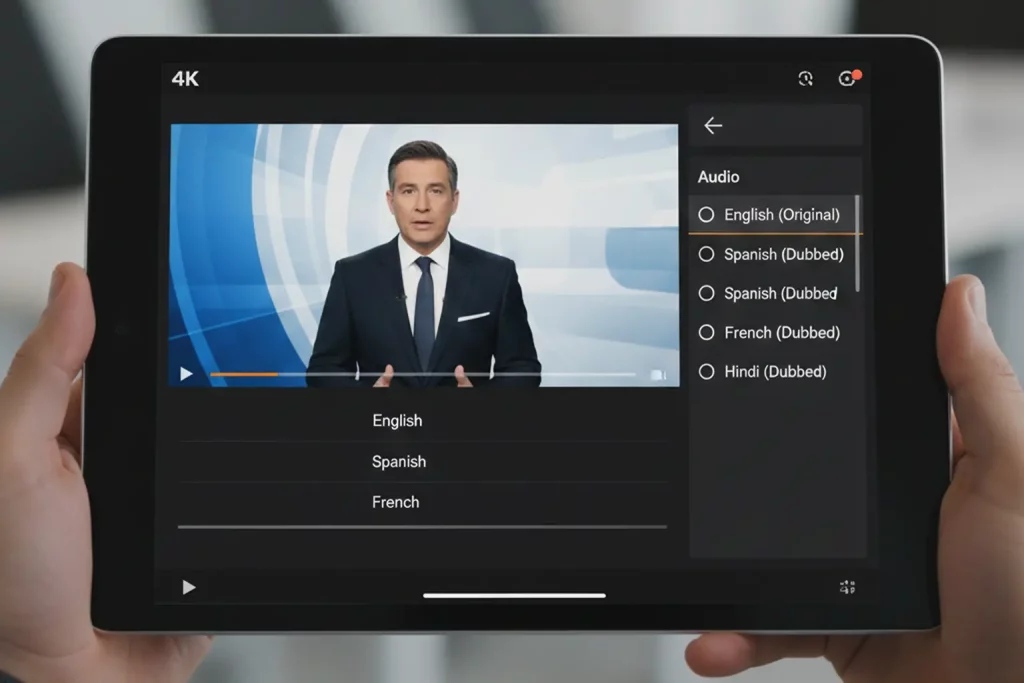
AI has transformed digital content localization by enabling faster, more scalable multilingual dubbing and subtitles. Modern AI-driven workflows support:
- Automated speech recognition (ASR) to create accurate source transcripts
- Machine translation as a first pass for captions and scripts
- AI voice generation to produce natural-sounding dubbed audio in multiple voices
- Intelligent timing and line-breaking for subtitles
- Consistency in terminology using glossaries and translation memories
The key shift is this: instead of starting from a blank slate for every language, you begin with AI-generated outputs that are then reviewed, corrected, and refined by linguists, editors, and audio specialists. This hybrid model delivers:
- Shorter time-to-market for localized versions
- Lower incremental cost per additional language
- More consistency across extensive catalogs and series
When combined with strong quality control, AI-powered dubbing and subtitles become a strategic asset rather than a compromise.
A Practical Playbook For Global Content Rollouts
A commercial, scalable approach to digital content localization using AI-powered dubbing and subtitles can follow these stages:
- Content and market prioritization
- Identify high-potential titles, courses, product videos, or series.
- Prioritize markets and languages based on audience data and strategic goals.
- Asset preparation
- Collect final masters, clean audio, scripts (if available), and reference materials.
- Ensure timelines, captions, and metadata are consistent across versions.
- AI-assisted transcription and translation
- Use ASR to generate source language transcripts.
- Run machine translation for target languages as a starting point.
- Subtitle creation and quality control
- Apply subtitle timing, formatting, and line-breaking rules.
- Linguists review and correct translations for nuance and clarity.
- AI-powered dubbing workflows
- Generate target-language voice tracks using AI voices aligned to brand and audience.
- Human review ensures pronunciation, pacing, and emotion feel natural.
- Mix and master dubbed audio to match original quality standards.
- Technical QC and compliance
- Verify sync between dubbed audio, subtitles, and video.
- Check for regulatory and platform-specific requirements (caption formats, safe areas, length limits).
- Delivery, publishing, and monitoring
- Deliver multiple language packages in required formats.
- Monitor performance by region and language to guide future localization investments.
This playbook can be customized to fit broadcast, OTT, e-learning, corporate training, marketing, or gaming environments.
How Digital Nirvana’s Subs and Dubs solution works
Digital Nirvana’s Subs and Dubs offering is designed to bring the benefits of AI-powered multilingual dubbing and subtitles into real-world media and enterprise workflows while maintaining professional quality.
Key elements include:
- AI-first, human-validated workflows
- Automated transcription and translation accelerate the pipeline.
- Human linguists and editors ensure that meaning, tone, and brand voice are preserved.
- Multilingual dubbing at scale
- AI-generated voices tuned for natural delivery in multiple languages.
- Human audio engineers handle mixing, mastering, and final polish.
- High-quality subtitles and captions
- Subtitle creation for multiple languages and formats.
- Support for accessibility standards and platform-specific caption requirements.
- Integration with existing media pipelines
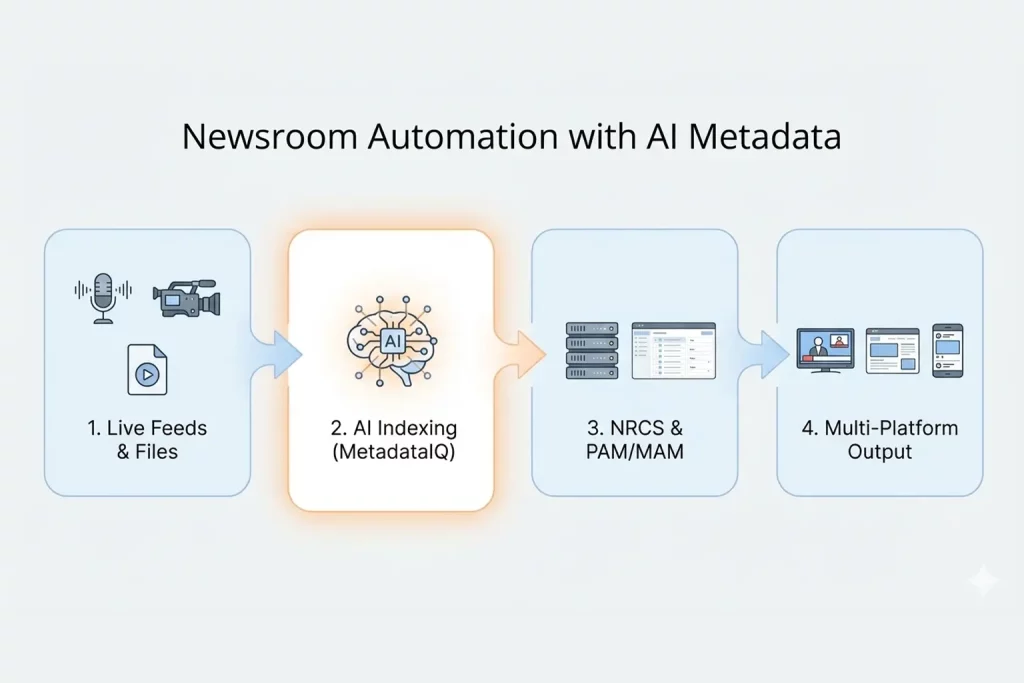
- Designed to work with your media asset management and delivery stack.
- Flexible delivery formats suitable for OTT, broadcast, web, and learning platforms.
- Consistency and governance
- Centralized glossaries and style guides for terminology consistency.
- Quality control processes that support regulated industries and brand-sensitive content.
With Subs, and Dubs, Digital Nirvana helps content owners, platforms, and enterprises turn localization from a bottleneck into a growth driver.
Commercial Impact: Reach, Revenue, and Viewer Experience
When your digital content localization strategy is powered by multilingual dubbing and subtitles, supported by AI and professional oversight, you see benefits across the business:
- Greater global reach
- Enter new markets faster with localized content libraries.
- Serve multilingual audiences without re-producing core content.
- Increased engagement and completion rates
- Viewers are more likely to finish and share content in their preferred language.
- Training and education content become more effective and inclusive.
- New revenue opportunities
- Localized content can support premium tiers, regional licensing, and bundled offerings.
- Multilingual catalogs are more attractive to partners and distributors.
- More substantial brand presence and consistency
- Unified voice and message across geographies.
- Professional, high-quality localization enhances brand perception.
- Operational efficiency
- AI-powered workflows reduce turnaround time and per-minute cost.
- Centralized localization pipelines reduce fragmentation and vendor sprawl.
Implementation Checklist for Content Teams and Platforms
To move from theory to execution, content leaders can use this checklist:
- Define priority content and target markets.
- Align stakeholders across content, marketing, product, and regional teams.
- Choose a localization partner with AI capabilities and strong human quality control.
- Standardize glossaries, style guides, and brand voice references.
- Integrate localization workflows with your media asset management and publishing systems.
- Pilot with a focused set of titles and languages to validate quality and turnaround.
- Scale to additional languages and catalogs based on impact and audience data.
Digital Nirvana’s Subs and Dubs offering can support at each step, from pilot design to global rollout.
FAQs
Digital content localization is the process of adapting video, audio, and related assets for different languages and regions, including translation, multilingual dubbing, and subtitles, as well as cultural and regulatory adaptation.
Subtitles provide accessibility and flexibility, while dubbing delivers a fully immersive, native-language experience. Together, they support a wider range of viewer preferences and accessibility needs across global markets.
AI accelerates transcription, translation, voice generation, and subtitle timing. It reduces manual work and speeds up delivery while human experts fine-tune the results for accuracy, tone, and cultural nuance.
Modern AI voices can be remarkably natural, especially when configured and checked by audio specialists. Digital Nirvana’s Subs and Dubs workflows combine AI with human review to ensure that dubbed tracks sound authentic and engaging.
No. Subs and Dubs is designed to integrate with existing media, OTT, broadcast, and enterprise workflows. Digital Nirvana delivers localized tracks and subtitles in the formats you need, so your teams can continue to use familiar tools and platforms.
Conclusion
Digital content localization is now a core growth strategy, not a side project. As your audiences span regions, devices, and languages, the ability to deliver high-quality multilingual dubbing and subtitles at scale becomes a competitive advantage.
AI-powered workflows make this possible. When combined with professional-quality control, they enable you to launch more content in more languages, faster and more efficiently than traditional models.
Digital Nirvana’s Subs and Dubs solution is built for this reality. It blends AI, linguistic expertise, and media engineering to help you transform your video catalog into a global asset. If your goal is to expand, reach, unlock new revenue, and deliver a better experience to every viewer, digital content localization with AI-powered dubbing and subtitles is the playbook, and Digital Nirvana is ready to help you execute it.