A regulator sends a follow-up question. An advertiser disputes a spot. A viewer complaint lands on a compliance officer’s desk months after the fact. In every one of these moments, the test isn’t whether a station followed the rules. It’s whether the station can prove it did, quickly and with evidence that holds up.
That’s the real function of compliance logging, and it’s a different job than most teams initially assume. Logging isn’t just about recording everything that airs. It’s about recording it in a way that makes proof retrievable in minutes instead of days, and that’s exactly where AI automation has changed what’s realistic.
Logging and Monitoring Aren’t the Same Thing
These two terms get used almost interchangeably, and that loose usage causes real confusion when teams evaluate compliance systems.
Compliance logging captures, stores, and indexes broadcast content with timecodes, building an archive that exists specifically for later proof and review. It answers the question “what happened,” with evidence.
Compliance monitoring watches signals as they happen, in real time, raising alerts and driving immediate remediation. It answers the question “what’s happening right now,” with thresholds and alert routing.
A mature compliance program needs both, connected through shared timecodes and metadata, so that a real-time alert from monitoring links directly to the recorded, indexed evidence sitting in the logging archive. Without that connection, a team ends up with two disconnected systems: one that flags problems and one that stores recordings, with no fast way to move between them when it actually matters.
Why Manual Compliance Processes Can’t Keep Pace Anymore
Traditional compliance workflows relied heavily on operators watching screens, checking logs manually, and reacting once a problem was already visible on air. That approach was workable when a team monitored a single linear channel.
It breaks down completely once operations expand to cover linear channels, OTT streams, IP feeds, regional outputs, ad breaks, captions, loudness levels, and return paths, often simultaneously, often across multiple facilities. No team of human operators can manually watch and log everything happening across that scope with the consistency compliance actually requires.
This is the gap AI-driven compliance logging and monitoring exists to close, not by replacing human judgment, but by handling the continuous, high-volume watching and indexing work no manual process can realistically sustain.
What AI Automation Actually Adds to Compliance Logging
AI transforms raw recordings into searchable, actionable evidence, rather than leaving compliance teams with hours of undifferentiated footage to manually review after an issue surfaces.
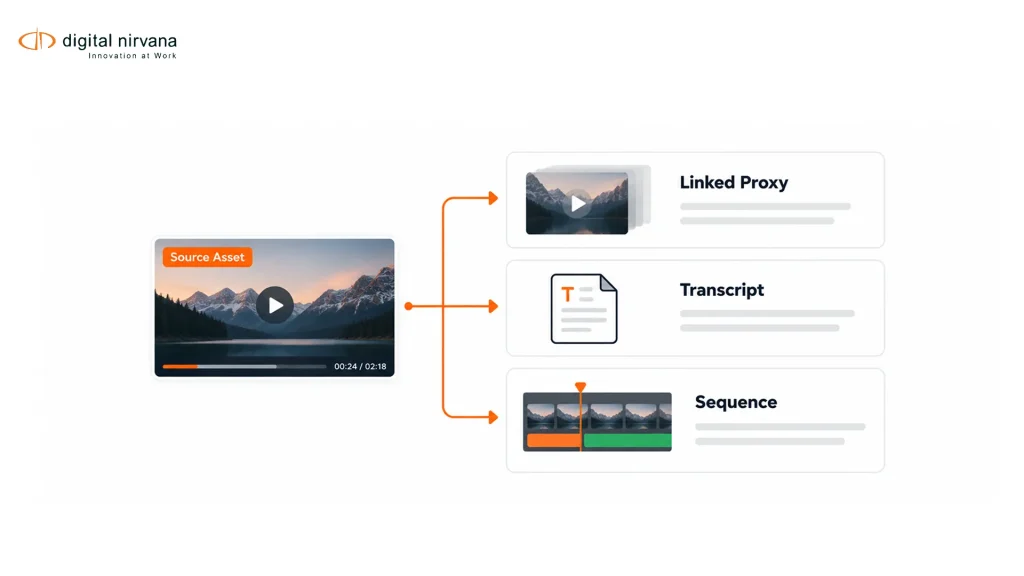
Speech-to-text transcription generates searchable text tied to every second of recorded content, so a compliance officer can search by spoken phrase instead of scrubbing through a timeline. Ad and logo detection automatically flags brand appearances and commercial content, supporting both compliance review and advertiser proof-of-performance requests. Loudness and caption monitoring continuously check content against regulatory thresholds, generating alerts the moment something falls outside acceptable range. And a single-page, timecoded view aligns video, captions, loudness, SCTE markers, and metadata on one shared timeline, which makes investigating any issue dramatically faster than cross-referencing separate, disconnected logs.
From Reactive to Proactive: What Real-Time Monitoring Changes
Real-time AI monitoring shifts compliance from a reactive posture, discovering problems after a complaint arrives, to a proactive one, catching issues as they happen and often before they reach a wider audience.
This matters because the cost of a compliance issue tends to grow the longer it goes undetected. A loudness violation caught within seconds and corrected immediately carries far less risk than the same violation discovered weeks later through a viewer complaint or regulatory inquiry, after it’s aired repeatedly and affected far more of the audience.

Building an AI-First Compliance Program: A Phased Approach
Trying to overhaul an entire compliance stack at once is rarely realistic, and it’s usually not the smartest path even when the budget exists. A phased rollout tends to produce better outcomes and lower risk.
Start with inventory and baselines. Document current tools, existing gaps, and the specific regulatory obligations that apply, including FCC requirements, partner contract windows, and any region-specific rules. This step matters more than it sounds like it should, since teams frequently discover compliance obligations they weren’t consistently tracking once they map everything out in one place.
Add AI where it delivers clear payback first. Rather than automating everything simultaneously, prioritize the highest-volume, highest-risk areas first, typically loudness monitoring, caption compliance, and ad verification, since these tend to generate the most disputes and the most manual review burden under a legacy process.
Automate reporting and escalation next. Once core detection is in place, connect alerts to automated report generation and clear escalation paths, so issues route to the right team member without manual triage eating up compliance staff time.
Expand into streaming once linear operations run smoothly. Extending the same AI-driven approach to OTT and streaming endpoints once the core linear workflow is proven reduces risk and gives the team a validated pattern to replicate rather than building two systems in parallel from scratch.
Who Actually Needs to Be in the Room
A compliance logging and monitoring overhaul touches more departments than engineering alone, and involving the right stakeholders early tends to determine whether the resulting system actually gets used the way it was designed to be used.
Legal needs visibility into audit trails and retention policies that meet regulatory minimums. Engineering owns the technical integration across capture points and existing infrastructure. Ad operations depends on the same evidence for proof-of-performance and dispute resolution. And news teams often need fast access to the same recorded archive for entirely different reasons, republishing or referencing prior broadcasts. Designing the system around all of these real use cases, rather than compliance alone, tends to produce a tool people actually rely on instead of one that sits unused outside audit season.
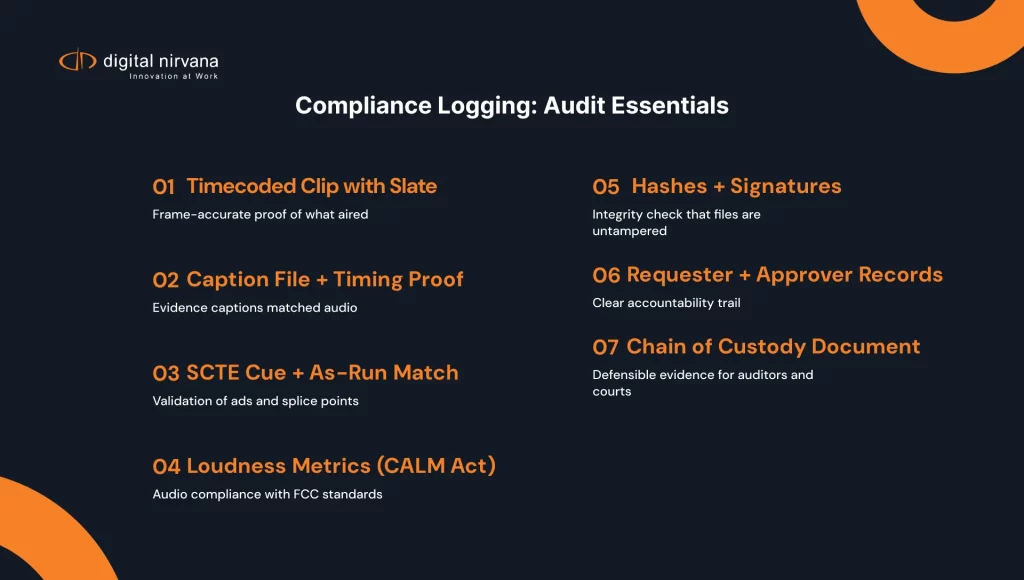
What Modern Compliance Logs Actually Need to Capture
| Data Type | Why It Matters |
| Timecoded video and audio | Core evidence tied to exact air time |
| Closed captions (CC608/708, subtitles) | Required for accessibility compliance verification |
| Loudness measurements | Required under CALM Act and similar regulations |
| SCTE 35/104 markers | Verifies correct ad insertion and break timing |
| Speech-to-text transcripts | Enables searchable, keyword-based evidence retrieval |
| Ad and logo detection tags | Supports advertiser proof-of-performance and brand safety review |
| Retention metadata | Ensures compliance with FCC, contract, and regional retention rules |
Measurable Impact of Connecting Logging and Monitoring Through AI
Broadcasters that move from fragmented, manual compliance processes to a connected, AI-driven logging and monitoring system typically see change across a few consistent areas.
Dispute resolution time drops sharply, since proof that used to require manual search across separate systems becomes a keyword search against a unified, timecoded archive. Violations get caught faster, often before they reach a wider audience, since real-time AI monitoring doesn’t depend on an operator happening to notice an issue on a screen. And audit readiness improves overall, since evidence lives in one indexed, searchable system rather than scattered across fragmented loggers, manual exports, and screenshots.
Key Capabilities Worth Prioritizing
- Continuous, real-time monitoring connected directly to timecoded, searchable recorded evidence
- Speech-to-text transcription generating keyword-searchable compliance archives
- Automated loudness, caption, and SCTE marker monitoring against regulatory thresholds
- Ad and logo detection supporting both compliance review and advertiser proof-of-performance
- Retention policies that meet or exceed FCC and regional regulatory minimums
- Support across linear, OTT, and streaming endpoints under one connected system
Addressing the Common Objections
“We’ve never had a serious compliance violation, so this feels like overkill.” Most compliance problems surface after the fact, through a complaint or dispute, not in the moment they occur. The real value of an AI-connected system is having proof ready before that call comes in, which matters regardless of how clean a station’s track record has been so far.
“Our current logger already records everything, isn’t that enough?” Recording and having genuinely usable evidence are different outcomes. A raw archive without AI-driven indexing and real-time alerting still leaves teams scrambling to locate the right moment when a dispute or audit actually happens.
“AI-driven compliance sounds like it removes human oversight.” It shifts where human oversight applies, not whether it exists. AI handles the continuous, high-volume watching and indexing that no manual process can sustain at scale, while compliance officers still make the actual judgment calls on regulatory interpretation and remediation.
How Digital Nirvana Approaches Compliance Logging and Monitoring Together
MonitorIQ is built specifically to connect real-time monitoring with searchable, timecoded compliance logging in one platform, combining AI detection, transcription, and metadata tagging so that an alert and its supporting evidence are always linked, rather than living in separate systems teams have to manually reconcile.
For broadcasters extending this into deeper searchable archives across their broader content library, MetadataIQ shares the same underlying metadata and transcription foundation. Teams managing caption accuracy and accessibility compliance alongside monitoring often connect this work to TranceIQ.
Why This Matters Beyond the Next Audit Cycle
Compliance logging and AI automation aren’t just about avoiding fines, though that remains a real driver. They’re about protecting ad revenue through fast, evidence-backed dispute resolution, defending trust when regulators or partners ask hard questions, and giving compliance, legal, and ad operations teams shared, reliable access to the same facts instead of chasing down evidence separately every time a question comes up.
As distribution keeps fragmenting across linear, OTT, and social platforms, broadcasters that build compliance logging and monitoring as one connected, AI-driven system, rather than a patchwork of separate tools, are the ones who stay ahead of problems instead of reacting to them after the damage is done. Digital Nirvana’s success stories show how broadcast groups have made exactly that shift.
Frequently Asked Questions
What’s the actual difference between compliance logging and compliance monitoring? Logging captures, stores, and indexes content for later proof and review. Monitoring watches signals in real time and raises alerts as issues occur. A connected system links both through shared timecodes and metadata.
How long should broadcast compliance recordings be retained? Retention requirements vary by regulation and contract, with FCC guidance often pointing to a baseline around 90 days in the US, though market class, regional rules, and advertiser agreements can extend that window significantly.
Does AI-driven compliance logging replace the need for a human compliance team? No. AI handles the continuous detection, indexing, and alerting work at a scale manual review can’t sustain, but human judgment remains essential for regulatory interpretation and final decision-making.
Conclusion
A compliance program only proves its value in the moment someone actually asks a hard question, a regulator, an advertiser, a viewer. Compliance logging and AI automation, connected into one system rather than run as separate tools, is what turns that moment from a scramble into a five-minute clip export. Building that system, phase by phase, with the right stakeholders involved from the start, is what separates broadcasters who stay ahead of compliance risk from those still reacting to it after the fact.
Key Takeaways
- Compliance logging and monitoring solve different problems and need to be connected, not treated as interchangeable
- Manual compliance processes can’t realistically scale across today’s multi-platform, multi-facility broadcast operations
- AI automation turns raw recordings into searchable, actionable evidence through transcription, ad detection, and timecoded indexing
- A phased rollout, starting with the highest-risk, highest-volume areas, reduces implementation risk
- Legal, engineering, ad operations, and news all depend on the same compliance evidence for different reasons
- Real-time AI monitoring shifts compliance from reactive discovery to proactive detection before issues reach a wider audience