It’s 6:40 a.m. and a regional news producer is staring at four hours of overnight storm coverage, trying to find the thirty seconds where the anchor mentions a specific county under evacuation. The rundown deadline is 7:00 a.m. There’s no time to scrub the footage manually, so the producer guesses at a timestamp, misses it twice, and finally finds the clip with four minutes to spare. Multiply that scramble across every desk, every channel, and every live event a station covers in a week, and you start to see why broadcast workflow management has quietly become one of the biggest operational bottlenecks in media.
The footage isn’t the problem. The problem is that nobody can find anything inside it fast enough.
Why Broadcast Workflows Break Down Without AI Metadata
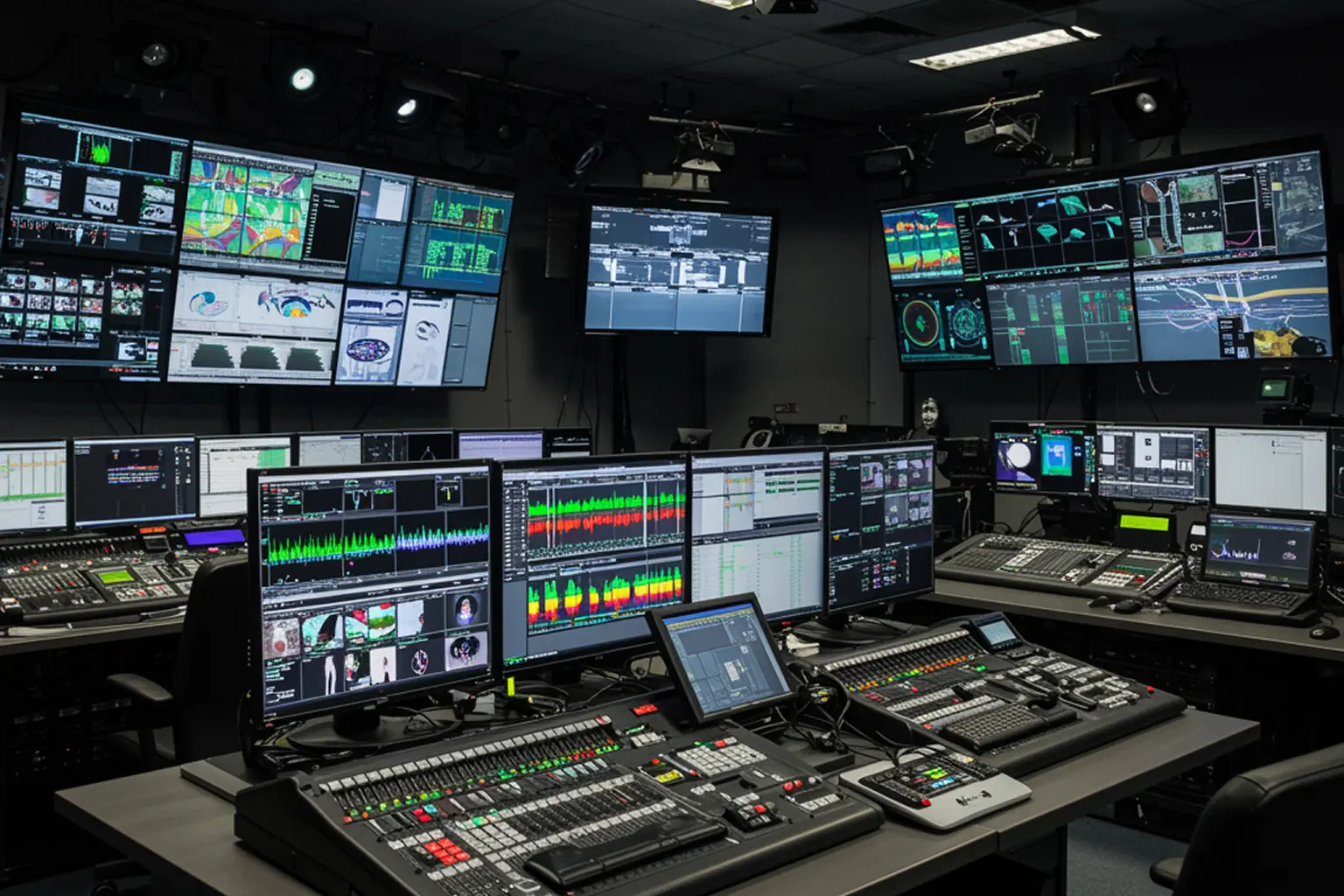
Traditional broadcast workflows rely on human loggers to watch footage, type in descriptions, and tag key moments by hand. That approach was manageable when stations ran one or two channels with predictable programming. It falls apart under today’s reality: multi-channel operations, 24/7 live feeds, simultaneous OTT delivery, and archives that grow by the hour.
Manual logging simply cannot keep pace with live volume. By the time a human logger finishes tagging yesterday’s coverage, today’s has already piled up behind it. That lag shows up everywhere: slower highlight turnaround, missed compliance windows, delayed content republishing, and archive footage that becomes effectively unsearchable within weeks of being recorded.
AI metadata changes the math. Instead of waiting for a person to describe what’s in a clip, automated tagging systems index speech, faces, on-screen text, scenes, and objects as content is ingested, live or archived, so search becomes instant rather than a research project.
The Market Context Driving This Shift
Three forces are pushing broadcast workflow management toward AI-assisted metadata faster than most stations planned for.
Channel proliferation is the first. Station groups are launching FAST channels and OTT simulcasts alongside their linear feeds, which multiplies the volume of content that needs tagging without multiplying headcount.
Compliance pressure is the second. Regulatory obligations under FCC and Ofcom frameworks require broadcasters to prove what aired, when, and how it was captioned, which means metadata isn’t just a production convenience anymore. It’s an audit requirement.
Content monetization is the third. Archive footage has real licensing value, but only if it’s searchable. A tagged, indexed archive can generate revenue through clip sales and syndication. An untagged one just sits there as storage cost.
Where Legacy Workflow Tools Fall Short
Most legacy broadcast systems were built for scheduling and playout, not for search. They can tell you what aired and when, but they can’t tell you what was actually said or shown inside that segment. That forces teams to bolt on manual logging processes or, worse, rely on institutional memory (“I think that interview ran sometime in March”).
Spreadsheet-based logging, shared drive folder structures, and basic keyword tags in legacy MAM systems all share the same weakness: they depend entirely on how thorough the person doing the tagging happened to be that day. Consistency breaks down under deadline pressure, which is exactly when broadcast teams need their metadata to be most reliable.
How AI Metadata Transforms Broadcast Workflow Management
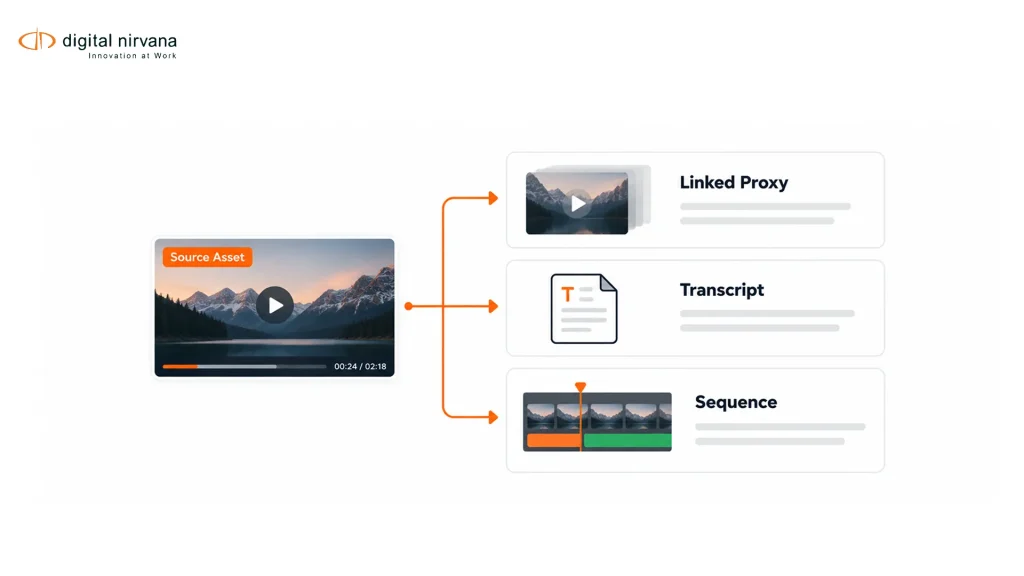
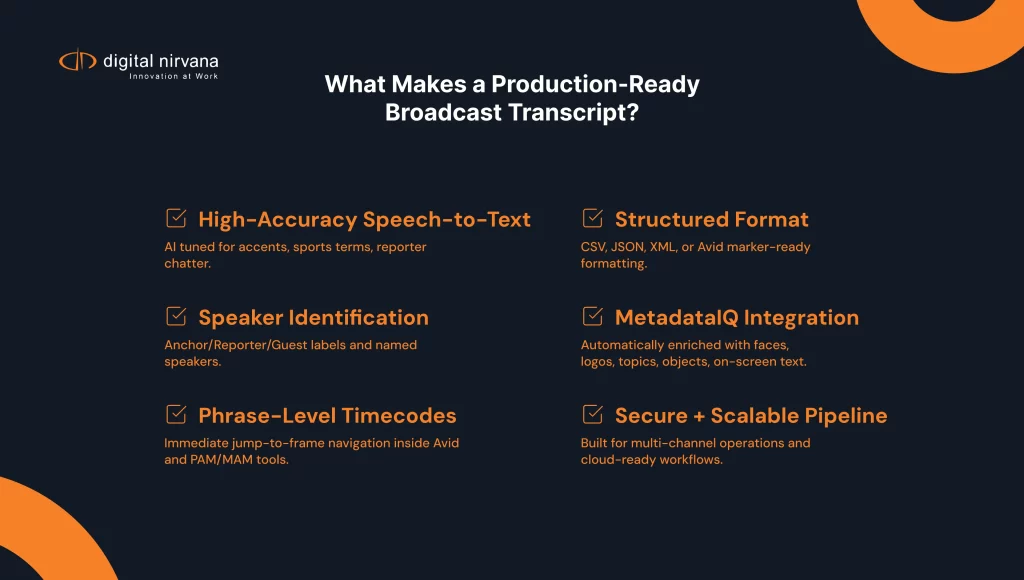
AI-powered metadata tagging works by processing video and audio as it’s ingested, whether live or archival, and automatically generating structured, searchable data around it. That typically includes automated transcription of spoken content, facial and object recognition, scene-level descriptions, and time-coded markers tied to specific moments rather than whole files.
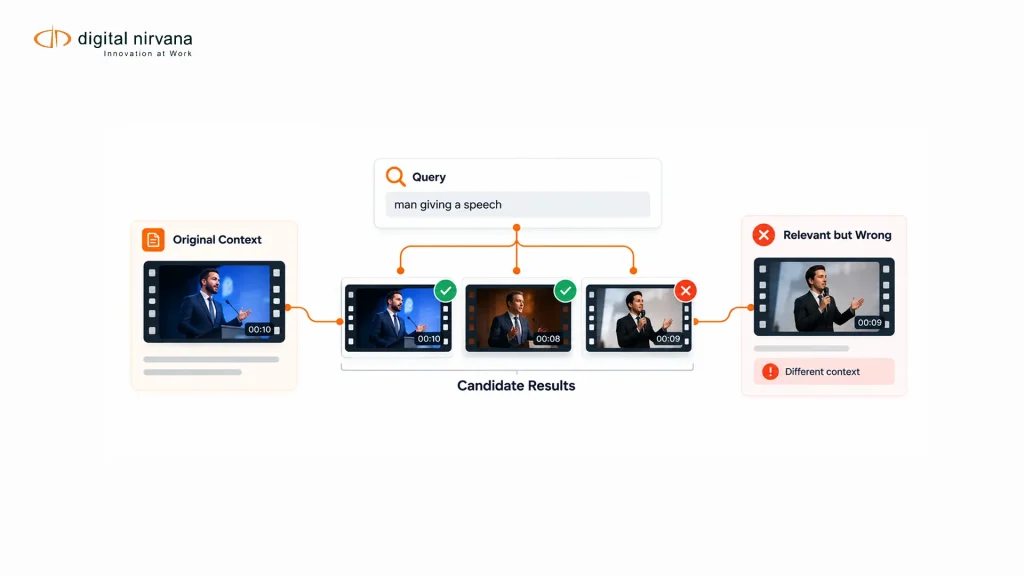
The result is that a producer searching for “the mayor discussing the evacuation order” gets a list of exact timestamps across every relevant feed, instead of a folder of raw files to scrub through manually. This is the core function behind platforms like MetadataIQ, which integrates directly with existing MAM and PAM systems so tagging happens inside the workflow teams already use, not as a separate step bolted on afterward.
Metadata generated this way also feeds downstream systems. Compliance teams can pull time-coded logs for proof-of-performance reporting, archive teams can batch-enrich older footage for licensing, and news teams can push searchable clips straight to digital and social publishing without manual re-review.
A Real-World Workflow Walkthrough
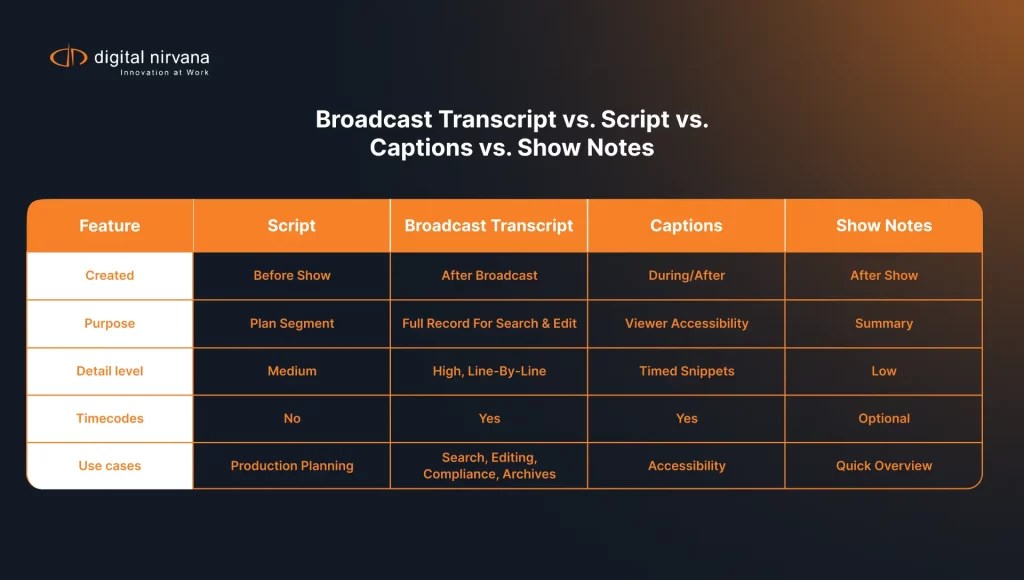
Consider a sports desk covering a live regional game with same-night highlight obligations. As the broadcast airs, AI metadata tagging runs in parallel, tagging player names, key plays, replays, and sponsor logo appearances in near real time.
By the final whistle, the highlights producer already has a searchable index of every scoring play and notable moment, tagged by player and timestamp, without anyone manually logging the game. Clips that used to take a couple of hours to assemble from scratch can be pulled together in a fraction of that time, because the search work is already done.
The same tagged metadata then flows into the archive, where it becomes searchable months later when a licensing request comes in for footage of a specific player or moment.
Measurable Impact on Broadcast Operations
Stations that implement AI metadata into their broadcast workflows typically see faster highlight and clip turnaround, reduced dependency on institutional memory for archive search, fewer compliance reporting delays, and a growing archive asset that stays usable instead of becoming a black hole of untagged files.
Just as importantly, the time saved on search and logging shifts staff capacity toward higher-value work: storytelling, editorial judgment, and audience engagement, rather than manual scrubbing.
Implementation Considerations for Media Operations Teams
Rolling out AI metadata into an existing broadcast workflow works best as a phased integration rather than a full system replacement. Start with the highest-volume, highest-pain workflow, often live news or sports, and connect the tagging system directly into the existing MAM/DAM environment so producers don’t have to learn a second tool.
From there, expand into archive batch processing to bring historical footage up to the same searchable standard, and finally extend metadata tagging into compliance and ad verification workflows where time-coded accuracy matters most. Integration with existing editorial tools like Avid or Grass Valley matters here too, since workflow adoption slows dramatically when teams have to switch platforms mid-task.
Key Capabilities to Prioritize
| Capability | Why It Matters for Broadcast Workflows | What to Look For |
|---|---|---|
| Live and archive processing | Covers both breaking coverage and historical footage in one system | Real-time tagging speed, batch enrichment for archives |
| MAM/DAM/PAM integration | Keeps metadata inside existing production tools | Native integrations with Avid, Grass Valley, and common MAM platforms |
| Speech and scene recognition | Enables search by what was said, not just filenames | Accuracy across accents, overlapping speech, and noisy live audio |
| Time-coded markers | Supports precise clip pulling and compliance reporting | Frame-accurate timestamps, not approximate ranges |
| Dashboard visibility | Gives operations leaders a view across channels | Multi-channel dashboards with quality scoring |
Common Objections, Addressed
“Our loggers already know the content well enough.” That works until the person who knows it leaves, or until volume outpaces what any individual can retain. AI metadata makes that knowledge searchable and permanent, not dependent on one person’s memory.
“We don’t want to replace our whole MAM system.” You don’t have to. Modern AI metadata platforms are designed to integrate into existing MAM/DAM/PAM environments rather than replace them.
“Live tagging accuracy can’t match a trained human logger.” Accuracy has improved significantly, and the stronger workflow model pairs automated tagging with human review for high-stakes content, combining speed with quality control rather than choosing one over the other.
Frequently Asked Questions
Does AI metadata tagging work on live broadcasts, or only archived footage? Both. Live tagging processes speech, scenes, and on-screen elements in near real time, while the same system can batch-process historical archives to bring them up to the same searchable standard.
Will AI metadata replace human loggers entirely? Not typically. Most effective workflows use AI tagging to handle volume and speed, with human review reserved for high-stakes or sensitive content, similar to how captioning teams combine automation with quality assurance.
How does AI metadata support broadcast compliance? Time-coded metadata creates a searchable, auditable record of what aired and when, which supports proof-of-performance reporting and regulatory documentation without manual log reconstruction.
What’s the difference between metadata tagging and broadcast monitoring? Metadata tagging focuses on making content searchable by describing what’s inside it. Broadcast monitoring, handled by tools like MonitorIQ, focuses on signal quality, compliance logging, and proof-of-performance for what actually aired.
How Digital Nirvana Supports Broadcast Workflow Management
Broadcast operations teams don’t need another standalone tool competing for attention during a live show. They need metadata that works quietly inside the systems they already rely on. Digital Nirvana’s MetadataIQ was built for exactly that, indexing live and archived content directly within existing MAM, PAM, and DAM environments so producers, archivists, and compliance teams pull from the same searchable index instead of separate manual logs.
For stations that also need to verify what aired and prove compliance, MonitorIQ extends that same time-coded accuracy into signal monitoring and proof-of-performance reporting. And where captioning, translation, or human-reviewed quality checks are part of the workflow, Media Enrichment and TranceIQ add the review layer that keeps automation accountable.
Why This Matters Beyond a Single Newsroom or Station
Broadcast workflow management isn’t just an efficiency upgrade, it’s what determines whether a station can compete on speed without sacrificing accuracy. Stations that still depend on manual logging are effectively working with one hand tied behind their back during breaking news and live events, while competitors with searchable, AI-tagged workflows publish faster and monetize archives that would otherwise sit unused. Teams exploring what a modernized workflow looks like in practice can review examples in Digital Nirvana’s success stories, and operations leaders modernizing their broader technology stack alongside metadata workflows may also find cloud engineering support relevant for scaling infrastructure to match growing archive volume.
Conclusion
Broadcast workflow management built on manual logging was never designed for the volume, speed, and compliance demands of modern multi-channel operations. AI metadata doesn’t replace the editorial judgment that makes great broadcast content; it removes the search bottleneck standing between that judgment and the deadline. Stations that make this shift stop losing time to manual scrubbing and start treating every minute of footage, live or archived, as an asset they can actually find, use, and monetize.
Key Takeaways
- Manual logging cannot keep pace with live, multi-channel broadcast volume, creating search delays that ripple into every downstream workflow.
- AI metadata tags speech, scenes, faces, and objects automatically, turning raw footage into searchable, time-coded data.
- Integration with existing MAM/DAM/PAM and editorial tools matters more than replacing systems outright.
- Time-coded metadata supports both faster highlight production and stronger compliance documentation.
- The strongest workflows pair automated tagging with human review for high-stakes or sensitive content.
- A searchable, AI-tagged archive becomes a monetizable asset instead of an expensive storage liability.