Introduction
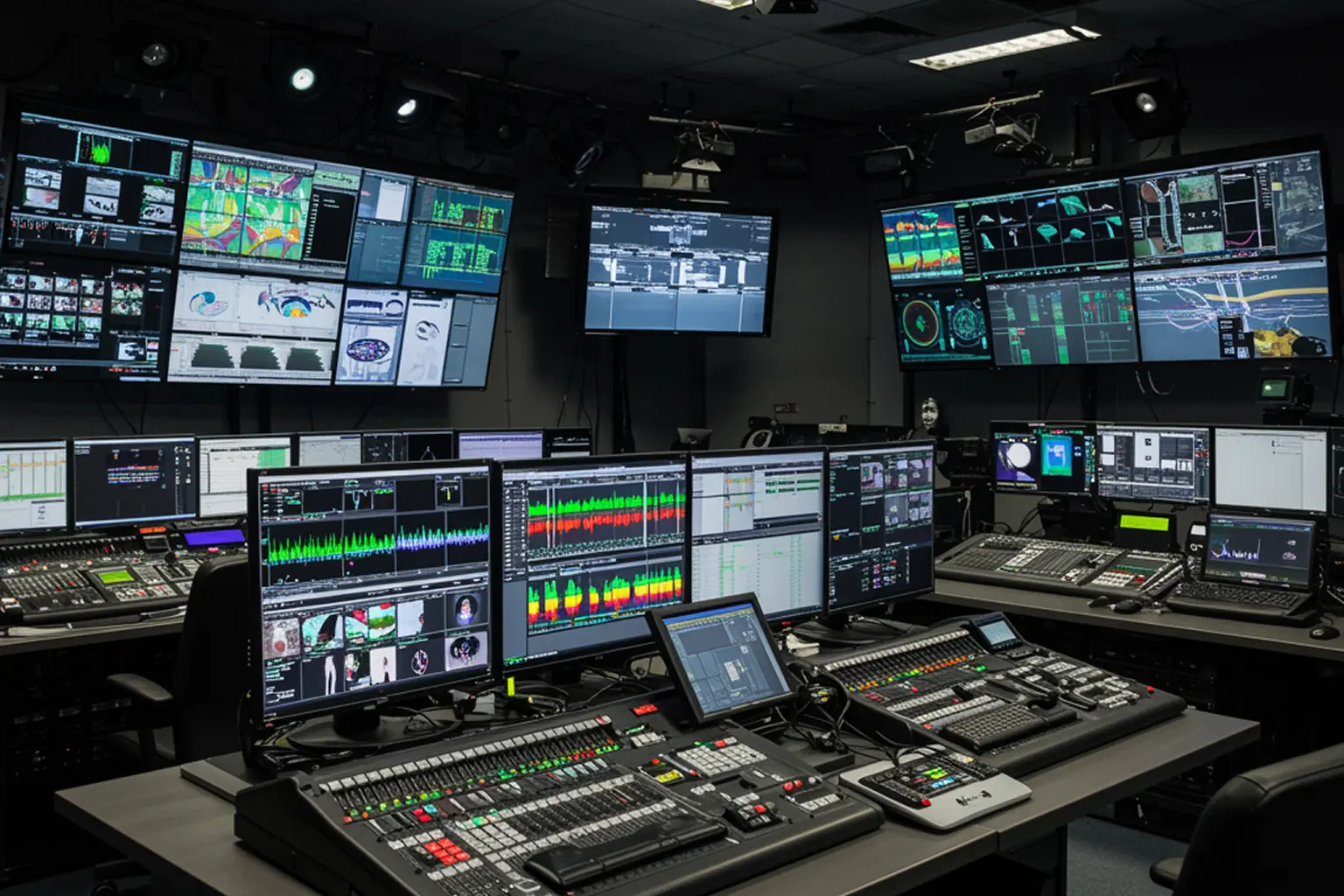
Broadcast workflow management has always been about one thing: moving content from lens to audience as efficiently and reliably as possible. Over the last decade, that responsibility has expanded to include IP-based playout, streaming, FAST, localization, and long-tail archives. The workflows have multiplied; the people and hours to manage them have not.
At the same time, channels are flooded with live feeds, user-generated content, and fast-turn programming. Teams are under pressure to publish more, localize more, and monetize more, without sacrificing compliance or quality. Traditional broadcast workflow management tools were not designed for this volume and speed.
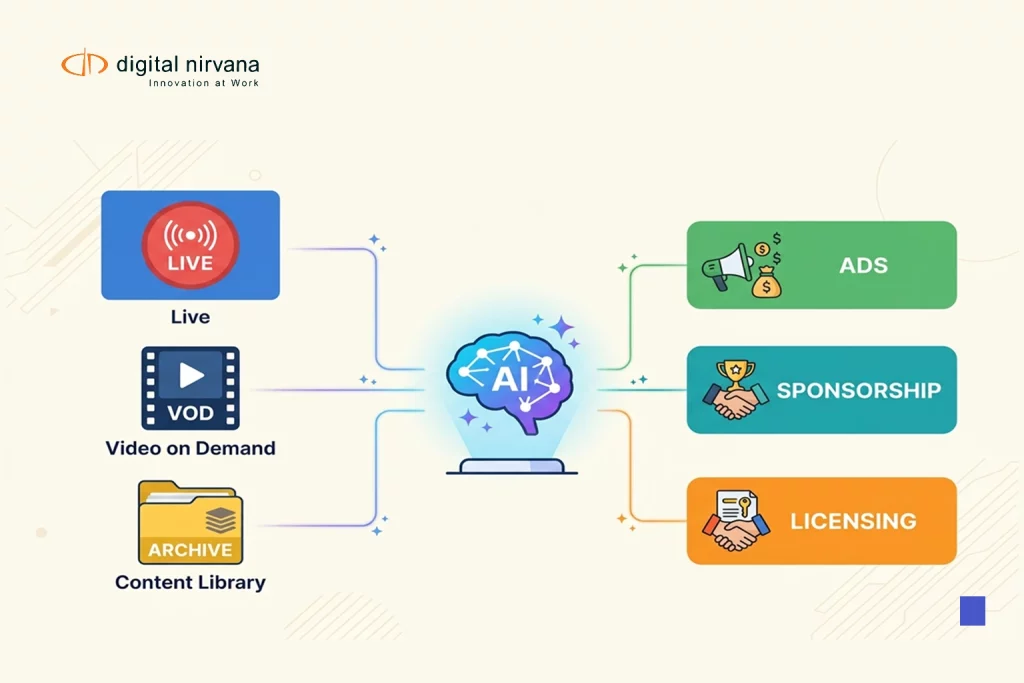
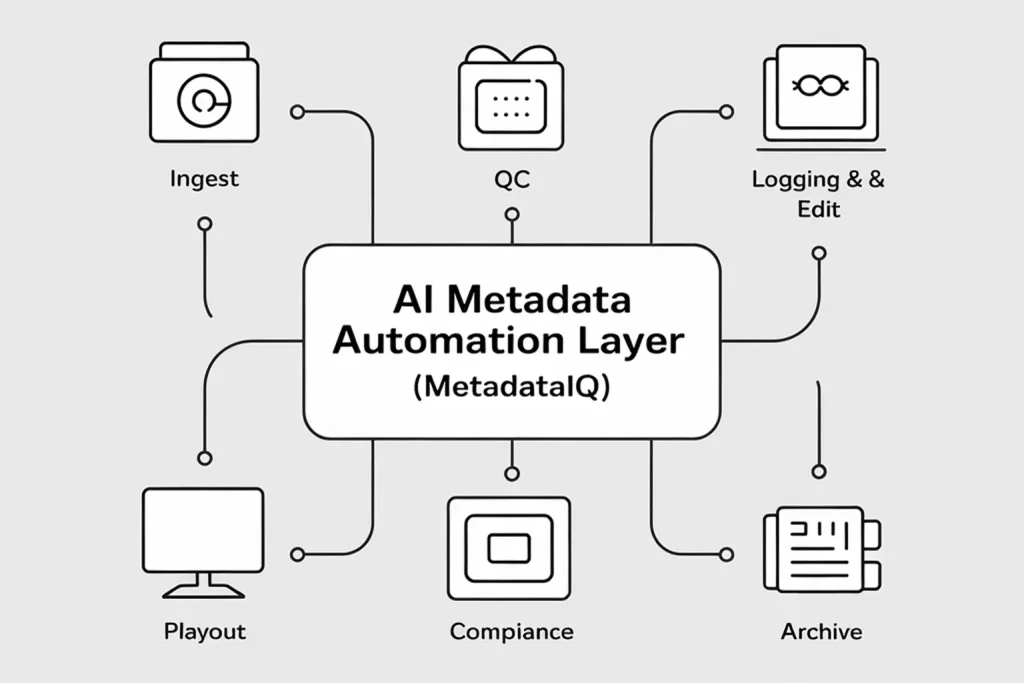
AI-driven metadata automation is now becoming the missing layer. Instead of relying on human logging, spreadsheets, and manual checks, broadcasters are using AI to generate rich, time-coded metadata that drives decisions at every stage of the workflow: ingest, QC, edit, compliance, playout, and archive.
In this article, we look at how AI metadata automation changes the way you think about broadcast workflow management, and how Digital Nirvana’s MetadataIQ fits into modern PAM/MAM environments as an intelligence layer rather than yet another silo.
What broadcast workflow management really looks like today
A typical broadcast or streaming operation manages a chain that looks roughly like this:
- Acquisition, and ingest (live feeds, file-based deliveries, remote, and cloud sources)
- Quality control and technical checks
- Logging and editorial preparation
- Craft edit in PAM/MAM, and NLE systems
- Compliance review and standards checks
- Playout or distribution across linear, OTT, VOD, and FAST
- Archive, and future reuse
Workflow management platforms help orchestrate handovers, track job status, and trigger automated steps. But in practice, many critical decisions still depend on people watching content and typing notes into fields or spreadsheets.
Common friction points include:
- Manual content logging cannot keep up with the volume
- Editors are wasting time scrubbing timelines to find specific quotes or shots.
- Compliance teams working with incomplete or inconsistent descriptions
- Archives that technically exist but are practically unusable because assets are not properly indexed.
The net effect: your broadcast workflow management stack is operationally sound, but the intelligence layer is thin. That is the layer AI metadata automation is designed to strengthen.
Why metadata is the control layer of modern broadcast workflows
Metadata is not just “labels” anymore. In a contemporary broadcast chain, metadata acts as a control layer:
- It tells automation systems what to do with each piece of content
- It defines how easily producers and editors can find and reuse material.
- It determines whether compliance and rights conditions are visible and enforceable.
- It enables programmatic decisions in scheduling, ad insertion, recommendations, and archive monetization.
When metadata is sparse or inconsistent:
- Search is unreliable
- Automation breaks or has to be disabled.
- Compliance becomes a manual review task.
- Valuable footage gets lost in storage instead of being repurposed.
Industry guidance on MAM and DAM consistently emphasizes rich, structured metadata as the foundation for efficient media operations, while acknowledging that manually creating it does not scale.
That gap is exactly where AI-driven metadata automation comes in.
What we mean by AI-driven metadata automation
AI-driven metadata automation uses machine learning models to watch, listen to, and understand media content, then generate structured, time-coded metadata that machines and humans can both use.
For broadcasters, that typically includes:
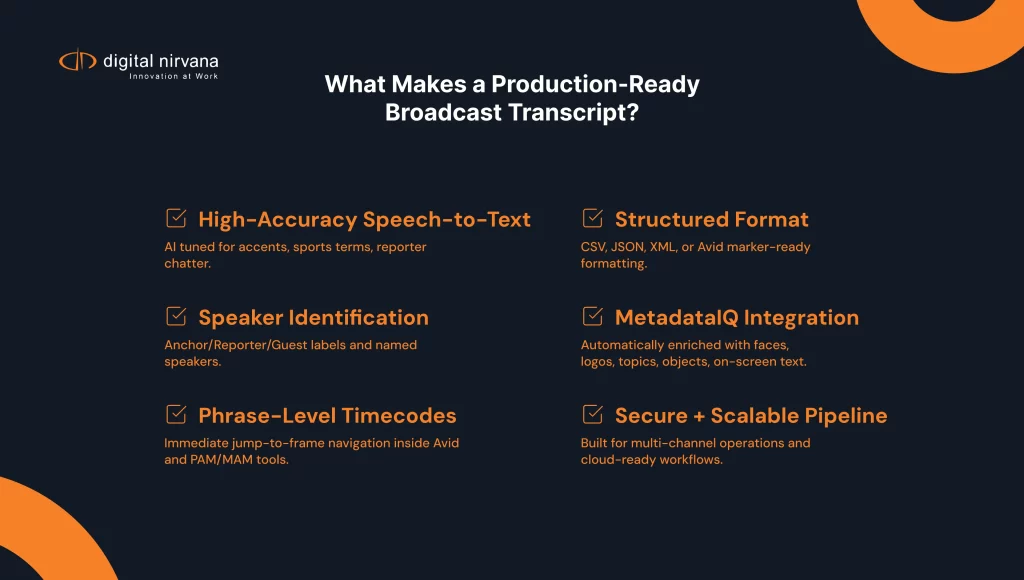
- Speech-to-text transcription with punctuation and speaker changes
- Detection of faces, logos, objects, and on-screen text
- Identification of topics, entities, and keywords across the timeline
- Automatic tagging of sensitive or regulated content (political, brand, profanity, violence, etc.)
- Alignment of tags with your internal taxonomies and compliance rules
The promise is not just “more data.” It is smarter workflows:
- Automatic clip suggestions for highlights and promos
- Rules-based routing for content that needs additional review
- Faster discovery for producers and editors working to deadlines
- Easier packaging and licensing of archive content
When AI metadata automation is tightly integrated with broadcast workflow management tools and PAM/MAM systems, metadata becomes more than a static description. It becomes an active driver of how work flows.
Where AI metadata automation fits across the broadcast workflow
To rethink broadcast workflow management, it helps to see where AI metadata automation can plug into each stage.
Ingest, and acquisition:
- Automatically index live feeds as they arrive
- Generate near-real-time transcripts and markers on ongoing events.
- Apply baseline tags based on channel, source, or show template.
Logging and editorial prep:
- Replace or augment manual logging with AI-generated markers
- Identify key segments such as goals, speeches, debates, or interviews.
- Pre-populate fields in your PAM/MAM to shorten prep time for editors
Compliance review:
- Flag potentially problematic segments for standards and legal teams
- Tag political content, disclosures, and regulated categories to match regional rules.
- Maintain an audit trail of what was detected, tagged, and reviewed.
Playout and distribution:
- Use metadata to drive late-binding decisions such as language track, caption selection, or regional blackout
- Enable better personalization and recommendations in OTT and FAST workflows based on rich content descriptors.
Archive, and monetization:
- Run batch AI metadata automation on deep archives
- Turn previously “dark” content into a searchable library for reuse and licensing.
- Build thematic collections by topic, personality, event, or sponsor.
When this metadata is generated and pushed back into your PAM/MAM and workflow engines, broadcast workflow management evolves from job-tracking to intelligence-driven orchestration.
From manual to intelligent: rethinking broadcast workflow management
Traditional broadcast workflow management focuses on:
- Orchestrating tasks
- Tracking job status and resource usage
- Ensuring assets move from one system to another reliably
With AI metadata automation in place, you can start to ask different questions:
- Which workflows can be triggered or skipped based on what is actually in the content?
- Where can we reduce manual steps, since AI-generated metadata is sufficient for the first pass?
- How can we use time-coded metadata to shorten cycles for highlights, promos, and localization?
- How do we build compliance logic directly into the workflow using metadata rules rather than ad hoc checks?
This does not replace your existing broadcast workflow management platforms. It makes them smarter because they are now driven by accurate, dynamic metadata rather than static labels and assumptions.
How MetadataIQ brings AI metadata automation into your PAM/MAM
MetadataIQ is Digital Nirvana’s AI-powered platform for automating broadcast metadata workflows. It is designed to sit alongside your existing PAM and MAM systems, not replace them.
Core capabilities relevant to broadcast workflow management include:
- Time-coded speech-to-text tuned for news, sports, and entertainment
- Detection of faces, logos, and on-screen text to support brand, sponsor, and compliance workflows
- Rules-based tagging and metadata scoring aligned with your internal standards
- Real-time and batch processing for both live feeds and deep archives
- Seamless integration with Avid environments and other PAM/MAM stacks through APIs and off-the-shelf connectors
In practice, MetadataIQ acts as:
- An ingest-side enrichment engine: indexing content as it arrives
- A logging accelerator: generating markers that drop directly into editorial tools
- A governance layer: dashboards that track metadata quality and compliance across your library
- A bridge between broadcast and enterprise systems: writing enriched metadata back to MAM, DAM, and other downstream platforms
For technology and operations teams, this means you can elevate your broadcast workflow management capabilities without destabilizing your existing infrastructure.
Real-world use cases: news, sports, entertainment, and compliance
News workflows:
- AI metadata automation generates real-time transcripts and markers on incoming news feeds.
- Producers search by topic, person, or quote inside the PAM, not by approximate timecodes.
- Rundown building speeds up because relevant clips are easier to find and validate
Sports and live events:
- Key plays, scores, and reactions are detected and tagged automatically
- Highlights can be assembled more quickly using time-coded metadata in your MAM.
- Rights-sensitive content can be identified and treated differently based on tags.
Episodic and entertainment:
- Reality and unscripted content benefit from automated logging of participants, locations, and recurring storylines
- Promo and trailer teams can search for thematic moments or sponsor exposures across seasons.
- Localization teams work from accurate transcripts and identified segments, improving turnaround time.
Compliance and standards:
- MetadataIQ can tag political content, brand placements, sensitive categories, and profanity using rules tuned to your markets
- Compliance teams focus on reviewing flagged segments rather than watching entire programs.
- Metadata and review history create an audit-ready record if regulators or advertisers ask for proof.
Across these use cases, broadcast workflow management shifts from reactive to proactive. Workflows are triggered by the content itself, not just by the folder it lives in.
Getting started: a practical roadmap for AI-enhanced workflows
If you are considering AI metadata automation as part of your broadcast workflow management strategy, a phased approach works best.
- Define the business outcomes:
- Clarify whether your priority is faster news production, more sports highlights, better compliance, archive monetization, or a combination of these.
- Set measurable goals, such as a reduction in search time, shorter time to air, or more archive-based revenue.
- Map current workflows and metadata:
- Document how content moves through ingest, PAM/MAM, QC, compliance, and archive
- Identify where metadata is created, by whom, and where it is missing or inconsistent.
- Choose initial workflows for a pilot:
- Pick one or two high-impact areas, such as live news feeds or a specific sports league.
- Integrate MetadataIQ with your PAM/MAM and workflow tools for those use cases.
- Tune AI models and rules:
- Align tags and entities with your editorial style, channel brands, and regulatory requirements.
- Adjust confidence thresholds and rules to balance automation and human review.
- Roll out, and scale
- Exp, and coverage to additional channels, genres, and archive collections.
- Use MetadataIQ dashboards and your existing analytics to monitor impact and identify new automation opportunities.
Throughout this journey, Digital Nirvana typically acts as a partner rather than a point solution provider, helping broadcast and media teams align AI metadata automation with real operational constraints.
FAQs
No. AI metadata automation complements your existing workflow systems and PAM/MAM stack. Tools like MetadataIQ generate rich metadata that your current platforms can then use to orchestrate more intelligent workflows. You keep your existing investment while making it more intelligent.
Generic transcription tools focus on a single output: text. MetadataIQ is built for broadcast workflows. It generates time-coded transcripts, parses them into markers, detects visual elements, aligns everything with your metadata schema, and writes it back to systems such as Avid and other PAM/MAM platforms.
Most broadcasters see quick wins in live news and sports, where reduced logging time and faster clip turnaround are immediately measurable. Archive enrichment and compliance automation often deliver substantial secondary benefits once the foundations are in place.
AI models have improved significantly, but they are not perfect. The goal is to automate the bulk of routine tagging and logging while keeping editorial teams in control. MetadataIQ supports confidence thresholds, review workflows, and rules that ensure human teams retain final say where it matters most.
MetadataIQ has deep integrations with Avid ecosystems, but it is designed to work with a wide range of PAM, MAM, and media management platforms using APIs and standards-based connectors. That makes it suitable for hybrid on-prem, cloud, and remote workflows.
Conclusion
Broadcast workflow management is entering a new phase. Linear job orchestration alone is no longer enough to keep pace with the volume, speed, and complexity of today’s media operations. The differentiator is metadata: how accurately you generate it, how consistently you apply it, and how intelligently you use it to drive decisions.
AI-driven metadata automation is how you make that leap. By watching and understanding your content at scale, metadata becomes an active control layer that powers everything from clip searches and highlights to compliance and archive monetization.
MetadataIQ is Digital Nirvana’s answer to that challenge. It brings AI metadata automation directly into your PAM/MAM and workflow stack, without forcing you to replace the systems your teams already trust. As you rethink broadcast workflow management for the next decade, the question is no longer whether to adopt AI-driven metadata, but where to start, and how quickly you want to see the benefits.
If you are ready to explore what this could look like in your environment, the next step is simple: map a high-impact workflow, connect it to MetadataIQ, and let AI-powered metadata start doing the heavy lifting.