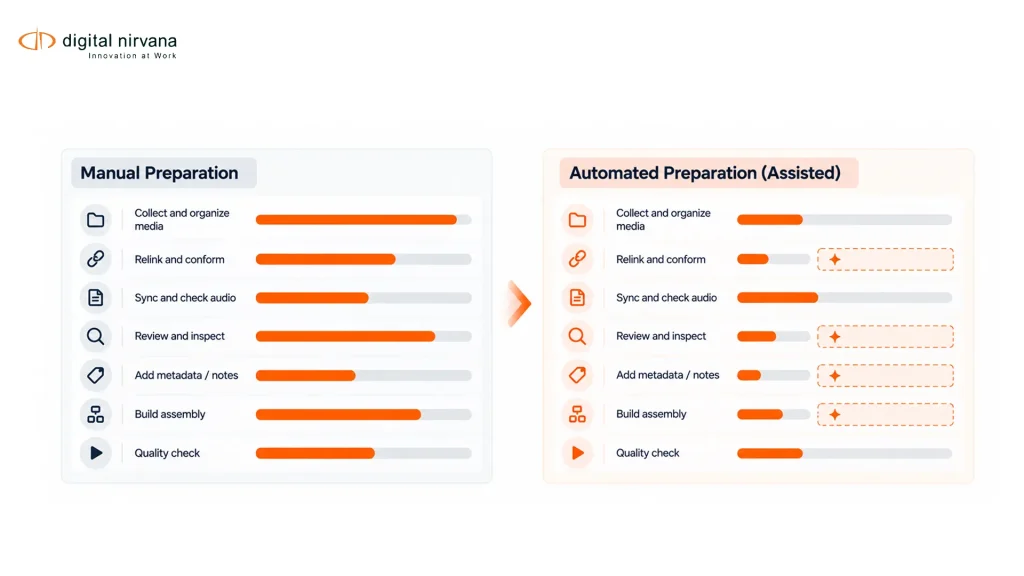
The proposed cut looks persuasive until a producer asks why a qualifying sentence disappeared. A note saying the edit improves pacing does not answer whether the omission changes the speaker’s meaning. AI video editing needs inspectable editorial evidence: the selected source, the rejected alternatives, the constraint being followed, and a way to correct the choice.
An explanation should help a reviewer test a decision. It should not become a substitute for checking the footage or a claim that the system’s written account perfectly reveals its internal computation.
Key Takeaways
- A readable explanation is useful only when reviewers can connect it to the actual source and edit.
- Separate factual source evidence from an AI-generated interpretation of tone, intent, or narrative role.
- Preserve the brief, sequence version, reviewer decision, and correction history together.
- Test whether an explanation remains accurate after the underlying cut changes.
- Keep final responsibility with a person who can reject a plausible but misleading assembly.
Table Of Contents
- What Does Explainability Mean In AI Video Editing?
- What Should An Editorial Decision Record Contain?
- How Can An Explanation Sound Right And Still Be Wrong?
- Which Decisions Need The Closest Review?
- How Should Revisions And Approval Be Recorded?
- How Do You Evaluate An Explainable Editing Workflow?
- FAQs
- Conclusion
What Does Explainability Mean In AI Video Editing?
Explainability means giving the intended reviewer a useful basis for understanding and challenging a system’s output. In editing, that basis should connect the proposed sequence to source material and the editorial brief.
NIST’s explainable AI principles distinguish providing an explanation, making it meaningful, ensuring it accurately reflects the process, and recognizing knowledge limits. Applying that distinction to editing is useful: a fluent paragraph is not sufficient evidence of a faithful decision record.
The form should suit the task. An editor may need source ranges and alternatives; a producer may need the story constraint and an unresolved question. Neither benefits from an elaborate account that cannot be checked against the sequence.
Digital Nirvana presents RoughCut’s written editorial reasoning as part of its workflow. Evaluate how that information supports inspection and correction, rather than treating the existence of an explanation as proof that the edit is correct.
What Should An Editorial Decision Record Contain?
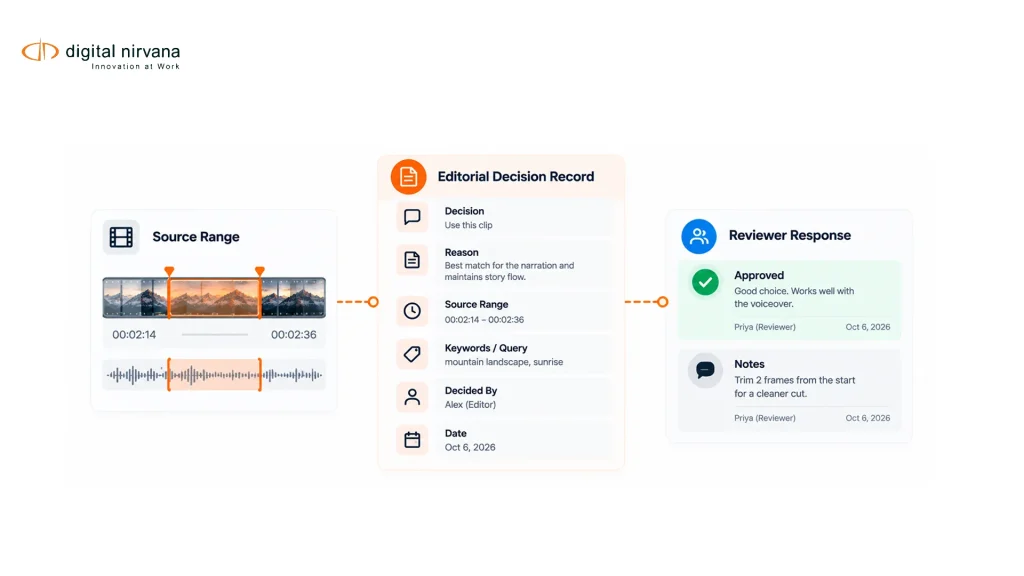
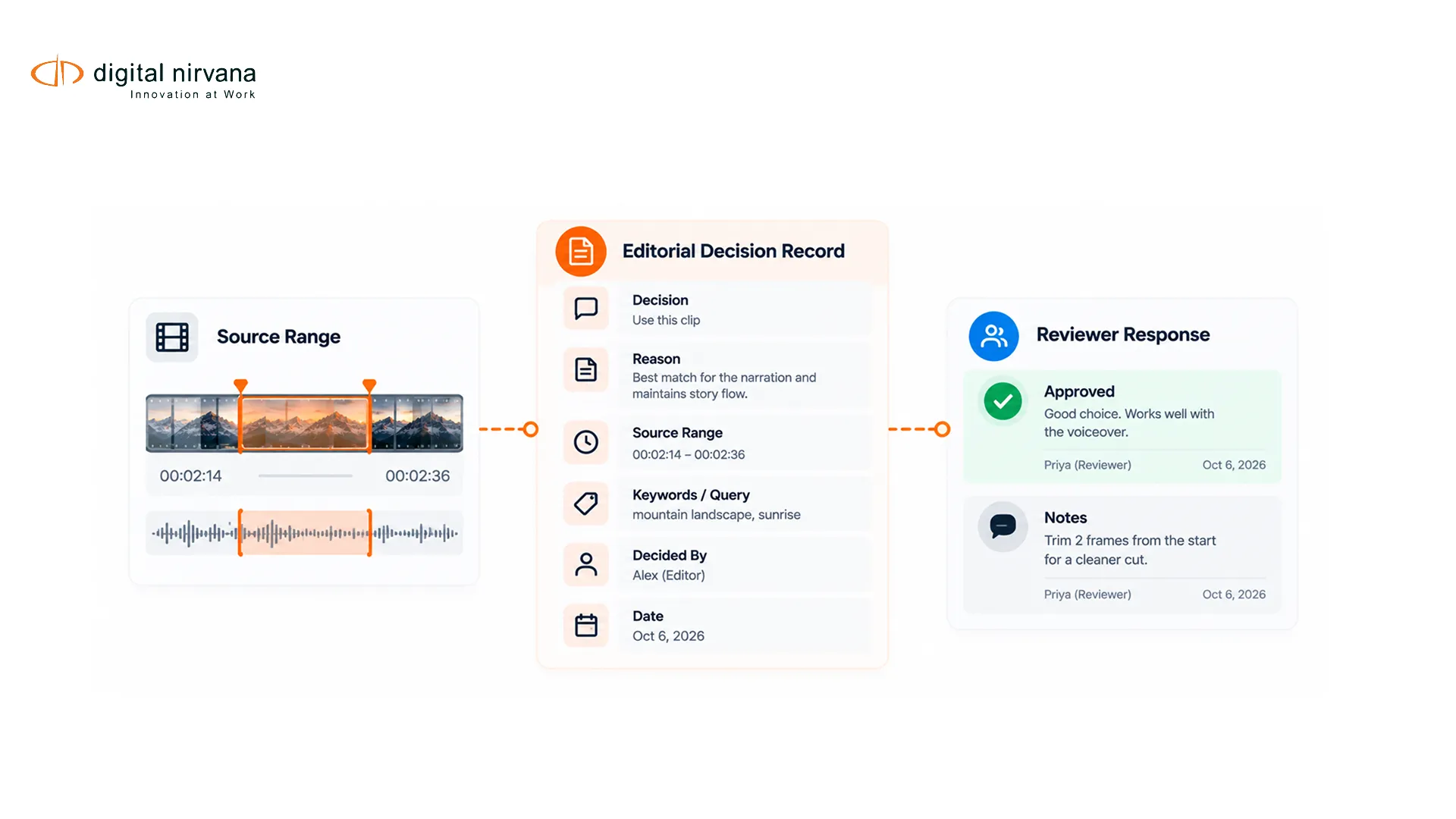
A useful record connects a decision, its evidence, and the person who accepted it. The following proposed template is a review aid, not a claim that every platform automatically captures every field.
| Field | What The Reviewer Needs |
| Editorial instruction | The requirement the selection is intended to satisfy |
| Source reference | Original asset and selected range |
| Proposed choice | What was included, excluded, shortened, or reordered |
| Supporting evidence | Observable dialogue or action that supports the choice |
| Uncertainty | Missing context, ambiguous identity, or unresolved rights |
| Human decision | Accept, reject, revise, or hold, tied to a version |
Keep factual evidence separate from interpretation. “The transcript includes the requested sentence” is different from “this speaker sounds confident.” The latter may be useful as an editorial suggestion but should not become an unqualified fact.
Store the record close enough to the sequence that a reviewer can inspect both. A detached explanation file that no longer matches the cut provides little protection against misunderstanding.
How Can An Explanation Sound Right And Still Be Wrong?
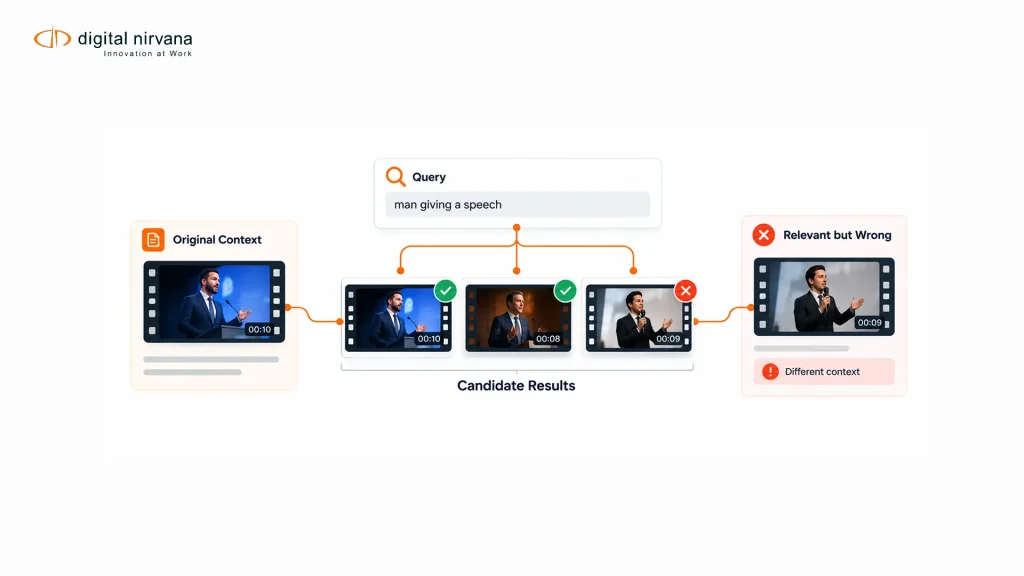
An explanation can be coherent while referring to the wrong source, omitting a competing constraint, or rationalizing a poor selection. The reviewer must be able to falsify it.
Consider an illustrative sports sequence. The software says it selected a reaction because it followed the winning play. Checking the source reveals that the reaction came earlier. The description of excitement may be reasonable, but the implied chronology is wrong.
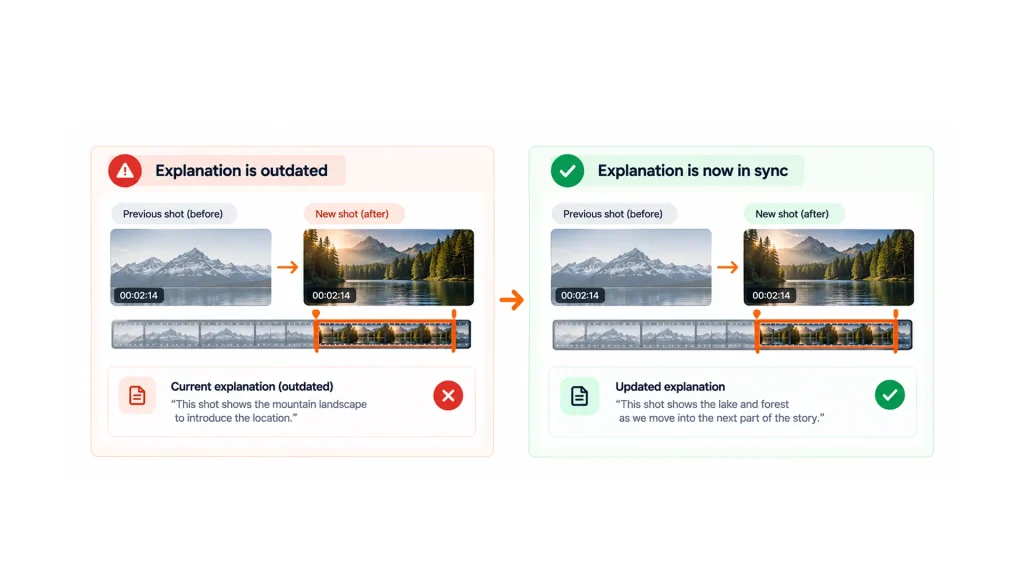
Another failure occurs after revision. A producer asks to replace a shot, the timeline changes, and the old explanation remains attached. The system now describes a choice that no longer exists. Test whether explanations are updated or clearly marked as historical.
The NIST AI Risk Management Framework’s trustworthiness discussion places explainability alongside other properties rather than treating it as sufficient on its own. Editorial review should do the same: a transparent mistake is still a mistake.
Which Decisions Need The Closest Review?
Prioritize decisions that could change a viewer’s understanding of an event or statement. Review omitted qualifications, reordered chronology, implied causation, speaker identity, and the use of illustrative footage before polishing minor timing choices.
For an illustrative interview, ask whether removing a phrase changes the claim’s scope. For news footage, ask whether a reaction is presented as a response to an event it did not follow. For a product video, ask whether the chosen shot implies a capability the recorded demonstration did not show.
Search and metadata can assist this review, but they do not resolve every ambiguity. Digital Nirvana’s media indexing explainer describes the discovery layer; the editorial team must still interpret the retrieved material responsibly.
Where evidence is incomplete, hold the selection or use a verified alternative. The review system should support an unresolved state rather than forcing every decision into an immediate approval.
How Should Revisions And Approval Be Recorded?
Tie approval to a specific sequence version, not to the project name alone. A revised cut can invalidate an earlier approval even if the filename barely changes.
Record the requested change, affected source range, editor response, and remaining issue. Keep approved constraints visible during later revisions. If an interview qualification must remain, it should not disappear because a subsequent instruction asks for a shorter runtime.
Decide what happens to corrections beyond the current project. A verified source-identity correction may belong in the archive. A subjective pacing preference may belong only in the editorial record. Metadata governance practices provide related context for separating persistent asset information from project-specific choices.
Access matters too. Reviewers need enough source visibility to verify a decision, while confidential material should remain restricted. If the reviewer cannot inspect the evidence, assign the check to someone with appropriate access.
How Do You Evaluate An Explainable Editing Workflow?
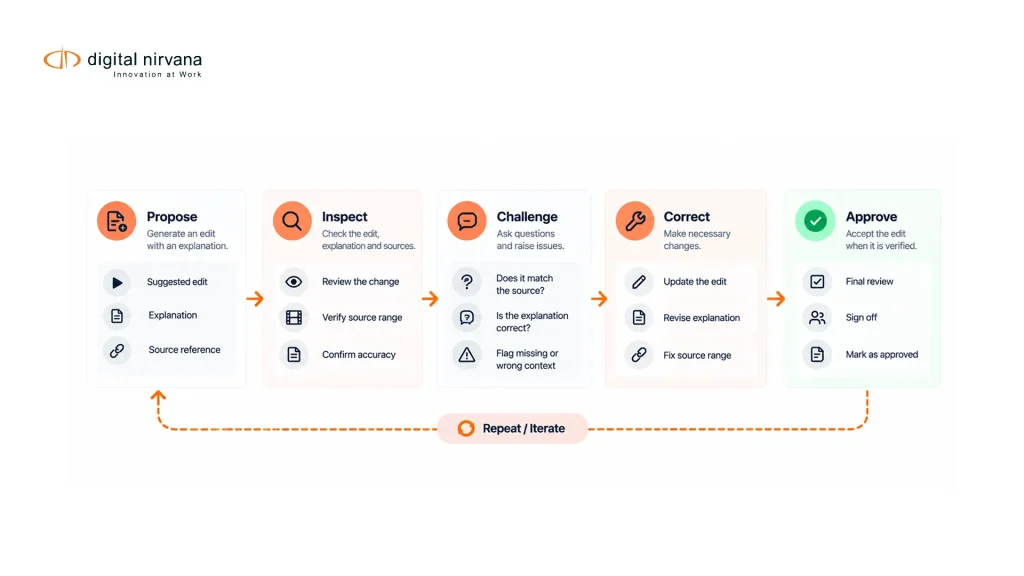
Evaluate whether the explanations improve a reviewer’s ability to detect and correct a problem. A demonstration should contain known wrong choices, not only successful edits.
Use these proposed tests:
- Ask for a cut containing a required qualification and check whether it remains.
- Present similar footage from different events and inspect the source choice.
- Replace a selected shot and verify the explanation matches the revision.
- Reject a proposed rationale and confirm the editor can keep a manual decision.
- Reopen the approved version and inspect the same evidence again.
Track how quickly reviewers identify the problem and whether the correction survives the next revision. Do not use explanation length as a quality metric.
For teams developing a broader operating policy, Digital Nirvana’s managed AI services provide related context for ongoing evaluation. The immediate next step is to use the decision-record template above on a real internal review assignment.
FAQs
It is an editing workflow that provides inspectable information about proposed decisions. Useful explanations connect the chosen material and edits to source evidence and the brief.
It does not guarantee correctness. The reviewer still needs to verify source identity, context, and whether the selection satisfies the assignment.
A written rationale is not automatically a faithful view of internal model computation. Evaluate it as a review artifact and test its accuracy against observable evidence.
Changes that affect meaning, required content, rights, or the approved sequence should trigger the review defined by your workflow. Tie the decision to the revised version.
The workflow should allow uncertainty to remain visible. A reviewer needs to know when the available evidence does not support a confident selection.
The person or team assigned editorial authority remains responsible. Software-generated explanations support that responsibility but do not transfer it away from the publisher.
Conclusion
Take one proposed selection and require the reviewer to trace it back to the original, challenge its rationale, and record a correction. Repeat after the cut changes. That practical exercise reveals whether explanations improve editorial control or merely add persuasive text beside a timeline.