Incorrect metadata arrangement can quickly bring massive operational problems. Your search indexes may stop working properly. Or your timecode references may even go missing. This is why choosing a solid media asset management system is so crucial.
Good quality metadata management brings up to a 40% increase in data quality and operational efficiency.
Most brands choose intelligent platforms like MetadataIQ by Digital Nirvana to manage metadata video files without disrupting aspects like search, timecodes, and other MAM operations. Let’s learn more about this.
What is Video Metadata?
Video metadata refers to the descriptive, technical, and administrative information that is already attached to your video asset. This information helps systems effectively identify, categorize, search, process, and manage media files across workflows.
Metadata can exist in multiple forms:
- Embedded directly inside the video container
- Stored in sidecar XML or JSON files
- Managed inside MAM or PAM databases
- Generated automatically through AI indexing systems
Common metadata categories include:
Descriptive Metadata
- Title
- Description
- Keywords
- Tags
- Language
- Genre
Technical Metadata
- Codec
- Resolution
- Frame rate
- Bitrate
- Audio configuration
- Timecode
Administrative Metadata
- Rights information
- Usage restrictions
- Ownership
- Compliance data
- Archive status
Without metadata, video libraries become difficult to search, organize, and automate.
Why Can A Small Metadata Edit Create Big Workflow Problems?
Metadata is deeply connected to modern media operations. Editing metadata video files may seem simple, but workflows often rely on exact field structures, unique IDs, timestamps, and timecode references. Even minor modifications can impact several systems at once.
For example:
- A changed asset ID may disconnect a file from the MAM database.
- Incorrect timecode edits may break synchronization in post-production.
- Removing embedded metadata may affect automated indexing.
- Inconsistent naming structures may reduce search accuracy.
- Rewrapping files incorrectly may strip critical metadata fields.
Many organizations unknowingly disrupt workflows when metadata-editing tools overwrite embedded structures during export or transcoding. Industry discussions around timecode correction and metadata preservation repeatedly highlight these workflow risks.
This is why metadata editing should always be approached as part of a controlled media management process instead of a standalone file adjustment task.
Which Metadata Fields Inside Video Files Are Safe To Edit, and Which Ones Aren’t?
Understanding which fields are safe to edit is important when learning how to edit video metadata.
Some fields are operationally sensitive, while others are designed for organizational improvements.
Commonly Edited Metadata Fields
- Video title
- Description
- Tags
- Keywords
- Copyright information
- Language metadata
- Category labels
- Transcript references
Sensitive Metadata Fields
- Timecode
- Creation timestamps
- Source identifiers
- Reel numbers
- Camera metadata
- Asset IDs
- Sync references
Sensitive fields should only be modified when teams fully understand downstream workflow dependencies.
Why Do Search Engines And MAM Systems Rely So Heavily On Metadata?
Media Asset Management systems rely on metadata as the foundation of content organization. Search engines inside MAM platforms use metadata fields to retrieve video assets instantly.
AI indexing systems analyze metadata video files to generate searchable moments, transcripts, speaker identification, and content segmentation.
Without structured metadata:
- Archives become difficult to navigate.
- Search results lose accuracy.
- Automated tagging systems fail.
- Duplicate assets increase
- Retrieval times become slower.
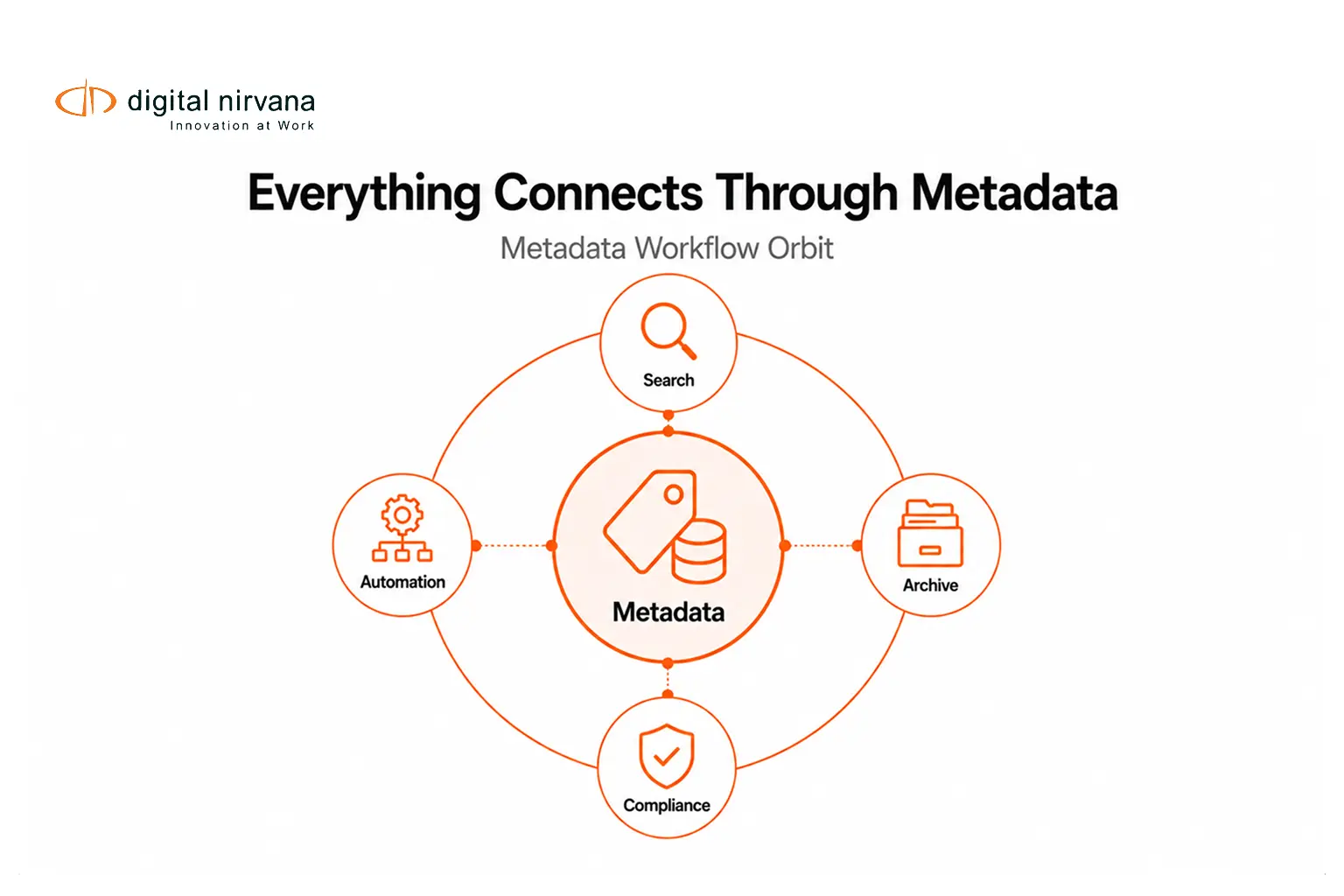
Modern MAM environments also depend on metadata consistency for:
- Workflow automation
- Broadcast scheduling
- Compliance tracking
- Rights management
- AI enrichment
- Archive preservation
That is why organizations need controlled metadata governance instead of manual editing practices spread across disconnected teams.
What Can Go Wrong When Metadata Gets Edited Incorrectly?
- Loss Of Embedded Timecode
Timecode metadata is critical for editing, broadcast delivery, and synchronization workflows. Improper rewrapping or metadata rewriting can remove or corrupt embedded timecode references.
Once timecode integrity is compromised, post-production alignment becomes significantly harder.
- Search Index Corruption
If metadata structures change unexpectedly, search indexes inside MAM systems may stop mapping assets correctly. This reduces discoverability and causes inefficiencies in the archive.
- Metadata Duplication
Manual metadata edits often create conflicting versions across:
- Embedded metadata
- Sidecar files
- Cloud archives
- MAM databases
This creates synchronization problems across systems.
- Broken Automation Workflows
Automated media pipelines rely on structured metadata fields. Changes to naming conventions or schema mappings may interrupt ingestion, transcoding, or publishing workflows.
- Compliance And Rights Risks
Incorrect metadata edits can remove rights ownership information or compliance records, creating legal and operational issues later.
How Can Media Teams Edit Video Metadata Without Disrupting Workflows?
Organizations should follow a structured process when editing metadata video files.
- Audit Existing Metadata First
Before making changes:
- Review current metadata structures.
- Identify critical operational fields.
- Understand workflow dependencies
- Verify how MAM systems store metadata.
This prevents accidental workflow disruption.
- Avoid Re-encoding Whenever Possible
Metadata updates should ideally happen without full video transcoding.
Re-encoding may:
- Alter technical metadata
- Affect timecode continuity
- Introduce quality degradation
- Strip embedded information
Modern metadata editing tools often support metadata-only updates without touching video essence.
- Use Controlled Metadata Standards
Organizations should establish:
- Naming conventions
- Metadata schemas
- Tagging policies
- User permissions
- Validation rules
Standardization improves consistency across teams.
- Preserve Original Metadata
Always maintain backup copies or metadata snapshots before editing. This helps restore workflows quickly if errors occur.
- Validate Metadata After Editing
After updates:
- Check timecode continuity
- Verify MAM indexing
- Test search functionality
- Confirm synchronization across systems.
Metadata editing should always include post-edit validation.
What Are The Smartest Ways To Manage Metadata Video Files Across Large Archives?
- Centralize Metadata Management
Avoid editing metadata separately across different tools and teams. A centralized metadata platform reduces inconsistencies and improves governance.
- Use AI-Assisted Metadata Enrichment
AI-powered indexing can automatically:
- Detect speakers
- Generate transcripts
- Identify scenes
- Extract keywords
- Improve search accuracy
This reduces manual tagging errors.
- Separate Technical And Descriptive Metadata
Descriptive metadata is generally safer to edit frequently. Technical metadata should remain tightly controlled to prevent workflow disruptions.
- Maintain Metadata Version Control
Track:
- Who edited the metadata?
- What changed
- When modifications occurred
- Why were changes made?
Audit trails improve operational transparency.
- Integrate Metadata Across Systems
Metadata workflows should connect with:
- MAM systems
- Broadcast automation
- Archive platforms
- AI indexing engines
- Compliance monitoring systems
Disconnected metadata environments create long-term inefficiencies.
Why Are More Media Companies Moving Toward Centralized Metadata Management?
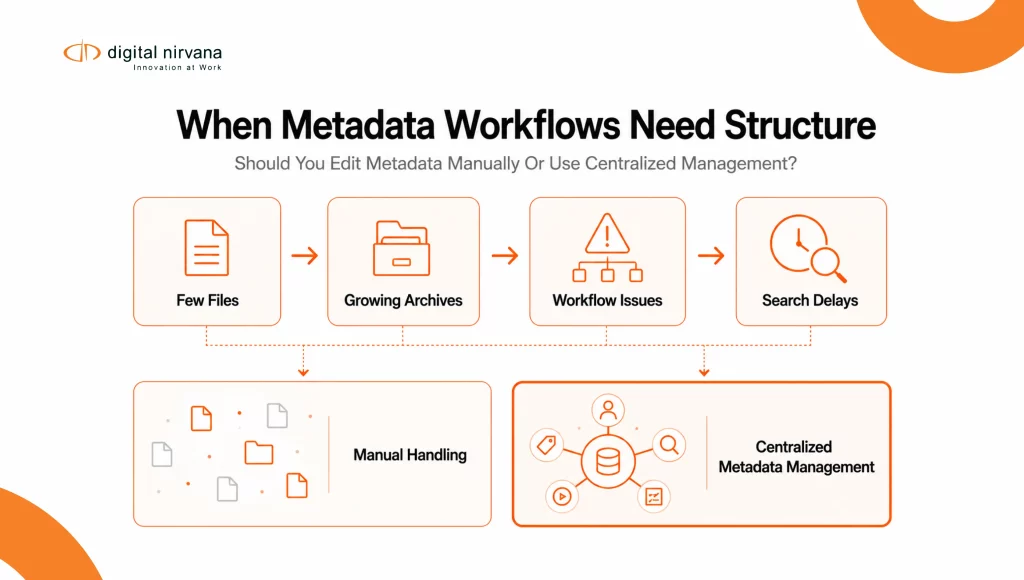
As media libraries scale, manual metadata editing becomes risky and inefficient.
Organizations handling thousands of video assets need:
- Automated indexing
- Centralized metadata control
- Search optimization
- Workflow orchestration
- Archive consistency
This is where enterprise-grade metadata management platforms become essential.
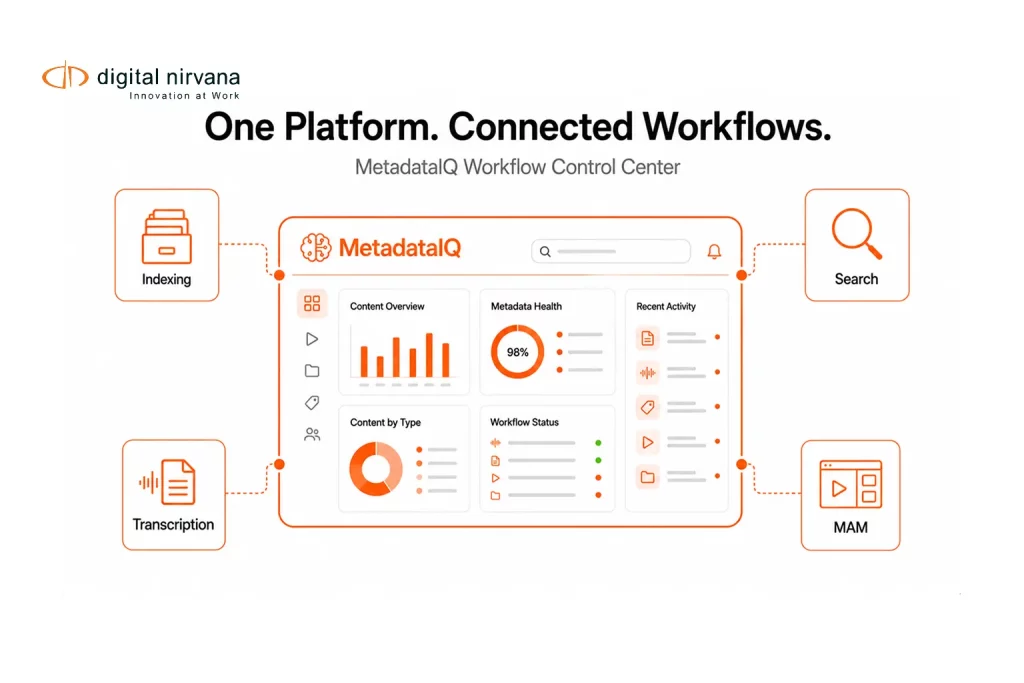
Platforms like Digital Nirvana’s MetadataIQ help broadcasters and media organizations manage metadata video files through AI-powered indexing, intelligent search, transcription, content tagging, and integrated MAM workflows.
Instead of manually updating metadata across fragmented systems, teams can manage assets through a centralized environment designed for scalable media operations.
How Does Digital Nirvana’s MetadataIQ Keep Metadata Workflows Organized Across Media Teams?
MetadataIQ by Digital Nirvana effectively helps broadcasters, production teams, OTT platforms, and media archives manage growing volumes of content while maintaining consistent metadata, search accuracy, and workflow efficiency.
- AI-powered media indexing ensures that your teams can identify relevant content attributes without spending much time on manual tagging or sorting.
- Intelligent metadata enrichment ensures excellent quality and depth of metadata in video files, enabling accurate search, retrieval, and repurposing of future videos.
- Advanced speech-to-text transcription services to quickly convert dialogues, sound bites, locate interviews, and more.
- PAM and MAM integration ensures that metadata remains consistently synchronized across production, asset management, broadcast, and archive environments.
- Automated tagging workflows to effectively reduce any repetitive manual work by assigning relevant keywords, categories, and content identifiers automatically.
- Centralized metadata management gives organizations much better visibility and control over how metadata is created, updated, stored, and distributed across their entire media ecosystem.
- Content discovery optimization makes everything way easier for editors, producers, journalists, and archive teams to surface relevant footage faster.
These features by Digital Nirvana help organizations always stay ahead in managing their metadata effectively. This eliminates the risk of workflow disruption while automating a wide range of redundant tasks.
FAQs
The safest approach is using metadata-only editing tools that do not re-encode the video file. Always back up original metadata before making changes.
Metadata-only edits generally do not affect video quality. However, re-encoding during metadata updates may alter compression and technical parameters.
Timecode ensures accurate synchronization during editing, broadcast operations, and archive retrieval workflows.
Yes. Incorrect edits to identifiers, timestamps, or schema structures can disrupt search indexing and asset mapping inside MAM platforms.
Embedded metadata is stored within the video file itself, while sidecar metadata is stored separately in XML, JSON, or database systems.
AI helps automate tagging, transcription, scene detection, keyword extraction, and content indexing for faster search and retrieval.
Centralized systems improve metadata consistency, workflow automation, archive management, compliance tracking, and operational scalability.
Conclusion
Learning the right way to edit your video metadata is super crucial. It makes or breaks the overall experience for users. The goal is to balance search accuracy, archive management, compliance, and other aspects in the right structure.
Thus, organizations managing large media libraries should focus on centralized solutions such as Digital Nirvana’s MetadataIQ. Such integrated platforms help to preserve search performance and timecode integrity while bringing solid MAM workflow stability.
Key Takeaways:
- Metadata editing is not just about changing file information. Every metadata field can influence search visibility, archive organization, timecode synchronization, and automated media workflows across connected systems.
- Editing metadata on video files without proper validation can create issues that go unnoticed until teams struggle with missing assets, broken search results, or failed synchronization within MAM platforms. A structured metadata management process helps prevent these operational disruptions.
- Timecode and asset identifiers should always be handled carefully during metadata updates. Even a small modification to sensitive metadata fields can affect post-production accuracy, broadcast workflows, and archive retrieval efficiency.
- Centralized metadata management improves consistency across production, compliance, archive, and distribution environments. It also reduces the confusion that often happens when multiple teams edit metadata separately using disconnected tools.
- AI-powered platforms like Digital Nirvana MetadataIQ help organizations automate indexing, transcription, tagging, and metadata enrichment at scale. This allows media teams to manage growing content libraries while maintaining search accuracy and workflow stability.