An AI system finishes its first assembly quickly, but the editor spends the afternoon checking omitted statements and repairing source links. Did the team save time? AI video editing creates a useful gain only when the accepted deliverable requires less total work. Comparing automated assembly time with manual logging time alone measures different tasks and hides the cost of verification.
The fair comparison includes finding material, understanding it, building a sequence, reviewing meaning, and preparing a usable handoff. Keep those stages visible before claiming a productivity improvement.
Key Takeaways
- Manual logging and rough-cut assembly are different tasks and should not be compared as equivalent outputs.
- Measure active staff effort separately from unattended processing and deadline waiting time.
- Include verification, correction, and downstream repair in every savings calculation.
- Use the same source material and acceptance brief when comparing workflows.
- Retain human review where omissions or changed context could alter the story.
Table Of Contents
- What Are You Comparing In AI Video Editing?
- Which Tasks Can Change When Preparation Is Automated?
- How Should You Calculate The Actual Time Saved?
- What Must Stay Constant In A Fair Pilot?
- Where Can Automation Create Extra Work?
- When Should You Keep A Manual Path?
- FAQs
- Conclusion
What Are You Comparing In AI Video Editing?
Compare two routes to the same accepted outcome. Logging produces information about footage; a rough cut proposes how selected material should be arranged. A faster assembly is not proof that every logging requirement has been met.
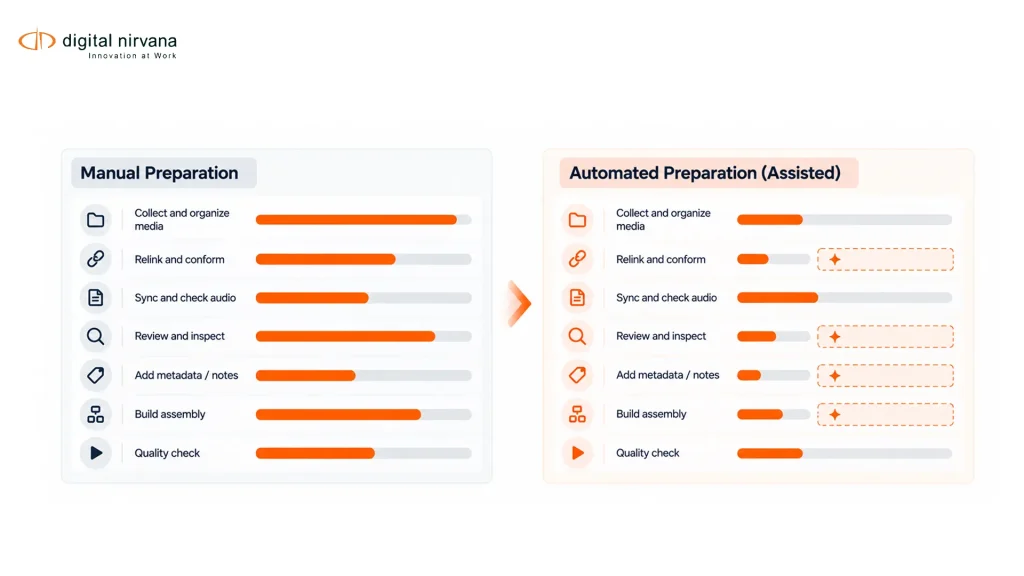
A useful manual baseline may include source review, notes, selects, first assembly, and producer feedback. The AI-assisted route may include ingest, analysis, query refinement, proposed assembly, verification, and correction. Write down both routes before timing them.
Digital Nirvana’s RoughCut product announcement describes an upstream analysis-and-assembly role. Your pilot should test the tasks relevant to that role rather than extrapolating from an overall marketing claim.
Also decide what remains valuable after delivery. A logging process may create reusable source knowledge, while a one-off cut may leave little behind. Account for that difference when defining the deliverables your team expects.
Which Tasks Can Change When Preparation Is Automated?
Automation may change how people find and organize material, but the editorial questions remain. Someone must decide whether the selected excerpt answers the brief and whether excluded material changes its meaning.
| Task | Manual Route | AI-Assisted Route To Evaluate |
| Locate dialogue | Review and record source notes | Search generated text and verify speech |
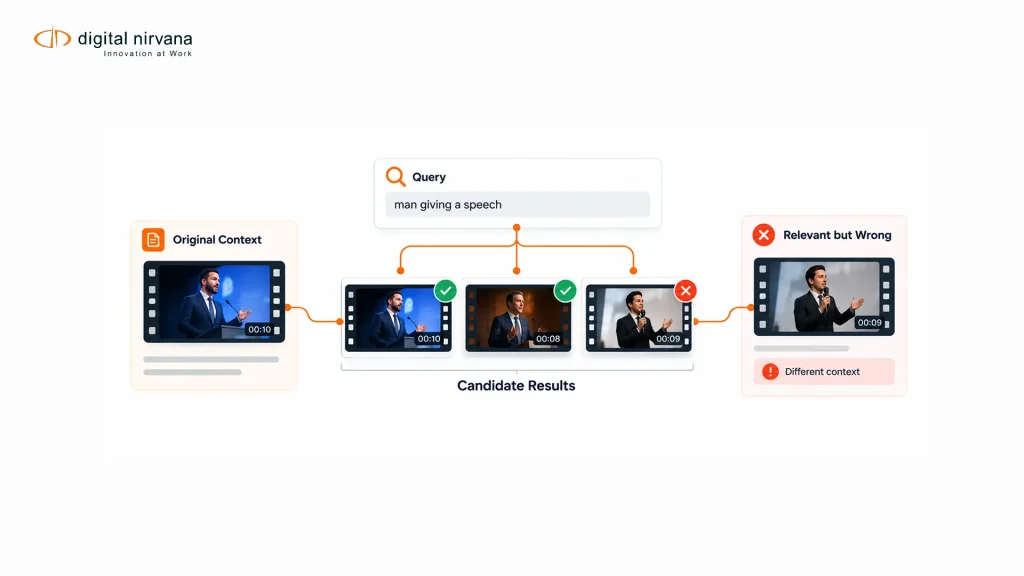
| Find visual candidates | Scrub and log shots | Review ranked candidates against context |
| Build selects | Add chosen ranges to a bin or sequence | Accept, reject, or adjust proposed ranges |
| Assemble story | Arrange selected material | Review and revise a proposed structure |
| Prepare handoff | Package sequence and source references | Check the same package after automation |
This matrix identifies work to measure; it does not assert a fixed saving for any product. Adobe’s Text-Based Editing sequence documentation provides one concrete example of selecting material through text before detailed refinement.
If your organization requires research notes beyond the finished sequence, keep those in scope. Removing a deliverable makes the process shorter without making it more productive.
How Should You Calculate The Actual Time Saved?
Subtract the full AI-assisted labor requirement from the comparable manual labor requirement. Keep platform charges and elapsed turnaround in separate columns so the results remain interpretable.
Use this proposed calculation:
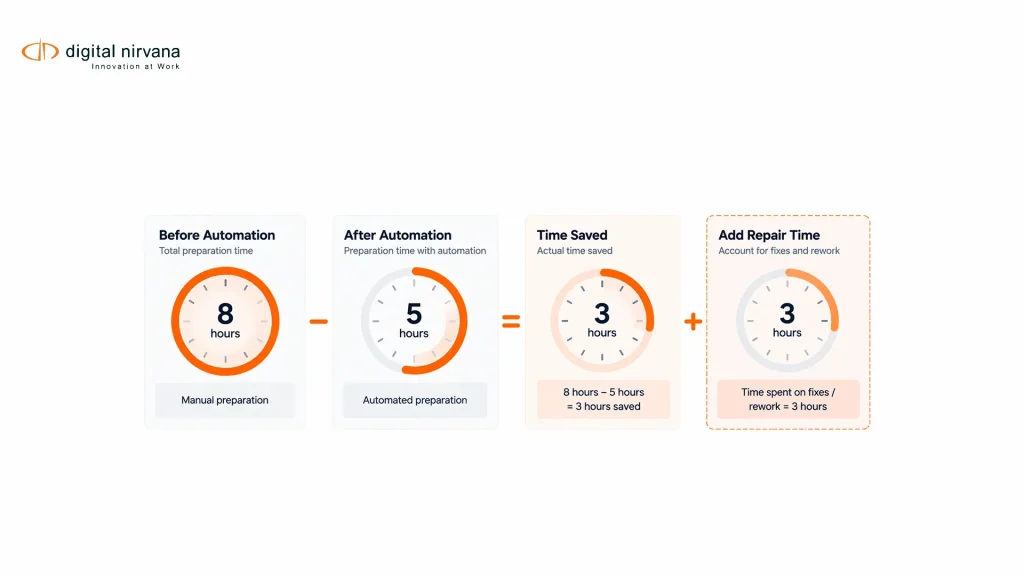
Net Labor Time Saved = Manual Preparation And Handoff Effort − AI-Assisted Setup, Review, Correction, And Handoff Effort.
For illustrative purposes, suppose the manual route requires 8 staff-hours. An assisted route requires one hour of setup, two hours of verification, one hour of correction, and one hour of handoff work. The illustrative saving is three staff-hours. If downstream repair adds another three hours, the savings disappear. These numbers demonstrate the method and are not Digital Nirvana results or industry benchmarks.
Report wall-clock completion separately. An unattended job may use little staff time but still miss the deadline because it waits in a queue. Conversely, work completed overnight may reduce next-day pressure without reducing the total processing duration.
What Must Stay Constant In A Fair Pilot?
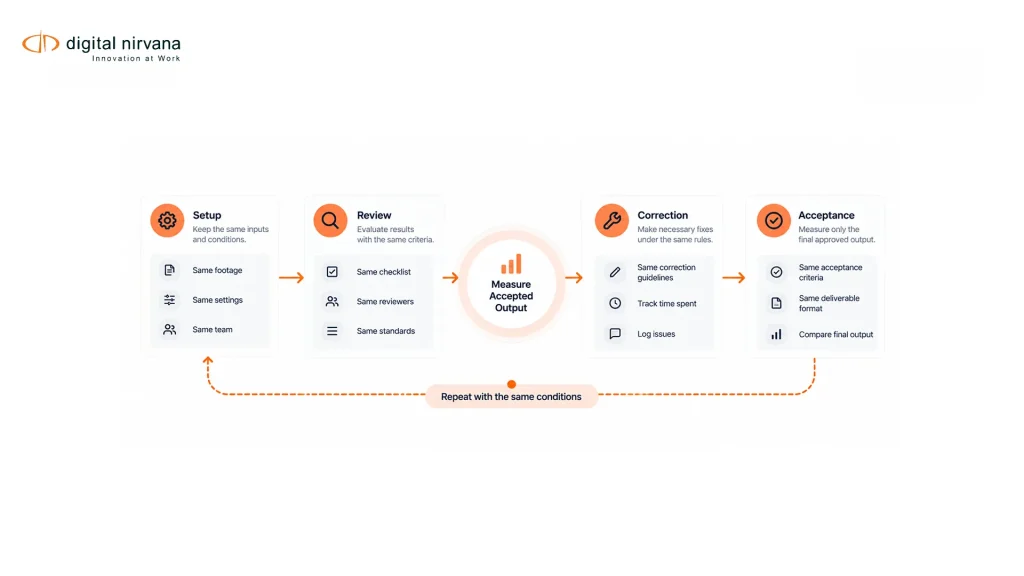
Keep the brief, source material, required outputs, and approval standard equivalent. If the manual route includes full context review and the AI route skips it, the comparison cannot support a savings claim.
Define acceptance before either workflow starts. Include editorial completeness, source traceability, audio intelligibility, and downstream usability. Have the reviewer document failures without changing the standard after seeing the result.
Avoid running the same editor through the same footage twice without acknowledging familiarity. The second pass benefits from knowledge gained during the first. Use comparable assignments or balance the order across participants, then explain the remaining limits of the comparison.
Record support effort too. If a specialist fixes every difficult export during the pilot, that work belongs in the cost record. The receiving editor’s timecode and source-range checks should be the same whichever route produced the sequence.
Where Can Automation Create Extra Work?
Automation creates rework when an output appears complete but leaves the reviewer uncertain about what was omitted, changed, or misidentified. Investigate the most consequential editorial errors before minor presentation issues.
Start with missing context, wrong-source selections, and inaccessible originals. Next examine boundary cleanup, audio joins, and repeated corrections. Finally assess cosmetic or preference-based revisions that would occur in either workflow.
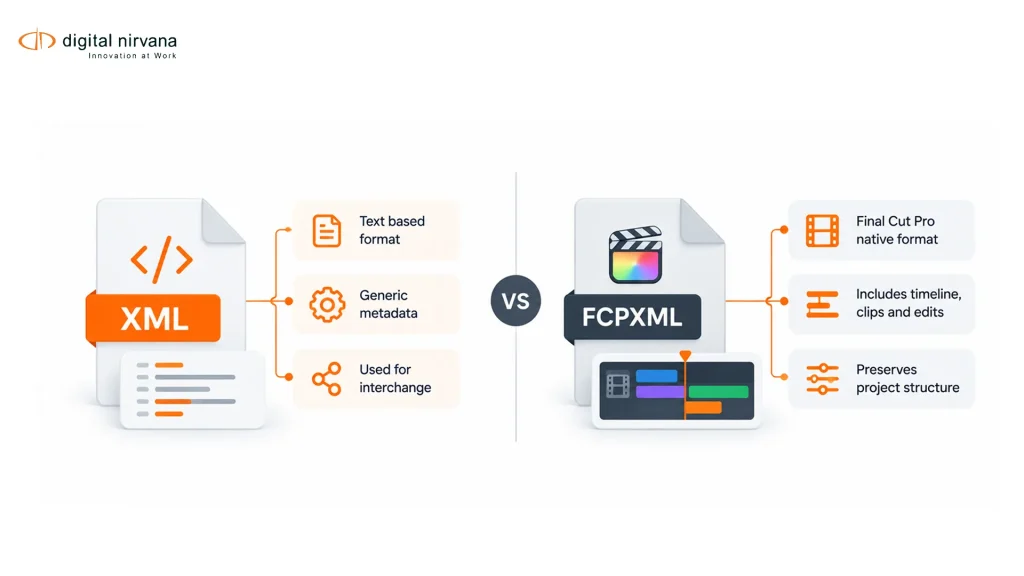
Technical exchange is another source of hidden labor. Adobe’s XML export guidance documents limits in transferring effects and audio adjustments. It does not imply that every handoff fails; it shows why a file-format promise needs an actual test.
Keep an exception log with cause, owner, and repair effort. A single catastrophic failure can matter more to a deadline-driven team than several fast routine assignments, so report failed jobs separately rather than hiding them inside an average.
When Should You Keep A Manual Path?
Keep a manual path when the assignment requires sustained source interpretation, the material cannot enter the approved processing environment, or the assisted route fails its acceptance checks. This is a production decision, not a judgment that automation is always unsuitable.
Sensitive interviews and ambiguous documentary material may require contextual review that a retrieval shortcut cannot replace. A team may still use machine-generated preparation while deciding the narrative manually.
Reuse verified source knowledge where possible. Digital Nirvana’s metadata enrichment capabilities address the organization of media information, which is related to but separate from automatically proposing a cut.
Choose the route by assignment type. Build an operating rule for what qualifies for assisted preparation, what needs additional review, and what stays manual. Revise that rule from observed pilot results, not from a single impressive demonstration.
FAQs
They do not guarantee a net saving. The result depends on setup, verification, correction, and handoff effort compared with an equivalent manual process.
Logging records information about source material; editing selects and arranges material into a sequence. A fair comparison must include all tasks needed to reach the same deliverable.
Unattended processing is not active labor, but it still affects elapsed turnaround and infrastructure cost. Report those measures separately.
A small pilot supports conclusions about the tested assignments and conditions. It cannot establish a universal productivity percentage across all footage and production types.
A consequential mistake is stopping the timer when the first preview appears. Continue through review and downstream acceptance so hidden repair work remains visible.
Keep the source information required for retrieval, reuse, rights, and editorial review. The way it is created can change, but its operational purpose does not disappear.
Conclusion
Measure one recurring assignment from intake to accepted handoff and record every repair. Use the result to decide which tasks deserve automation and which require deeper human review. Then request a pilot scoped to those tasks rather than an unqualified speed demonstration.