An automatically assembled timeline can arrive before anyone has checked which camera original it references. That creates speed at one stage and uncertainty at the next. A useful AI-assisted post-production workflow moves through verified source intake, searchable preparation, supervised assembly, and accepted handoff. Each stage needs an owner and an output the next person can trust.
The practical change is not simply that software edits faster. Producers and assistant editors need to define what automation may decide, what evidence it must retain, and when a person must resolve uncertainty.
Key Takeaways
- Preserve source identity before creating proxies, transcripts, or candidate sequences.
- Separate technical intake checks from editorial decisions about what belongs in the story.
- Attach review decisions to a specific sequence version and source range.
- Measure waiting time and staff effort separately across the complete workflow.
- Accept the rough cut only after the receiving editor opens and checks it.
Table Of Contents
- Where Does AI Belong In A Post Production Workflow?
- What Must Happen Before Footage Is Analyzed?
- How Should Logging Become Searchable Preparation?
- How Does A Brief Become A Reviewable Assembly?
- What Should A Handoff Package Contain?
- How Do You Prevent Rework From Moving Downstream?
- FAQs
- Conclusion
Where Does AI Belong In A Post Production Workflow?
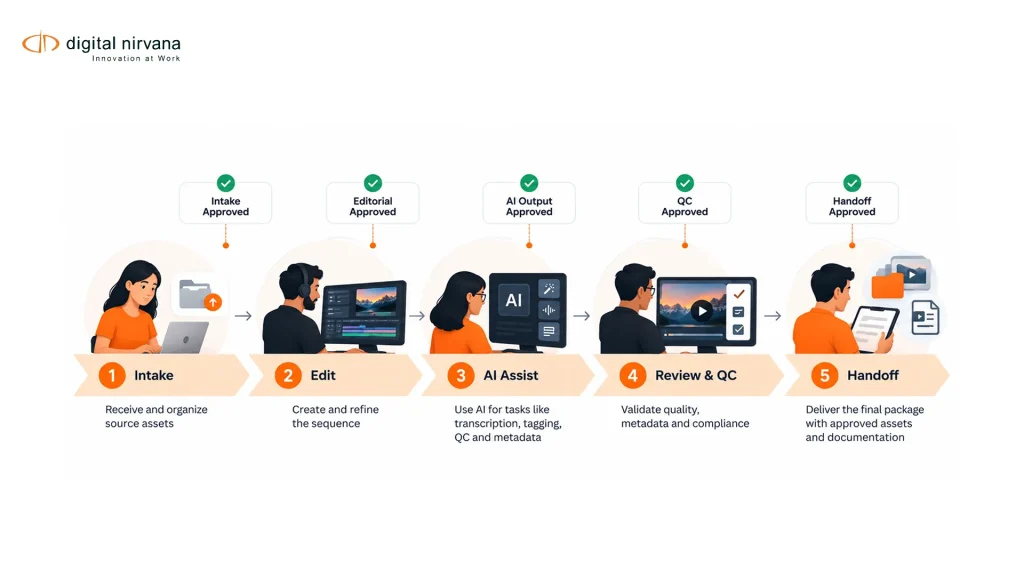
Put AI at the stages where its output can be inspected and corrected without obscuring the original material. A proposed operating model separates ingest, preparation, assembly, review, and handoff.
| Stage | Required Output | Person Accountable |
| Intake | Source inventory and exceptions | Assistant editor |
| Preparation | Searchable references linked to originals | Media operations lead |
| Assembly | Proposed sequence tied to an editorial brief | Editor |
| Review | Version-specific decisions and unresolved questions | Producer |
| Handoff | Editable sequence, media references, and reference render | Receiving editor |
This allocation is a suggested workflow, not a required staffing model. Smaller teams may combine roles, but the checks should still happen.
Digital Nirvana’s RoughCut workflow is organized around ingest, understanding, composition, and delivery. Map those stages to your facility’s responsibilities rather than assuming the product itself supplies every approval your organization requires.
What Must Happen Before Footage Is Analyzed?
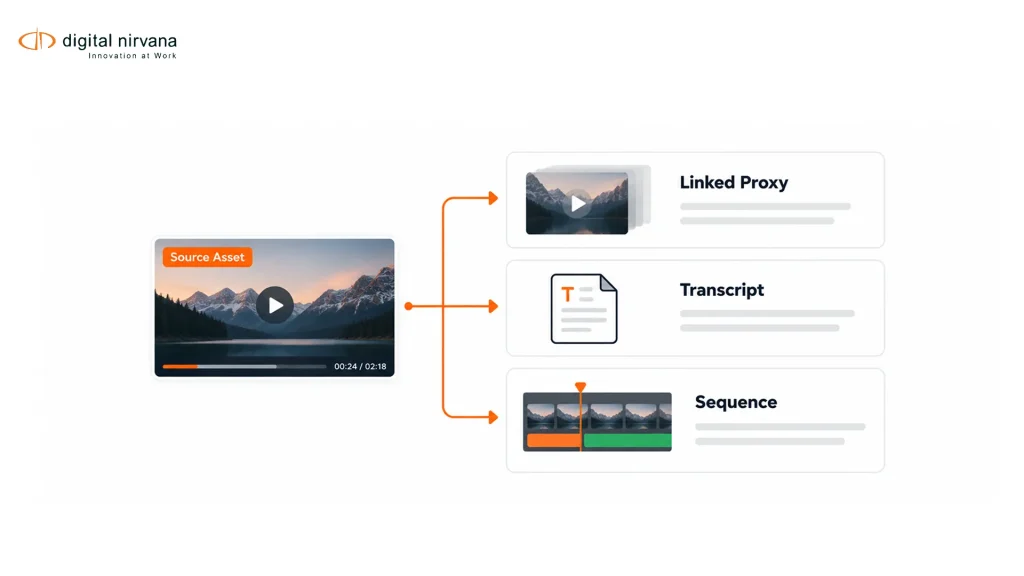
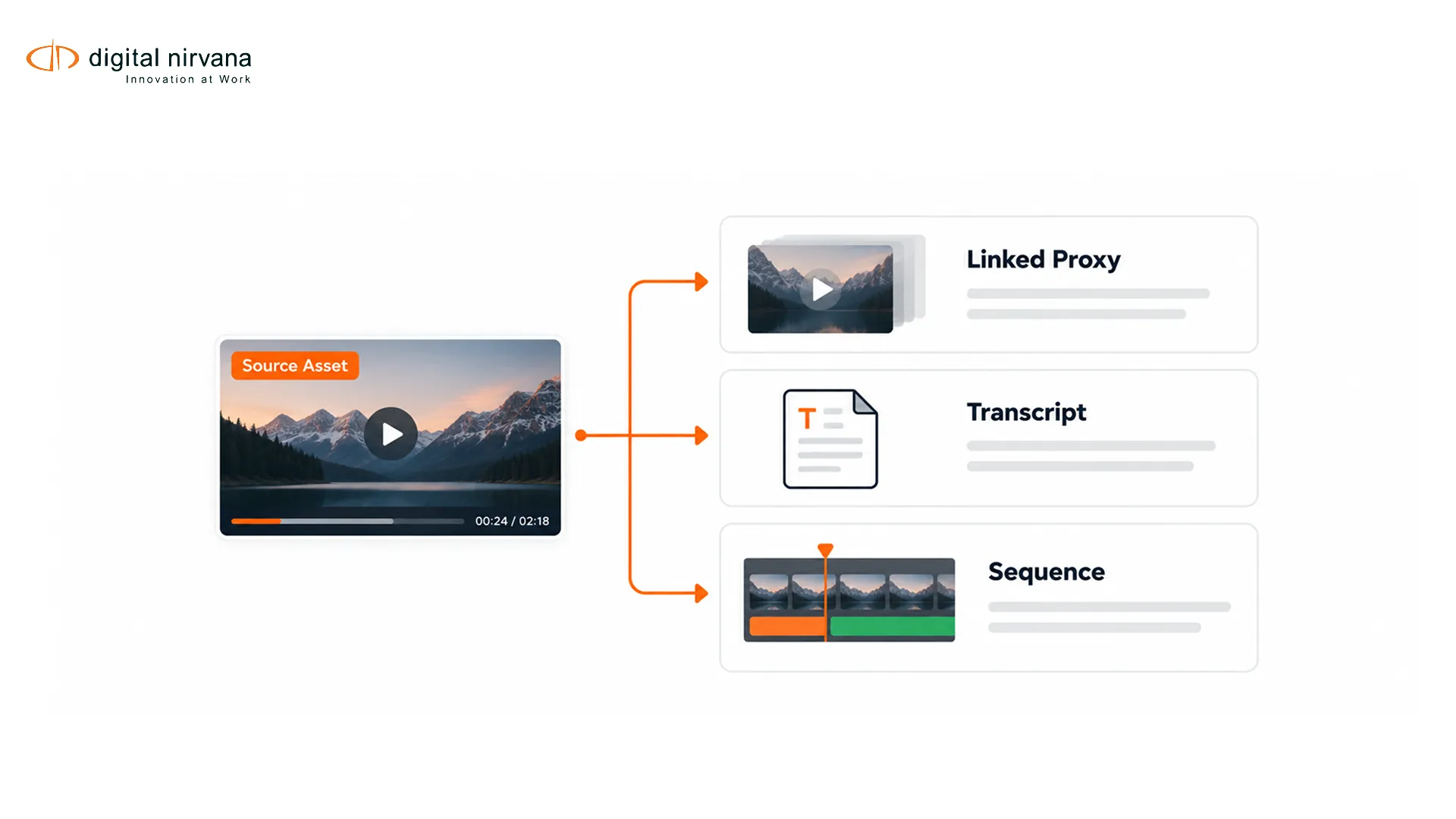
Confirm that each source is identifiable, accessible, and approved for processing. Create an intake record containing the original filename, stable asset identifier, source location, frame-rate interpretation, audio layout, and applicable restrictions.
Record exceptions before analysis begins. A missing audio channel or incomplete transfer can produce apparently convincing downstream output while leaving the editor with incomplete evidence. Keep failed or incomplete assets visible rather than letting them disappear from the job list.
For cloud transfers, Amazon S3’s checksum documentation explains mechanisms for checking object integrity. A matching checksum supports byte-level transfer validation; it does not prove that the right camera file was selected or that its descriptive metadata is correct.
Avoid changing source naming or media interpretation midway through the pilot. If a transformation is necessary, document the relationship between the original and the derived file so later selections remain traceable.
How Should Logging Become Searchable Preparation?
Treat generated transcripts and descriptions as a first indexing pass. Review fields that drive important editorial decisions, especially names, speaker identity, event identity, and restrictions.
Separate observed content from inferred meaning. A person raising their arms is visible behavior; whether they are celebrating a win depends on context. Your metadata should make that distinction clear enough for an editor to inspect.
Where an existing media system already holds the source library, metadata indexing may support discovery without relocating the entire archive. Confirm the relevant integration and field mapping for your environment.
The preparation stage ends when a producer can retrieve a useful source range and inspect the original context. It does not end merely because an analysis progress bar reaches completion. Test a known quotation, a visual moment, and a difficult example before allowing the job to advance.
How Does A Brief Become A Reviewable Assembly?
A reviewable assembly starts with explicit editorial constraints. State the audience, intended duration, required story points, material that must remain, and material that must not be used.
Consider an illustrative interview package. The brief requires a speaker’s qualification to remain with the claim it limits. If an automated assembly retains the claim and removes the qualification, the sequence may sound cleaner while changing the meaning. That should fail review even if every technical check passes.
Ask the editor to inspect why candidate material was selected and to compare alternatives before approval. Record unresolved context or rights questions as blockers, not optional notes.
For dialogue-led work, Adobe’s Text-Based Editing workflow shows one route from transcript selections into a sequence. Whatever tool supplies the assembly, the editor still needs to listen to the joins and watch the surrounding action.
What Should A Handoff Package Contain?
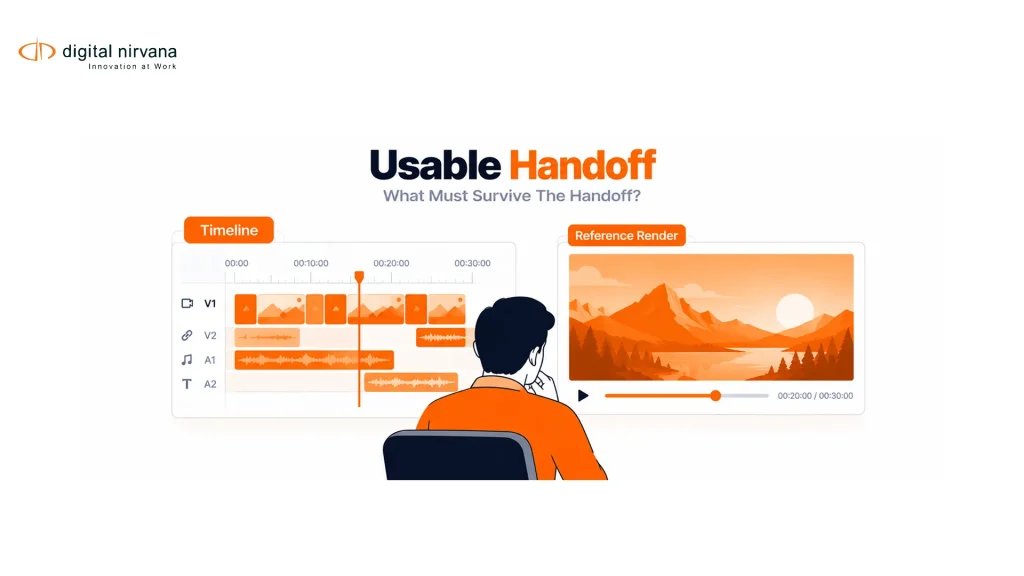
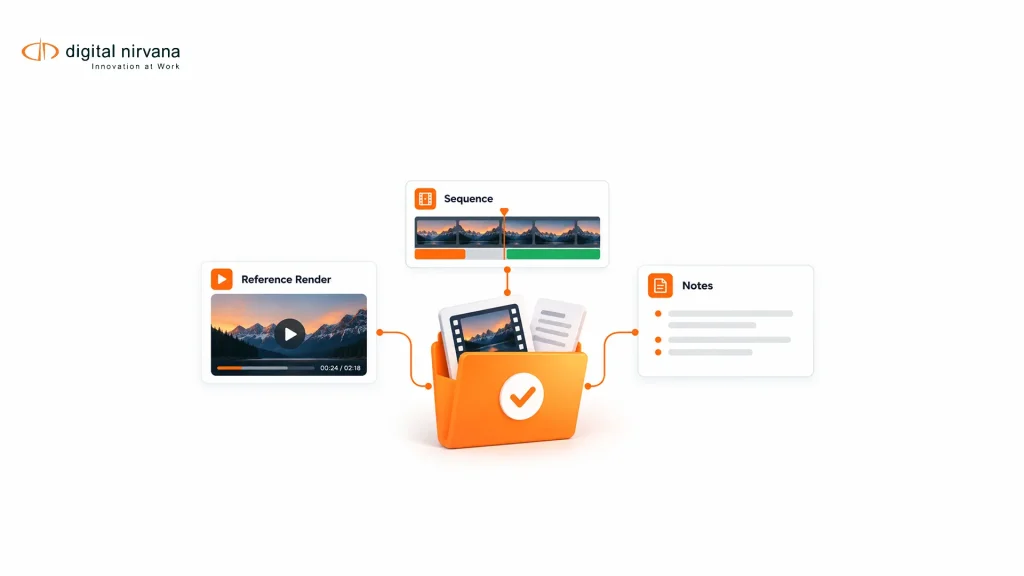
The package should let another editor reproduce the intended sequence and distinguish approved decisions from open questions. Include the editable timeline, referenced media or agreed paths, a reference render, review notes, and a list of known translation issues.
Use a manifest to connect those items to the same version. The render should not show one cut while the editable sequence contains another. Identify who exported the package and which software configuration the recipient is expected to use.
Include transcript or subtitle sidecars only with their role clearly labeled. A preparation transcript is not automatically an approved accessibility deliverable. Digital Nirvana’s broadcast language-workflow comparison provides related context on treating those outputs separately.
Finally, ask the receiving editor to acknowledge acceptance. An upload notification proves delivery of files, not successful use of the editorial package.
How Do You Prevent Rework From Moving Downstream?
Place a quality gate immediately before every irreversible or expensive handoff. The goal is to catch the defect where someone still has the context to fix it.
Track four proposed measures: time until footage is searchable, active assembly effort, review correction effort, and downstream repair effort. Compare equivalent assignments; a short interview and a multicamera sports package should not be treated as interchangeable observations.
Keep an exception log describing the cause rather than only the symptom. “Wrong event selected” points toward retrieval or briefing problems. “Media offline” points toward source mapping or packaging. “Producer changed direction” is a different class of work and should not be counted as a software error.
Review this log after each pilot assignment. If one stage becomes faster while another becomes consistently slower, change the process or acceptance criteria before expanding use across the team.
FAQs
A post production workflow is the sequence of tasks that turns recorded material into an approved deliverable. It includes preparation, editing, review, finishing, and delivery, with different responsibilities at each stage.
Start with a repeatable preparation or assembly task whose output your team can verify. That makes it easier to measure useful assistance and identify problems before changing a larger pipeline.
Keep originals and their identifiers available throughout the workflow. Generated metadata and proposed sequences should remain traceable to source material rather than becoming the only surviving record.
A rough cut still needs editorial and technical review. The required finishing, rights checks, audio work, captions, and delivery validation depend on the assignment.
The editor or producer assigned editorial responsibility should approve it. A processing job finishing successfully is not editorial approval.
Compare the effort and elapsed time required to reach the same accepted deliverable. Include preparation, review, and downstream repair so the measurement reflects the whole process.
Conclusion
Choose one recurring assignment and document its handoffs before adding more automation. Agree who accepts each stage, preserve the source references, and inspect exceptions together. Then discuss the workflow with Digital Nirvana using an actual intake-to-handoff example.