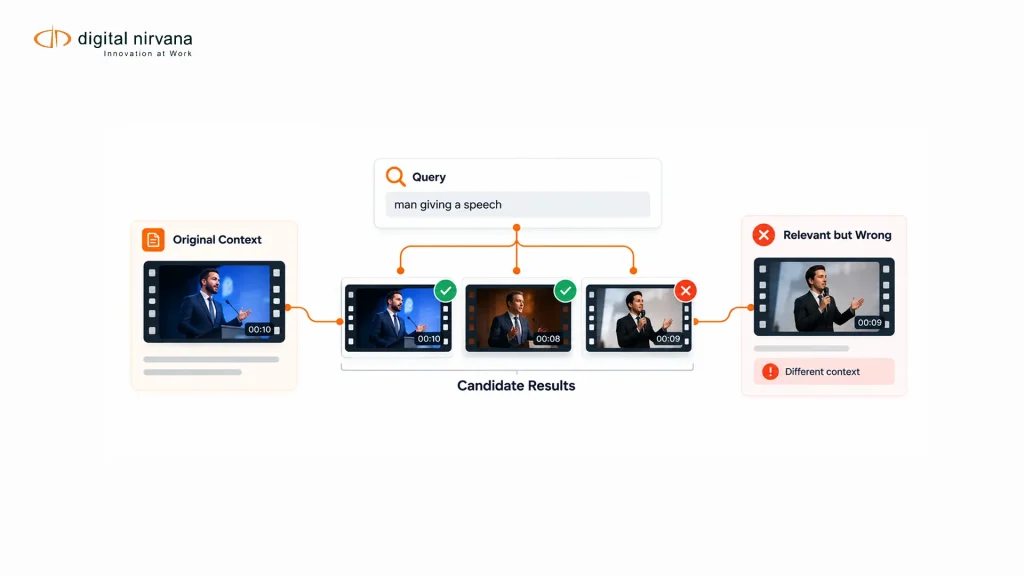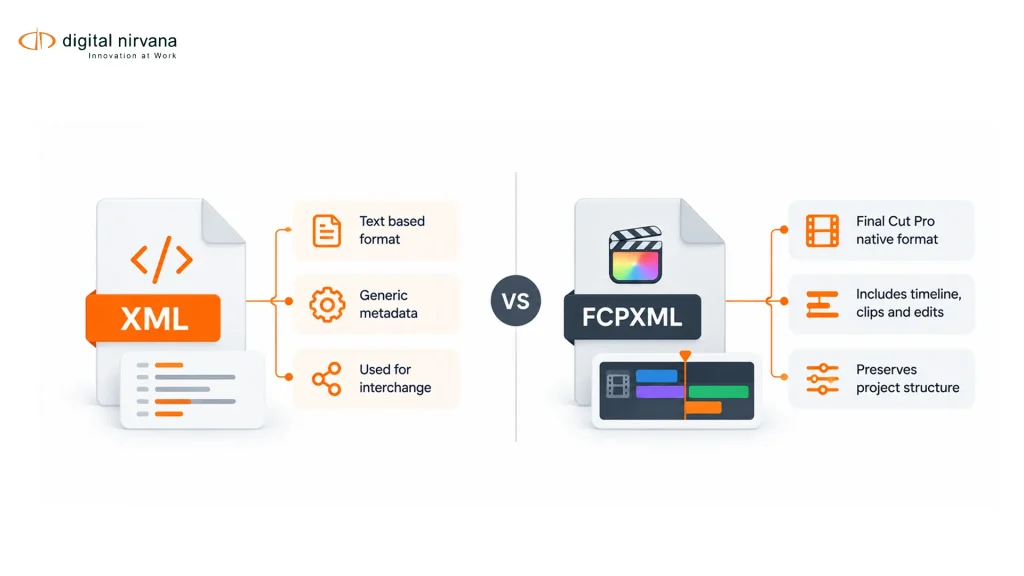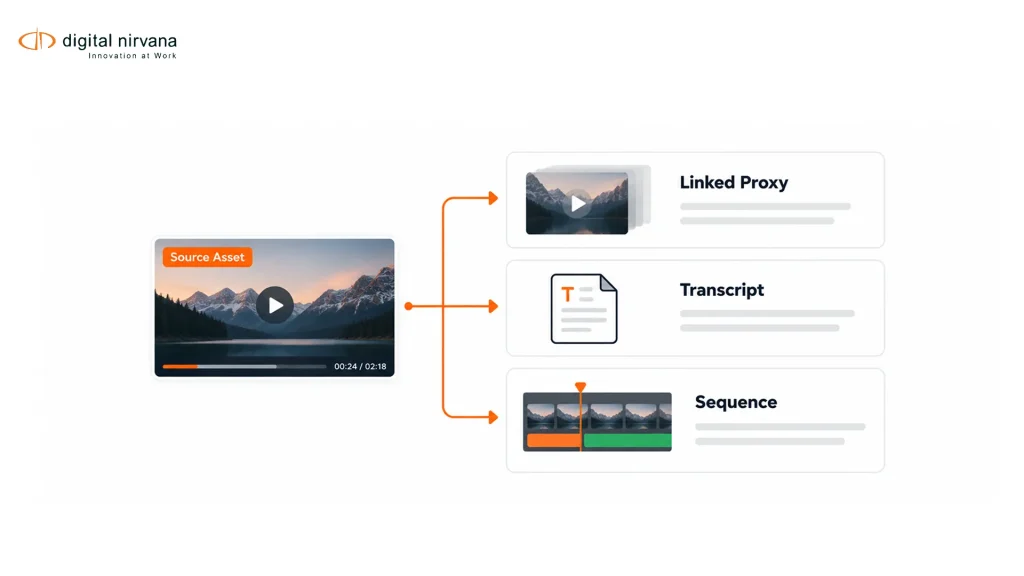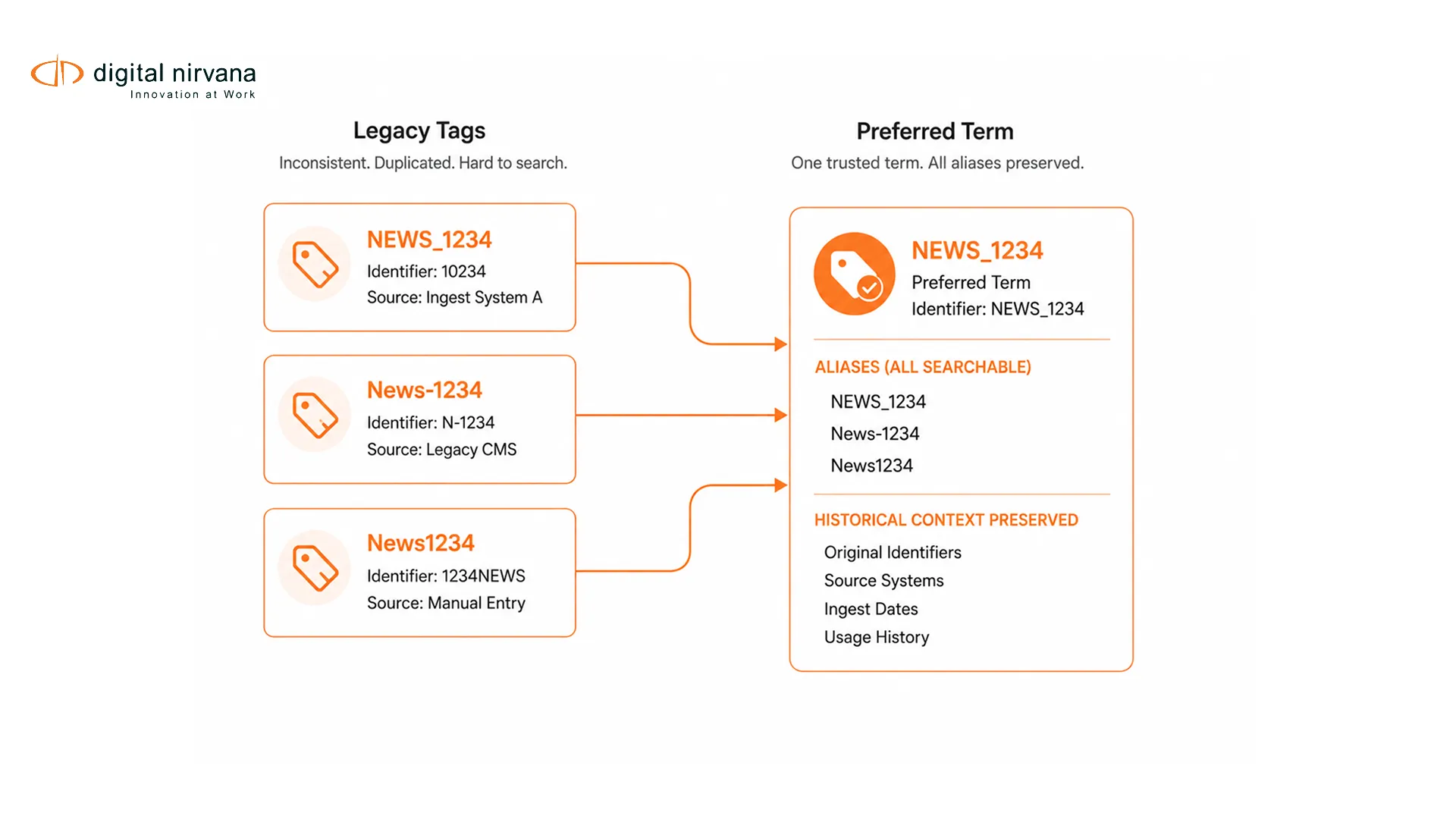
A metadata migration can finish with every record transferred and still leave an archive harder to search. Broadcast archive metadata migration succeeds only when old terms, aliases, identifiers, field meanings, and time-based relationships remain retrievable after the move. The safe method is to profile the source data, build field and value crosswalks, preserve original values, test real searches against both systems, and cut over only after the target returns equivalent or better results.
This matters most in long-running archives. One field may contain program genres, another may mix people and organizations, and a third may use abbreviations that only veteran staff understand. Moving those strings without interpreting them preserves the mess. Replacing them without traceability can erase years of institutional knowledge.
Key Takeaways
- A successful broadcast archive metadata migration preserves search behavior, not merely record counts.
- Field mapping and value mapping are separate jobs; matching “Genre” to “Content Type” does not resolve inconsistent values inside those fields.
- Every preferred term should retain aliases, source values, stable identifiers, and the mapping decision that produced it.
- One-to-many, many-to-one, and context-dependent mappings require human review because automatic replacement can change meaning.
- Search testing should use real producer, editor, rights, and archive queries before cutover, with the old system retained as a rollback reference.
- Migration logs should record source values, target values, rule versions, exceptions, timestamps, and reviewer decisions.
Table Of Contents
- Why Broadcast Archive Metadata Migrations Break Search
- What To Inventory Before Building A Crosswalk
- How To Build Field And Value Crosswalks
- Which Mapping Relationship Should Each Legacy Term Use
- How To Preserve Aliases, Identifiers, And Historical Context
- What Migration Sequence Reduces Risk
- How To Test Searchability Before Cutover
- How To Handle Exceptions, Versioning, And Rollback
- Where Automation And Human Review Fit
- FAQs
Why Do Broadcast Archive Metadata Migrations Break Search?
Migrations break search when they transfer values without preserving the meaning and retrieval behavior behind them. A legacy MAM may treat “PKG,” “package,” and “news package” as equivalent. A new system may index them as three unrelated terms. The record count matches, but a producer searching one preferred label misses two-thirds of the collection.
Other failures are less visible. A person’s name may move as plain text without the identifier that separates two people with the same name. A rights field may be flattened into a note, making it impossible to filter by territory or expiration. Segment-level tags may be copied to the asset level, causing a search result to imply that an entire program covers a topic mentioned for 20 seconds.
Digital Nirvana’s existing guidance on metadata tagging taxonomies for news and sports explains how controlled terms, entities, and aliases improve retrieval. Migration adds another requirement: every old value needs an explicit disposition, even when the decision is to retain it unchanged.
What Should You Inventory Before Building A Crosswalk?
Inventory the real source data before designing the target taxonomy. Documentation rarely captures every field, delimiter, local abbreviation, null value, or workaround that accumulated over years.
Start with five inventories:
- Field inventory: field name, data type, repeatability, required status, source system, and whether the field applies to an asset, rendition, segment, event, or person.
- Value inventory: every distinct value, its frequency, capitalization variants, delimiters, and co-occurring values.
- Relationship inventory: parent-child records, series and episode links, asset and instantiation links, segment timecodes, and person or organization references.
- Workflow inventory: which teams create, edit, approve, search, export, or depend on each field.
- Risk inventory: rights, restrictions, embargoes, accessibility, preservation, identity, and other fields where a wrong mapping can affect use.
Frequency matters, but it should not decide importance by itself. A term used once may identify the only interview with a historical figure. A blank value may mean “unknown,” “not applicable,” “not yet reviewed,” or simply missing. Treating all four as empty discards operational meaning.
How Do You Build Field And Value Crosswalks?
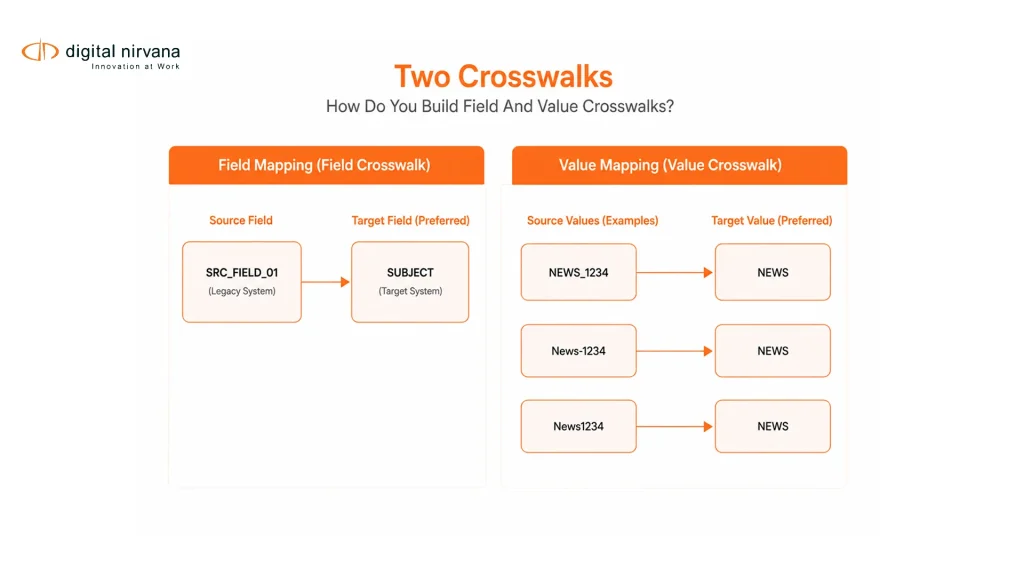
Build two linked crosswalks: one for the structure and another for the terms stored inside it. A field crosswalk answers where data belongs. A value crosswalk answers how each legacy term will be represented.
For every source field, record the target field, transformation rule, cardinality, data type, default behavior, and exception path. “Cardinality” means whether the field allows one value or several. A repeatable legacy subject field cannot safely move into a single-value target field without a rule for selecting, joining, or splitting values.
Then map the values. For each legacy value, record:
- Original value exactly as stored
- Preferred target term
- Target concept or entity identifier
- Mapping relationship
- Confidence or review status
- Effective date and rule version
- Notes explaining context-dependent decisions
The PBCore mappings documentation shows why crosswalks need specificity. Its PBCore-to-MARC guidance includes simple and complex mappings because a source element may map differently depending on context. Broadcast teams should expect the same issue when moving between custom schemas, MAM platforms, PAM environments, and archive databases.
Which Mapping Relationship Should Each Legacy Term Use?
Each legacy term should be classified as an exact match, close match, broader match, narrower match, related match, or no safe automatic match. Treating every mapping as simple equality hides uncertainty and creates silent errors.
The W3C SKOS reference defines mapping relationships between concepts in different schemes, including exact, close, broader, narrower, and related matches. Those relationships provide a useful model even when the migration is implemented in a spreadsheet or ETL pipeline rather than RDF.
Use the relationships this way:
- Exact match: the old and new concepts can be used interchangeably across the intended searches.
- Close match: they are similar enough for some retrieval uses but should not be merged without qualification.
- Broader match: the target term covers more than the source term, so detail may be lost.
- Narrower match: the target term is more specific and may require context or additional evidence.
- Related match: the terms are associated but not equivalent.
- No match: retain the original and route it for review.
Never force a one-to-one mapping to make the spreadsheet look complete. An unresolved value is safer than a wrong value that appears authoritative.
How Do You Preserve Aliases, Identifiers, And Historical Context?
Preserve the legacy value as an alias or source label rather than deleting it after normalization. Preferred terms improve consistency, while aliases preserve the language people actually use to search.
For a person, team, program, venue, sponsor, or organization, attach variants to a stable entity identifier. The identifier should remain unchanged when the display label changes. That allows a search for an old team name, former sponsor name, nickname, transliteration, or misspelling to resolve to the same entity without rewriting the historical record.
Controlled vocabularies can also carry history. The Library of Congress controlled vocabularies include current genre and form terms for moving images and sound recordings while noting earlier guides still found in legacy cataloging. That distinction is directly relevant to broadcast archives: discontinued terms may remain valuable as access points even when teams stop assigning them to new records.
Keep at least four values where the target supports them: preferred label, alternative label, source label, and stable ID. Add valid-from and valid-to dates when names or classifications change over time.
What Migration Sequence Reduces Risk?
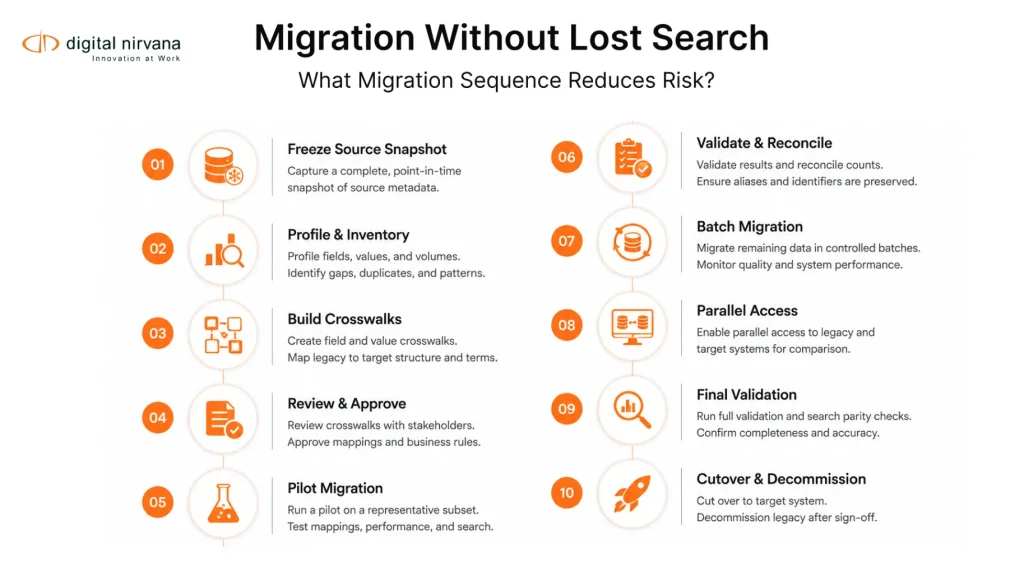
A staged migration reduces risk because it separates discovery, mapping, transformation, and cutover into testable decisions. Do not clean the only copy of the source data in place.
Use this sequence:
- Freeze a source snapshot. Export records, schemas, vocabulary lists, relationship tables, and configuration needed to reproduce the starting state.
- Profile the data. Measure distinct values, blanks, duplicates, malformed dates, orphaned identifiers, delimiter patterns, and field usage.
- Approve the crosswalk. Archive, production, rights, engineering, and system owners review high-impact fields and ambiguous values.
- Transform a representative pilot. Include common records, rare records, multi-part programs, segment metadata, restricted assets, and known problem cases.
- Load into a non-production target. Preserve source identifiers and migration batch IDs so every record can be traced.
- Test retrieval and workflows. Compare real searches, filters, exports, integrations, and write-back behavior.
- Reconcile and correct. Resolve exceptions, update mapping rules, then rerun the pilot from the frozen source.
- Migrate in controlled batches. Record batch boundaries, counts, failures, and rule versions.
- Run parallel access. Keep the legacy system read-only while users validate the target.
- Cut over with rollback criteria. Define the errors or search failures that trigger a pause or reversal.
The process separates archive migration from ongoing enrichment. MetadataIQ’s media indexing workflow can support searchable metadata within existing media infrastructure, but the source taxonomy, target rules, and human approval points still need to be defined for the specific environment.
How Should You Test Searchability Before Cutover?
Test whether users can find the same assets and moments, not only whether the same number of records arrived. Technical reconciliation proves transfer completeness. Retrieval testing proves operational usefulness.
Build a search test set from actual requests made by producers, editors, librarians, rights teams, compliance staff, and researchers. Include:
- Preferred names and former names
- Acronyms, nicknames, misspellings, and transliterations
- Series, episode, version, and segment searches
- Topic plus date or location combinations
- Rights territory and expiration filters
- Exact quotes, speakers, logos, objects, and timecoded moments
- Searches expected to return no result
For each query, compare recall, precision, ranking, facets, timecode accuracy, and permissions. Recall measures whether relevant items were found. Precision measures whether the returned items were actually relevant.
Record a baseline before transformation. A migration that raises metadata consistency but lowers recall for the archive’s most common queries is not ready. This is where video metadata capture and governance should connect to migration QA: required fields, timecodes, rights, and approval status need tests tied to their operational use.
How Do You Handle Exceptions, Versioning, And Rollback?
Exceptions should remain visible, versioned, and reversible until a responsible owner resolves them. Hiding them in a general migration log makes the next correction harder.
Create an exception queue for unmapped terms, conflicting identifiers, malformed dates, mixed fields, invalid timecodes, orphaned relationships, and records that violate target constraints. Assign each exception a category, severity, owner, source record, proposed action, and resolution status.
Version every crosswalk and transformation rule. The migration log should record:
- Migration batch and source snapshot
- Crosswalk and script version
- Source field and value
- Target field and value
- Mapping relationship
- Automatic or human decision
- Reviewer and timestamp
- Validation result
- Reversal action
Rollback does not always mean restoring the entire old system. It may mean reversing one batch, restoring one field, reapplying aliases, or rebuilding a search index. Define those actions before cutover.
The same audit discipline used in metadata automation governance applies here. A migration decision should be explainable after the project team has moved on.
Where Do Automation And Human Review Fit?
Automation should handle repeatable transformations, while people decide mappings that depend on editorial, historical, or rights context. Scripts are effective for trimming whitespace, normalizing case, splitting known delimiters, validating formats, applying approved exact matches, and generating exception reports.
Human review is needed when:
- One source term could map to several target concepts
- Several source terms may represent one entity
- A label changed meaning over time
- Rights or restriction values are incomplete
- A broader or narrower mapping may remove detail
- A person or organization identity is uncertain
- A field mixes multiple semantic roles
Run transformation rules against the frozen source every time. Do not make manual corrections only in the pilot target because they will disappear during the next load. Approved corrections belong in the crosswalk, authority file, or repeatable script.
If your archive team is evaluating how to enrich migrated records after the structure is stable, use one scoped next step: explore MetadataIQ for media indexing and archive enrichment.
FAQs
Broadcast archive metadata migration is the controlled transfer and transformation of descriptive, technical, rights, structural, and time-based metadata from a legacy system into a new archive, MAM, DAM, or related platform. It includes preserving meaning, relationships, identifiers, aliases, and search behavior.
A metadata crosswalk maps source fields and values to their target equivalents. A reliable crosswalk records transformation rules, mapping relationships, exceptions, and review decisions rather than listing field names alone.
Legacy tags should usually be retained as aliases or source values when they carry retrieval or historical value. Removing them can break searches based on former names, local abbreviations, misspellings, or terminology used in older records.
Use a one-to-many rule only when the source contains enough context to support each target term. Otherwise, preserve the original value and route the record for human review rather than creating unsupported specificity.
Test record counts, required fields, relationships, identifiers, permissions, exports, integrations, and real user searches. Retrieval tests should cover aliases, combined filters, timecoded moments, rights conditions, and expected zero-result queries.
Measure migration quality with transfer reconciliation, mapping coverage, exception rates, search recall, search precision, relationship integrity, and user validation. No single metric proves success because complete transfer can coexist with poor retrieval.
AI can suggest classifications, entities, and matches, but ambiguous or high-impact mappings still require governed human review. Rights, identity, historical context, and many-to-one collisions should not be resolved from model confidence alone.
Metadata migration does not always require replacing the existing MAM or DAM. Teams may migrate between systems, consolidate taxonomies, enrich an archive in place, or add an intelligence layer that works with current infrastructure.
Conclusion
A broadcast archive metadata migration should begin with the searches and workflows the archive must preserve. Freeze the source, profile the real values, build separate field and value crosswalks, retain aliases and stable identifiers, and test retrieval before cutover.
Professional help becomes useful when the archive contains mixed schemas, undocumented local fields, timecoded relationships, rights-sensitive values, or several systems that must remain synchronized. The first decision is not which script to run. It is which meanings, relationships, and access paths cannot be lost.