Introduction
Global distribution can turn one video library into many new opportunities for audiences.
But there is a difference between making content available worldwide and making it feel ready for each market. A subtitle that is technically translated but poorly timed can frustrate viewers. A caption file that lacks sound cues can fail to meet accessibility expectations. A direct translation can lose humor, emotion, cultural references, or brand meaning.
For media teams, translation and subtitle services are not just post-production tasks. They are part of the distribution workflow. They help content move across languages, platforms, regions, and accessibility requirements while keeping the viewing experience clear and natural.
That is why strong media localization services combine language expertise, subtitle timing, caption quality, cultural adaptation, file formatting, and quality control. The goal is not only to translate words. The goal is to help every viewer follow the story with the same clarity and intent as the original audience.
Table Of Contents
- What Are Translation And Subtitle Services?
- Why Global Media Distribution Needs More Than Translation
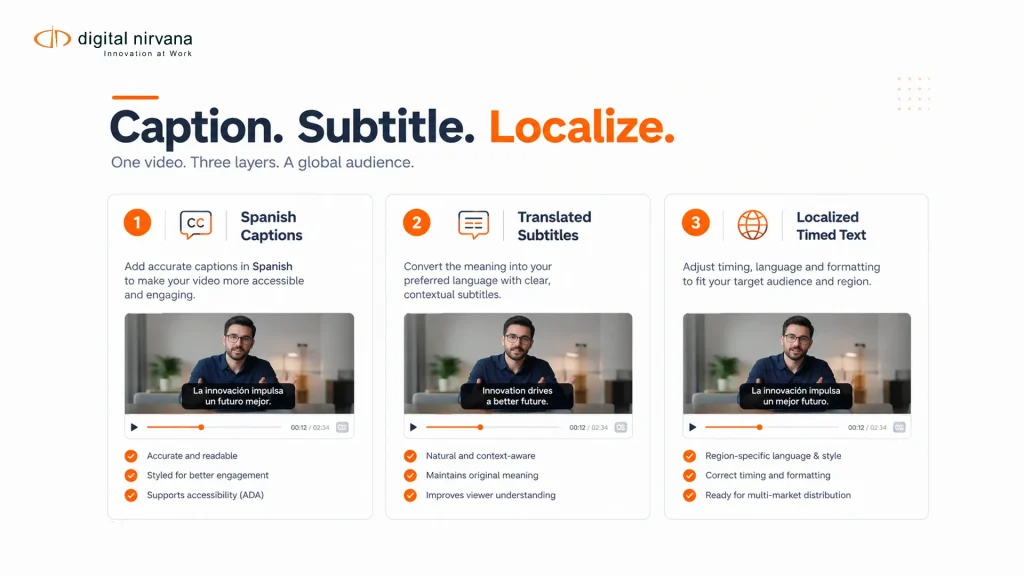
- Translation, Subtitles, Captions And Localization: What Is The Difference?
- What To Look For In Translation And Subtitle Services
- How Media Localization Services Support Global Distribution
- A Practical Workflow For Translation And Subtitle Projects
- How Digital Nirvana Supports Media Enrichment And Localization
- When Media Teams Should Use A Professional Localization Partner
- FAQs
- Conclusion And Key Takeaway
What Are Translation And Subtitle Services?
Translation and subtitle services help media teams convert spoken or written content from one language into another and prepare that translated text for video playback.
Media distribution usually involves more than document translation. A professional subtitle workflow may include transcription, source script preparation, translation, subtitle timing, subtitle formatting, caption creation, quality control, file conversion, and delivery in formats accepted by broadcast, OTT, streaming, learning, or social platforms.
Digital Nirvana’s Media Enrichment solutions include captioning, transcription, subtitling, live captioning, translation, and related services for global accessibility and media workflows. Its translation services page also describes translation across documents, audio, video, legal, medical, and other content, with skilled linguists delivering precise, culturally nuanced output.
For a media company, this matters because subtitles are part of the viewer experience. They need to be accurate, readable, synchronized, culturally appropriate, and technically ready for the destination platform.
Why Global Media Distribution Needs More Than Translation
Global media distribution is not only a language problem. It is a viewing experience problem.
A direct translation may technically communicate the words, but it may not fit the character limit, reading speed, cultural context, tone, genre, or platform requirement. A subtitle may be accurate, but if it appears too late, disappears too quickly, or breaks a sentence awkwardly, viewers may struggle to follow the content.
This is why media localization services go beyond word-for-word translation. Translated describes the challenge of global media distribution as preserving message, emotion, and cultural nuance, not simply making content available in another language. Deluxe also frames localization as delivering authentic content experiences through services such as subtitling, dubbing, audio description, and accessibility support.
For broadcasters, OTT platforms, studios, education companies, corporate media teams, and digital publishers, the risk is clear. Poor localization can reduce engagement, create accessibility gaps, delay distribution, or cause platform rejection.
Strong translation and subtitle services help teams avoid those issues before the content reaches viewers.
Translation, Subtitles, Captions And Localization: What Is The Difference?
These terms are related, but they do not mean the same thing. Understanding the difference helps teams choose the right service for each distribution need.
Translation
Translation converts meaning from one language into another.
For media, this may include scripts, transcripts, subtitles, captions, metadata, episode descriptions, promotional copy, compliance notes, and platform descriptions. Good media translation must preserve tone, intent, context, names, idioms, humor, and cultural meaning.
Translation is the foundation, but it is not the finished video deliverable by itself.
Subtitles
Subtitles are timed text displayed on screen so viewers can read dialogue in the same language or another language.
For global distribution, subtitles usually focus on dialogue translation. They must be synchronized with speech, fit the screen, and remain readable at the viewer’s pace. Netflix’s timed text guide, for example, says subtitle text should usually be kept to one line unless it exceeds character limits, with a maximum of two lines.
This shows why subtitle translation is a specialist task. The translator must consider meaning, timing, line breaks, character limits, and readability at the same time.
Captions
Captions are designed for viewers who need access to both speech and important non-speech audio.
W3C explains that captions provide a text version of speech and non-speech audio information needed to understand the content, and they are synchronized with the audio. Captions may include speaker identification, music cues, sound effects, tone, and other audio information that affects meaning.
The FCC says closed captions on television should be accurate, synchronous, complete, and properly placed. These standards make caption quality important for accessibility, compliance, and viewer trust.
Media Localization
Media localization adapts content for a specific language, region, culture, platform, and audience.
It may include translation, subtitles, captions, dubbing, voice-over, audio description, graphics localization, metadata translation, title adaptation, regional compliance checks, and platform-specific formatting.
Visual Data Media Services describes localization for media and broadcast as including subtitling, dubbing, scripting, closed captions, and metadata. For global distribution, this broader localization layer is often what separates a translated asset from a market-ready asset.
What To Look For In Translation And Subtitle Services
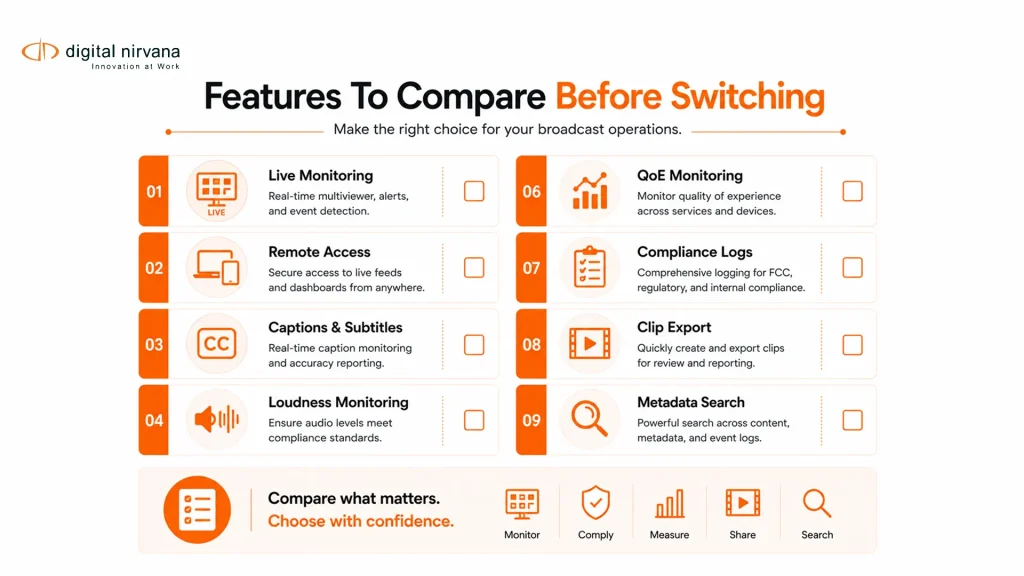
Choosing a provider should not depend only on language count or turnaround time. Media teams should compare quality, workflow fit, file readiness, review process, and distribution support.
Linguistic Accuracy
Accuracy is the baseline.
The translated subtitles should preserve meaning, names, terminology, numbers, speaker intent, and context. For factual content, this is especially important because a mistranslated figure, title, quote, or claim can change its meaning.
For entertainment, accuracy also includes tone. A comedy, documentary, sports interview, news segment, corporate film, and scripted drama all require different language handling.
Cultural Adaptation
Good localization adapts meaning for the target audience without changing the core message.
This may involve idioms, jokes, regional references, honorifics, measurements, currency, gestures, slang, and cultural context. A literal translation may be correct on paper but still feel unnatural to viewers.
This is why human linguistic review remains important, even when AI helps speed up parts of the process. Translated’s media translation guidance describes a hybrid approach that combines AI with human expertise to preserve nuance and creative intent.
Subtitle Timing And Readability
Subtitles need to be readable while the video is moving.
Timing, line breaks, character limits, and reading speed all affect the viewer experience. A subtitle that disappears too quickly can be as damaging as a mistranslation. A subtitle that covers important visual information can distract from the scene.
Netflix’s timed text guide gives practical rules for line treatment, including keeping subtitles to two lines maximum and making line breaks after punctuation, before conjunctions, or before prepositions when needed. These details matter because subtitles must support the video, not compete with it.
Caption And Accessibility Support
Media teams should look for providers that understand the difference between subtitles and captions.
Captions support accessibility by including speech and important non-speech audio. W3C notes that captions are used by people who are Deaf or hard of hearing, and also by people who process written information better than audio.
For broadcast and streaming teams, caption quality should be part of the localization workflow, especially when content is repurposed across regions or platforms.
File Format And Platform Readiness
Translation and subtitle services should deliver files that are ready for the destination platform.
Common subtitle and caption formats include SRT, VTT, SCC, TTML, STL, and other platform-specific timed text formats. Crowdin’s subtitle localization page, for example, lists support for formats such as SRT, VTT, SBV, ASS, SMI, and SUB, which reflects how varied subtitle delivery requirements can be across systems.
Before choosing a provider, teams should confirm whether the service can deliver the right file format, frame rate, encoding, naming convention, language code, and versioning structure.
Human Review And Quality Control
A strong workflow should include review before delivery.
Quality control should check translation accuracy, timing, spelling, punctuation, reading speed, line breaks, subtitle placement, caption completeness, file format, and platform compatibility.
AI can help create first-pass transcripts, translations, and subtitles, but human review is still important for tone, cultural nuance, sensitive terms, brand language, and final approval.
Scalable Turnaround Times
Global media teams often need to localize many assets at once.
This may include full seasons, live events, sports highlights, news archives, corporate training libraries, OTT catalogs, or social clips. A provider should support urgent turnaround without losing quality control.
Digital Nirvana’s Media Enrichment page emphasizes flexible turnaround times for captioning, transcription, subtitling, live captioning, translation, and related services.
Security And Content Confidentiality
Media localization often involves unreleased content.
Studios, broadcasters, OTT platforms, corporate teams, and learning organizations should ask how files are handled, who has access, how review workflows are managed, and whether the provider can support confidential or pre-release content.
This is especially important for entertainment premieres, sports packages, financial content, legal material, corporate training, and internal communications.
How Media Localization Services Support Global Distribution?
Media localization services help teams prepare content for more markets, more platforms, and more viewers.
OTT And Streaming Distribution
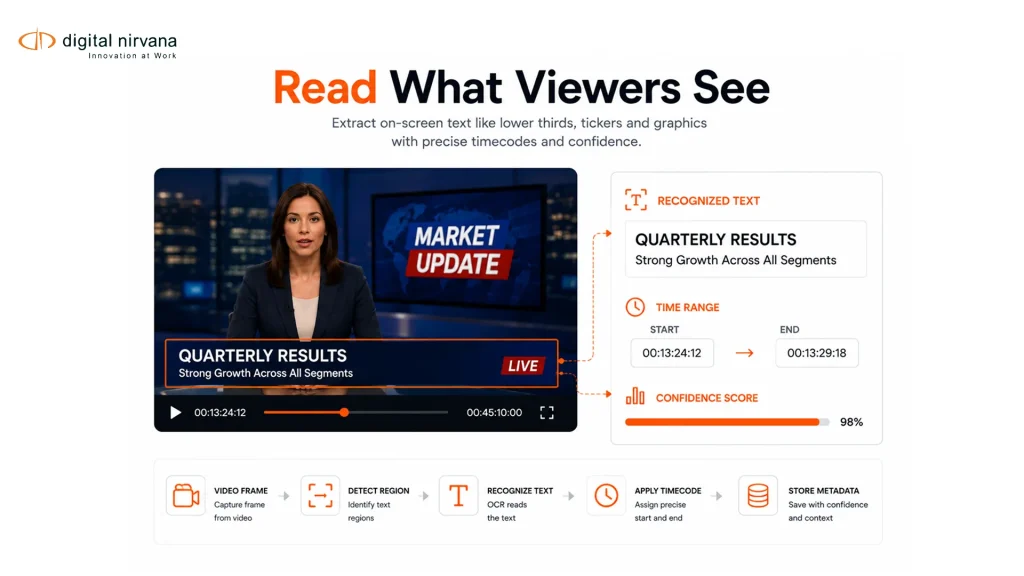
OTT and streaming platforms need localized subtitles, captions, descriptions, metadata, thumbnails, titles, and sometimes dubbing or audio description.
A single program may need multiple subtitle files, caption files, language variants, regional descriptions, and compliance-ready metadata. Localization helps teams release content across territories without having to rebuild the workflow for each market.
Digital Nirvana’s TranceIQ page also highlights auto-translation of captions into 100+ alternate languages within the same session, helping teams repurpose assets for distribution across regions and countries.
Broadcast And Linear TV Distribution
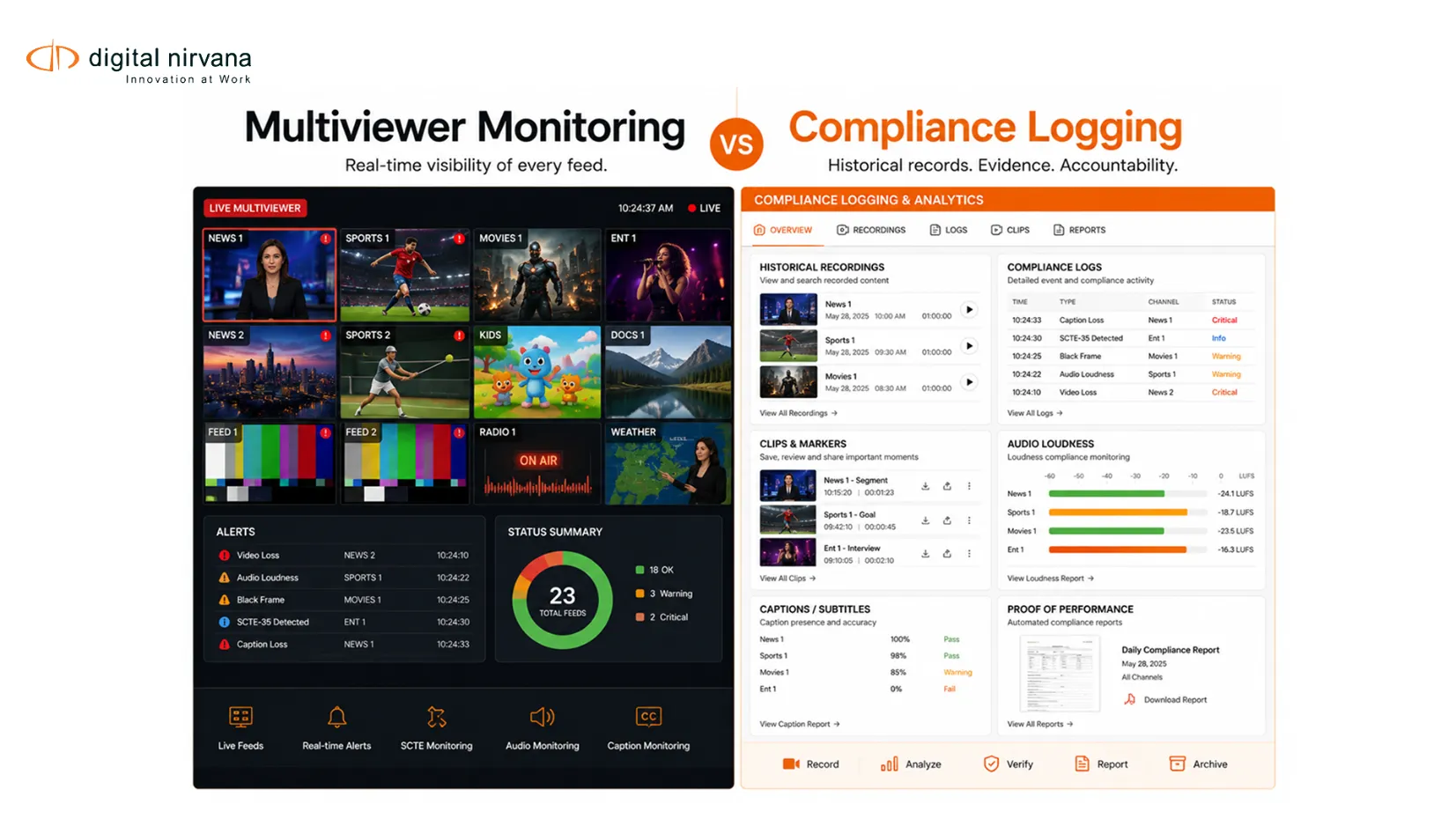
Broadcast distribution often requires accurate captions, subtitles, transcripts, timing, and compliance-ready files.
For television, caption quality can affect accessibility and regulatory requirements. The FCC’s captioning guide states that captions should match spoken words, convey background noises and other sounds as much as possible, align with the audio, run from beginning to end, and avoid blocking important visual content.
For broadcasters, translation and subtitle services should support both editorial quality and technical readiness.
FAST Channel Distribution
FAST channels need efficient localization because content libraries often move quickly across channels, regions, and ad-supported environments.
Localization can help teams package older content for new audiences, add subtitles for new regions, and improve catalog usability without creating a fully new production cycle.
For FAST operations, the key is repeatable workflow. Teams need subtitle files, translated metadata, version control, QC, and delivery formats that can scale across many titles.
Corporate And Learning Content
Media localization is not limited to entertainment.
Corporate training, product education, investor communications, compliance training, and learning content all benefit from translation and subtitles. For global companies, subtitles and captions can help employees, customers, and partners understand video content in their preferred language.
This is especially useful when one training or learning asset needs to serve many regions.
Archive Monetization
Many media organizations already own valuable content that is hard to distribute globally because it exists in only one language.
Translation, subtitles, captions, and localized metadata can help turn archive content into new regional opportunities. This can support licensing, OTT packaging, educational reuse, social republishing, and international distribution.
Digital Nirvana’s Digital Content Localization blog frames localization with multilingual dubbing and subtitles as a way to expand reach, unlock revenue, and improve audience experience across regions.
A Practical Workflow For Translation And Subtitle Projects
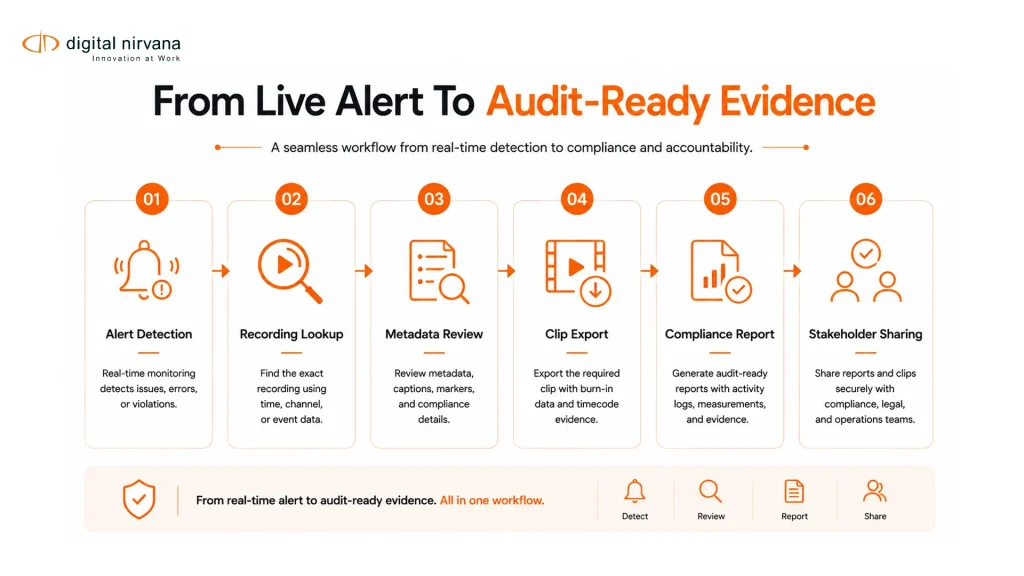
A strong localization workflow reduces rework. It also helps teams maintain quality across languages, vendors, and platforms.
Prepare The Source Media
Start by collecting the source video, final audio, scripts, existing transcripts, captions, glossary, brand terms, speaker names, and platform requirements.
This step prevents confusion later. If the source file changes after translation begins, timing and subtitle segmentation may need to be rebuilt.
Create Or Clean The Source Transcript
A clean source transcript improves every downstream step.
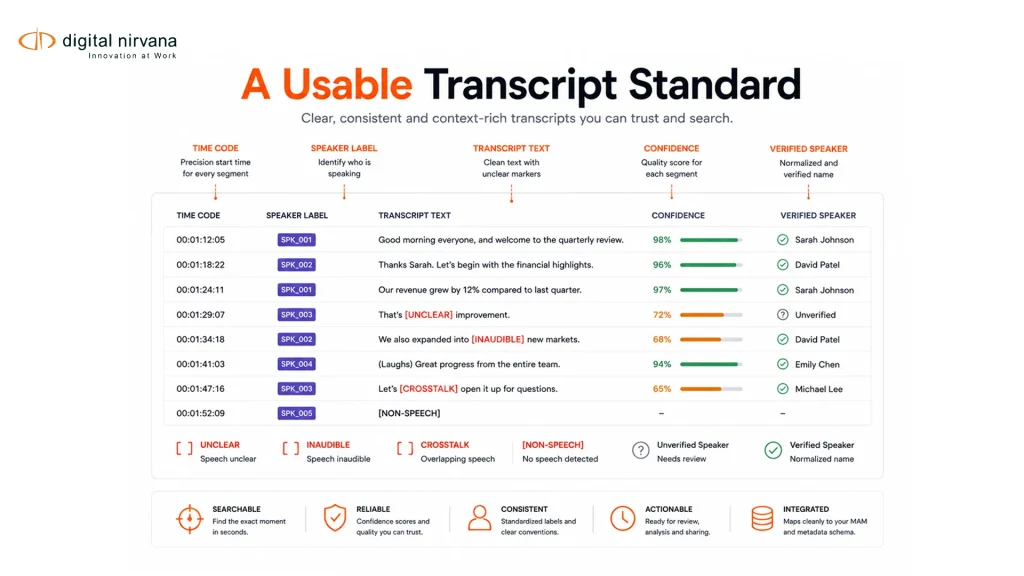
The transcript should include accurate dialogue, speaker labels where needed, proper names, terminology, and timecodes. If the transcript is inaccurate, the translation and subtitles may inherit those mistakes.
For teams that need transcription, captioning, subtitling, and translation in one workflow, Digital Nirvana’s Media Enrichment solutions are relevant because they cover each of these connected services.
Translate For Meaning And Context
The translation stage should focus on meaning, tone, and audience context.
This is where a linguist or reviewer adapts idioms, phrasing, cultural references, humor, emotional tone, and specialized terminology. The goal is to create subtitles that feel natural to the target audience while staying faithful to the original content.
Time And Format The Subtitles
After translation, subtitles need to be timed and formatted.
This includes syncing text with speech, cleanly splitting lines, adjusting reading speed, checking duration, avoiding awkward breaks, and ensuring subtitles do not block important visual information.
This is one reason professional subtitle translation differs from ordinary translation. The final output must work on screen.
Review Captions, Subtitles, and Localization Quality
Quality control should review both language and technical performance.
A reviewer should check accuracy, grammar, punctuation, names, numbers, terminology, timing, readability, caption completeness, sound cues, speaker labels, and file compatibility. For accessibility-focused work, W3C’s guidance is useful because it explains that captions include both speech and meaningful non-speech audio.
Deliver Platform-Ready Files
The final files should match the destination requirements.
This may include SRT, VTT, SCC, TTML, embedded captions, sidecar files, translated metadata, script files, or platform-specific packages. Teams should also confirm language codes, naming conventions, frame rates, and version numbers.
Poor file management can delay distribution even when the translation itself is good.
Maintain A Reusable Localization Library
Localization gets easier when teams preserve approved translations, glossaries, character names, show terminology, legal phrases, and subtitle templates.
A reusable library helps maintain consistency across episodes, seasons, regions, and platforms. It also reduces review time for future projects.
How Digital Nirvana Supports Media Enrichment And Localization
Digital Nirvana’s Media Enrichment solutions are built for teams that need accurate, scalable media accessibility and localization workflows.
The service includes captioning, transcription, subtitling, live captioning, translation, and related services for global media accessibility. For teams with video catalogs, broadcast content, OTT assets, corporate media, or learning content, this connected service model helps reduce handoffs between transcription, captioning, translation, and subtitling vendors.
Digital Nirvana also offers dedicated translation services for documents, audio, video, legal, medical, and other content, supported by linguists who focus on accurate and culturally nuanced translation. For teams that need multilingual subtitle generation and localization at scale, TranceIQ supports caption auto-translation into 100+ languages within the same session.
This makes Digital Nirvana a strong fit when a team needs more than one isolated service. A global distribution workflow may require transcripts, captions, subtitles, translation, quality control, and platform-ready deliverables together.
When Media Teams Should Use A Professional Localization Partner?
A professional partner becomes important when the cost of errors is higher than the cost of doing the work properly.
Media teams should consider professional translation and subtitle services when:
They are preparing content for international distribution.
They need subtitles or captions in multiple languages.
They need platform-ready subtitle files.
They need caption quality for accessibility.
They are localizing entertainment, news, sports, education, corporate, or regulated content.
They need fast turnaround across large media libraries.
They need human review for cultural accuracy and tone.
They need to reduce rework caused by rejected files or poor timing.
They need consistent terminology across episodes, seasons, regions, or product lines.
They need one workflow for transcription, captioning, subtitling, translation, and localization.
For commercial buyers, the real question is not whether a subtitle can be translated. The stronger question is whether the final media asset is accurate, readable, culturally appropriate, accessible, and ready for the platform where it will be published.
FAQs
What Are Translation And Subtitle Services?
Translation and subtitle services convert spoken or written content into another language and prepare it as timed text for video. These services may include transcription, translation, subtitle timing, captioning, formatting, quality control, and delivery in platform-ready files.
What Is The Difference Between Subtitles And Captions?
Subtitles usually provide dialogue text for viewers who can hear the audio but need language support. Captions include dialogue and important non-speech audio, such as speaker identification, music, sound effects, and other audio cues. W3C explains that captions provide speech and non-speech audio information needed to understand the content.
What Are Media Localization Services?
Media localization services adapt video, audio, subtitles, captions, scripts, metadata, and sometimes graphics or dubbing for a specific language, region, culture, platform, or audience. Localization goes beyond direct translation because it considers tone, context, cultural meaning, timing, and delivery requirements.
Why Are Subtitle Services Important For Global Distribution?
Subtitle services help media teams reach viewers in different languages without recreating the original content. They also support OTT, broadcast, FAST, corporate, learning, and social media distribution by making video easier to understand across regions.
What Makes A Good Subtitle Translation?
A good subtitle translation is accurate, natural, readable, well-timed, culturally appropriate, and technically formatted for the destination platform. It should preserve the meaning of the original content while fitting subtitle timing and readability limits.
Do Translation And Subtitle Services Include File Formatting?
Professional services should include file formatting or file delivery support. Common formats include SRT, VTT, SCC, TTML, and other platform-specific timed text files. Crowdin’s subtitle localization page lists support for several subtitle formats, including SRT and VTT, showing how format readiness matters in localization workflows.
Can AI Be Used For Subtitle Translation?
Yes. AI can help speed up transcription, translation, caption generation, and subtitle drafting. However, human review is still important for cultural nuance, terminology, tone, timing, accessibility, and final quality. Translated’s media translation AI guidance also describes the value of combining AI with human expertise for media localization.
How Does Digital Nirvana Support Translation And Subtitle Services?
Digital Nirvana’s Media Enrichment solutions include captioning, transcription, subtitling, live captioning, translation, and related services. Its translation services support audio, video, documents, and other content, while TranceIQ supports caption auto-translation into 100+ languages for localization workflows.
Conclusion
Translation and subtitle services are essential for global media distribution, but they should not be treated as simple text conversion.
A strong localization workflow protects meaning, timing, accessibility, platform readiness, and viewer experience. It helps media teams release content across regions without losing context, delaying delivery, or creating avoidable quality issues.
For broadcasters, OTT platforms, FAST channels, learning teams, corporate media teams, and content owners, professional media localization services can turn existing video assets into market-ready global content.
Key Takeaway
- Translation converts language, but media localization prepares the full viewing experience for a target audience.
- Subtitles must be accurate, readable, well-timed, and formatted for the destination platform.
- Captions support accessibility by including speech and important non-speech audio.
- Global distribution requires quality control across translation, timing, file format, cultural context, and platform requirements.
- AI can speed up localization workflows, but human review remains important for nuance, tone, terminology, and final approval.
- Digital Nirvana’s Media Enrichment solutions support connected workflows across transcription, captioning, subtitling, translation, and localization.
- The right partner helps teams move faster while protecting quality, accessibility, and audience experience.