A media operations team finishes a six-month hybrid cloud migration of its media asset management system. The infrastructure works. Storage costs are down. Then the archive team tries to pull a specific clip using its original timecode reference, and the number no longer lines up with the footage. Every downstream workflow that depended on that timecode, from editing to compliance logging to metadata search, is now unreliable.
This is one of the most common and most underestimated risks in media asset management (MAM) hybrid cloud migration. Storage, compute, and access control tend to get most of the planning attention. Timecode integrity often does not, and when it breaks, it breaks quietly, showing up weeks or months after the migration is declared complete.
This guide walks through why hybrid cloud migration makes sense for most media operations, where timecode problems actually originate, and what a migration plan needs to include to avoid this exact failure mode.
Why Hybrid Cloud Is the Right Model for Most MAM Systems
Full cloud migration sounds appealing on paper, but most media organizations cannot fully abandon on-premises infrastructure, at least not immediately. Live production environments, high-throughput editing suites, and certain compliance-sensitive archives often need to stay local for latency, cost, or regulatory reasons.
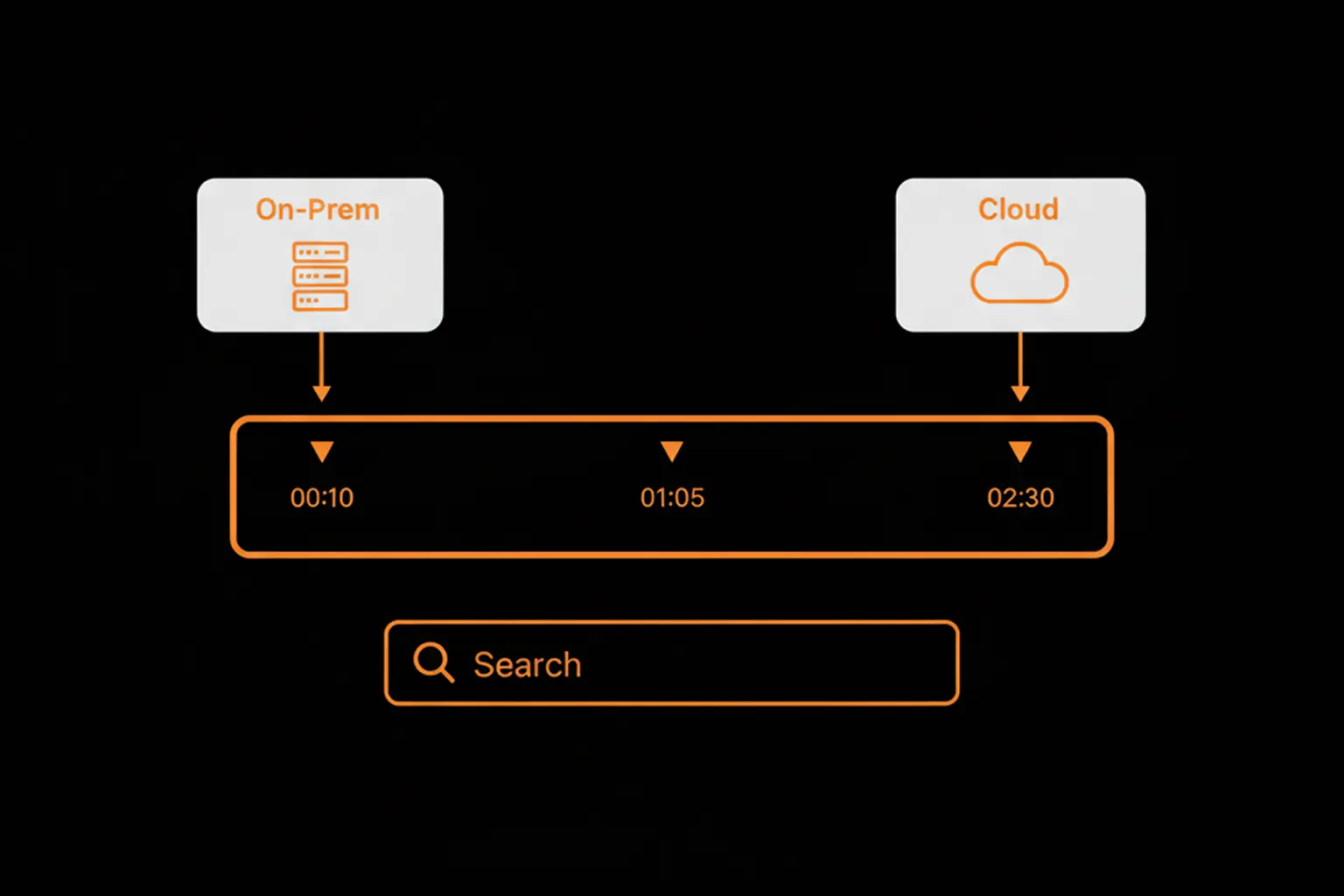
A hybrid model lets teams move the right workloads to the cloud, archival storage, AI-driven metadata processing, remote access and collaboration, while keeping latency-sensitive or high-security workloads on-premises. This is why hybrid cloud architecture has become the default approach for media technology teams modernizing their infrastructure, rather than an all-or-nothing cloud migration.
The benefits show up quickly once the architecture is right:
- Archive storage costs drop significantly compared to maintaining equivalent on-premises capacity.
- Remote teams gain access to media assets without VPN bottlenecks or local storage duplication.
- AI-driven metadata tagging and search scale on demand instead of being limited by fixed on-premises compute.
- Disaster recovery improves, since cloud-based redundancy is typically more resilient than a single physical location.
None of these benefits are in question. What is often underestimated is how much of a media library’s operational value depends on something as small as a timecode reference staying accurate through the entire migration.
Why Timecode Breaks During Migration
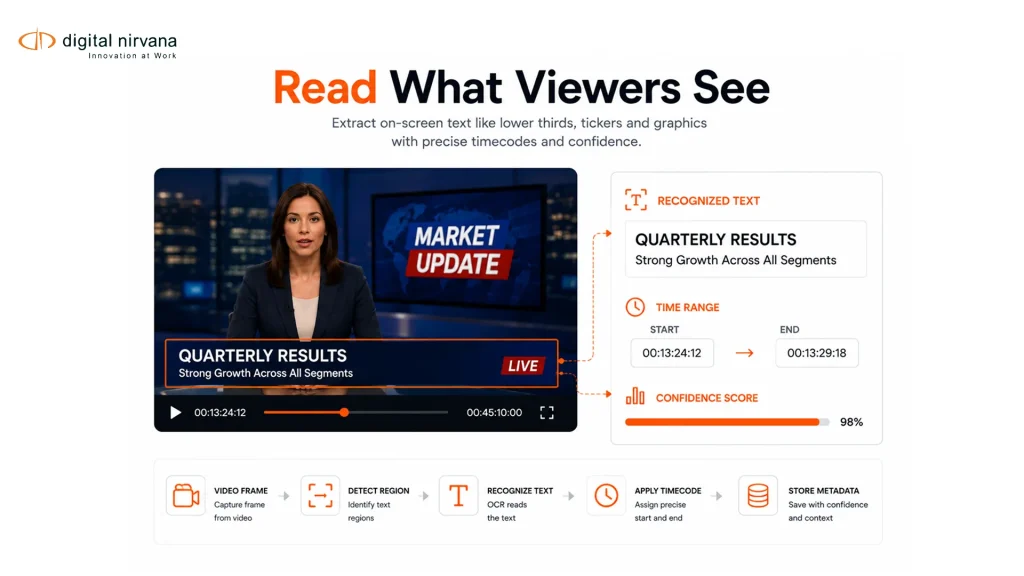
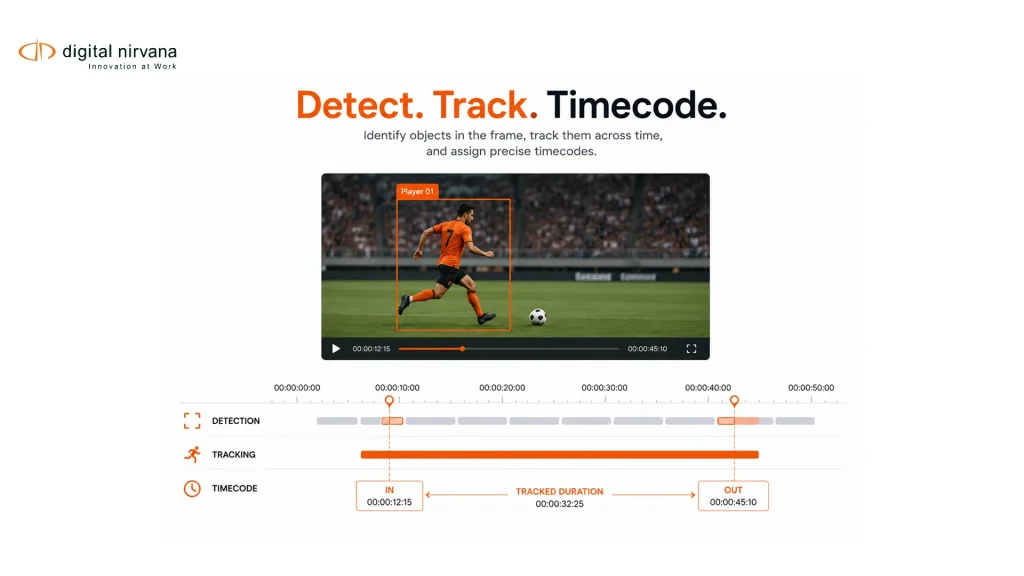
Timecode is the backbone of nearly every media workflow: editing, compliance logging, metadata tagging, archive search, and rights management all depend on frame-accurate references. A single frame of drift can misalign a caption, break a proof-of-performance record, or make an archived clip unfindable using its original reference.
A few specific failure points show up repeatedly during MAM hybrid cloud migrations:
Frame rate mismatches between source and destination systems. Content originally ingested at one frame rate can get transcoded or re-wrapped during migration, shifting timecode references even when the video itself looks unchanged.
Drop-frame versus non-drop-frame confusion. Many archives contain a mix of both, and migration tools that assume one standard across an entire library will silently miscalculate timecodes for the other.
Metadata detached from its timecode anchor. When metadata systems and video files migrate on separate schedules or through separate pipelines, the link between a piece of metadata and its exact frame reference can break, even if both pieces of data technically survive the migration.
Re-wrapping or re-transcoding during storage tier transitions. Moving assets between storage tiers (hot, cool, archive) sometimes triggers format conversions that were not part of the original migration plan, introducing timecode drift as a side effect.
Time zone and start-of-day offset errors. For live broadcast content with midnight-crossing timecode, migration scripts that do not account for this correctly can produce timecodes that are technically valid but do not match the original reference frame.
Every one of these is preventable, but only if timecode integrity is treated as a first-class requirement in the migration plan rather than an assumption that “the files will just carry over.”
A Practical Framework for Protecting Timecode During Migration
Audit before you move anything. Document the frame rates, timecode standards (drop-frame vs non-drop-frame), and wrapper formats present across the existing library before migration begins. Libraries built over many years frequently contain more inconsistency than teams expect.
Migrate metadata and media assets together, not on separate schedules. Keeping the timecode-to-metadata link intact means treating video files and their associated metadata as a single migration unit, not two separate workstreams that will “reconcile later.”
Validate timecode accuracy at every migration checkpoint, not just at the end. Spot-checking a sample of assets after each migration phase catches drift early, when it is a small fix, instead of after the full library has moved, when it is a major remediation project.
Avoid unnecessary transcoding during the migration itself. Every additional format conversion is another opportunity for timecode drift. Where possible, migrate assets in their original wrapper and handle any necessary transcoding as a separate, deliberate step with its own QC pass.
Use AI-assisted metadata tools that preserve timecode references natively. Systems built for media-specific metadata handling, rather than generic file storage tools, are far less likely to introduce timecode errors during indexing and tagging. This is where purpose-built platforms like MetadataIQ differ meaningfully from generic cloud storage or DAM tools not designed around frame-accurate media metadata.
Hybrid Cloud MAM Migration Checklist
Pre-migration:
- [ ] Full inventory of frame rates, timecode standards, and wrapper formats across the library
- [ ] Identification of assets with midnight-crossing or non-standard timecode
- [ ] Metadata schema mapped and validated against the destination MAM system
- [ ] Storage tiering strategy defined (hot, cool, archive) before any assets move
During migration:
- [ ] Media files and associated metadata migrated together, not on separate timelines
- [ ] Timecode spot-checks performed after each migration batch, not just at project completion
- [ ] No unplanned transcoding or re-wrapping introduced mid-migration
- [ ] Access controls and permissions validated for hybrid (cloud plus on-premises) retrieval
Post-migration:
- [ ] Full timecode validation across a statistically significant sample of the migrated library
- [ ] Search and retrieval tested using original timecode references, not just file names
- [ ] Compliance and archive teams sign off on frame-accuracy before the legacy system is decommissioned
- [ ] Documentation updated to reflect the new hybrid storage and retrieval architecture
What This Means for Archive Monetization and Compliance
Timecode accuracy is not just a technical detail. It directly affects two of the highest-value outcomes of a MAM migration: archive monetization and compliance readiness.
Licensing and rights teams rely on precise timecode to clear specific clips for reuse. If a migration introduces even minor drift, licensing teams either lose confidence in the system or spend hours manually verifying references that used to be automatic. Compliance and legal teams face a similar problem when timecode-based proof-of-performance records no longer match the archived broadcast feed.
Getting this right during migration protects the very reason most teams pursue metadata-driven archive strategies in the first place: making content searchable, licensable, and audit-ready without manual verification every time it is accessed.
How Digital Nirvana Supports Hybrid Cloud MAM Migrations
Digital Nirvana’s approach to media asset management is built around exactly this kind of frame-accurate, metadata-first workflow. Cloud Engineering supports the infrastructure side of hybrid migration, covering architecture design, secure data integration, and cost optimization for media-heavy workloads that need to move between on-premises and cloud environments without disruption.
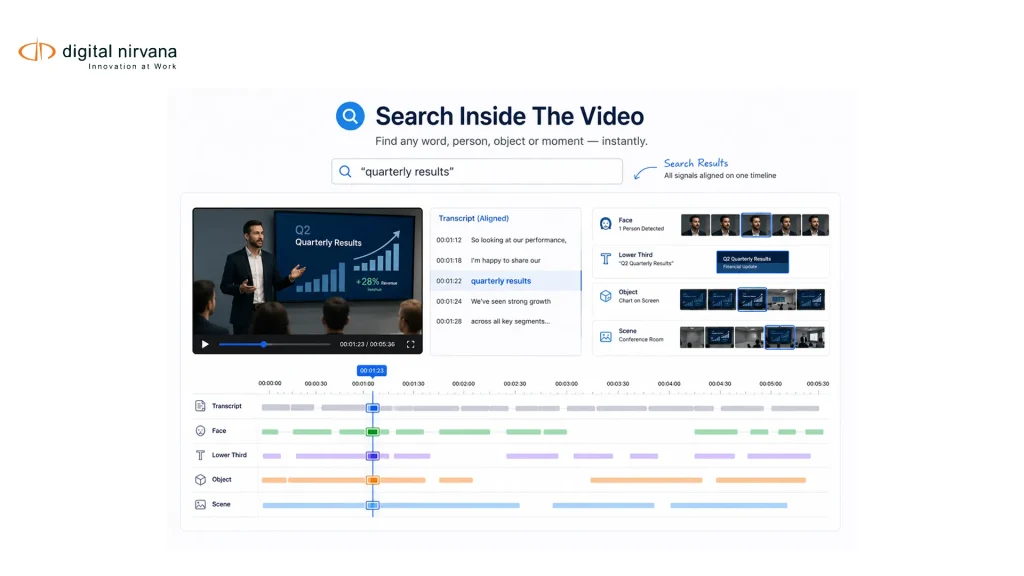
MetadataIQ is built specifically for media indexing and MAM/DAM integration, which means timecode and metadata stay linked as assets move, rather than being treated as two separate migration problems. For teams that also need to clean up, validate, or restructure metadata before or during migration, Data Intelligence supports the data wrangling and validation work that keeps a migrated library trustworthy from day one. And because time-coded transcripts often anchor metadata in the first place, MediaServicesIQ’s AI-driven content intelligence capabilities help confirm that scene detection, speech-to-text, and object recognition data all stay aligned to the correct frame references after migration. Several media and broadcast teams describe these outcomes directly in Digital Nirvana’s success stories, where migration and metadata accuracy come up as recurring themes.
Bringing It All Together
Hybrid cloud migration is the right move for most media asset management systems, but the infrastructure decision is only half the project. Timecode integrity determines whether the migrated library actually works the way the old one did, for search, for licensing, for compliance, and for every editorial workflow built on frame-accurate references.
Teams that treat timecode validation as a core migration requirement, not an assumption, are the ones who avoid the quiet, expensive failure of an archive that looks migrated but no longer lines up with its own history.
Key Takeaways
- Hybrid cloud is the practical model for most MAM systems, balancing cost and scalability against latency and compliance needs that keep some workloads on-premises.
- Timecode drift is one of the most common and most overlooked risks in MAM migration, often surfacing weeks after a project is declared complete.
- Frame rate mismatches, drop-frame confusion, and metadata detached from its timecode anchor are the most frequent causes of migration-related timecode errors.
- Migrating media files and metadata together, validating timecode at every checkpoint, and avoiding unnecessary transcoding are the most effective safeguards.
- Timecode accuracy directly protects archive monetization and compliance readiness, the two outcomes most media organizations are migrating to achieve in the first place.
FAQ
What is the difference between drop-frame and non-drop-frame timecode? Drop-frame timecode adjusts for the actual frame rate of NTSC video (29.97 fps) to keep timecode aligned with real time over long durations, while non-drop-frame timecode counts frames without that adjustment. Mixing the two without accounting for the difference is a common source of migration errors.
Can timecode drift be fixed after a migration is already complete? Yes, but it is significantly more expensive and time-consuming than catching it during migration, since it requires re-validating and often re-syncing metadata across the entire affected library.
Does hybrid cloud migration always require re-transcoding media files? No. Re-transcoding should be a deliberate, separate decision, not an automatic side effect of moving assets between storage tiers or systems. Unnecessary transcoding is one of the most common sources of timecode drift.
How long does a typical MAM hybrid cloud migration take? Timelines vary widely based on library size and complexity, but a phased migration with proper timecode validation at each checkpoint typically takes longer upfront than a rushed migration, while avoiding costly remediation afterward.