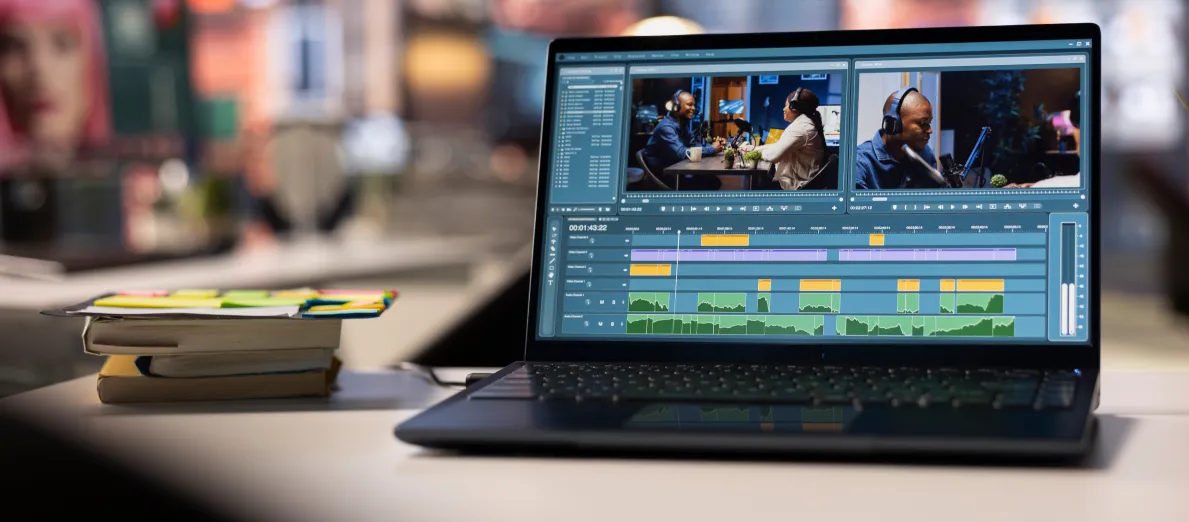
An editor is cutting a 90-second recap of a two-hour town hall. The one soundbite that matters, a candidate’s exact wording on a policy question, is buried somewhere in the middle of the recording. Without a timecoded transcript, that search means scrubbing the timeline minute by minute, guessing where the moment lives. With one, it means typing a phrase into a search bar and jumping straight to the exact frame.
That single capability, tying spoken words to an exact point in a video or audio file, has quietly become one of the most valuable tools in modern media operations. It speeds up editing, it protects legal and regulatory positions, and it turns hours of raw footage into something a team can actually work with. Teams that still treat transcription as a nice-to-have are losing time and taking on risk they do not need to carry.
What Timecoded Transcription Actually Means
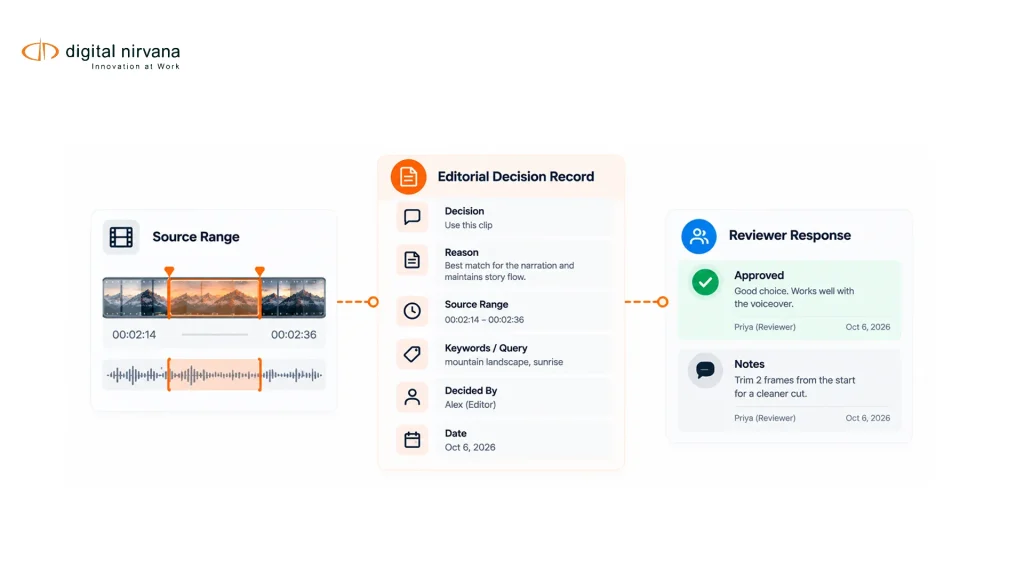
A standard transcript gives you the words. A timecoded transcript ties every sentence, sometimes every word, to the exact timestamp where it was spoken in the source video or audio. That connection is what makes the transcript searchable and clickable rather than just readable.
For editors, this means searching a transcript for a phrase and jumping directly to that frame, instead of scrubbing a timeline by eye and ear. For compliance and legal teams, it means being able to produce an exact record of what was said, by whom, and precisely when, without relying on someone’s memory of “somewhere in the second half.”
Why This Has Become a Production and Compliance Priority
Content volume keeps growing across broadcast, OTT, corporate, and educational video, and none of these teams have more hours in the day to manually review it. At the same time, the stakes for getting it wrong keep rising. Regulatory bodies like the FCC hold broadcasters accountable for closed captioning accuracy, and accessibility frameworks referenced by organizations like Ofcom require that spoken content be represented completely and correctly. Legal discovery requests increasingly ask for exact transcripts tied to timestamps, not paraphrased summaries.
On the production side, deadline pressure has not eased either. Newsrooms need to clip a quote within minutes of it being spoken. Post-production teams face shrinking delivery windows from platforms like Netflix, Amazon, and Hulu. Sports and live event teams need to isolate a specific moment inside hours of multi-camera footage. In every one of these situations, a searchable, timecoded transcript is what separates a fast turnaround from a missed deadline.
Where Manual and Basic Transcription Approaches Break Down
Plenty of teams still rely on transcription methods that were never built for this level of speed or accuracy.
Fully manual transcription is accurate when done well, but it is slow and expensive at scale. A single hour of footage can take several hours to transcribe by hand, which does not work for breaking news or high-volume production schedules.
Basic auto-generated captions, the kind built into many editing tools, often lack the accuracy and timecode precision needed for legal or compliance use. They are useful for a rough first pass but risky as an official record, especially with technical terminology, accents, or overlapping speakers.
Disconnected transcript files that are not synced to source timecodes create a different problem. The words exist, but finding where they occur in the actual video still requires manual searching, which defeats much of the purpose.
None of these approaches hold up well against tightening compliance expectations or increasingly compressed production timelines.
How Modern Timecoded Transcription Works
AI-powered transcription platforms combine automatic speech recognition with human review workflows to produce transcripts that are both fast and defensible. As footage is ingested, whether live or archival, the system generates a full transcript with word-level or sentence-level timecodes attached automatically.
Platforms like TranceIQ are built specifically around this workflow, pairing cloud-based transcription with human review to catch errors AI alone might miss, particularly around names, jargon, and multiple speakers. For teams that need the transcript integrated directly into their editing environment, that timecode data can also feed into metadata and search platforms like MetadataIQ, so editors are searching one unified index instead of juggling separate transcript files and video timelines.
A Real-World Workflow: From Raw Footage to Compliant Cut
Consider a documentary team working with 40 hours of interview footage. As each interview is ingested, timecoded transcription runs automatically, producing a searchable text layer synced to every clip. When the editor needs a specific answer about a timeline of events, they search the phrase across the entire interview archive rather than watching hours of footage looking for it.
Now consider a broadcaster facing an FCC caption accuracy complaint. Instead of manually reviewing archived footage to verify what actually aired, the compliance team pulls the timecoded transcript record tied to that exact broadcast window, confirming word-for-word what was said and when, with a complete audit trail ready to submit.
Same underlying technology, two very different but equally critical use cases.
Measurable Impact of Timecoded Transcription
| Workflow Area | Manual or Basic Approach | Timecoded AI Transcription |
| Quote or soundbite search | Minutes to hours per clip | Seconds, searchable by phrase |
| Caption accuracy for compliance | Inconsistent, error-prone | Human-reviewed, audit-ready |
| Legal discovery response time | Days of manual review | Hours, with exact timestamps |
| Multilingual delivery readiness | Separate translation pass required | Faster localization from a verified base transcript |
| Editorial turnaround on breaking content | Delayed by manual scrubbing | Same-day or same-hour clipping |
The pattern is consistent across every use case: the moment transcription is tied to exact timecodes, both editorial speed and compliance confidence improve at the same time.
Implementation Considerations
Teams adopting timecoded transcription should think through a few practical questions before rollout. Does the platform support both live and archival ingestion, since news and sports teams need real-time transcription while archive teams need batch processing of legacy content? Does it integrate with existing editing tools like Avid or Premiere, or does it require exporting and re-importing files? And critically, does the workflow include human review for high-stakes content, such as legal proceedings or regulatory filings, where AI accuracy alone is not sufficient?
Multilingual organizations should also confirm that translation and localization workflows, often handled through Media Enrichment, can build directly on the verified base transcript rather than starting from scratch.
Key Capabilities to Prioritize
- Word-level or sentence-level timecode accuracy, not just a rough transcript
- Human review workflows for content where accuracy carries legal or compliance weight
- Live and archival processing to cover both breaking content and legacy libraries
- Editorial tool integration so transcripts live inside the workflow editors already use
- Multilingual and translation support built on the same verified transcript base
- Export formats compatible with caption conformance requirements for OTT and broadcast delivery
Addressing the Common Objections
“Auto-captions already handle this.” Auto-generated captions are a useful starting point, but accuracy gaps around names, accents, and overlapping speech make them risky as a sole compliance record. Human-reviewed timecoded transcription closes that gap.
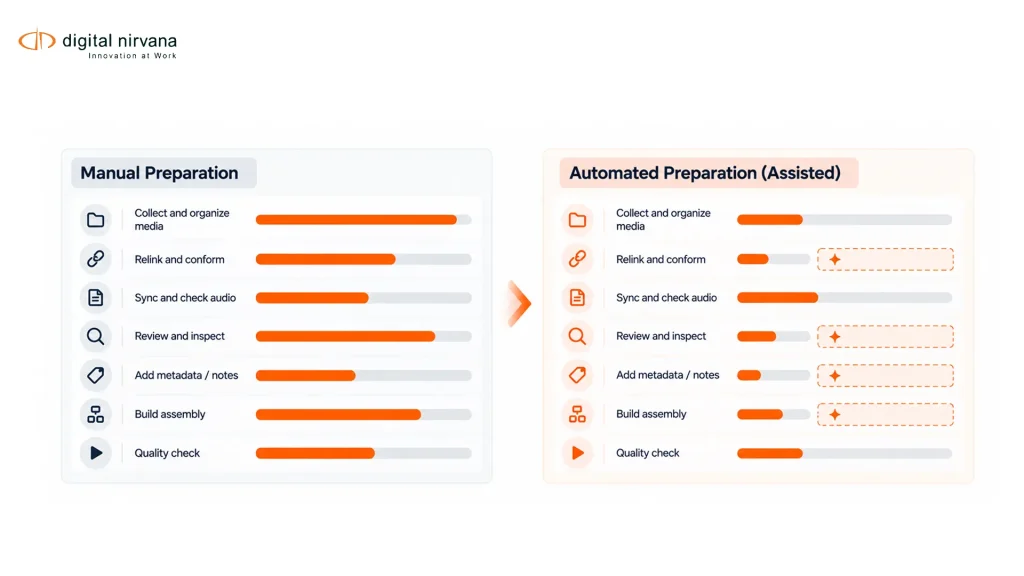
“This adds another step to our workflow.” In practice, it removes steps. Editors stop manually scrubbing footage, and compliance teams stop manually cross-referencing archives during an audit or discovery request.
“We only need this for a few high-profile projects.” Search needs rarely stay confined to a handful of projects. Once a team experiences instant phrase-based search on one production, the expectation quickly extends to the rest of the archive.
Success Metrics Worth Tracking
Organizations rolling out timecoded transcription should monitor average time to locate a specific quote or clip, caption accuracy rates against FCC or Ofcom standards, turnaround time on legal discovery or compliance requests, and editor satisfaction with search and clipping speed. These metrics turn an operational upgrade into a measurable business case.
How Digital Nirvana Supports Transcription-Driven Workflows
Digital Nirvana built TranceIQ around the reality that speed and accuracy cannot be traded off against each other, especially when compliance is on the line. It combines cloud-based transcription with human review, caption conformance support, and API integration so transcripts move directly into existing production and delivery pipelines.
For teams that need live broadcast monitoring and proof-of-performance alongside transcription, MonitorIQ covers compliance logging and QoE in the same ecosystem. Organizations managing large legacy libraries often pair transcription with MetadataIQ to unify transcript search with broader metadata like faces, scenes, and objects. You can see how these workflows have played out for real broadcast and media teams on the success stories page.
Why This Matters Beyond a Single Edit
Timecoded transcription is not just an editing convenience. It is the connective layer between raw footage and everything a media organization needs to do with that footage afterward: cutting a clip on deadline, proving compliance during an audit, responding to a legal discovery request, or localizing content for a new market. Teams that build this layer once, accurately, save themselves from rebuilding it under pressure every time a new demand shows up. Digital Nirvana’s approach, pairing AI transcription speed with human review and direct integration into broadcast and post-production workflows, reflects exactly that principle: fast enough for the newsroom, accurate enough for the compliance file.
Frequently Asked Questions
What is timecoded transcription? It is a transcript where every sentence or word is linked to the exact timestamp in the source video or audio, allowing editors and reviewers to jump directly to that moment instead of searching manually.
Is AI transcription accurate enough for compliance use? AI transcription alone can miss names, jargon, or overlapping speech. Pairing it with human review, as platforms like TranceIQ do, produces the accuracy level needed for compliance and legal records.
How does timecoded transcription help with video editing specifically? It lets editors search a transcript by phrase and jump straight to that frame, replacing manual timeline scrubbing with instant, text-based navigation through hours of footage.
Conclusion
Timecoded transcription turns hours of footage into something searchable, clippable, and defensible in seconds. Editors get their quote without scrubbing a timeline, and compliance teams get an exact record instead of a guess. As content volume and regulatory scrutiny both continue to climb, this is no longer an optional production upgrade. It is foundational infrastructure for any team that edits, publishes, or has to answer for video content.
Key Takeaways
- Timecoded transcription ties spoken words to exact timestamps, making footage instantly searchable
- Manual and basic auto-caption approaches cannot match the speed or accuracy modern teams need
- Human-reviewed AI transcription balances speed with the accuracy compliance work requires
- Editorial tool integration keeps transcripts inside the workflow editors already use
- A verified transcript base speeds up multilingual localization as well as legal discovery
- Track quote search time, caption accuracy, and discovery response time to measure ROI