It’s the final two minutes of a championship game. The home team just hit a buzzer-beating three-pointer that’s about to break the internet, if only someone can get it online in time.
The social team is staring at a five-hour raw feed. Somewhere in there is the exact three seconds the world wants to see. The editor’s cursor hovers over the scrub bar, and every second she spends searching is a second some other account beats her to the punch with a shaky phone recording from section 214.
This is the moment sports metadata either saves your broadcast or quietly costs you the internet. And in 2025, with live sports data moving faster than ever, that moment happens dozens of times a night, across every league, every network, every stream.
So let’s talk about what’s actually happening behind the scenes when a highlight goes from “buried in raw footage” to “trending in six minutes.” Because the answer isn’t luck. It’s metadata, and it’s more dramatic than it sounds.
The Core Problem: Sports Moves Faster Than Humans Can Tag It
Here’s the uncomfortable truth nobody in sports production wants to say out loud. Live sports generates content faster than any human team could ever manually log it, and it’s not close.
A single football Sunday can produce more raw footage than an entire year of scripted television. Multiply that by every camera angle, every regional broadcast, every league running simultaneously, and you get a mountain of footage that grows by the second, live, while your highlights team is already three plays behind.
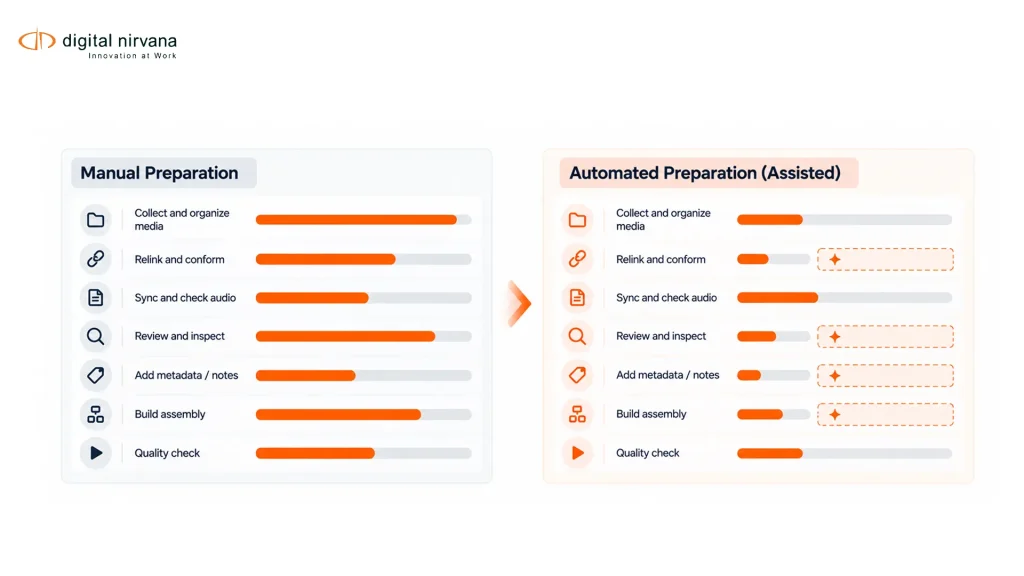
Manual logging worked fine when there was less to log. It does not work when a wide receiver’s catch, a sideline reporter’s question, and a sponsor’s logo all need to be found, clipped, and published before the next commercial break. The pain isn’t a lack of talent on your production team. It’s math. There simply aren’t enough hours, or eyes, to keep up.
Market Context: 2025 Raised the Stakes on Every Front
Something shifted in how fans consume sports, and it happened fast. Attention spans shrank to the length of a highlight clip, sponsors started demanding real-time proof of every logo appearance, and streaming platforms multiplied the number of feeds a single game gets broadcast on.
Add in the explosion of FAST channels and league-owned streaming apps, and every organization is suddenly managing a bigger content footprint with the same size team they had two years ago. Sponsorship deals increasingly include reporting requirements down to the second, meaning “we think our logo appeared a lot” no longer satisfies anyone writing the check.
The pressure isn’t coming from one direction. It’s coming from fans who want it now, sponsors who want proof, and leagues who want every archived game to still be worth something years later. Nobody has time to lose this fight to a filing cabinet full of unlabeled tape.
Traditional Solutions and Their Gaps (Or, Why Your Highlights Team Looks Exhausted)
Most sports organizations have tried to solve this the hard way, and it shows.
Manual logging during the broadcast. Someone watches the game live and types notes as plays happen. It’s heroic, honestly, and it still can’t keep pace with a fast-moving game across multiple camera angles.
Post-game archive scrubbing. After the final whistle, someone combs back through the footage looking for anything worth clipping. By the time it’s found, the moment has already cooled off online, and the internet has moved on to the next thing.
Basic keyword search on unlabeled footage. Some teams try searching their archive by game date and opponent, which works fine if you already know exactly which game the moment happened in. It falls apart the second someone asks for “every time this player celebrated this season.”
None of these approaches were built for a sport that moves in real time. They were built for a slower media world that stopped existing a while ago.
Enter AI Metadata: The Plot Twist Nobody Saw Coming (Except the Teams Already Using It)
Here’s where the story turns. What if the system could watch the game the same way your highlights team does, except never blink, never get tired, and tag everything the moment it happens?
That’s exactly what AI-powered sports metadata tagging does. As the live feed comes in, the system identifies players, recognizes logos, detects key moments, and transcribes commentary, all in real time, attaching searchable tags to the footage as it’s captured rather than hours later.
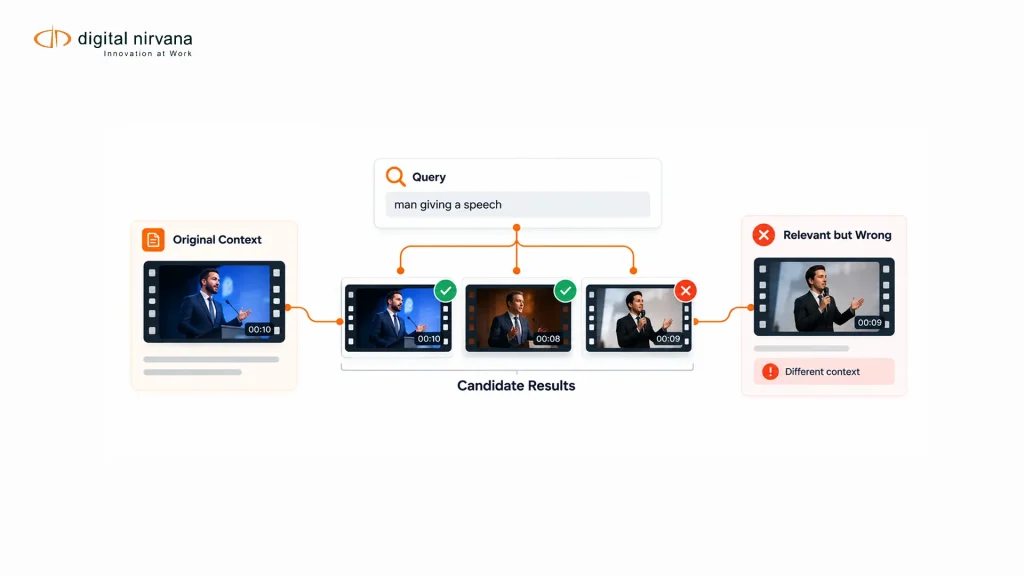
Suddenly, “find the buzzer-beater” isn’t a search through five hours of raw feed. It’s a query that returns the exact timecode in seconds. Platforms like MetadataIQ are built for exactly this scenario, giving sports production teams real-time, searchable metadata instead of a post-game scavenger hunt.
A Day in the Life: How This Actually Plays Out on Gameday
Let’s go back to that championship game. This time, the system has been tagging the broadcast live the entire fourth quarter. The moment the ball leaves the player’s hands, the metadata engine flags the scene, the player, and the crowd reaction.
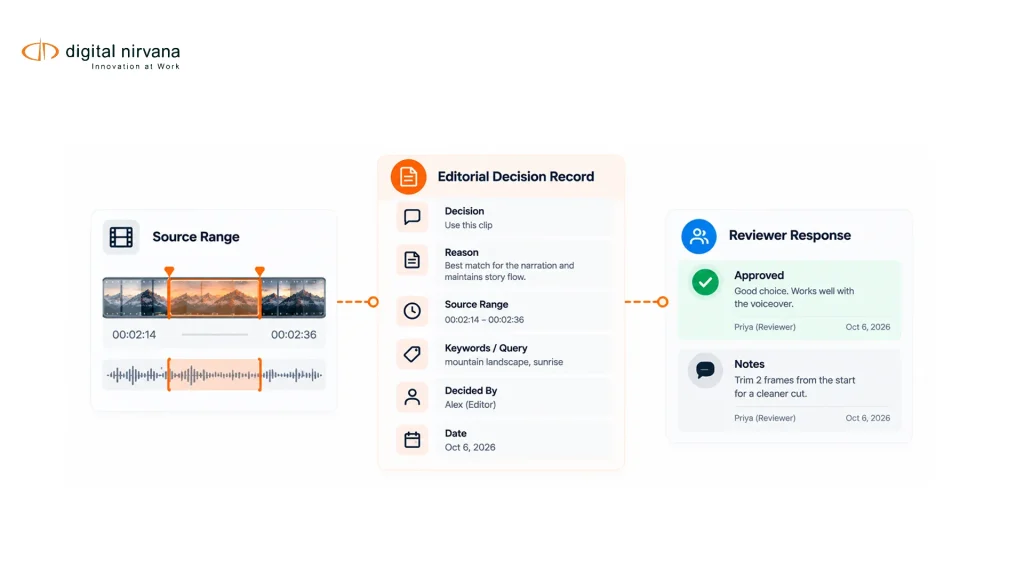
The editor doesn’t scrub anything. She searches “game-winning shot, fourth quarter,” and the exact clip appears with the timecode already marked. Ninety seconds later, it’s cut, captioned, and posted, while the arena is still roaring.
Down the hall, the sponsorship team runs a separate query for a partner brand’s logo. The system returns every appearance across the broadcast, timestamped and ready for the end-of-game report, no scrubbing required. Two teams, two completely different needs, one searchable archive doing all the heavy lifting.
Measurable Impact: What Actually Changes When the Clock Is the Enemy
Here’s the part that convinces even the most skeptical general manager. Teams that move from manual tagging to real-time AI metadata typically cut highlight production time from hours down to minutes, sometimes while the game is still being played.
Sponsorship reporting shifts from “our best estimate” to an exact, timestamped log of every logo appearance, which matters enormously when a sponsorship renewal conversation depends on proof, not vibes. And archive footage that used to sit untouched after the season ends becomes searchable and licensable, turning old tape into new revenue instead of dead weight in a storage system.
Implementation Considerations: Getting the System Into Your Existing Workflow
The good news is that none of this requires ripping out your current production setup. Most sports organizations already run broadcast systems built around Avid, Grass Valley, or similar production tools, and a proper metadata layer needs to plug into that infrastructure rather than replace it.
Before rollout, production leads should decide which moments matter most to tag in real time (plays, player appearances, sponsor logos, crowd reactions) versus what can be processed after the fact from the archive. It’s also worth deciding early who reviews tagging accuracy for high-stakes moments, since the fastest system in the world still benefits from a human double-check before a sponsorship report goes out the door.
Key Capabilities to Prioritize (Because Not Every Tool Is Built for This Speed)
- Real-time tagging during live broadcast, not just post-game processing
- Player, logo, and object recognition tuned for fast-moving action
- Searchable metadata tied to exact timecodes, not just game-level tags
- Sponsorship and brand appearance tracking for reporting
- Batch processing for enriching years of existing archive footage
- Integration with existing production tools and MAM/DAM systems
- Support for chapter markers and summaries through complementary tools like MediaServicesIQ
Skip any of these, and you’re back to someone squinting at a scrub bar during the biggest moment of the night.
Common Objections (And Why They Don’t Hold Up Under Pressure)
“Our highlights team is already fast.” They probably are, and they’re also exhausted, working against a clock that never stops moving. Real-time metadata doesn’t replace their instincts; it just removes the scavenger hunt part of their job.
“We don’t want another system to manage.” Modern metadata platforms are designed to integrate into existing broadcast infrastructure, not replace it, meaning your team gains searchability without abandoning the tools they already trust.
“AI tagging accuracy makes us nervous.” Fair concern, and it’s exactly why the best implementations pair automated tagging with human review checkpoints for anything sponsorship-related or high-stakes, rather than trusting automation blindly.
Success Metrics and KPIs (The Scoreboard That Actually Matters)
| Metric | What It Tells You |
| Highlight publish time from moment to post | Speed advantage over competitors and fan channels |
| Sponsor logo detection accuracy and count | Reliability of sponsorship reporting |
| Archive search time for past-season footage | Efficiency of legacy content reuse |
| Licensing revenue from archived clips | Whether old footage is becoming a real asset |
| Percentage of live footage tagged in real time | Coverage of your metadata initiative |
Track these across a full season, and the case for real-time metadata practically makes itself.
How Digital Nirvana Fits Into This Story
Digital Nirvana built MetadataIQ around exactly the pressure sports teams face every single gameday: content moving faster than any human team can log it, with sponsors, fans, and archivists all wanting instant answers. The platform tags players, scenes, logos, and commentary in real time, then makes all of it searchable the moment the broadcast ends, not weeks later.
For organizations also managing live broadcast compliance and signal quality alongside metadata, MonitorIQ covers that side of the same live production. And for teams enriching years of past-season footage into licensable, searchable archives, that same tagging discipline extends through Media Enrichment and human-reviewed workflows like Managed AI, keeping tagging accuracy high even as archive volume grows.
Why This Story Matters Beyond One Championship Night
This isn’t really a story about one buzzer-beater or one highlight reel. It’s about an entire industry realizing that content is only as valuable as its ability to be found, fast, by the right person, at the right moment. Real deployments of this exact challenge, across sports, news, and archive teams, are documented in Digital Nirvana’s success stories, and the broader philosophy behind the approach lives on the Digital Nirvana homepage.
Conclusion: The Highlight Was Always There. Now It Doesn’t Get Lost.
Every great sports moment already exists somewhere in the footage the second it happens. The only question is whether your team can find it before the internet moves on without you. In 2025, with live sports data moving faster than any manual process can match, real-time AI metadata isn’t a competitive edge anymore. It’s the difference between winning the moment and watching someone else’s shaky phone video win it instead.
Key Takeaways
- Live sports generates more footage per game than any human team can manually tag in real time.
- Real-time AI metadata tags players, logos, and key plays as they happen, not hours later.
- Sponsorship reporting shifts from estimates to exact, timestamped proof of logo appearances.
- Archived footage becomes searchable and licensable instead of sitting unused after the season ends.
- Integration with existing production infrastructure means no rip-and-replace rollout.
- Human review checkpoints keep tagging accuracy high for sponsorship and high-stakes moments.
FAQ
What is sports metadata tagging? It’s the process of automatically identifying and tagging players, logos, key plays, and commentary within live or archived sports footage, making that content instantly searchable by timecode.
How is real-time sports metadata different from post-game logging? Real-time tagging attaches searchable metadata as the broadcast happens, allowing highlight teams to publish clips within minutes. Post-game logging only becomes searchable after someone manually reviews the footage, often long after the moment has cooled off online.
Can this same system track sponsor logo appearances for reporting? Yes. Logo detection can track every appearance of a sponsor’s brand across a broadcast, with exact timestamps, giving sponsorship teams accurate proof instead of manual estimates.