Regardless of new-age digital media channels, radio remains a reliable and influential medium for advertisers, broadcasters, and regulatory bodies. After all, it reaches approximately over 80% audiences worldwide. This is mainly due to its local reach, consistent engagement, and trust-based audience.
However, as campaigns become increasingly distributed across multiple stations, regions, and languages, it can be extremely overwhelming to ensure accuracy and accountability across the board. For example, a campaign that you may have carefully planned may not always translate the same way during execution. Even minor deviations, such as missed ad slots, incorrect scheduling, and more, can create countless operational and financial issues in the long run.
This is precisely where radio broadcast monitoring comes into the picture. The best radio broadcasting software, like MonitorIQ by Digital Nirvana, bridges this gap by offering a more structured way to track, verify, and analyze all your on-air radio broadcasts.
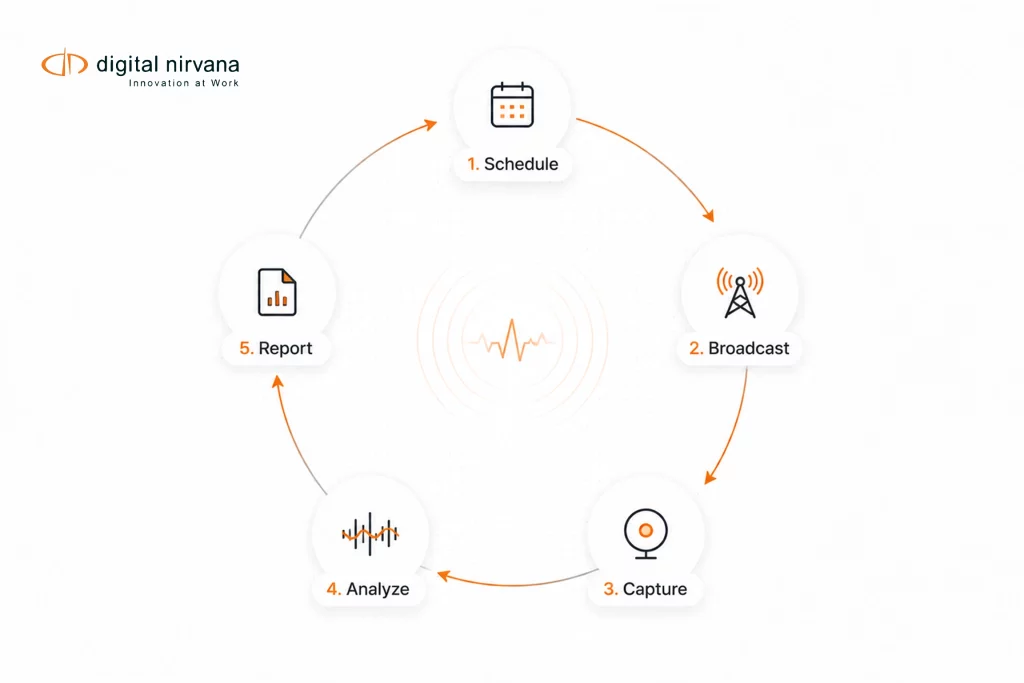
What Radio Broadcast Monitoring Involves?
Radio broadcast monitoring typically refers to the entire process of recording, storing, and analyzing all kinds of radio transmissions. The primary goal is to ensure that all your broadcast content is reviewed and verified before each airing.
Traditionally, this was done manually under human observation, resulting in countless errors and issues. There was a major lack of consistency and scalability, especially when broadcast networks expanded in recent years.
This is why modern radio monitoring systems quickly capture signals and convert them into more searchable formats. This ensures you can easily retrieve specific segments of the broadcast content without having to manually review long recordings. There are more such benefits of choosing the right radio broadcasting software, which we will discuss further.
Growing Importance of Modern Broadcasting
Radio campaigns are no longer limited to a single station or region. They are now executed simultaneously across multiple markets, time zones, and languages. Such a broad distribution surely brings new operational challenges. Without a reliable monitoring mechanism, verifying whether all planned ads and content were executed as intended becomes extremely challenging.
Advertisers now expect absolute transparency in campaign delivery. They require measurable proof of airtime rather than the usual summary-based reporting. This shift has made broadcast monitoring a critical component of media accountability.
Lastly, it also plays a significant role in aligning all kinds of radio activity with broader multi-channel marketing strategies. This ensures accurate consistency across platforms.
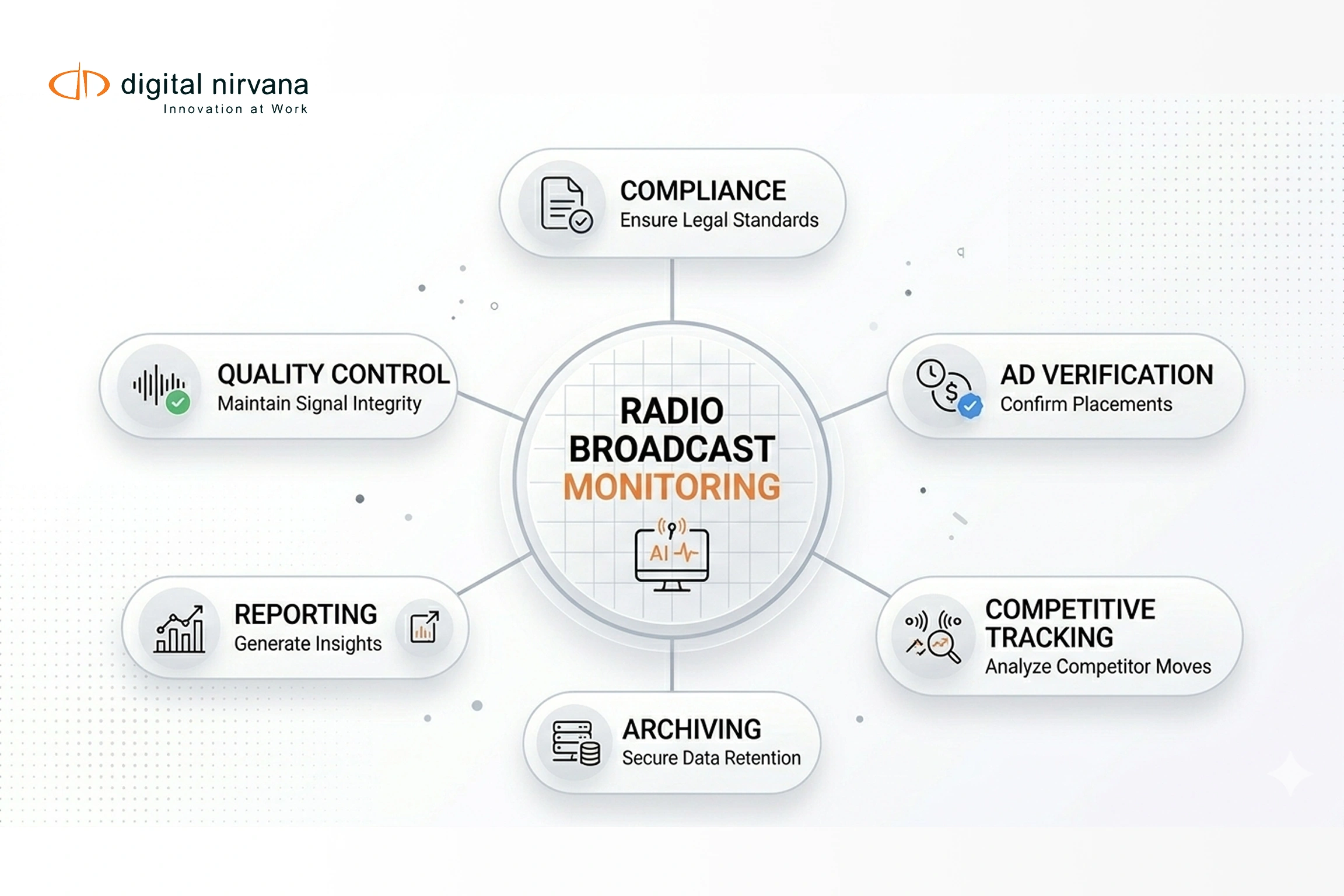
Compliance Monitoring in Radio Operations
Compliance monitoring is one of the most underestimated but core aspects of radio broadcasting. Typically, these vary across regions and jurisdictions.
Again, manually checking all the clips and adhering to these policies can be extremely challenging and error-prone. Thereby, causing countless unintentional regulatory violations, penalties, and reputational concerns for your business.
Monitoring systems systematically maintain continuous records of all broadcast content across your channels. Each segment is logged with precise metadata, including time, station, and duration, making the entire process easy to track.
This eventually simplifies future audit processes and ensures that compliance verification never depends on fragmented documentation or human recall.
Ad Verification and Campaign Accountability
Ad verification is one of the most critical applications of radio broadcast monitoring. This ensures that the advertisements are always aired exactly as scheduled and in the intended format.
With manual monitoring, discrepancies such as scheduling conflicts, operational errors, and programming adjustments often go unnoticed, and no corrective action is taken. Radio broadcast monitoring ensures that every advertisement gets independently verified against its scheduled placement. Ultimately, bringing accurate visibility into the actual delivery and execution.
Competitive Tracking Through Broadcast Intelligence
Radio monitoring is invaluable for competitive intelligence. It helps brands understand how their competitors use radio broadcasting as part of their marketing strategy.
This includes everything, such as ad frequency, time slot preferences, messaging patterns, and more. Such crucial insights give a much better understanding of how competitors are currently positioning themselves in a crowded market. This helps brands refine their own strategies, like scheduling, messaging, and targeting approaches, for better leads.
Automation and AI in Monitoring
Automation has significantly improved the efficiency and reliability of radio broadcast monitoring. Modern systems use automated recording to capture content continuously without manual intervention. This ensures that no broadcast segment ever gets missed, regardless of the massive volume or timing.
AI in these radio monitoring systems also helps by converting audio into structured, searchable text. This helps teams and users locate specific content much more quickly for larger recordings.
It also provides real-time alerts and event detection, which will help enable faster responses to potential compliance issues or campaign discrepancies.
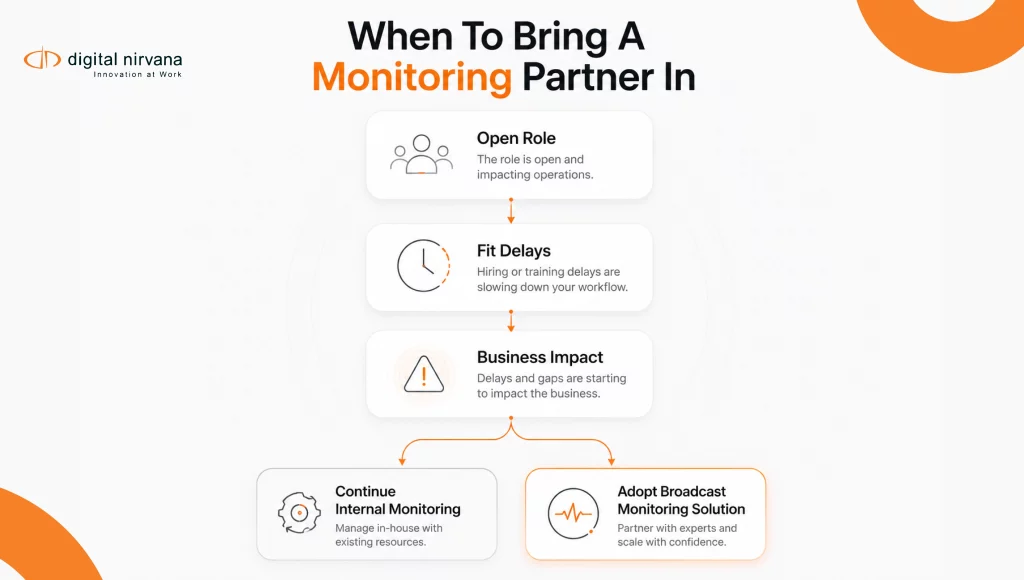
Features of Monitoring Systems
There are several aspects that you need to analyze when choosing the right radio monitoring system for your business, like
- A robust radio broadcast monitoring system is defined by its ability to manage large-scale data while maintaining accessibility.
- Continuous recording ensures complete coverage of all broadcast activity. This forms the foundation of reliable monitoring.
- Search functionality helps to quickly retrieve specific content based on certain keywords, timestamps, or even station identifiers. This reduces the additional time the team requires for content review and analysis.
- Multi-channel support enables simultaneous monitoring across multiple stations. This is the ultimate game-changer for agencies that are currently managing regional or national campaigns.
Structured reporting brings clear summaries of all kinds of broadcast activity. This improves both operational review and compliance documentation.
Industry Uses and Applications
Radio broadcast monitoring is widely used across multiple sectors with distinct operational requirements. Advertising brands rely on it to verify campaign execution and ensure that media investments are accurately delivered. This helps maintain accountability across agencies and broadcasters.
Media agencies use radio monitoring systems to generate verified reports for clients. This strengthens transparency and supports performance evaluation. Broadcasters use internal monitoring to ensure operational accuracy and maintain consistency in scheduled programming.
Regulatory authorities rely on broadcast records for compliance verification and enforcement.
What are the Operational Challenges in Monitoring?
Despite new-age technologies, certain challenges may still persist in radio broadcast monitoring. For example, the volume of content generated across all stations can bring data management issues. Always prioritize efficient storage and retrieval systems for effective management and scalability.
Ensure adequate language diversity when tracking radio signals across multiple regions. This is especially important in regions where multiple languages are broadcast simultaneously on the same network.
Lastly, variability in signal quality is also another major issue that can hinder reporting accuracy. This is commonly seen in dispersed broadcast environments.
These are some reasons you should always choose reliable, scalable radio monitoring infrastructure over alternatives.
How Can Digital Nirvana’s MonitorIQ Help?
Digital Nirvana is carefully designed to ensure structured broadcast monitoring across all radio environments.
- What really sets solutions like MonitorIQ apart is how they simplify an otherwise extremely scattered process.
- It ensures continuous capture of broadcast signals and their organization into searchable archives. This will help production teams accurately deliver the right content to the right team without manual efforts.
- The compliance tracking feature brings detailed logs of all possible broadcast activity. This is extremely beneficial during future audit requirements and in addressing issues quickly.
- The ad verification feature allows accurate tracking of all ads whenever and wherever they are aired. This brings absolute transparency across all campaign execution.
This makes it much easier to keep an eye on what’s actually going on, whether it’s checking compliance, confirming ads ran as planned, or even reviewing performance.
FAQs
This refers to the entire process of recording and analyzing radio broadcasts. This is extremely crucial to ensure content accuracy, compliance, and ad verification for businesses.
Radio monitoring provides accurate data and proof that ads aired as scheduled. This improves overall transparency and accountability in campaign delivery.
Yes. The best radio monitoring systems allow tracking of competitor ad patterns, including frequency, timing, messaging strategies, and more.
Most modern systems incorporate automation for recording, transcription, content indexing, and other areas. This significantly reduces manual effort and the chances of errors.
It maintains accurate and structured records of all broadcasts across all channels. This can be referred to further during audits, regulatory checks, and internal reviews, as required.
Radio monitoring systems are widely used by advertisers, media agencies, broadcasters, and regulatory bodies for a wide range of operational and strategic purposes.
MonitorIQ is one of the best broadcast monitoring software programs used across different industries. It provides several features, such as ad verification, compliance tracking, and more, through structured, searchable content records.
Conclusion
Radio broadcast monitoring plays an extremely crucial role in maintaining accuracy and accountability across the broadcasting ecosystem. As campaigns become more complex and distributed, the need for structured verification is non-negotiable.
This is why businesses rely on good radio broadcast monitoring systems like MonitorIQ by Digital Nirvana. With a wide range of features and AI automation, it completes the entire process of monitoring, reviewing, and auditing.
Key Takeaways:
- Radio broadcast monitoring ensures that every aired message is accurately recorded and available for verification. This creates clarity in environments where broadcast operations are highly distributed.
- Compliance requirements are consistently met through structured recording and documentation. This reduces operational risk and simplifies audit readiness.
- Ad verification strengthens campaign accountability by confirming actual airtime against planned schedules. This improves reporting accuracy across stakeholders.
- Competitive tracking provides valuable insight into market activity, enabling more informed and strategic media planning. It helps organizations understand competitors’ positioning in real time.
- Solutions such as MonitorIQ streamline monitoring workflows by organizing broadcast data into accessible and searchable formats. This enhances operational efficiency and reliability.