A digital asset manager opens a ticket asking for every piece of content mentioning a specific product line, across four years of campaign footage, brand videos, and social clips. The library holds over 80,000 assets. The current tagging system covers maybe a third of them consistently, and the rest depend on whichever intern applied labels back in 2022. The request takes three days to fulfill, and the answer still isn’t fully confident.
This is what happens when metatagging doesn’t scale with the library it’s supposed to organize. Most digital asset libraries don’t fail because nobody tags content. They fail because tagging works fine at a thousand assets and quietly falls apart at eighty thousand, when manual effort can’t keep pace and consistency starts to drift.
This guide walks through what metatagging actually involves, why it breaks down at scale using manual or semi-manual methods, and how a modern, AI-assisted tagging workflow keeps a growing digital asset library searchable, governed, and genuinely useful instead of just technically stored.
What Metatagging Actually Means
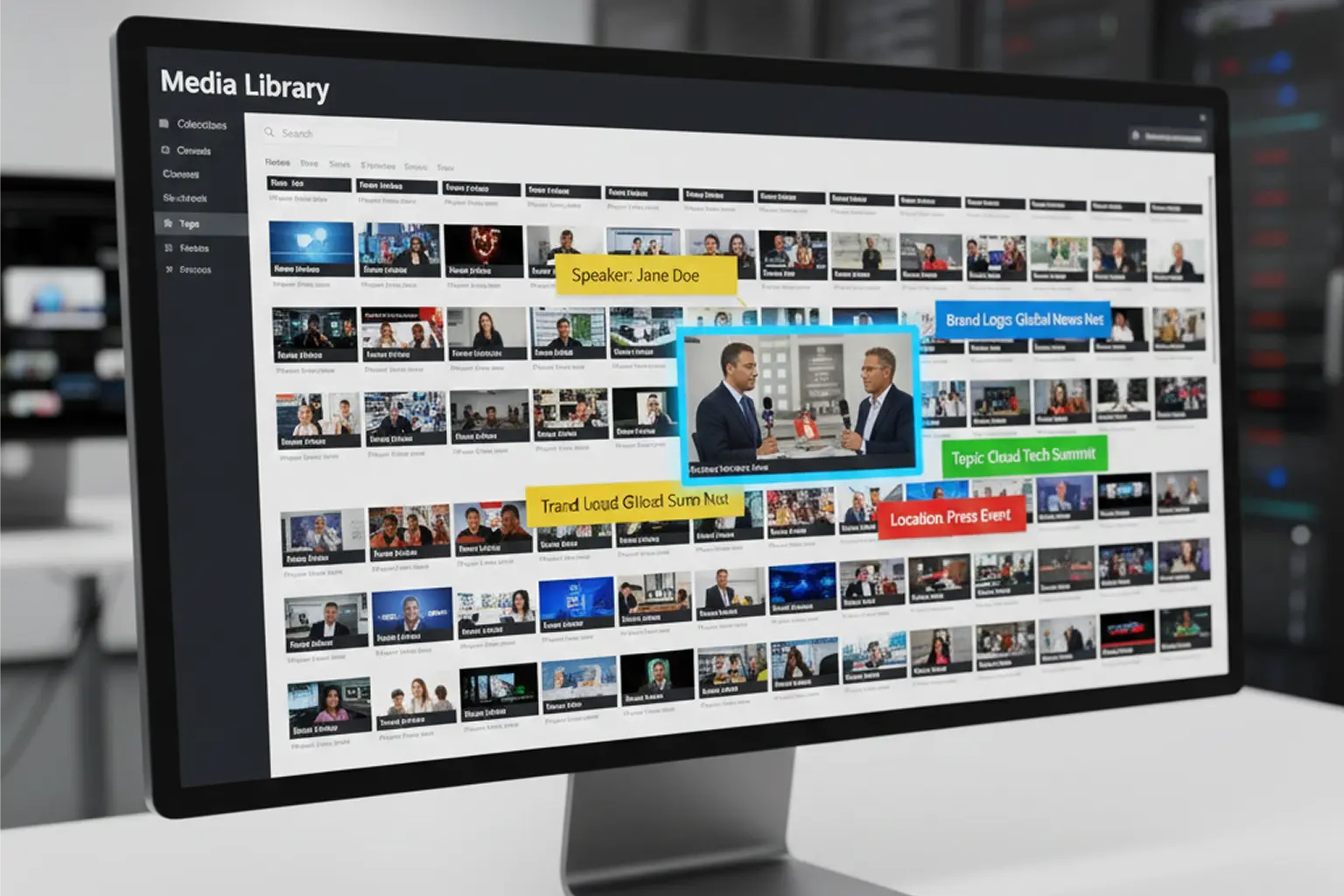
Metatagging is the process of applying structured, descriptive metadata to a digital asset so it can be found, filtered, and reused accurately within a digital asset management (DAM) or media asset management (MAM) system. That metadata typically includes descriptive tags (what’s in the asset), technical metadata (format, resolution, duration), rights and usage metadata (licensing terms, expiration dates), and administrative metadata (who created it, when, and under what project).
Done well, metatagging turns a growing pile of files into a genuinely searchable library. Done inconsistently, it creates the illusion of organization while actually leaving most of the library invisible to search, since a viewer can only find what was tagged accurately in the first place.
Why Metatagging Breaks Down as Libraries Grow
Metatagging problems rarely show up early. A small library with a dedicated librarian or a disciplined production team can maintain reasonably consistent tags by hand. The trouble starts once volume and contributor count both increase.
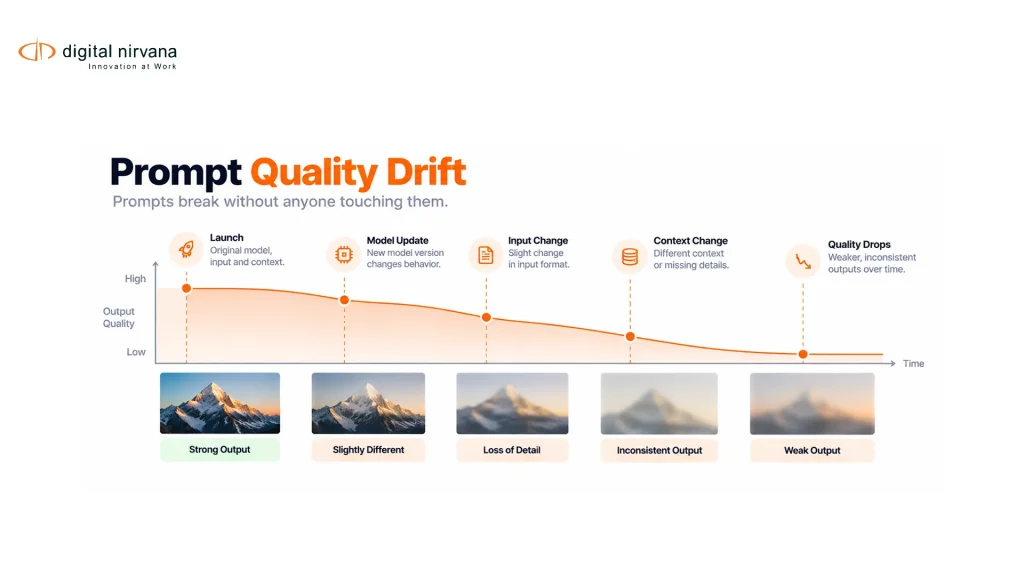
Manual tagging simply can’t keep pace with ingest volume once a library grows past what a small team can review. Different contributors apply different vocabulary for the same concept, so one editor tags “press conference” while another tags “media briefing” for identical content types, splitting the archive into inconsistent silos that search can’t bridge. Historical backlog accumulates faster than anyone budgets time to clean it up, so libraries end up with a well-tagged recent layer sitting on top of years of poorly tagged or completely untagged legacy assets. And without governance, tag vocabularies drift over time with no enforcement, which means even a well-intentioned tagging effort degrades gradually without anyone noticing until a search request comes back empty.
The Real Cost of Inconsistent Tagging at Scale
The cost isn’t abstract. It shows up as licensing and reuse opportunities missed because valuable footage simply can’t be found. It shows up as duplicated production work, where teams recreate content that already exists somewhere in the archive because nobody could locate it. It shows up as compliance risk, when rights and usage metadata isn’t reliably tracked and expired-license content gets reused by mistake. And it shows up as wasted staff time, with skilled team members spending hours on manual search instead of production work, simply because the metadata that should have made the search instant was never applied consistently.

Metatagging vs. Full Media Indexing: An Important Distinction
It helps to separate metatagging from full media indexing, since they solve overlapping but distinct problems. Metatagging typically applies at the asset level, describing what a file is overall. Full media indexing goes deeper, applying time-coded tags within a video or audio file, so a search can return the exact moment a topic, person, or object appears, not just confirm that the asset exists somewhere in the library.
| Approach | Granularity | Best For |
| Basic metatagging | Asset-level (whole file) | General library organization, rights tracking, categorization |
| Full media indexing | Time-coded (within the file) | Locating specific moments, clips, or mentions inside long-form content |
Most large libraries need both. Asset-level metatagging keeps the overall library organized and governed, while time-coded indexing supports the deeper search needs of teams working with long-form footage like broadcasts, sports coverage, or recorded events. Platforms like MetadataIQ are built to handle both layers together, combining asset-level tagging with deeper time-coded indexing and quality scoring inside the same MAM and DAM integration.
How AI-Assisted Metatagging Works at Scale
A modern metatagging pipeline applies automated analysis at ingest, rather than depending entirely on a human tagging every asset by hand after the fact.
Automatic speech recognition and natural language processing extract topics, named entities, and spoken content from audio and video assets. Object, face, and logo recognition identify visual elements without requiring a human reviewer to watch each asset in full. Optical character recognition captures on-screen text, graphics, and document content. And a controlled vocabulary or taxonomy layer keeps automated tags consistent across the entire library, rather than allowing tag drift to creep in asset by asset.
Solutions such as MediaServicesIQ offer these detection capabilities (ASR, NLP, OCR, and object, face, and logo recognition) as modular AI and ML microservices, letting teams apply automated tagging directly within their existing DAM or MAM environment rather than adopting an entirely new platform. For broadcasters that also need live monitoring alongside their tagged archive, MonitorIQ adds compliance and quality-of-experience tracking across the same content footprint.

Governance: The Piece Most Teams Skip
Automated tagging solves the volume problem, but without governance, even AI-generated tags drift into inconsistency over time. A sustainable metatagging strategy at scale needs a controlled taxonomy that defines approved terms and hierarchy, rather than allowing free-text tags to multiply without structure. It needs quality scoring or confidence thresholds on automated tags, so low-confidence tags get flagged for human review instead of silently entering the system as fact. It needs a defined process for updating the taxonomy as the business evolves, since new product lines, campaigns, or content categories inevitably emerge over time. And it needs periodic audits of tag consistency across the library, catching drift before it accumulates into a full re-tagging project down the line.
A Realistic Workflow: Tagging an 80,000-Asset Backlog
Picture the digital asset manager from the opening scenario deciding to fix the archive rather than keep fielding three-day search requests. Rather than attempting to re-tag all 80,000 assets at once, the realistic path starts with a taxonomy audit, defining a controlled vocabulary based on how the library actually gets searched, not how it was informally tagged in the past.
From there, AI-assisted tagging runs across the full backlog, applying consistent, automated tags at scale far faster than any manual re-tagging project could manage. High-confidence tags get applied automatically, while lower-confidence or ambiguous results get flagged for a smaller human review team to confirm, rather than requiring full manual review of every asset. Priority segments (the most frequently requested content categories, or the highest-value assets for licensing and reuse) get processed and validated first, so the library becomes meaningfully more useful within weeks rather than only after a full backlog clears.
Within that kind of workflow, a request like “every asset mentioning this product line across four years of content” becomes a search query with reliable results, not a three-day manual investigation with an uncertain answer at the end.
Measurable Impact of Scaled Metatagging
Teams that move from manual or inconsistent tagging to AI-assisted metatagging at scale typically see search and retrieval time drop from hours or days down to seconds for most queries. Consistency improves significantly once a controlled taxonomy replaces free-text tagging across multiple contributors. Archive reuse and licensing opportunities increase because content that was previously invisible to search becomes discoverable. And staff time that used to go toward manual search and re-creation of lost content shifts toward higher-value production work instead.
Implementation Checklist for Scaling Metatagging
- [ ] Audit current tag consistency across a sample of the library to establish a baseline
- [ ] Define a controlled taxonomy based on actual search behavior, not just historical tagging habits
- [ ] Select an AI tagging solution that integrates directly with your existing DAM or MAM platform
- [ ] Set confidence thresholds that route low-certainty tags to human review rather than auto-publishing them
- [ ] Prioritize tagging the highest-value or most-requested content segments first
- [ ] Schedule periodic taxonomy and tag-quality audits rather than treating tagging as a one-time project
- [ ] Assign clear ownership for taxonomy governance as the business and content categories evolve
Common Objections, Addressed
“We already have a DAM system with tagging built in.” Most DAM platforms provide the structure for tags but don’t generate them automatically at scale. AI-assisted tagging fills that gap, populating the structure your DAM already supports without requiring a platform switch.
“Our library is too large to retag.” Retagging an entire historical backlog manually is rarely realistic, but AI-assisted tagging processes large volumes far faster than manual review, and prioritizing high-value segments first delivers usable results well before the full backlog completes.
“AI tags aren’t reliable enough for our archive.” Confidence scoring addresses this directly. High-confidence automated tags can be trusted and published immediately, while lower-confidence results get routed to a smaller human review layer instead of requiring full manual tagging across the board.
How This Connects to Digital Nirvana’s Approach
Metatagging at scale is exactly the problem MetadataIQ was built to solve, combining AI-driven tagging, quality scoring, and search with direct integration into existing MAM, DAM, and PAM systems, so libraries don’t need to migrate off tools teams already rely on. For organizations managing metatagging needs that extend beyond media into broader unstructured business data, Data Intelligence applies the same labeling and data-wrangling discipline to non-media assets. Teams that need ongoing quality assurance on automated tagging at scale often add a Managed AI review layer, keeping confidence scoring and human oversight consistent as the library keeps growing.
Broadcasters and archives with accompanying transcription and captioning needs typically pair metatagging with TranceIQ, since accurate transcripts strengthen the topic and entity extraction that feeds directly into tagging quality. Reviewing Digital Nirvana’s success stories shows how archive and media operations teams have applied this same combination of automated tagging and governance to turn large, inconsistent libraries into genuinely searchable assets.
Why Governance Matters More as You Scale
It’s worth being direct about this: the technology to tag content at scale is no longer the hard part. AI-assisted tagging can process enormous libraries quickly, and most modern platforms handle the volume problem well. The part that actually determines long-term success is governance, the taxonomy discipline, confidence thresholds, and ownership structure that keep a large tagged library consistent five years from now instead of drifting back into the same inconsistency that created the original backlog. Teams that treat metatagging as an ongoing governed process, not a one-time cleanup project, are the ones whose libraries stay reliably searchable as they keep growing.
Conclusion
Metatagging breaks down at scale not because tagging itself is hard, but because manual and semi-manual approaches can’t keep pace with growing volume and multiple contributors, and consistency drifts without anyone noticing until a search comes back empty. AI-assisted tagging solves the volume problem, but only sustained governance, a controlled taxonomy, confidence thresholds, and clear ownership keeps a large library reliably searchable over time. Teams that combine both turn sprawling digital asset libraries from a source of frustration into one of their most valuable, reusable resources.
Key Takeaways
- Metatagging works fine at small scale but breaks down as volume grows and multiple contributors apply inconsistent vocabulary.
- Asset-level metatagging and time-coded media indexing solve different problems and most large libraries need both.
- AI-assisted tagging (ASR, NLP, OCR, object and face recognition) solves the volume problem that manual tagging can’t keep up with.
- Governance, a controlled taxonomy, confidence thresholds, and clear ownership, is what keeps a tagged library consistent over time.
- Prioritizing high-value or frequently requested content segments first delivers usable results faster than attempting a full backlog re-tag at once.
- Confidence scoring lets teams trust high-certainty automated tags while routing ambiguous results to human review.
FAQ
What’s the difference between metatagging and media indexing? Metatagging typically applies descriptive tags at the asset level, describing what a file is overall. Media indexing goes further, applying time-coded tags within the file so specific moments become searchable, not just the asset as a whole.
How long does it take to metatag a large existing digital asset library? Timelines vary by library size and content complexity, but AI-assisted tagging processes large backlogs far faster than manual review. Most teams see meaningful improvement within weeks by prioritizing high-value content segments rather than waiting for a full backlog to complete.
Can AI-generated tags be trusted for a large media archive? Confidence scoring is the key factor. High-confidence automated tags can generally be trusted and published directly, while lower-confidence or ambiguous tags should route to human review before being finalized.
Does metatagging replace the need for a digital asset management system? No. Metatagging populates the structure a DAM or MAM system already provides. The two work together, with the DAM handling storage, rights, and workflow, and metatagging making the content within it actually findable.