Ask a data engineering lead where a specific customer field originated, who last touched it, and whether it’s safe to use in a new model, and watch how long the answer takes. In most enterprises, that question triggers a scramble across Slack threads, old wikis, and a few engineers’ memories, because the metadata that should answer it instantly was never centrally managed in the first place.
This is the quiet cost of skipping metadata management. Data volume keeps growing, teams keep multiplying data sources, and without a proper catalog and governance layer, “we have the data” quietly turns into “we have no idea what’s in our data.” This guide breaks down what metadata management services actually do for an enterprise data catalog, and why it’s become a foundational requirement rather than a nice-to-have.
The Core Problem: Data Without Governance Is a Liability, Not an Asset
Enterprises collect data faster than they can document it. New pipelines get built, new fields get added, and new teams start pulling from shared sources, often without anyone updating a central record of what each field means, where it came from, or who’s responsible for it.
Without that governance layer, data quality issues compound quietly. Analysts build reports on fields they don’t fully understand. AI teams train models on data nobody can confirm is clean or current. Compliance teams struggle to answer basic questions about data lineage when an audit or regulatory request arrives.
The pain isn’t a lack of data. It’s the absence of a reliable, searchable record of what that data actually is, and that gap grows more expensive the longer it goes unaddressed.
Market Context: Data Governance Pressure Is Rising From Every Direction
Regulatory frameworks around data privacy and AI accountability continue to expand, and most of them require organizations to demonstrate exactly where sensitive data lives, how it flows, and who has access to it. Answering those questions without a proper metadata catalog usually means weeks of manual discovery work every time a request comes in.
At the same time, enterprise AI initiatives are multiplying, and every one of them depends on trustworthy, well-documented data. Teams launching new models are discovering that the biggest blocker isn’t compute or algorithms; it’s not knowing whether their training data is accurate, current, or even correctly labeled.
Add in the sheer sprawl of modern data stacks, cloud warehouses, SaaS tools, legacy databases, and unstructured content, and it becomes clear why enterprise data catalogs paired with active metadata management have moved from IT nice-to-have to executive priority.
Traditional Approaches and Their Gaps
Most organizations have tried one of a few approaches to managing data documentation, and each one eventually breaks down.
Manual documentation in wikis or spreadsheets. Someone writes down field definitions and data lineage by hand. It’s accurate on day one and stale within a quarter, because nobody has the bandwidth to keep updating it as pipelines evolve.
Passive data catalogs. Some organizations deploy a catalog tool but only populate it once, treating it as a static reference rather than a living system. Search works for whatever was documented at launch, and nothing added since.
Siloed team knowledge. Individual teams understand their own data well but have no visibility into how other teams’ data connects to theirs. This creates duplicate fields, conflicting definitions, and no single source of truth across the organization.
None of these approaches scale with the pace of modern data growth. They all rely on someone remembering to update a static record, and that assumption fails the moment teams move fast.
How Modern Metadata Management Services Work
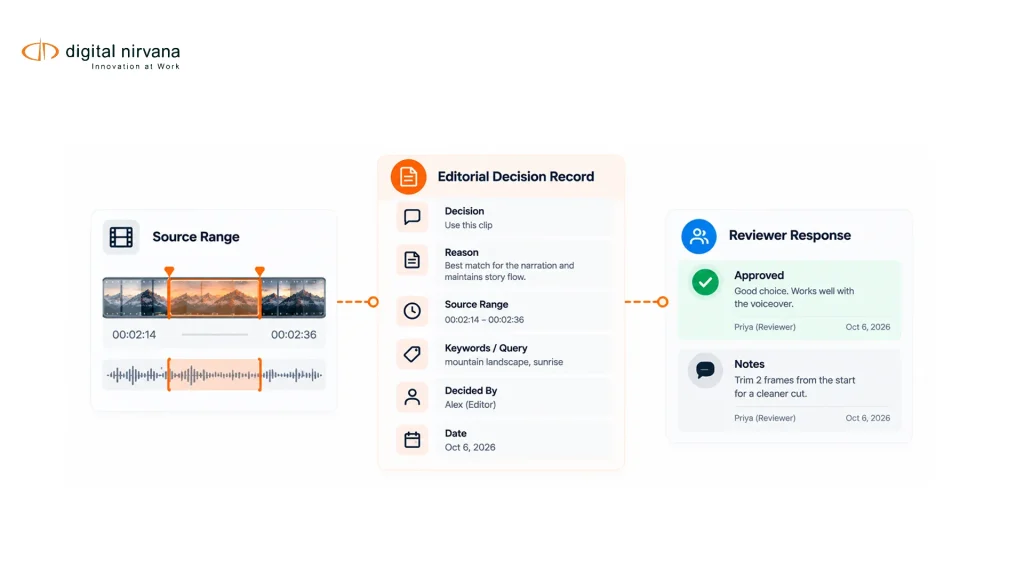
Modern metadata management treats documentation as an active, continuously updated layer rather than a one-time project. Data sources are scanned and profiled automatically, lineage is tracked as pipelines change, and quality checks run continuously rather than during an annual audit.
That metadata gets organized into a searchable enterprise catalog, so a data scientist, analyst, or compliance officer can look up any field and immediately see its definition, source, last update, quality score, and access permissions. Instead of static documentation, the catalog becomes a living map of the organization’s entire data estate.
This is the same principle behind Data Intelligence services: turning unstructured, undocumented, or messy data into something structured, labeled, and trustworthy enough for teams to actually build on with confidence.
Real-World Workflow: From Data Sprawl to Trusted Catalog
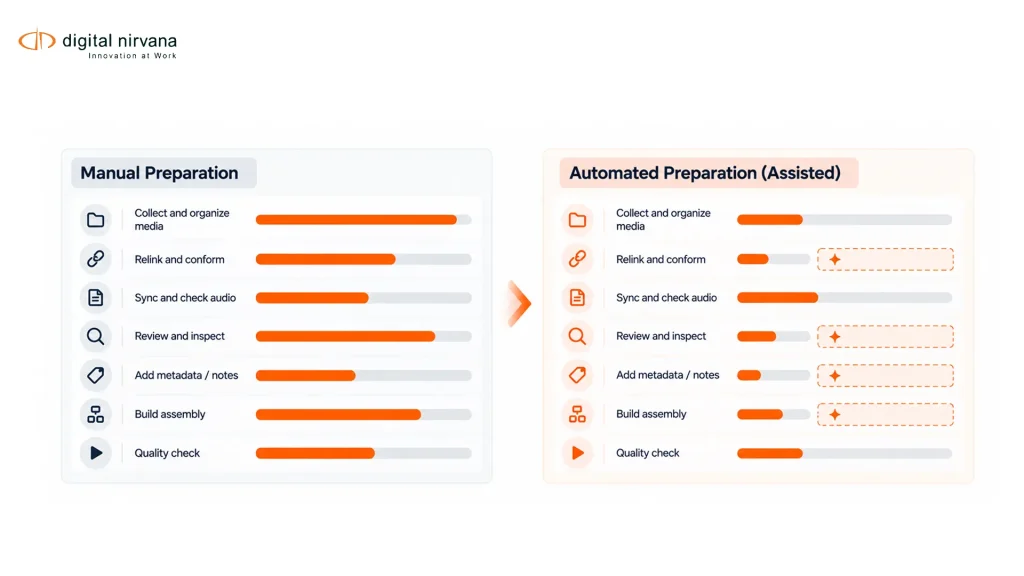
Picture an enterprise data team preparing to launch a new AI model that relies on customer transaction data pulled from three different systems. Before metadata management is in place, the team spends weeks manually tracing which system is the source of truth, confirming field definitions match across systems, and checking whether any of the data has quality issues.
With an active metadata management layer, that same team searches the catalog, immediately sees each field’s lineage, quality score, and last validation date, and confirms within an hour which dataset is safe to use for training. When a compliance officer later asks which systems touch personally identifiable information, the answer comes from a search query instead of a multi-week audit.
That shift, from manual tracing to instant lookup, is what separates a passive catalog from an actively managed one.
Measurable Impact: What Changes When Metadata Is Actively Managed
Organizations that move from static documentation to active metadata management typically see improvement in three areas: faster data discovery, reduced duplicate or conflicting datasets, and shorter response times for compliance and audit requests.
Data discovery time drops because teams stop relying on tribal knowledge and start relying on search. Duplicate datasets decrease because a shared catalog surfaces existing fields before teams build redundant ones. And compliance response time improves dramatically, since lineage and access information live in one searchable place instead of scattered across systems and memories.
Implementation Considerations
Rolling out metadata management works best as a phased effort rather than an all-at-once migration. Most enterprises start by cataloging their highest-risk or highest-value data sources, customer data, financial data, or anything feeding active AI initiatives, before expanding to lower-priority systems.
It’s also important to decide early who owns data stewardship for each domain. A catalog without clear ownership tends to drift out of date the same way manual documentation does, just with a better search interface. Pairing the catalog rollout with cloud infrastructure modernization, an area covered by Cloud Engineering, often makes sense when legacy systems are part of the data sprawl problem.
Key Capabilities to Prioritize When Evaluating a Solution
- Automated data profiling and discovery across cloud and on-premises sources
- Active lineage tracking that updates as pipelines change
- Data quality scoring, not just field-level definitions
- Access and permissions visibility tied to each dataset
- Support for both structured and unstructured data sources
- Integration with existing data warehouses and BI tools
- Human review workflows for validating labels and lineage on sensitive datasets
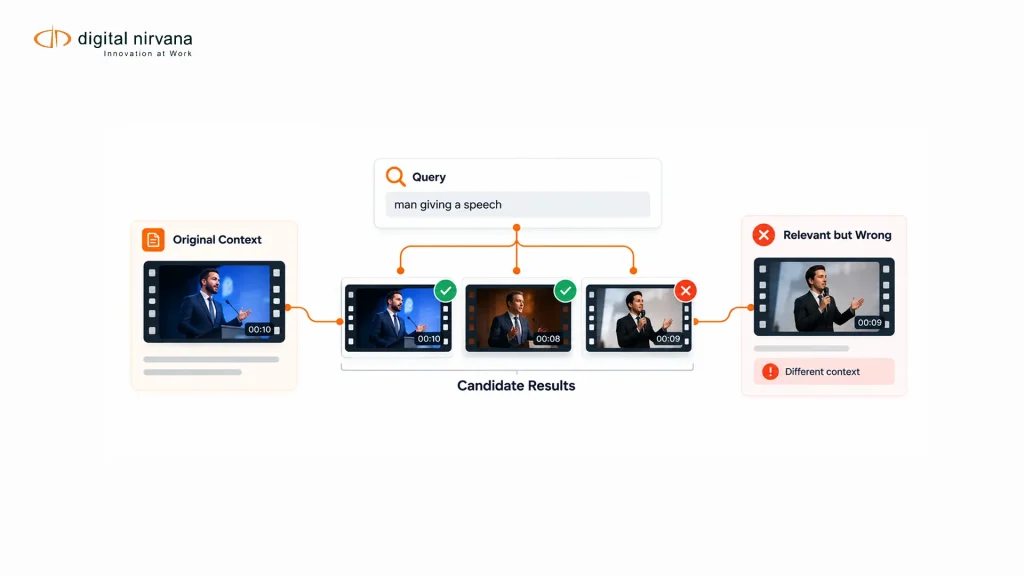
That last point matters more than it might seem. Fully automated systems can mislabel edge cases, which is why pairing automation with structured human review, the same principle behind Managed AI review pipelines, keeps catalog accuracy high as data volume scales.
Common Objections and Counterarguments
“We already have a data catalog tool.” Having the tool isn’t the same as actively managing it. Many organizations own catalog software that’s only partially populated or hasn’t been updated since launch, which defeats the purpose.
“Our data team already knows where everything is.” That knowledge usually lives in a handful of people’s heads. When those people leave or move teams, the organization loses that context entirely, which is exactly the risk active metadata management eliminates.
“This sounds like a long, expensive project.” Phased implementation, starting with highest-risk datasets, delivers value well before the entire data estate is cataloged, making the investment easier to justify incrementally.
Success Metrics and KPIs to Track
| Metric | What It Tells You |
| Average time to locate a dataset’s definition and lineage | Discovery efficiency across teams |
| Percentage of enterprise data sources cataloged | Coverage of your metadata initiative |
| Number of duplicate or conflicting datasets identified and resolved | Data hygiene improvement |
| Time to respond to compliance or audit data requests | Governance readiness |
| Data quality score trend over time | Whether ongoing validation is working |
Reviewing these metrics quarterly gives data leadership a clear, evidence-based case for expanding catalog coverage to additional systems and teams.
How Digital Nirvana Approaches Metadata and Data Governance
Digital Nirvana’s Data Intelligence services are built around the same principle covered in this guide: turning messy, undocumented, or unstructured data into something structured, labeled, and reliable enough for teams to build AI initiatives on with confidence. That includes data wrangling, labeling, and model validation work that keeps a growing data catalog accurate rather than stale.
For organizations combining data governance work with infrastructure modernization, Cloud Engineering supports the migration and architecture side of the equation, while Managed AI provides the human-in-the-loop review layer that keeps automated tagging and labeling accountable at scale. Digital Nirvana has applied this same discipline of AI-assisted, human-verified tagging in media metadata contexts through MetadataIQ, where the same core challenge, making unstructured content searchable and trustworthy, plays out in a different domain.
Why This Matters Beyond the Data Team
An actively managed enterprise data catalog doesn’t just help data engineers find fields faster. It gives compliance teams audit-ready answers, gives AI teams confidence in their training data, and gives leadership a clear picture of what the organization actually owns. Real examples of this kind of AI-assisted, human-reviewed operational work are documented across Digital Nirvana’s success stories, and the broader philosophy behind the approach is outlined on the Digital Nirvana homepage.
Conclusion
Enterprise data catalogs only deliver value when the metadata behind them stays current, accurate, and actively governed. Static documentation and siloed knowledge might get an organization through the next quarter, but they break down exactly when it matters most, during an audit, a model launch, or a compliance request. Investing in active metadata management now means your data team spends time building on trusted data instead of chasing down where it came from.
Key Takeaways
- Manual documentation and static catalogs go stale as fast as data pipelines change.
- Active metadata management treats documentation as a continuously updated layer, not a one-time project.
- Automated data profiling combined with human review keeps lineage and labels accurate at scale.
- Phased implementation, starting with highest-risk data, delivers value before a full rollout is complete.
- Clear data stewardship ownership prevents catalogs from drifting out of date.
- Track discovery time, catalog coverage, and compliance response time to measure real progress.
FAQ
What is metadata management for an enterprise data catalog? It’s the practice of automatically documenting, tracking, and governing data across an organization, including definitions, lineage, quality, and access, so teams can find and trust data quickly.
How is this different from just having a data catalog tool? A catalog tool is only useful if its metadata stays current. Active metadata management means continuous scanning, lineage tracking, and quality validation, rather than a one-time setup.
Does metadata management require replacing existing data infrastructure? No. Most metadata management approaches integrate with existing data warehouses, cloud platforms, and BI tools, adding a governance and discovery layer rather than replacing what’s already in place.