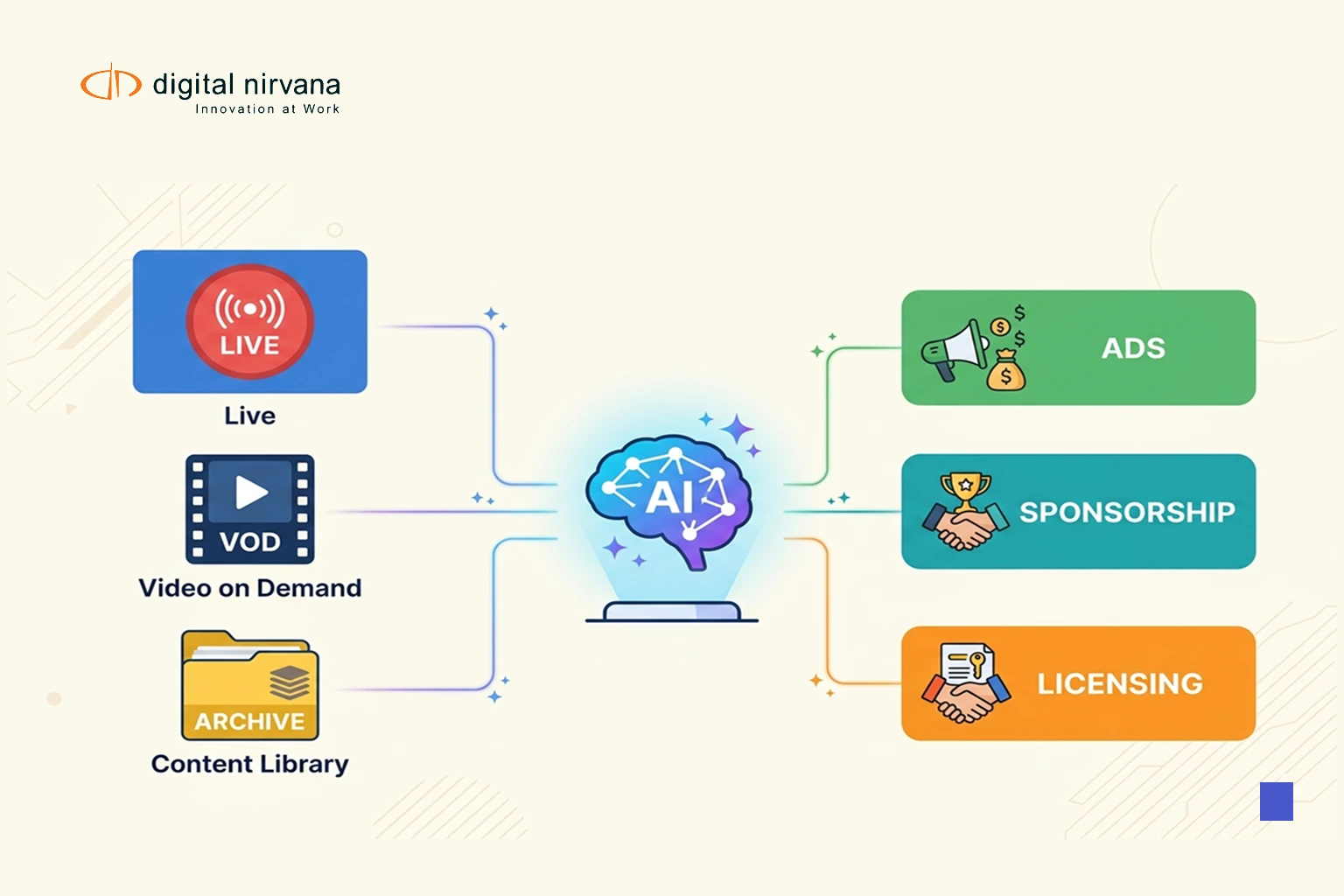
A regional broadcaster sits on 40 years of game footage, breaking news coverage, and original programming. Somewhere in that archive is a clip that a streaming platform would pay for, a highlight reel a sponsor would sponsor, and a scene that a documentary team is searching for right now. But nobody can find it. The metadata is thin, the tapes were digitized without proper tagging, and the only way to locate anything is to ask the one archivist who has watched most of it. That person is retiring next year.
This is the story behind most media monetization problems today. It is rarely about having valuable content. It is about not being able to find, package, and license that content fast enough to matter.
Why Media Monetization Is Harder Than It Looks
Media companies have always known their archives hold value. What has changed is how fast that value needs to move. FAST channels, licensing marketplaces, social clip platforms, and AI training data buyers all want content on tight timelines. A slow archive is a lost deal.
The core problem is not a lack of content. It is a lack of searchable, structured metadata that connects footage to buyers, use cases, and rights information. Without that layer, monetization depends on institutional memory, which does not scale and does not survive staff turnover.
Industry data backs this up. Media organizations routinely report that less than a fraction of their archived content is ever reused or licensed, simply because teams cannot locate it efficiently. That is not a content problem. That is a discoverability problem, and discoverability is exactly what AI-powered metadata and search solve.
Market Context: Why Monetization Pressure Is Rising Now
A few forces are converging to push archive monetization higher on the priority list.
FAST channels and niche streaming services need constant programming, and licensing existing footage is far cheaper than commissioning new content. Sports leagues and news organizations are under pressure to feed short-form platforms with clips within minutes of an event, not hours. Meanwhile, rights holders are fielding more requests from AI companies and research groups looking to license verified, well-tagged media at scale.
At the same time, regulatory and platform requirements around captioning and accessibility (guided by frameworks like the FCC’s closed captioning rules and Ofcom’s access services code) mean that any archive being prepared for resale also needs to be conformant, not just searchable. Monetization and compliance are becoming the same workstream.

Traditional Approaches and Where They Fall Short
Most archives were built for storage, not monetization. Traditional workflows rely on a few patterns that no longer hold up.
Manual logging by junior staff or interns, where tagging quality depends entirely on who did the work and how much time they had. Keyword-only metadata pulled from file names or shot lists, which misses everything that happens inside the frame. Siloed systems where the archive team, the licensing team, and the ad sales team each keep their own spreadsheets that never talk to each other.
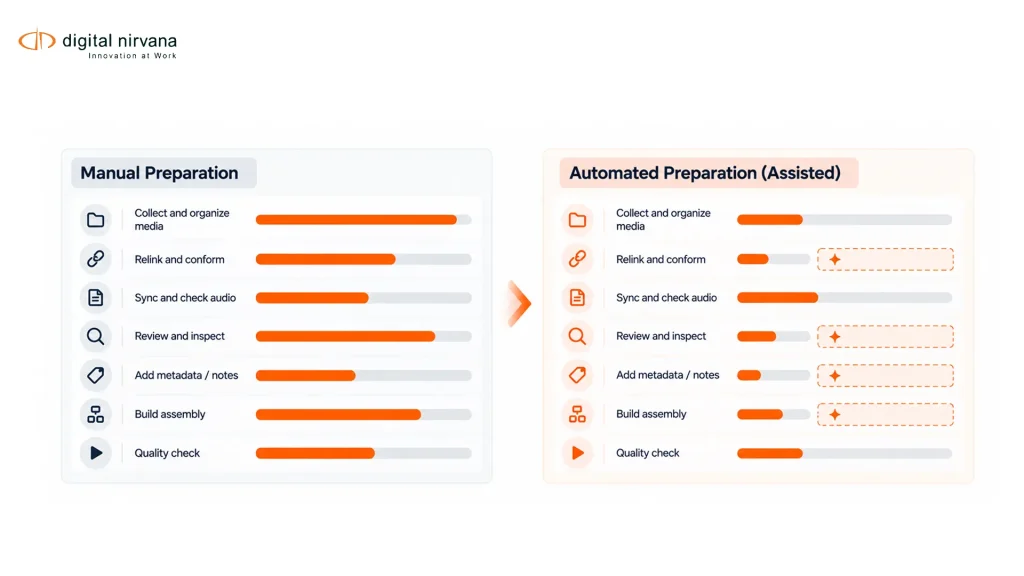
These approaches worked when archives were smaller and demand was slower. They collapse under today’s volume. A single 24-hour news operation can generate more raw footage in a week than a small archive team can tag in a month.
How AI-Powered Media Monetization Works
AI metadata automation changes the economics of archive value by making every frame searchable, not just the frames someone manually described.
Speech-to-text and natural language processing convert dialogue and commentary into searchable transcripts. Computer vision identifies faces, logos, on-screen text, and scenes, so a search for “stadium sponsor logo, third quarter” actually returns a result. Automated summaries and chapter markers turn hours of raw footage into navigable segments a buyer can preview in minutes instead of watching in full.
Platforms like MetadataIQ apply this kind of automated tagging across live and archival content, integrating directly with existing MAM and DAM systems so archive teams are not forced to migrate everything to a new platform. That integration matters. Most media organizations do not want another silo. They want their existing asset library to suddenly become searchable.
For content that includes speech-heavy material such as interviews, panels, or commentary, transcription and captioning through TranceIQ does double duty: it makes the content accessible and compliant while also generating the searchable text layer that licensing teams rely on to locate specific quotes or moments.
A Real-World Workflow: From Archive to Licensed Asset
Picture a sports network preparing to license highlight packages to a regional streaming partner. Before AI-driven metadata, this process meant days of manual review, cross-checking sponsor visibility, and confirming rights windows by hand.
With automated metadata in place, the workflow looks different. A licensing manager searches the archive by player name, team, and sponsor logo. The system returns time-coded clips instantly, each tagged with scene descriptions and detected logos. The manager filters by rights status and export-ready formats, then packages a licensing bundle in an afternoon instead of a week.
The same pattern applies to news archives preparing footage for documentary licensing, to podcast networks packaging clip libraries for social platforms, and to corporate media teams repurposing training content into external thought leadership assets through services like Media Enrichment.
Measurable Impact of AI-Driven Monetization
The value shows up in a few consistent places across media organizations that have automated archive metadata.
Search and retrieval time drops from hours to minutes, since teams query structured metadata instead of scrubbing footage manually. Licensing turnaround shortens, because packages that once took days to assemble can be built the same day a request comes in. Previously unusable footage becomes commercially viable, since content that nobody could locate is, for monetization purposes, content that does not exist.
There is also a quieter benefit: better internal decision-making. When leadership can see exactly what is in the archive and how often it is being reused, they can make smarter calls about what to digitize next and which back catalog deserves active promotion.
Implementation Considerations
Getting from a static archive to a monetization-ready one requires a few deliberate steps.
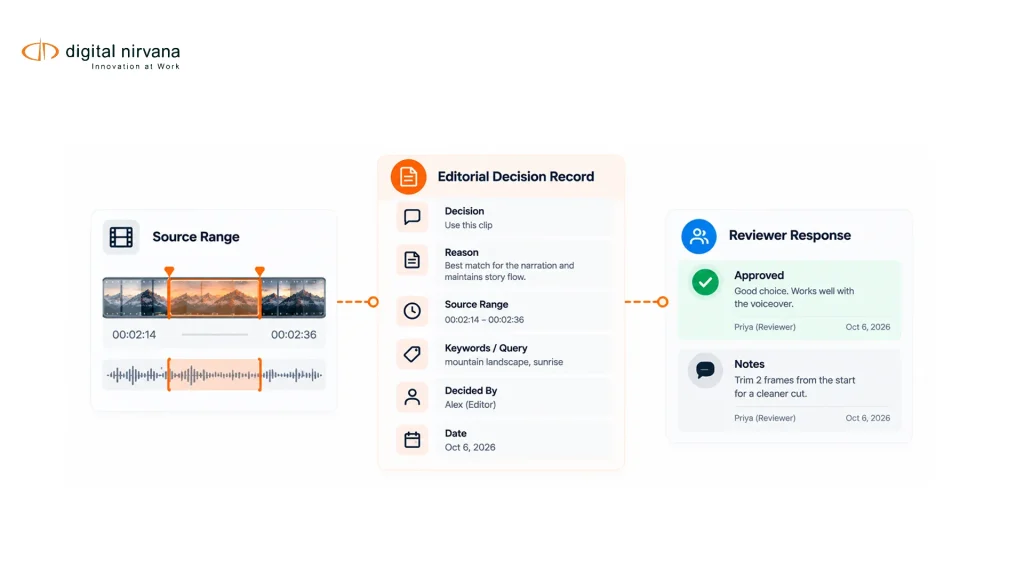
Start with an inventory of what already exists, including format, rights status, and current metadata quality. Prioritize high-demand categories first, such as sports, breaking news, or original programming, rather than trying to tag everything at once. Confirm integration paths with existing MAM/DAM and post-production tools like Avid or Grass Valley, so the new metadata layer sits on top of current workflows instead of replacing them. Assign ownership for rights and licensing data, since even the best search results are useless if nobody can confirm what can legally be sold.
Teams that combine AI automation with structured human review tend to get the most reliable results, particularly for rights-sensitive content where an incorrect tag could create a licensing problem down the line.
Key Capabilities to Prioritize When Evaluating a Solution
| Capability | Why It Matters |
|---|---|
| Speech-to-text and NLP search | Makes spoken content, not just visuals, discoverable |
| Face, logo, and object detection | Supports sponsorship reporting and licensing filters |
| MAM/DAM and NLE integration | Avoids a costly, disruptive migration |
| Rights and licensing metadata fields | Prevents legal exposure during resale |
| Batch processing for legacy footage | Makes large-scale archive digitization realistic |
| Caption and conformance support | Keeps monetized content accessible and platform-ready |
Common Objections and Counterarguments
“We already tried metadata tagging and it didn’t help.” Often this means keyword tagging was applied without AI-driven scene, speech, and object recognition. Basic tagging finds file names. AI metadata finds moments.
“Our archive is too disorganized to fix.” Batch processing tools are built precisely for this scenario. Legacy, poorly labeled footage is a common starting point, not an edge case.
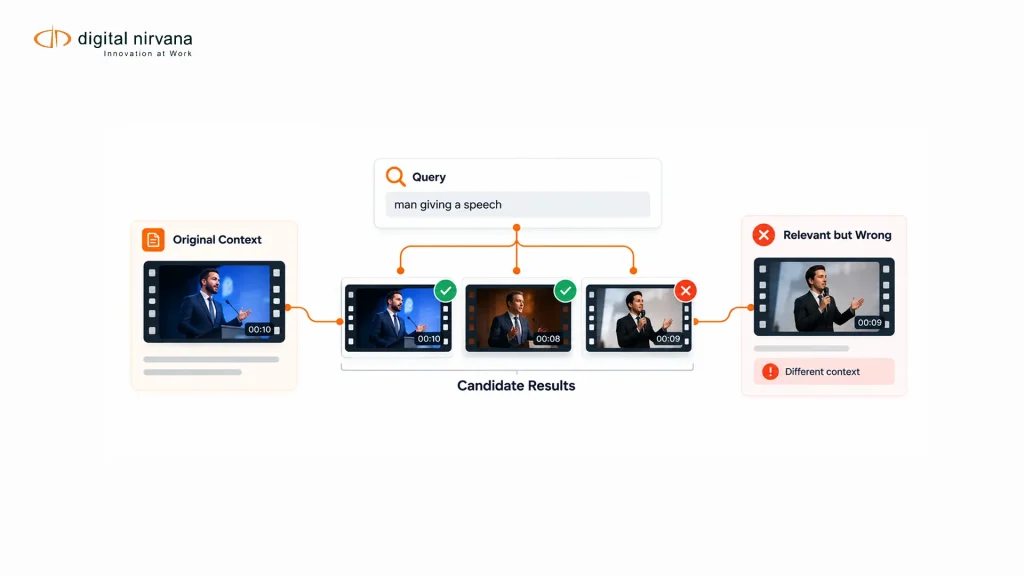
“AI accuracy worries us for licensing decisions.” This is a fair concern, and the right answer is not full automation. Pairing AI tagging with human-in-the-loop review, similar to the model used in Managed AI operations, keeps accuracy high while still cutting manual review time dramatically.
Success Metrics and KPIs to Track
Media teams evaluating their monetization progress should track a handful of numbers consistently: average search-to-clip time, percentage of archive content with complete metadata, licensing deal turnaround time, and revenue generated from previously untagged or unused footage. Reviewing these quarterly makes it easy to spot where the archive strategy is paying off and where it still needs investment.
Where Digital Nirvana Fits Into Your Monetization Strategy
Media monetization is ultimately a workflow problem before it is a technology problem, and that is where Digital Nirvana’s approach differs from generic AI vendors. MetadataIQ handles the heavy lifting of automated tagging, search, and archive indexing, while MediaServicesIQ adds granular AI microservices such as OCR, logo detection, and scene explanation for teams that need API-level access to specific capabilities.
For organizations juggling large volumes of legacy or unstructured content beyond media files, Data Intelligence services extend the same discipline of structured, validated data to broader operational archives. And because monetization strategies often expand into new markets and languages, Cloud Engineering support ensures the underlying infrastructure can scale as licensing demand grows.
How This Aligns With Digital Nirvana’s Broader Expertise
None of this works as a one-off software purchase. Archive monetization succeeds when metadata automation, human review, rights governance, and infrastructure scalability all move together, which is exactly the operating model Digital Nirvana was built around. The same human-in-the-loop philosophy that governs AI reliability in production systems applies just as well to protecting the accuracy of licensing metadata. Teams already using MonitorIQ for compliance monitoring or TranceIQ for captioning are often sitting on metadata they have not yet connected to monetization workflows, which makes archive activation a natural next step rather than a new initiative. Case examples of this kind of workflow transformation are documented in Digital Nirvana’s success stories.
Conclusion
Archives are not dead weight. They are unrealized revenue sitting behind a search problem. Media organizations that invest in AI-powered metadata, search, and rights governance are turning footage that used to gather dust into licensing deals, sponsor packages, and new distribution opportunities, often within the same content they already own. The technology to do this at scale exists today, and the organizations moving first are the ones setting the pace for the rest of the industry.
Key Takeaways
- Most archive value is lost to poor discoverability, not lack of content.
- AI metadata (speech, scene, face, and logo detection) makes footage searchable at a level manual tagging never could.
- Integration with existing MAM/DAM and post-production tools avoids disruptive migrations.
- Human-in-the-loop review protects licensing accuracy while keeping automation fast.
- Track search time, metadata completeness, and licensing turnaround to measure real ROI.
- Compliance and monetization increasingly depend on the same accurate, structured metadata layer.
FAQ
How quickly can an organization start monetizing an existing archive? Most teams see searchable results within weeks of connecting AI metadata tools to their archive, since batch processing can tag large volumes of legacy footage without manual review of every file.
Does AI metadata replace the need for a rights and licensing team? No. AI handles discovery and tagging speed, but rights confirmation and deal structuring still require human ownership, especially for legally sensitive content.
What kind of content benefits most from AI-driven monetization? Sports, news, and original programming archives tend to see the fastest returns, since demand for short-form and licensed clips in these categories is highest.