A sports desk needs a clip of a player’s rookie season for a tribute package airing in two hours. The footage exists somewhere in a library that’s grown for over a decade. Nobody can find it fast enough, so the team reshoots what it can and skips the rest.
This happens more often than most media organizations admit. It’s not a storage problem. It’s a media asset management problem, and it’s one of the most expensive, least visible costs in news, sports, and entertainment operations today.
What Media Asset Management Actually Means
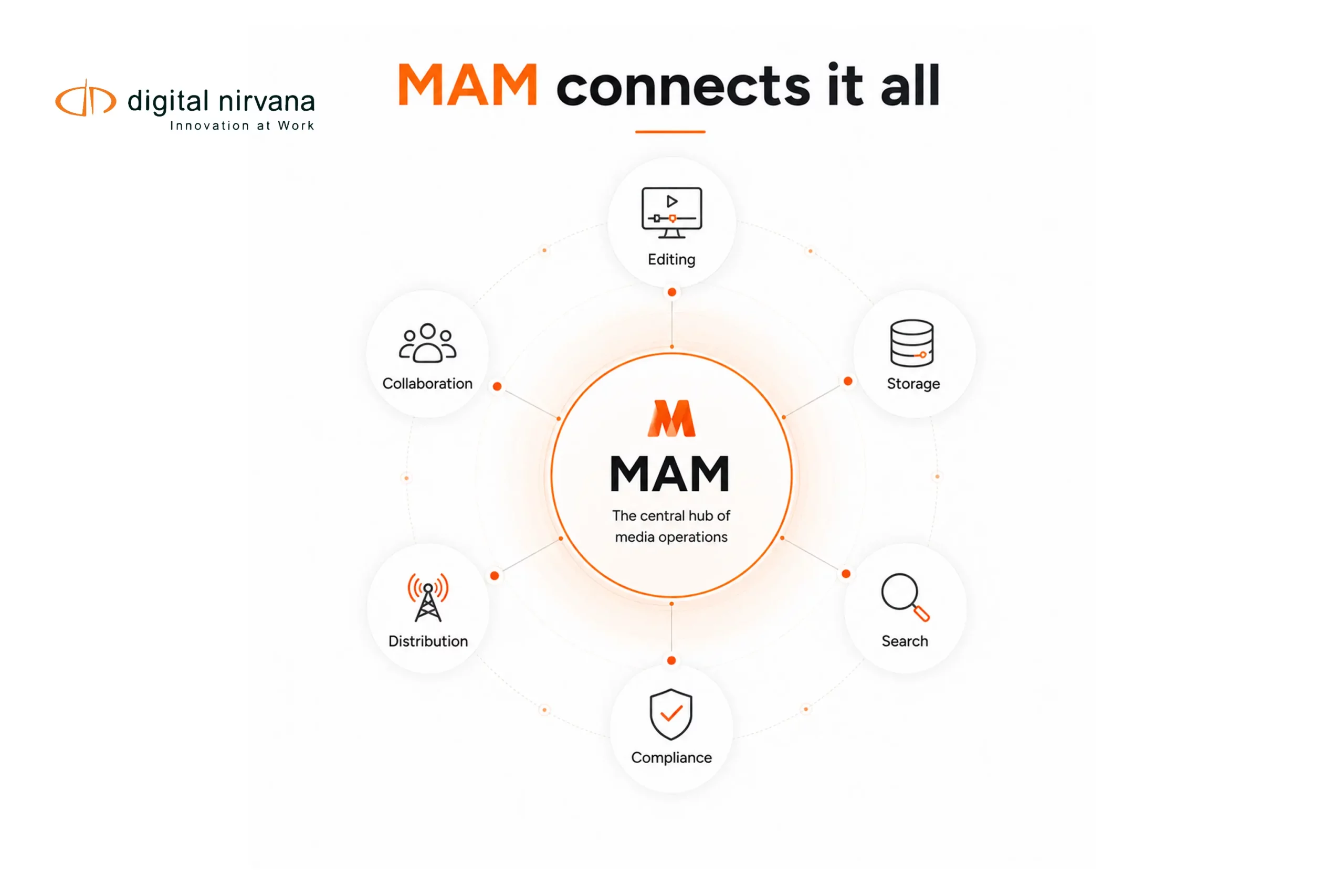
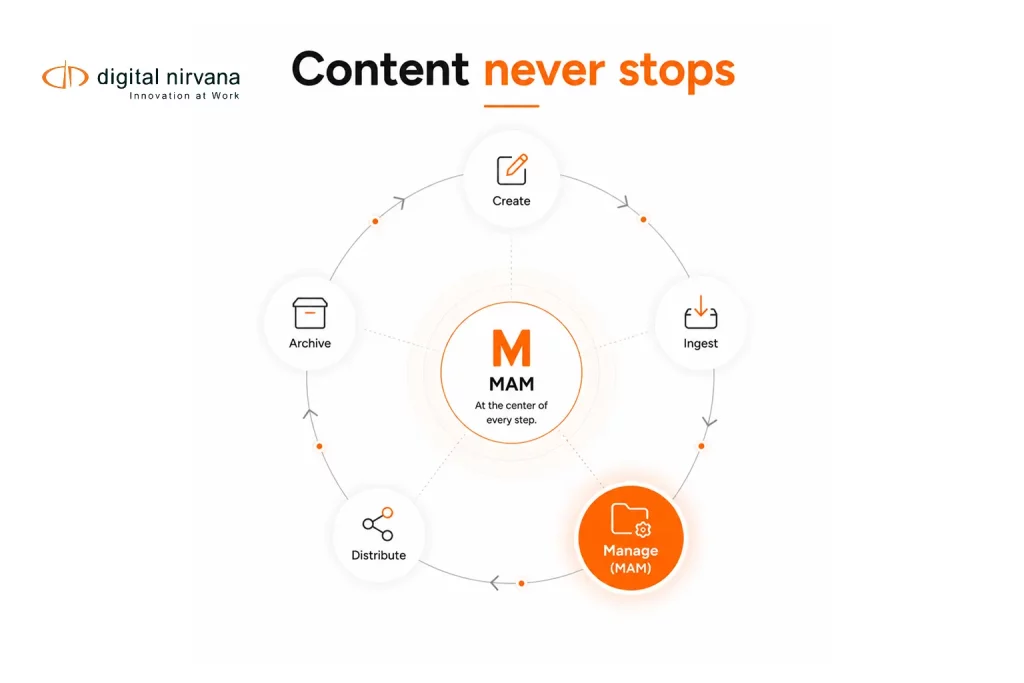
Media Asset Management, or MAM, is the centralized system that ingests, organizes, indexes, and distributes video, audio, and graphics across a media operation. A well-built MAM connects everything from ingest to archive to final delivery under one operational layer, rather than leaving footage scattered across drives, vendor systems, and personal folders.
At its core, a MAM system handles four jobs: bringing content in (ingest), describing what it is (metadata and indexing), storing and organizing it (archive and search), and getting it out to the right platform (distribution). When any one of those breaks down, the rest of the operation slows with it.
Why This Matters More in 2025 Than It Did Five Years Ago
The pressure on MAM systems has changed shape. It’s no longer just about storage capacity. It’s about speed, rights accuracy, and monetization.
News and sports teams now operate under fast-turnaround expectations that didn’t exist a decade ago. A highlight needs to hit social media within minutes of the moment happening, not after the broadcast ends. That pressure pushes MAM platforms to handle live feeds, rapid clipping, and multi-platform distribution in near real time, not batch processes.
At the same time, the shift toward hybrid and cloud-based MAM deployment is accelerating, letting distributed creative teams work on the same assets across regions instead of everyone needing to be on the same local network. Analysts tracking the media asset management market point to double-digit annual growth through the back half of the decade, driven largely by this demand for centralized, fast, cloud-capable systems.
Where Traditional MAM Approaches Break Down
Not every system built ten years ago can handle today’s volume and speed requirements. The common failure points look like this:
| Legacy MAM Limitation | Why It Fails Today |
| On-premises only, no remote access | Blocks distributed and hybrid production teams |
| Manual metadata entry | Can’t keep pace with live and high-volume ingest |
| Keyword-only search | Misses content buried in unlabeled footage |
| No rights metadata tracking | Creates compliance risk across territories and platforms |
| Siloed from newsroom and playout systems | Forces duplicate work across departments |
Rights tracking deserves special attention here. A single piece of sports footage might be cleared for linear broadcast in one territory, streaming in another, and archive use for highlights but not full replays. Without structured rights metadata built into the MAM, those distinctions get lost, and violations happen by accident rather than intent.
How Modern MAM Systems Solve This
The shift happening across news, sports, and entertainment MAM platforms right now centers on AI-assisted metadata generation applied at the point of ingest, not after the fact.
Instead of an archivist manually tagging footage days or weeks later, AI tools generate searchable metadata as content comes in: who’s on screen, what’s being said, what text appears, what the scene shows. That metadata gets attached to the asset immediately inside the MAM, which is what makes near-instant search possible later.
This is exactly the layer where AI metadata tagging integrates directly with existing MAM, DAM, and PAM environments, rather than requiring teams to abandon systems they’ve already invested in.
A Realistic Workflow: Sports, News, and Entertainment Side by Side
Sports. A live match is ingested in real time. Player names, key plays, and sponsor logos get tagged automatically as the game airs. By the final whistle, the highlights team searches by player name or moment type and pulls the clip in seconds instead of scrubbing four hours of raw feed.
News. A breaking story requires archive footage from a press conference months earlier. Automated transcription and metadata tagging mean the desk searches by spoken keyword or topic, not by guessing a timecode.
Entertainment. A studio preparing a FAST channel needs to identify which library titles are cleared for a given territory and platform. Rights metadata embedded in the MAM flags eligible content instantly, instead of legal and licensing teams manually cross-checking contracts.
Measurable Impact of Getting MAM Right
Organizations moving from manual, siloed asset management to AI-assisted, integrated MAM typically see change across three areas.
Archive search time drops from hours to minutes once footage is tagged at ingest rather than logged manually after the fact. Rights compliance risk falls when territory and platform restrictions are tracked as structured metadata instead of living in separate contract files. And previously unusable archive content becomes monetizable again, since teams can finally find and license footage that’s been sitting untagged for years.
What to Evaluate Before Choosing or Upgrading a MAM System
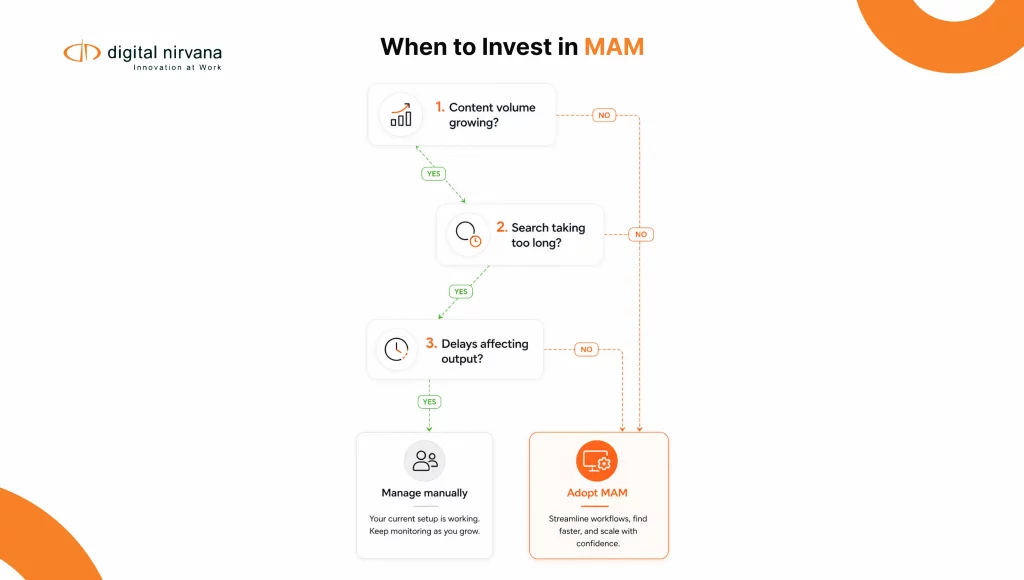
A few questions decide whether a MAM rollout actually solves the problem or just moves it.
Does the system integrate with your existing newsroom, playout, and editing tools, or will teams need to change established workflows? Can it handle both live ingest and archive processing without separate tools for each? Does it track rights metadata structurally, or does that still live in spreadsheets outside the system? And can it scale across a hybrid cloud environment if your teams work across multiple locations?
Key Capabilities Worth Prioritizing
- AI-assisted metadata generation at the point of ingest, not just post-production
- Native integration with newsroom systems, NLEs, and playout infrastructure
- Structured rights and compliance metadata, not manual tracking
- Hybrid or cloud-native deployment for distributed teams
- Fast, multi-signal search across speech, faces, logos, and on-screen text
Common Objections, Addressed Honestly
“We already have a MAM system, this isn’t a priority.” Having a MAM and having a searchable MAM are different things. Many organizations have storage without discoverability, which is where the real cost hides.
“Manual tagging has worked for us so far.” It often has, at lower volume. The moment a breaking story or live sports moment needs footage found in minutes, manual tagging becomes the bottleneck that costs the deadline.
“Migrating to a new MAM sounds disruptive.” The strongest implementations layer AI metadata and search on top of existing MAM, DAM, and PAM infrastructure rather than requiring a full replacement, which significantly lowers that risk.
How Digital Nirvana Supports Modern MAM Operations
Digital Nirvana’s MetadataIQ is built specifically to sit alongside existing MAM, DAM, and PAM systems, generating searchable metadata at ingest so news, sports, and entertainment teams can find footage in seconds instead of hours. It’s designed to work with the infrastructure teams already run, not replace it.
For teams that also need transcription, captioning, and subtitle work tied to the same archive, TranceIQ handles that layer directly, while MediaServicesIQ extends detection into face, logo, and object recognition for teams building more custom workflows. Broadcasters managing compliance alongside asset search often pair this with MonitorIQ for live monitoring and proof-of-performance.
Why This Matters for the Next Phase of Media Operations
The organizations pulling ahead in news, sports, and entertainment right now aren’t the ones with the biggest archives. They’re the ones whose archives are actually searchable, rights-cleared, and ready to be reused across linear, streaming, and social without a manual scramble every time.
Teams handling high volumes of captioning and description work alongside asset management often turn to Media Enrichment for managed, human-reviewed support, and Digital Nirvana’s success stories show how this plays out across broadcast and sports media operations that made the shift from manual to AI-assisted asset management.
Frequently Asked Questions
What’s the difference between MAM and DAM? MAM typically refers to systems built for video-centric, broadcast, and production workflows, while DAM covers broader digital asset types across marketing and brand use. In practice, the two increasingly overlap in modern platforms.
Can AI metadata tagging work with a MAM system we already have? Yes. The strongest AI metadata tools are designed to integrate with existing MAM, DAM, and PAM infrastructure rather than requiring a full system replacement.
How does rights metadata actually get tracked inside a MAM? Modern systems attach structured metadata for territory, platform, and time window restrictions directly to each asset, so the system flags a rights conflict automatically before content reaches air or stream.
Conclusion
A media library is only as valuable as what a team can actually find inside it. For news, sports, and entertainment organizations, the gap between a full archive and a searchable one is where deadlines get missed, revenue gets left on the table, and compliance risk quietly builds. Getting media asset management right in 2025 means treating metadata and rights tracking as core infrastructure, not an afterthought bolted on after the footage is already buried.
Key Takeaways
- MAM systems are only as useful as the metadata and search layer built on top of them
- Fast-turnaround demands in news and sports have pushed MAM toward real-time, ingest-level tagging
- Structured rights metadata prevents compliance violations across territories and platforms
- AI-assisted metadata tools integrate with existing MAM, DAM, and PAM systems rather than replacing them
- Hybrid and cloud-native MAM deployment supports distributed production teams working across regions
- Archives that are actually searchable turn into monetizable assets, not just storage costs