When something goes wrong on air, nobody asks how good your dashboard looks. They ask one question.
Can you prove exactly what aired, when it aired, and export the evidence fast?
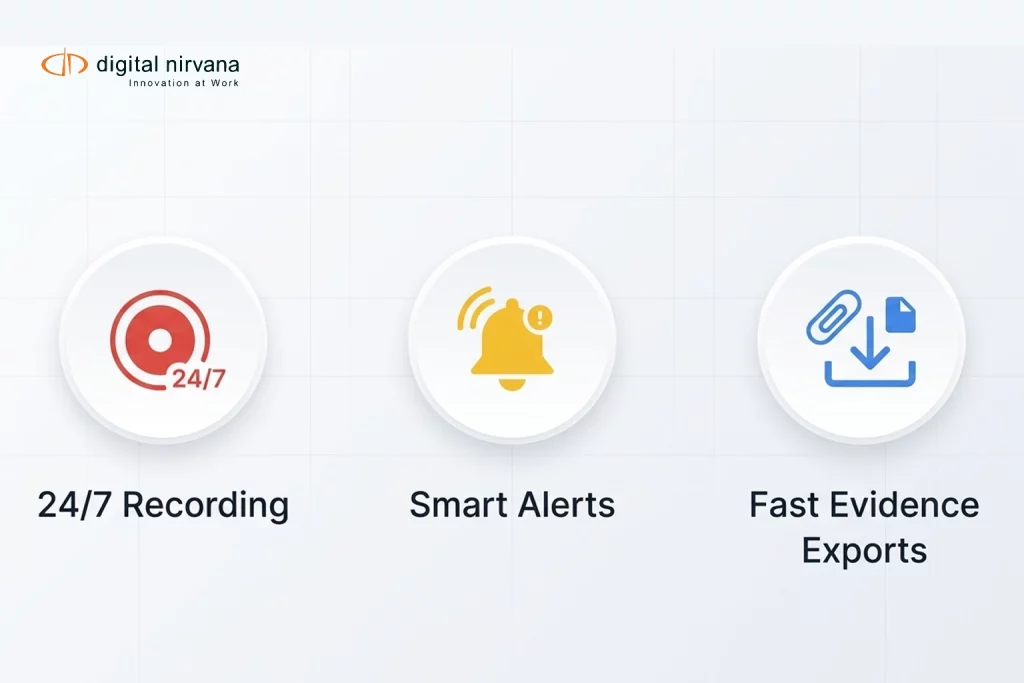
That is why more broadcasters are moving from DIY logging setups to a managed media monitoring service, one that combines 24/7 recording, proactive alarms, clear SLAs, and audit-ready evidence exports across linear, OTT, and distributed delivery chains.
What A Managed Media Monitoring Service Means For Broadcasters
First, a quick clarification because the keyword is overloaded.
PR media monitoring tools track brand mentions across news sites and social platforms. That is not what broadcast teams mean by a broadcast monitoring service.
For broadcasters, a media monitoring service is a managed operation that continuously records and monitors your output, retains it for a defined period, and makes it searchable and exportable as evidence for compliance, complaints, ad verification, and quality assurance.
A managed service usually includes
- Platform and ingest setup across SDI, IP, OTT outputs, and return path monitoring where needed.
- 24/7 health monitoring and proactive alerts for issues such as silence, black frames, missing captions, and delivery faults.
- Retention policy design and storage management aligned to regional requirements.
- Evidence suggests that non-engineers can generate quickly for legal, advertisers, and internal teams.
If you cut corners on monitoring, you often pay later through remediation, missed issues, and expensive investigations.
The SLA Framework: What To Put In The Contract
Most procurement conversations stop at uptime. For broadcast monitoring, that is not enough.
You want SLAs that protect what matters operationally: recording completeness, alerting, evidence turnaround, and support responsiveness.
SLA Checklist Table
| SLA Category | What To Define | Why It Matters |
| Recording Continuity | Maximum allowable recording gaps per channel, per month | Gaps weaken regulatory responses and advertiser proof |
| Monitoring Coverage | Which feeds are monitored (origination, distribution, OTT variants, returns) | You need evidence of what viewers actually received |
| Alerting Latency | Time from fault detection to alert delivery | Faster alerts reduce viewer impact and MTTR |
| Incident Response | Response time by severity (P1, P2, P3) and escalation path | Avoids silent failures and unclear ownership |
| Evidence Export SLA | Broadcast is not a 9-to-5 business | Legal and ad sales timelines are rarely flexible |
| Support Availability | 24/7 coverage for critical feeds, plus weekend and holiday terms | Procurement needs proof that the service is performing |
| Reporting Cadence | Weekly operational report, monthly SLA report, quarterly review | Procurement needs proof the service is performing |
Practical tip for procurement teams
Ask vendors how long the system can run without reboots and how they prevent incomplete logs. This is a common buyer concern in monitoring and compliance evaluations.
Retention And Storage: How To Design A Policy That Holds Up
Retention is where compliance, cost, and reality meet.
Many broadcasters retain rolling logs for anywhere from 90 to 365 days, depending on region and business needs, and requirements can vary by category.
For example, one summary of FCC expectations notes a minimum retention of 60 to 90 days for aired content, with longer retention for political advertising documentation.
A Practical Retention Model For Procurement
- Tier 1: Fast Proxy Retention
Low-bitrate proxy for fast search, quick exports, and broad access. - Tier 2: High-Resolution Evidence Retention
High-quality segments are stored for a shorter window or for high-risk categories. - Tier 3: Legal Hold And Case-Based Archives
If an incident, complaint, or dispute exists, preserve evidence beyond standard retention until cleared. - Region And Content Category Rules
Different regions and content types can require different retention and logging behavior.
Digital Nirvana positions MonitorIQ for browser-based access to one to hundreds of channel recordings, with compliance logging and monitoring features that support cross-team use.
Evidence Exports: What Legal, Ad Sales, And Engineering Need
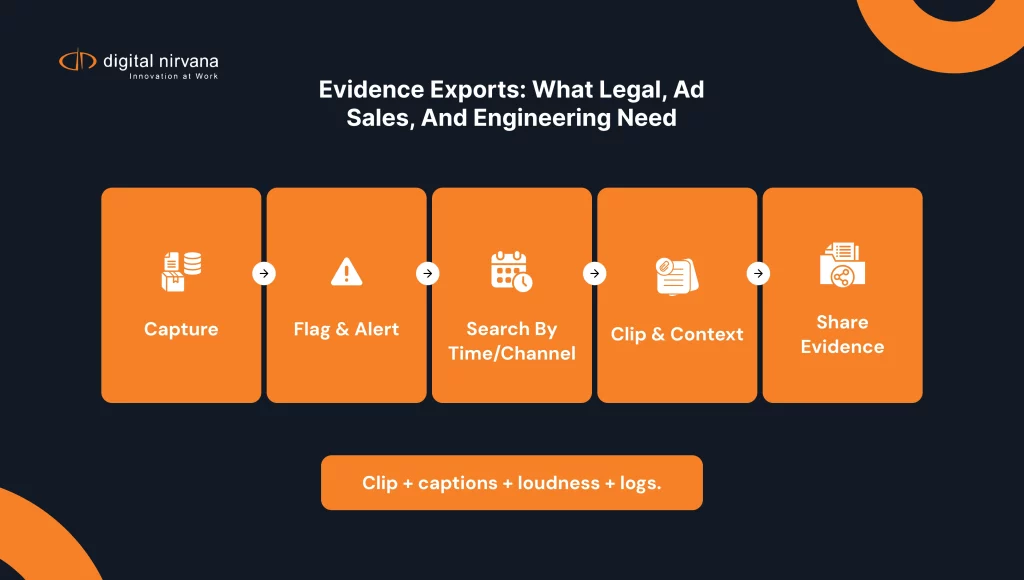
A clip is not always enough. In many cases, teams need an evidence pack: video plus supporting proof that explains what happened.
What modern compliance monitoring highlights as useful is a single view that aligns video with captions, loudness graphs, SCTE messages, run log data, and watermarks.
Evidence Export Essentials
- Frame-Accurate Clip Export
Browser-based clip selection and export so legal and sales teams do not need edit suites. - Timecodes That Match The Operational Record
Time-aligned artifacts reduce disputes. - Caption And Loudness Context
Caption presence and loudness compliance often show up in complaints and audits. - As-Run Reconciliation
Ad verification often requires reconciling traffic logs with what actually aired. - Searchability For Investigations
Fast navigation and search by date/time and, where available, transcripts and metadata.
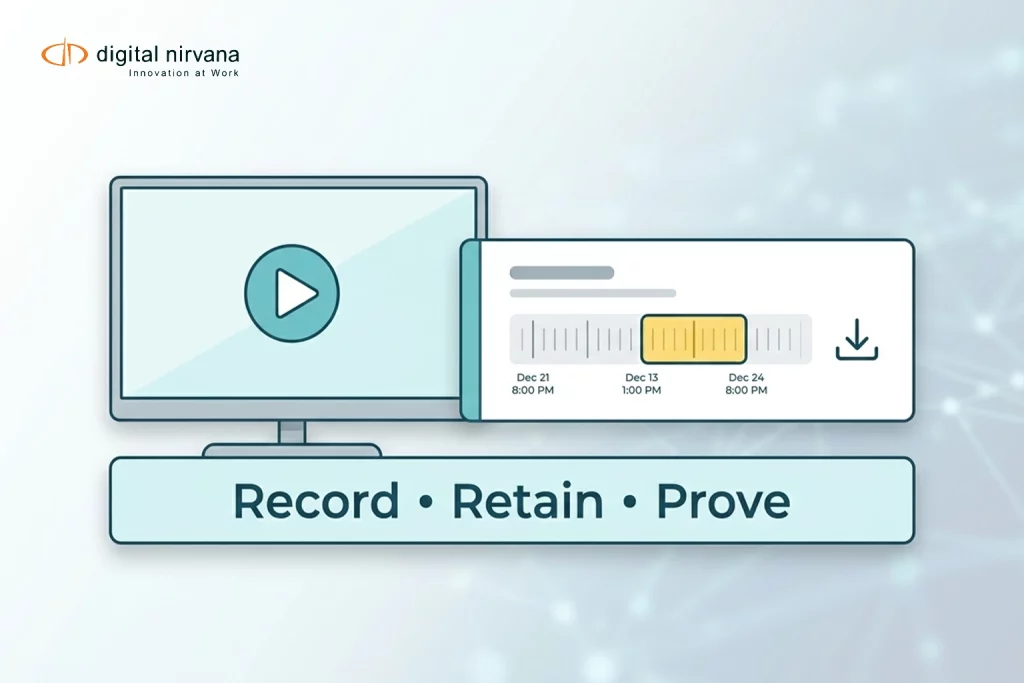
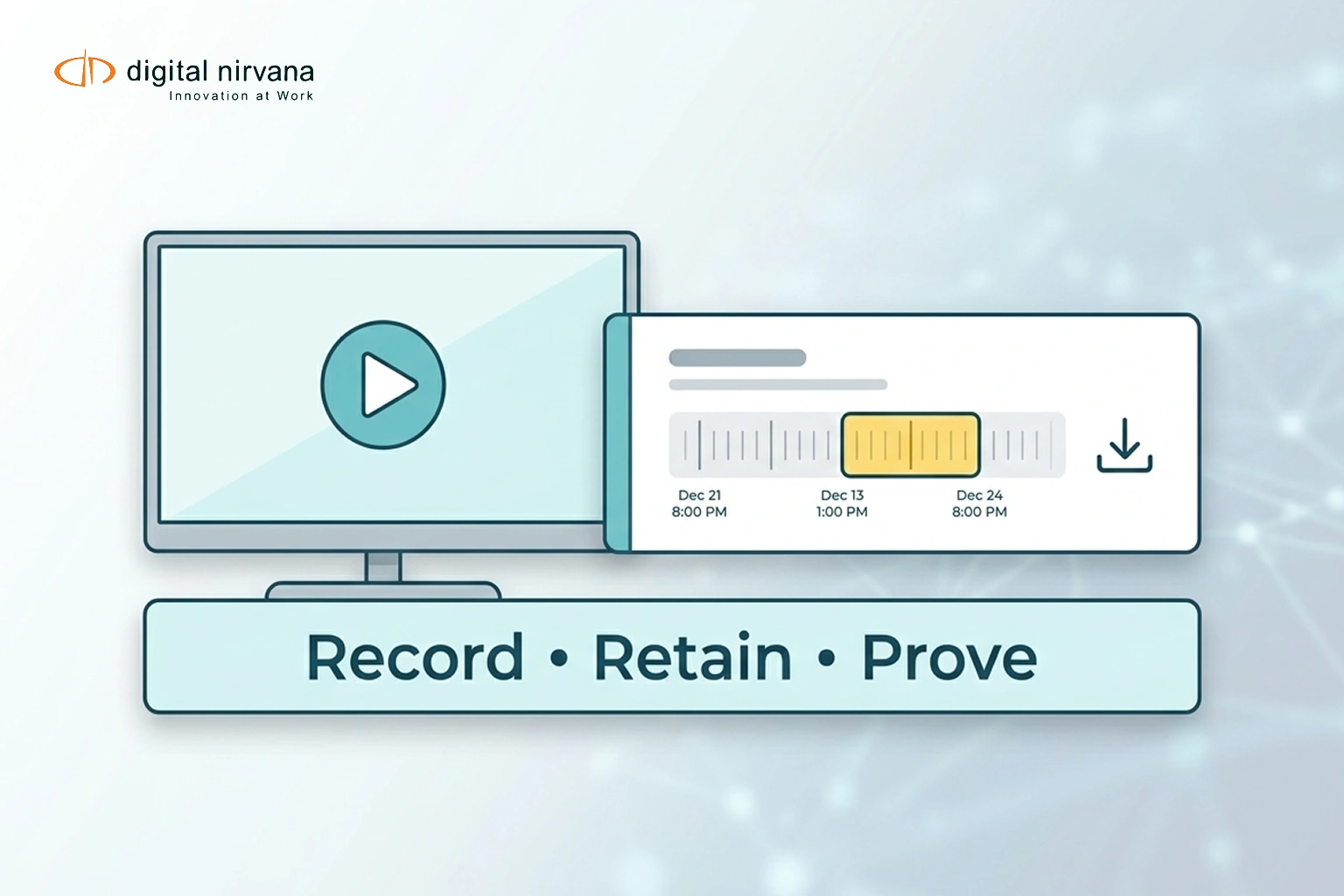
Digital Nirvana describes a storyboard-based workflow where users browse content in increments, set in-and-out points, and export frame-accurate clips for review, legal, or advertiser proof.
Operational Workflows: Alerts, Escalation, And Reporting Cadence
A managed broadcast monitoring service should feel like an extension of your master control and engineering operations, not a black box.
Operational Components That Matter
- Proactive Alarms With Clear Thresholds
QoE alarms and alerts for impairments and service quality issues are table stakes in modern monitoring. - Escalation Paths
Define who gets paged, when, and what “resolved” means for each incident type. - Weekly Ops Review
Recurring issues are usually patterns: a flaky encoder, an intermittent caption path, a specific affiliate handoff. Without a weekly review, the same incidents repeat. - Cross-Team Access With Guardrails
A single system should serve engineering, legal, and ad sales safely, with role-based access and governance expectations. - Continuous Improvement
Monitoring and compliance issues appear across the entire supply chain, not only at transmission, so reporting should include upstream patterns and recommended fixes.
Procurement Questions: The RFP Checklist
Use these questions to compare any media monitoring service or broadcast monitoring service, and to reduce surprises after purchase.
Coverage And Ingest
- Which feeds can you record and monitor (SDI, IP, OTT ABR, transport streams, return path)?
- Can you monitor multiple points in the delivery chain to compare origination vs distribution vs viewer-side outputs?
- What redundancy and failover options prevent recording gaps?
SLAs And Reliability
- What are your SLAs for incident response, alerting, and evidence exports?
- How long can the system operate continuously without downtime or reboots?
- How do you prove recording completeness and handle missed segments?
Retention, Security, And Governance
- How do retention policies work by channel, region, and content category?
- Can retention be tiered (proxy vs high-res), and can cases be placed on legal hold?
- Do you support role-based access aligned to multi-department use?
Evidence Exports And Audit Readiness
- Can non-engineers create frame-accurate clips in a browser?
- What export formats are supported, and can exports include captions, loudness context, and run log alignment?
- Do you offer a single-page aligned view for audits and investigations (video, captions, loudness, SCTE, run logs)?
Roadmap And Future Readiness
- How does the solution handle IP workflows and evolving standards, including OTT monitoring needs?
- What integrations exist with traffic, playout, and compliance processes?
How MonitorIQ Supports Managed Broadcast Monitoring
MonitorIQ is positioned as a content-monitoring, compliance-logging, and verification platform that helps broadcasters monitor ad performance, service quality, and compliance in a single system.
For a managed monitoring service model, MonitorIQ supports the key pillars buyers typically require:
- Browser-Based Access To Multi-Channel Recording
Access one to hundreds of channel recordings from any web browser, across live and historical content. - Compliance Logging Support
Loudness compliance monitoring and caption standards monitoring with real-time alerting are described as core capabilities. - Evidence Exports Built For Non-Engineers
Storyboard browsing and frame-accurate clip exports support legal review and advertiser proof-of-performance workflows. - Verification And Audit Context
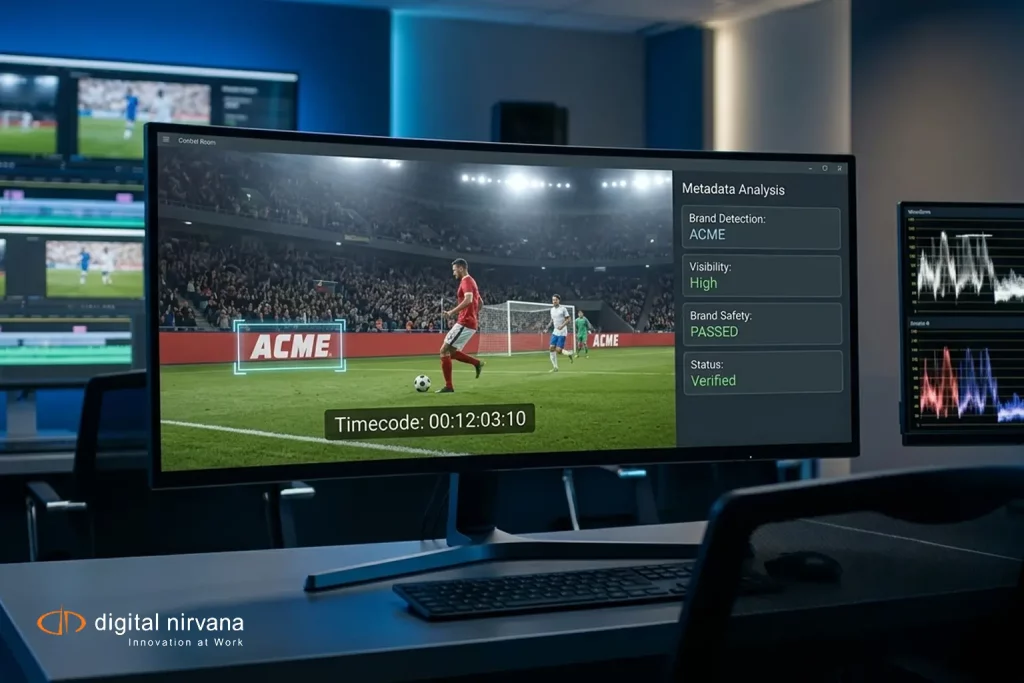
A timecode-aligned view of video with captions, loudness graphs, SCTE messages, and run log data supports investigations and audits.
Meet Digital Nirvana At NAB Show 2026
If you’re attending NAB Show 2026, meet Digital Nirvana at Booth N1555 in Las Vegas, April 19–22, 2026. While MetadataIQ is the core showcase, it is also a good place to discuss the operational realities of running AI in production, including governance, review workflows, and how teams maintain accuracy over time.
FAQs
It is a service that continuously records and monitors your broadcast and streaming outputs, retains the logs for a defined period, and enables fast search, playback, and evidence exports to prove what aired.
PR media monitoring tracks mentions in news and social coverage. Broadcast monitoring services focus on recording your output, monitoring quality and compliance, and exporting proof-of-air evidence.
It depends on your region and content category. One broadcast compliance summary notes 60 to 90 days for general aired content in FCC context, and longer retention for political advertising documentation. Always confirm your local requirements.
At minimum, a timecoded, frame-accurate clip and the context to validate how it ran. Modern workflows also align captions, loudness, SCTE, and run log data to the same timeline for fast verification.
Because 24/7 monitoring, retention management, and evidence export workflows require constant operational attention. A managed approach adds clear SLAs, proactive alerting, and defined accountability for on-air proof and response.
Conclusion
A managed media monitoring service is not just a recorder. It is an operational promise: you will have complete, searchable evidence of what aired, you will be alerted when quality breaks, and you will be able to export proof quickly when regulators, advertisers, or executives ask.
If you are building an RFP, anchor it on four things: SLAs that match broadcast reality, retention policies that hold up under scrutiny, evidence exports that non-engineers can generate, and procurement questions that uncover gaps before signing.
Key Takeaways:
- Write SLAs for recording completeness, alerting latency, and evidence export turnaround, not only uptime.
- Design retention with tiers (proxy vs high-res) and legal hold support, aligned to regional rules.
- Demand audit-ready exports: frame-accurate clips plus aligned captions, loudness, SCTE, and run log context.
- Use procurement checklists to validate mandated compliance features, stability, and future readiness.
- MonitorIQ supports this model with browser-based multi-channel access, proactive monitoring, and evidence exports designed for legal and proof-of-performance workflows.