A standards and practices reviewer has forty-five minutes to clear a two-hour documentary before it airs. Somewhere in that runtime is a single frame of unintended profanity that slipped through editing. The reviewer catches most of what matters, but a two-hour manual review under time pressure is never a guarantee, and the one thing that gets missed is usually the thing that generates a complaint.
This is the reality for teams responsible for content review across broadcast, streaming, and user-generated platforms. The volume of content that needs to be screened for profanity, nudity, sensitive imagery, or brand-unsafe material has grown far past what manual review alone can reliably catch, and the cost of a miss (regulatory penalties, advertiser pullouts, viewer complaints) keeps rising.
Why Manual Content Review Is Running Out of Runway
Standards and practices teams, content moderation groups, and compliance reviewers were built for a media environment with far less volume than exists today. A single streaming platform can add hundreds of hours of new content in a week. A broadcaster managing UGC segments, live call-ins, or user-submitted clips faces content arriving faster than any human review queue can process.
Manual review also depends heavily on reviewer attention, which degrades over long sessions. A reviewer screening hours of footage back to back is statistically more likely to miss something in hour four than in the first twenty minutes. That is not a reflection of the team’s diligence. It is simply how sustained attention works.
The consequences of a miss are not evenly distributed either. A single instance of inappropriate content reaching air or publication can trigger regulatory scrutiny, advertiser withdrawal, or a public relations problem that costs far more than the review process itself.

What “Inappropriate Content” Actually Covers
The scope of content review has expanded well beyond profanity checks. Depending on the platform and audience, review teams are typically screening for explicit language and profanity, nudity or sexual content, graphic violence, hate speech or discriminatory language, and brand-unsafe context, meaning content that is not illegal but is inappropriate for a specific advertiser or audience.
Increasingly, teams are also screening for political disclosures, sensitive news context, and content that needs specific labeling or a content warning under regional broadcast standards. That is a wide net for a manual team to cast consistently across hundreds of hours of content, which is exactly where AI-driven detection earns its place.
How AI-Driven Detection Actually Works
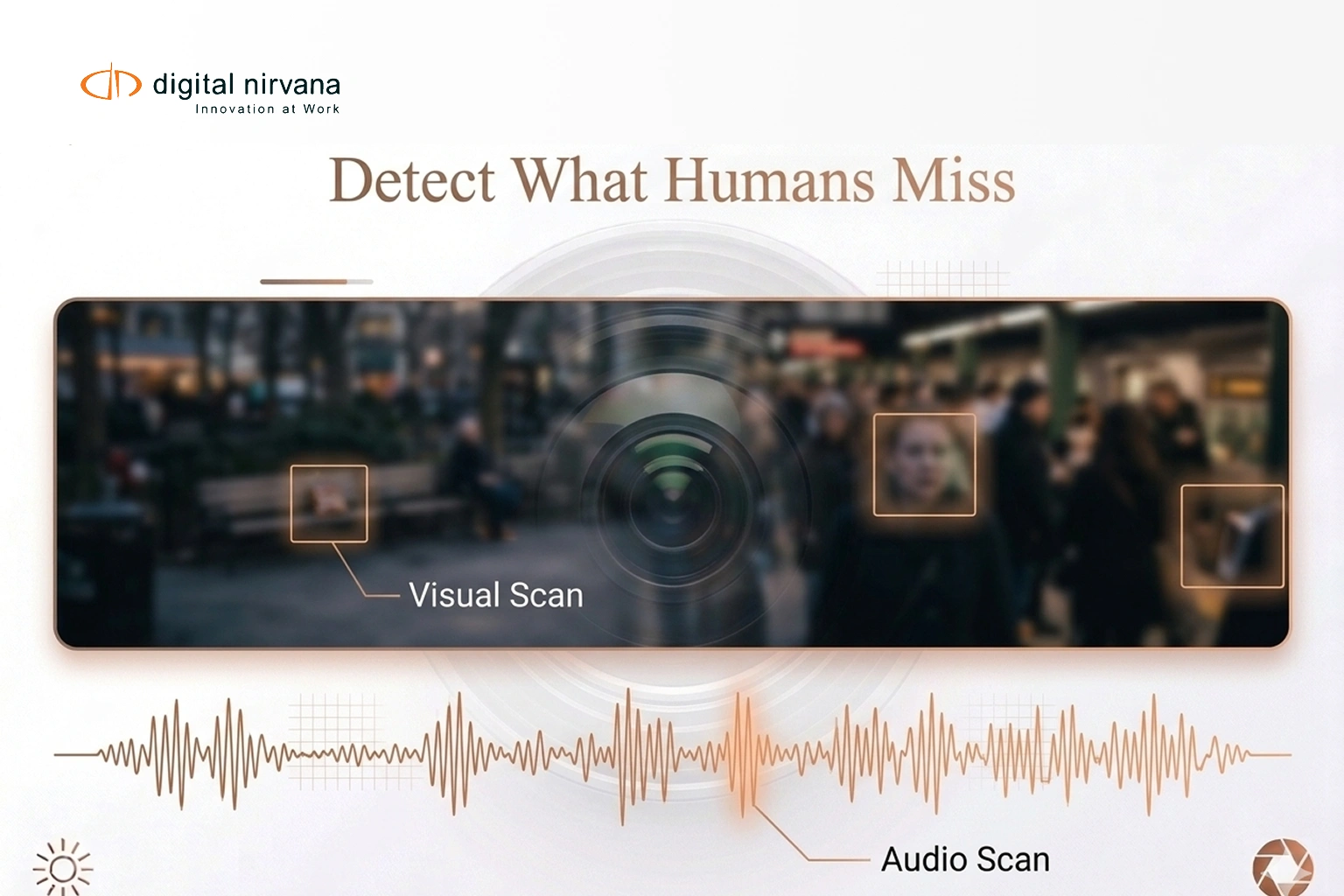
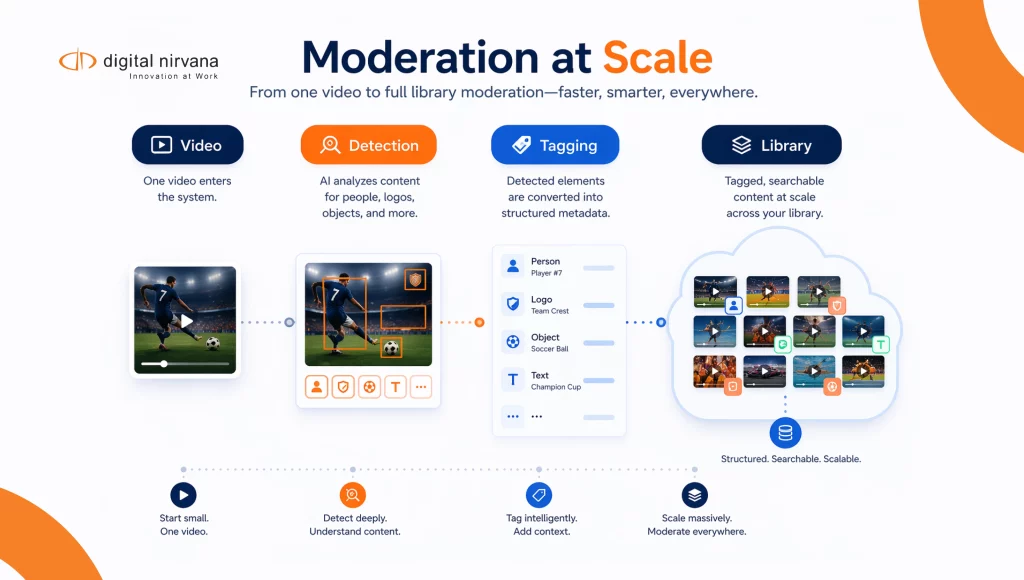
AI content detection systems combine several recognition layers, each trained to flag a specific category of concern. Audio analysis scans spoken dialogue for profanity and flagged language, timestamping exactly where it occurs. Visual analysis screens frame by frame for nudity, graphic content, or specific imagery that violates platform or broadcast standards. Object and scene recognition can flag weapons, drug paraphernalia, or other visual elements that need review, even when there is no spoken cue at all.
Crucially, none of this is designed to replace a human reviewer’s final judgment. It is designed to flag the moments that need a reviewer’s attention, so the reviewer is not scrubbing through two hours of clean footage to find the ninety seconds that actually matter. This is where a system like MediaServicesIQ fits, exposing AI/ML content optimization capabilities including object, scene, and content recognition through accessible APIs that plug into an existing review workflow.
A Real-World Review Workflow
Consider a streaming platform onboarding a new content library ahead of a regional launch. Under a fully manual process, a review team would need to watch every asset in full before it can be cleared, which is simply not feasible at the volume most catalogs require.
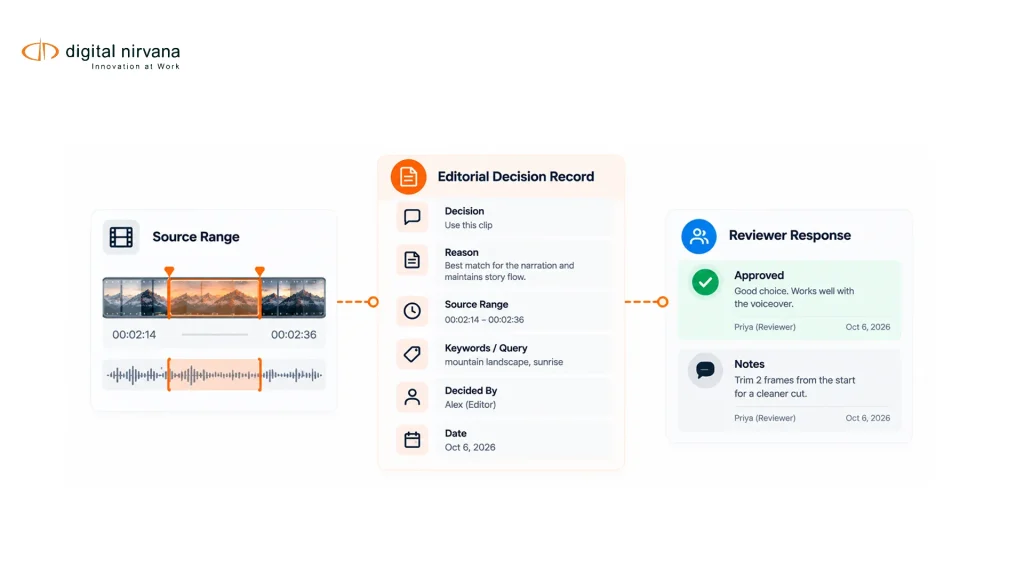
With AI-driven detection running first, every asset is scanned automatically, and the system generates a time-stamped list of moments that need human review, whether that is a flagged word, a specific visual cue, or a scene that matches a sensitive content pattern. The reviewer’s job shifts from watching everything to reviewing exactly what the system flagged, confirming or dismissing each instance with context a machine cannot fully judge on its own.
This is the same workflow that applies to UGC moderation. Instead of a moderation queue growing faster than a team can clear it, flagged content gets prioritized automatically, and the team’s time goes toward genuinely ambiguous cases rather than obviously clean content.
The Measurable Impact of AI-Assisted Review
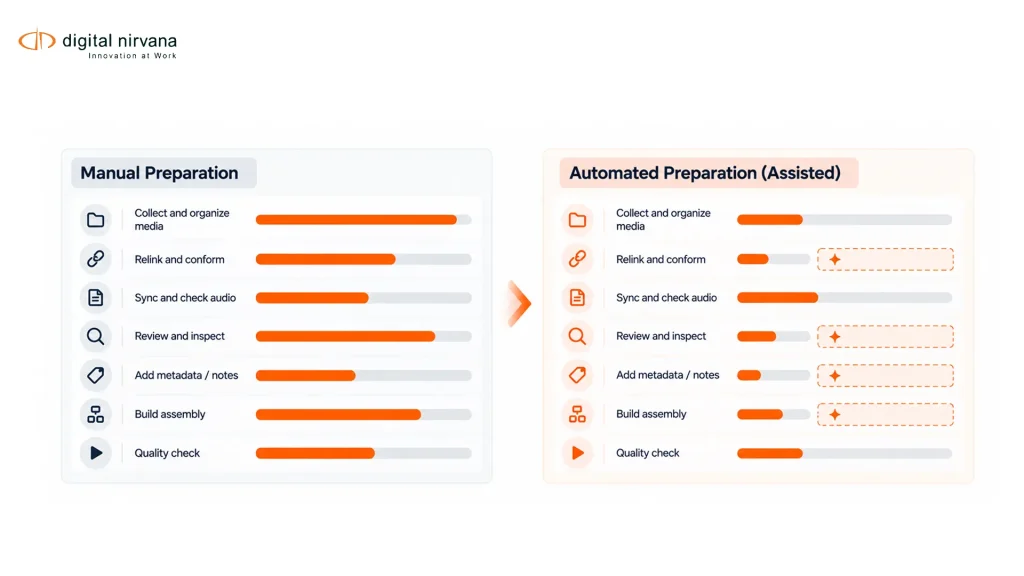
Teams that add AI detection ahead of manual review typically see review time drop significantly, since reviewers are working from a flagged timestamp list instead of a full runtime. That also means review queues stop growing faster than teams can clear them, which matters enormously for platforms onboarding large content libraries or handling high UGC volume.
Consistency improves too. An AI system applies the same detection criteria to every asset, every time, without the attention degradation that affects a human reviewer four hours into a shift. That does not eliminate the need for judgment, but it does mean nothing slips through simply because a reviewer was tired or rushed.
What to Prioritize in a Content Review System
Detection accuracy matters most, but a few other capabilities determine whether a system genuinely reduces review workload or just adds another queue to manage.
| Capability | Why It Matters |
| Multi-modal detection (audio, visual, text) | Catches issues a single-mode scan would miss entirely |
| Time-stamped flagging | Lets reviewers jump directly to the moment in question |
| Configurable sensitivity by platform or region | Different audiences and regulations require different thresholds |
| Human-in-the-loop review workflow | Keeps final judgment with a person for ambiguous or context-dependent cases |
| Integration with existing MAM or review tools | Keeps flagged content inside the systems reviewers already use |
Configurable sensitivity deserves particular attention. A broadcaster serving a general audience and a platform serving a mature-content library need very different thresholds, and a system that cannot be tuned per platform or region creates more manual override work than it saves.
Addressing the Common Concerns
A few objections come up consistently when review teams consider adding AI detection to their workflow.
“AI will miss things a human reviewer would catch.” This is exactly why detection systems are paired with human review rather than replacing it. The goal is not full automation, it is making sure human attention goes where it matters most instead of being spread thin across hours of clean content.
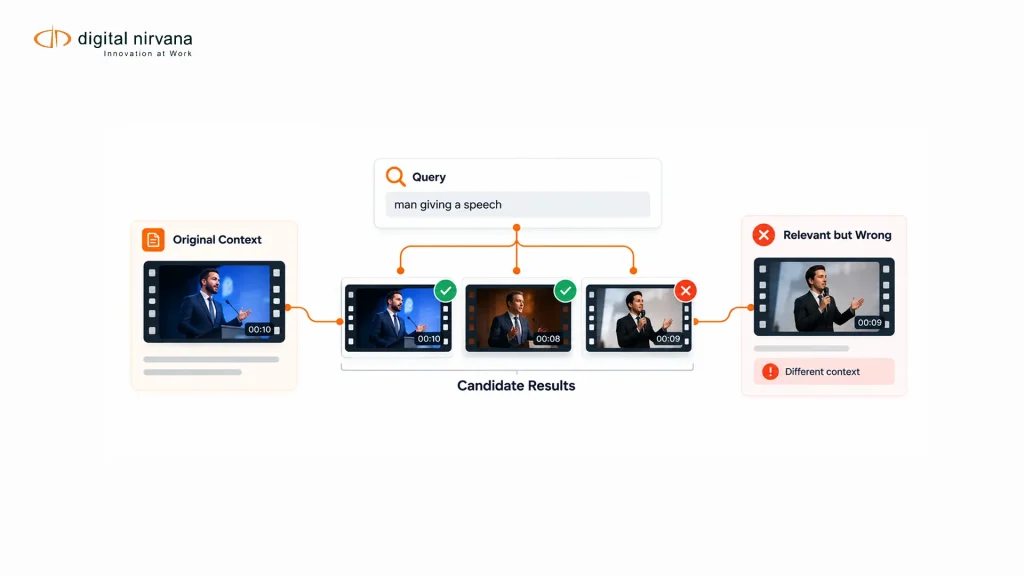
“Our content is too nuanced for automated flagging.” Context-dependent judgment calls, like satire or artistic nudity, are precisely the cases that should route to a human reviewer. AI detection is strongest at catching clear-cut instances and flagging ambiguous ones for review, not making the final call on nuance.
“This feels like another layer of process.” In practice, teams report the opposite once implemented. Detection reduces total review time because reviewers are no longer watching full runtimes to find the handful of moments that actually need judgment.
Measuring Whether Your Review Process Is Working
A few numbers make the impact clear: average review time per hour of content, the size and age of the moderation or review queue over time, and how often flagged content is confirmed versus dismissed, which indicates whether detection thresholds are well tuned.
If review time is dropping and queues are staying manageable even as content volume grows, the detection system is doing its job.
Where Digital Nirvana Fits Into Content Review and Compliance
Screening media content for inappropriate material sits at the intersection of AI detection accuracy and genuine human judgment, and getting that balance right requires more than a generic content moderation tool. This is where Digital Nirvana’s media-specific AI expertise applies directly.
MediaServicesIQ provides the underlying detection capabilities, from audio and visual analysis to scene and object recognition, through APIs that integrate into existing review workflows. For content-level tagging tied to archive governance, including flagging profanity, nudity, or sensitive political mentions across a library, MetadataIQ extends that same detection into searchable, governable metadata. And for teams that want AI-flagged content reviewed with structured, auditable human oversight, Managed AI applies human-in-the-loop review specifically designed for quality assurance on AI outputs.
Where captions or subtitles also need review for sensitive language across multiple languages, TranceIQ ensures that same standard applies consistently across every localized version of a piece of content.
Detection and Human Judgment Are Not Competing Priorities
It is tempting to frame AI content detection and human review as a tradeoff, as though adding automation means reducing human oversight. In practice, the strongest review programs use AI to protect human judgment, not replace it, by making sure reviewer time goes toward the handful of genuinely ambiguous moments in a piece of content instead of the hours of clearly clean footage surrounding them.
That distinction is what separates a review process that scales with growing content volume from one that eventually breaks under it.
Conclusion
Content volume across broadcast, streaming, and UGC platforms is not going to shrink, and the cost of a single missed instance of inappropriate content, whether it triggers a regulatory issue, an advertiser pullout, or a viewer backlash, keeps climbing. Manual review alone was never built to catch everything reliably at today’s volume.
AI-driven inappropriate content detection does not remove human judgment from the process. It focuses that judgment exactly where it is needed, flagging the moments that require a person’s attention instead of asking reviewers to watch everything in full. For teams whose review queues are growing faster than they can clear them, this is one of the clearest paths to keeping pace without sacrificing accuracy.
Key Takeaways
- Manual content review degrades in accuracy over long sessions and cannot scale with today’s content volume.
- AI detection covers profanity, nudity, graphic content, hate speech, and brand-unsafe material across audio, visual, and object recognition layers.
- Time-stamped flagging lets reviewers jump directly to moments that need judgment instead of watching full runtimes.
- Configurable sensitivity by platform or region is essential, since different audiences require different thresholds.
- The strongest review programs pair AI detection with human-in-the-loop review rather than removing people from the process.
FAQ
Can AI content detection fully replace human review? No. AI detection is designed to flag content that needs review, while final judgment on context-dependent or ambiguous cases still belongs with a human reviewer.
What types of content can AI detection systems flag? Systems typically screen for profanity, nudity, graphic violence, hate speech, and brand-unsafe material across audio, visual, and object recognition, with configurable sensitivity by platform or region.
How does AI detection help with user-generated content moderation? It prioritizes moderation queues automatically, routing flagged content to reviewers first so teams are not working through submissions in the order they arrived rather than by actual risk level.