A station gets a call from an advertiser’s agency six weeks after a campaign ran. They want proof a specific spot aired at the agreed time, in the agreed break, at the agreed length. The traffic team pulls up the as-run log, but the timestamps don’t quite match what the advertiser is asking about, and nobody can find the actual recorded segment fast enough to settle the dispute. What should have been a five-minute lookup turns into a two-day scramble, and the station ends up issuing a makegood it may not have actually owed.
This scenario plays out at broadcasters more often than most people outside master control realize. Broadcast compliance logging exists exactly to prevent it, but a lot of stations are still running logging processes that were designed for a different era of television, one with fewer channels, simpler ad structures, and less scrutiny from regulators and advertisers alike.
What Broadcast Compliance Logging Actually Covers
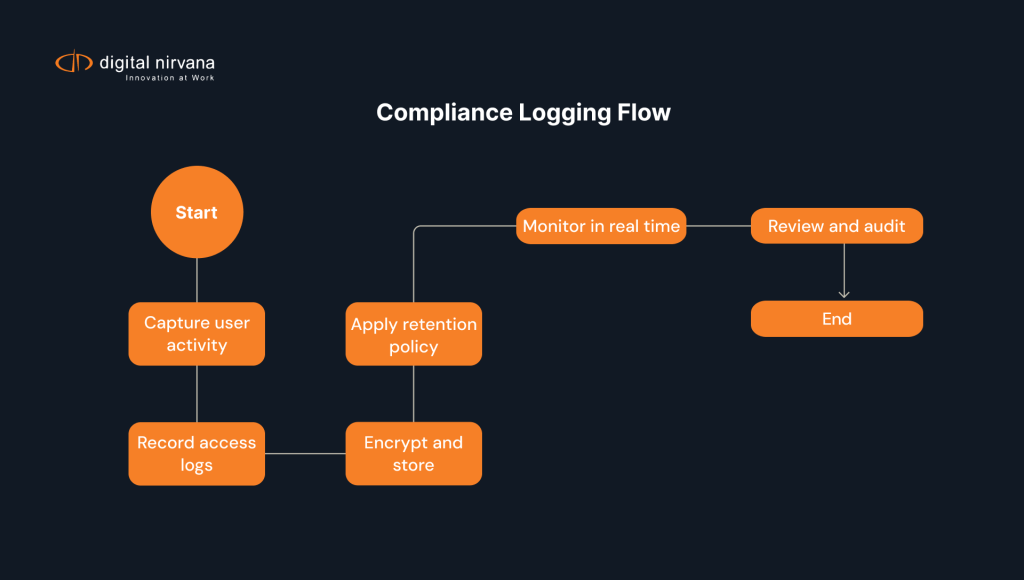
Broadcast compliance logging is the practice of continuously recording what actually aired, alongside the metadata needed to prove it aired correctly. That includes program content, commercial breaks, closed captions, EAS alerts, sponsorship disclosures, and loudness levels. The recording itself is only half the job. The other half is being able to retrieve the right moment quickly when someone, whether that’s an advertiser, a regulator, or internal legal, asks for proof.
In the US, this obligation connects directly to FCC requirements around closed captioning, EAS testing, and sponsorship identification, along with CALM Act loudness rules. In the UK, Ofcom’s Code on Television Access Services sets out comparable access service obligations. None of these regulations disappear because a station is running multiple channels or has moved operations to the cloud. If anything, multi-channel operations make the logging requirement more demanding, not less.
Why Compliance Logging Is Getting Harder, Not Easier
A few shifts happening across broadcast operations right now are putting real pressure on legacy compliance logging setups.
Channel count is going up. Station groups running FAST channels alongside traditional linear channels now need compliance logging across a much wider footprint than a single-channel logger was ever designed to handle.
Remote operations are now standard. Engineers monitoring multiple sites from a centralized operations center need logging systems that are accessible remotely, not tethered to a single physical location’s hardware.
Ad verification demands have increased. Advertisers and agencies are asking for proof-of-performance more frequently and more specifically, partly because programmatic and addressable advertising has made buyers more used to granular verification data.
Legacy hardware is aging out. A lot of compliance loggers still in use were installed a decade or more ago, and vendor support for that hardware is thinning as manufacturers shift focus to IP-based and cloud-native monitoring.
Core Components of a Compliance Logging System
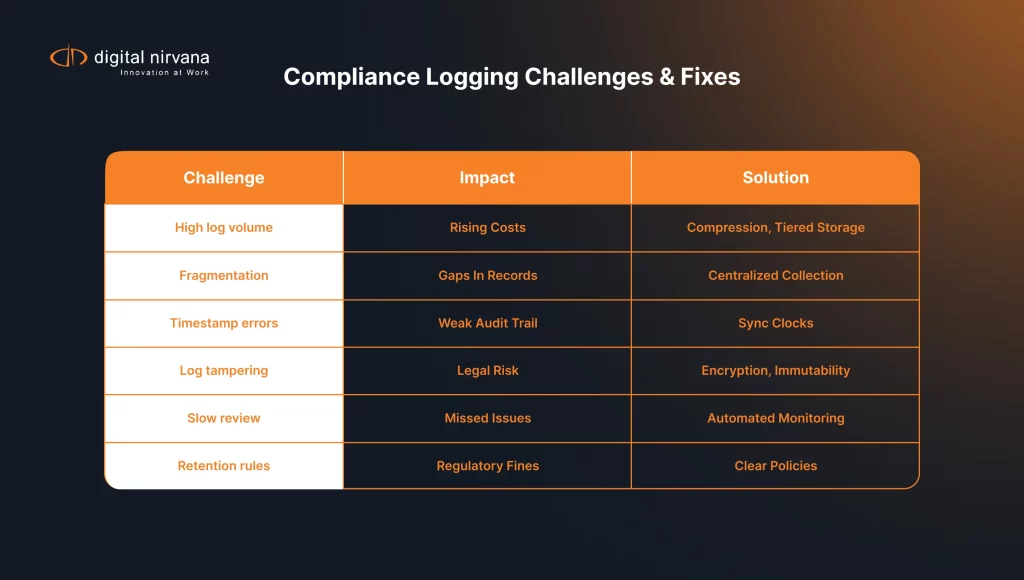
Whether a station is running an on-prem logger or a cloud-based monitoring platform, a complete compliance logging setup should cover the same core elements.
| Component | What It Verifies | Why It Matters |
|---|---|---|
| Continuous recording | Content actually aired as scheduled | Basis for all proof-of-performance requests |
| Closed caption presence | Captions ran and matched dialogue | FCC/Ofcom accessibility compliance |
| Loudness monitoring | Audio levels stayed within CALM Act thresholds | Avoids viewer complaints and regulatory action |
| EAS logging | Emergency alerts were received and passed through correctly | Regulatory requirement, public safety obligation |
| As-run reconciliation | Aired content matches the traffic log | Resolves ad disputes and billing discrepancies |
| Retrieval and search | Specific moments can be located quickly | Determines how fast a dispute actually gets resolved |
That last row is where a lot of legacy systems fall short. Recording everything doesn’t help much if finding the right ten seconds inside weeks of footage takes hours of manual scrubbing.
Proof-of-Performance: Where Compliance Meets Revenue
Compliance logging and ad verification often get treated as separate workflows, but they’re really the same underlying capability applied to different stakeholders. A regulator wants proof that captions and EAS alerts ran correctly. An advertiser wants proof that their spot aired in the right break at the right length. Both requests come down to the same question: can the station retrieve accurate, timestamped evidence of what actually aired?
Stations that treat these as one unified logging and retrieval workflow, rather than two separate systems, tend to resolve both regulatory and ad disputes faster, because the underlying recording and metadata infrastructure is already built to answer exactly that kind of question.
Replacing a Legacy Compliance Logger Without Disrupting Master Control
Migrating away from an aging compliance logger is one of the more anxiety-inducing projects a broadcast engineering team can take on, mostly because master control cannot afford downtime during the transition. A few practices reduce that risk significantly.
- Run the new system in parallel before cutover. Validate that the new logger captures everything the old one did, across every channel, before decommissioning the legacy hardware.
- Migrate historical logs, don’t just start fresh. Retention requirements often mean older recordings still need to be accessible, so plan for data migration, not just forward-looking capture.
- Test retrieval speed, not just recording accuracy. A logger that records everything correctly but takes twenty minutes to locate a specific clip hasn’t actually solved the underlying problem.
- Validate remote access from day one. If engineering teams are monitoring multiple sites centrally, confirm the new system supports that access model before it goes live.
- Involve ad sales and traffic in testing, not just engineering. Compliance logging serves both regulatory and revenue functions, so both teams should validate the system meets their needs.
A Quick Compliance Logging Health Check
Use this checklist to gauge whether your current logging setup is keeping pace with 2025 operational demands.
- Can you retrieve a specific 30-second clip from any channel within minutes, not hours?
- Does your system log closed captions, loudness, and EAS alongside program content?
- Can engineering staff access logs remotely across all monitored sites?
- Is historical log retention long enough to cover your regulatory and contractual obligations?
- Can ad sales and traffic teams self-serve proof-of-performance requests without engineering intervention?
- Does the system scale cleanly as you add channels, including FAST channels?
If more than one or two of these get a “no,” it’s worth treating compliance logging modernization as a near-term priority rather than a someday project.
How Digital Nirvana Supports Broadcast Compliance at Scale
This is the exact operational gap that MonitorIQ is built to close. It combines continuous broadcast monitoring, closed caption verification, loudness compliance, EAS logging, and ad verification into a single platform, so compliance and proof-of-performance requests get answered from one source instead of stitched together across multiple systems.
For station groups managing large volumes of recorded content, MetadataIQ makes that footage searchable at the clip level, which is what actually determines how fast a dispute gets resolved once a recording exists. And because compliance logging increasingly needs to cover captions and multilingual content, TranceIQ helps verify that caption accuracy holds up across the content mix a modern station is airing.
Teams weighing a move away from on-prem infrastructure toward more scalable, cloud-based monitoring can also look at Cloud Engineering for the migration and architecture side of that transition. You can see how these capabilities come together in practice in Digital Nirvana’s success stories.
Why Compliance Logging Deserves Ongoing Investment
Broadcast compliance logging isn’t a project with a finish line. Channel counts keep growing, advertiser scrutiny keeps increasing, and regulatory expectations around accessibility and audio levels aren’t loosening. Stations that treat compliance logging as core operational infrastructure, worth revisiting and modernizing as conditions change, spend far less time firefighting disputes than stations that only think about their logging system when something goes wrong.
Conclusion
Broadcast compliance logging sits at the intersection of regulatory obligation and revenue protection, and legacy systems built for a smaller, simpler broadcast footprint are struggling to keep up with today’s channel counts, remote operations, and ad verification demands. A modern approach means treating recording, retrieval, and reconciliation as one connected workflow rather than three separate problems, and building a system that can prove what aired in minutes, not days.
Key Takeaways
- Compliance logging must cover program content, captions, loudness, EAS, and as-run reconciliation together, not as separate systems.
- Retrieval speed matters as much as recording accuracy since disputes get resolved by how fast proof can be located.
- Rising channel counts, remote operations, and ad verification demands are pushing legacy loggers past their limits.
- Migrating to a new compliance logger should be validated on retrieval speed and remote access, not just recording completeness.
- Unifying regulatory compliance and ad proof-of-performance into one workflow speeds up resolution for both use cases.