A large part of your audience may be watching your content without fully seeing it. For viewers with visual impairments, key moments in a video can be missed if not described in audio. Scenes, expressions, actions, and transitions often convey meaning that dialogue alone cannot.
The scale of this responsibility is growing: according to the latest 2026 World Health Organization data, more than 2.2 billion people globally have a vision impairment, making accessibility in media a fundamental necessity for global broadcasters.
This is where Digital Nirvana helps platforms bridge the gap. By using media enrichment through video and audio description, professional audio description services, organizations make content more inclusive and compliant without altering the original viewing experience.
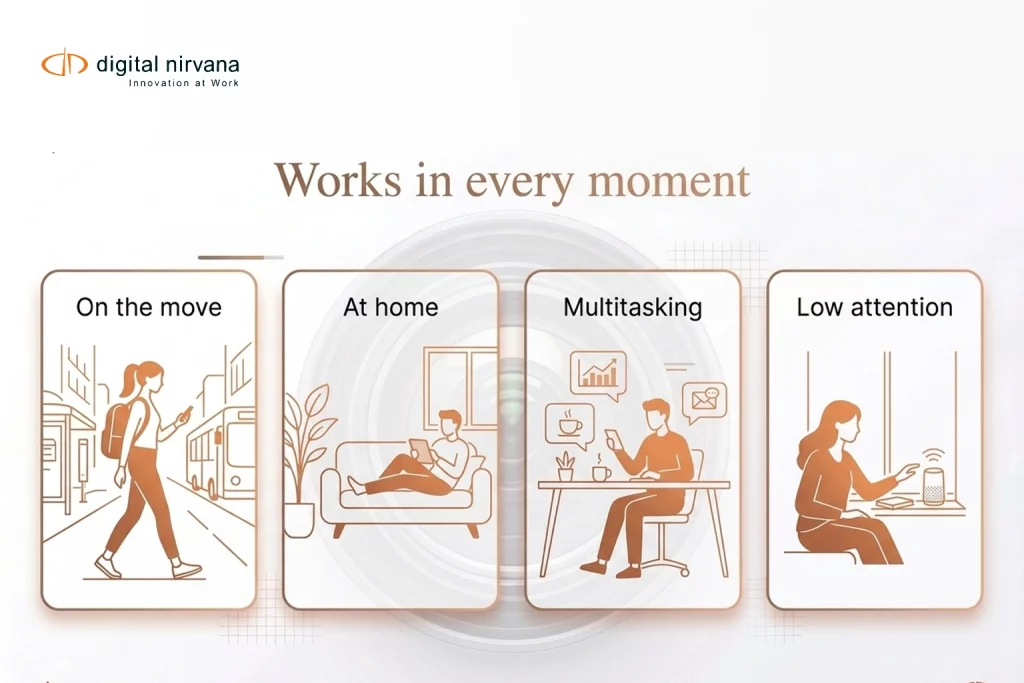
Why Accessibility is Important in Broadcast And OTT?
Accessibility is no longer an option; it’s a requirement driven by both viewer expectations and tough regulatory requirements, such as the CVAA. Broadcasters are supposed to deliver inclusive viewing experiences and maintain consistency across regions.
Something that demands a very deep integration of data intelligence to track and manage accessibility resources.
Broadcasters and OTT platforms are really expected to:
- Provide inclusive viewing experiences.
- Meet accessibility guidelines and regulations.
- Expand their reach to many different kinds of audiences.
- Maintain a consistent user experience across all regions.
Audio description services can really help meet these expectations by ensuring that all visual elements are clearly communicated through sound.
Barriers in Delivering Accessible Video Content
Creating accessible content at scale comes with several challenges:
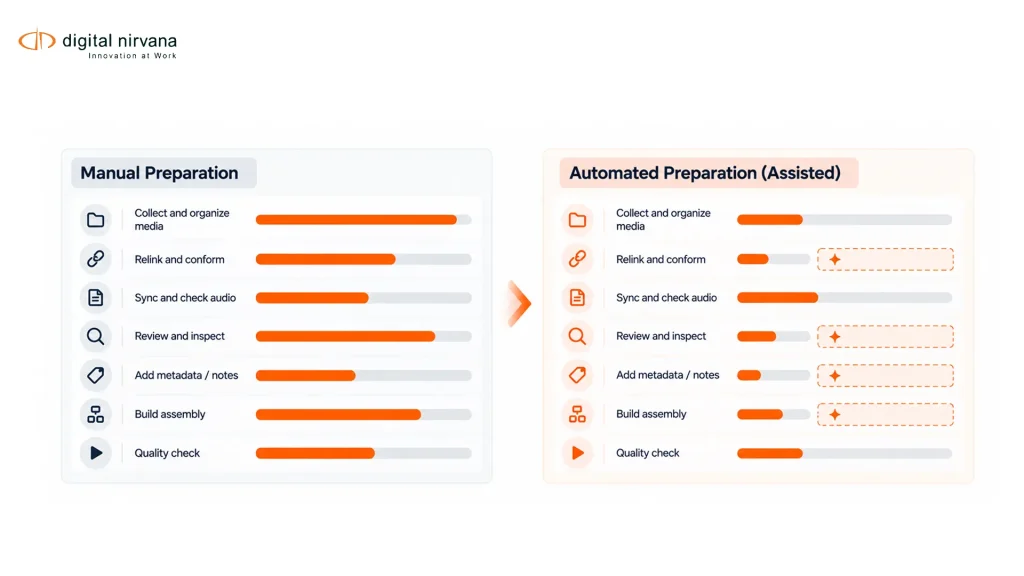
- Manual Description Creation Really Takes a Lot of Time
Writing detailed, accurate descriptions for each video asset is extremely labor-intensive. This really causes a big problem in our production pipeline. When we have to sit and watch and sum up hours of footage ourselves, it really slows down our ‘time-to-market,’ stopping content from going live until it’s no longer trending or relevant.
- Inconsistent quality across all our content libraries
When several team members are handling metadata, the tone, level of detail, and even the vocabulary can vary widely. One editor might give a very thorough look at the technical parts of a scene, while another gives just a vague two-sentence summary. This lack of standardization really makes our library seem quite unprofessional and even hinders the effectiveness of our search algorithms that rely on consistent keywords.
- Trouble in syncing descriptions with the video timing itself
Modern accessibility and search standards really require descriptions to be time-stamped. Manually finding the exact right moment for thousands of scene changes is prone to human error, leading to ‘drift’ where the metadata doesn’t match what the viewer sees on screen.
- Managing many formats across different platforms
Each platform, from YouTube and TikTok to Netflix or our internal CMS, has its own different character limits, tagging needs, and audience expectations. Repurposing a single description for five different platforms requires constant re-editing and reforming, which significantly increases our workload and increases the risk of technical errors when uploading content.
- Meeting regional compliance requirements is really a challenge
Our content must be described quite differently to meet the legal and cultural standards of various countries. This means adding specific parental ratings, content warnings, or even localized summaries. Keeping track of these constantly changing global regulations manually is a high-stakes task, and a single misstep could result in fines or our content being blocked in certain regions altogether.
Without structured workflows, accessibility efforts can slow down content delivery.
What Are Audio Description Services?
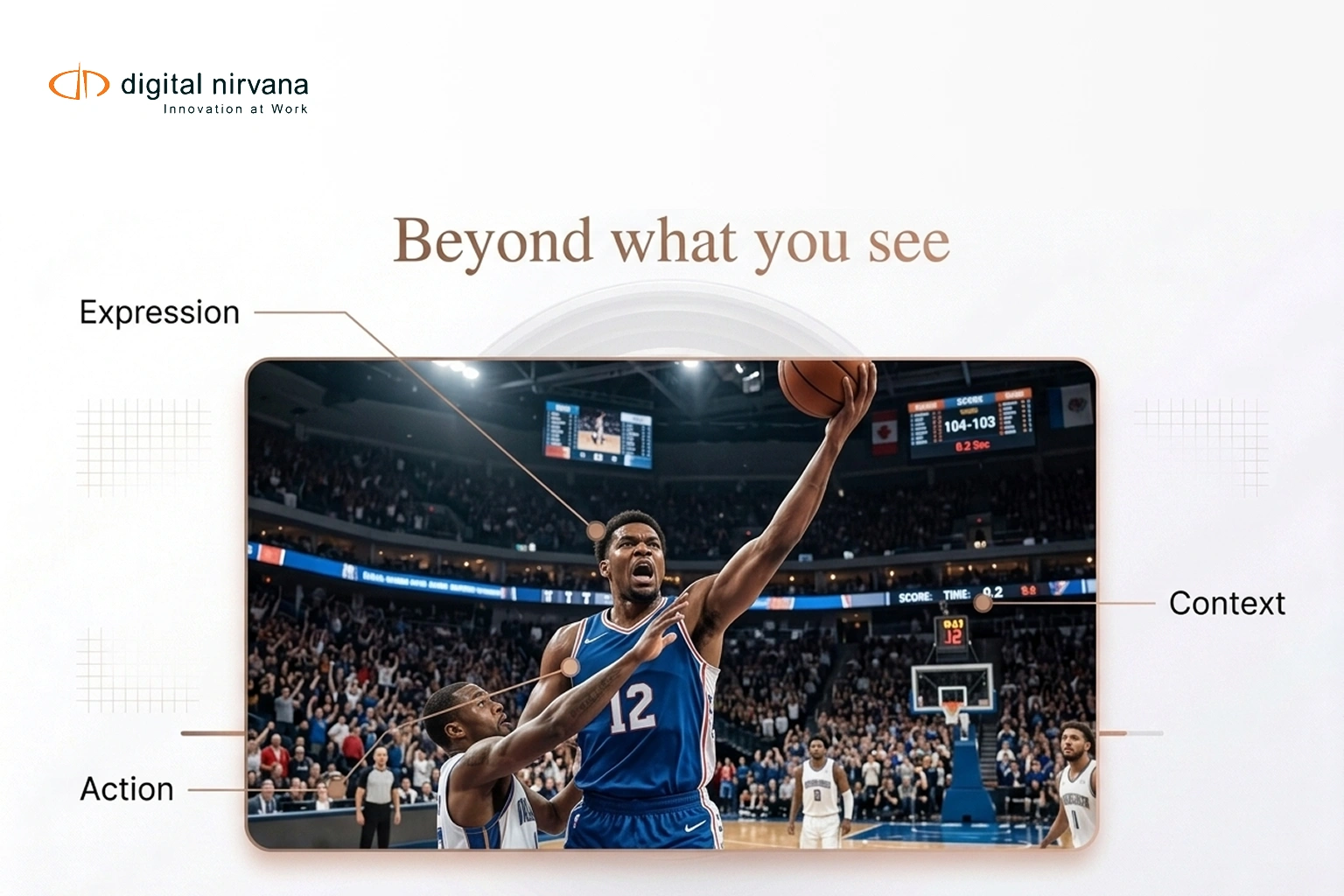
Audio description services involve adding narrated descriptions to video content, explaining important visual elements during natural pauses in dialogue. These cover actions, scene changes, and facial expressions, ensuring that the managed AI workflows governing your content also prioritize human-centric accessibility.
These descriptions cover:
- Actions and movements
- Scene changes
- Facial expressions
- On-screen text or graphics
Video description services ensure that viewers who cannot see the screen still understand the full context of the content.
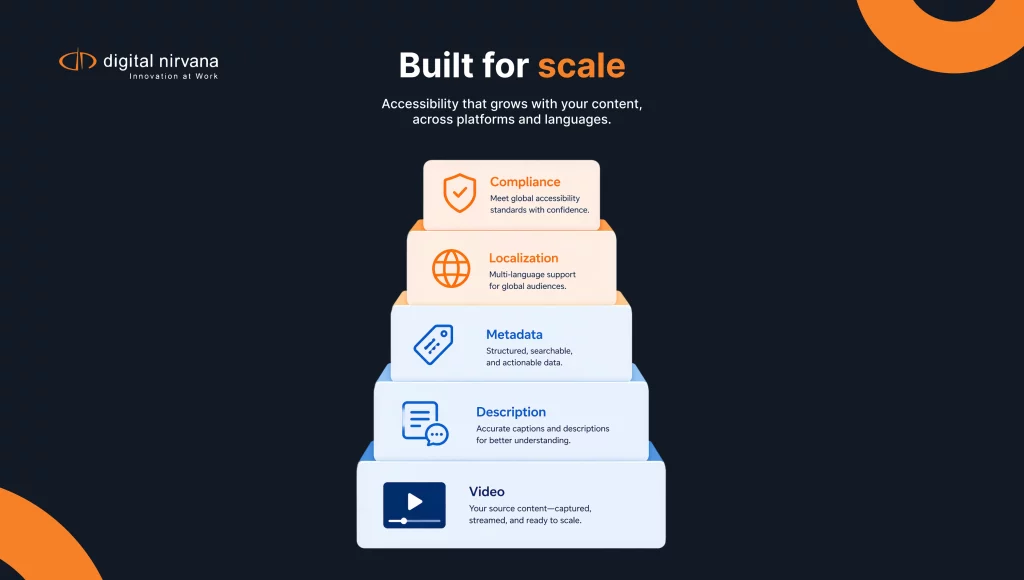
How Video Description Services Work In Media?
The process typically involves content review, script creation, and precise synchronization. For specialized sectors such as investment research, ensuring that on-screen charts and financial data are accurately described is vital for professional accessibility.
The process includes:
- Content Review: Identifying sections where visual context needs explanation
- Script Creation: Writing concise descriptions that fit between dialogue
- Voice Recording: Recording narration in a clear and natural tone
- Synchronization: Matching descriptions with the video timeline
- Quality Check: Ensuring accuracy and compliance
This structured process ensures that descriptions improve the viewing experience without interrupting it.
How Media Enrichment Supports Accessibility?
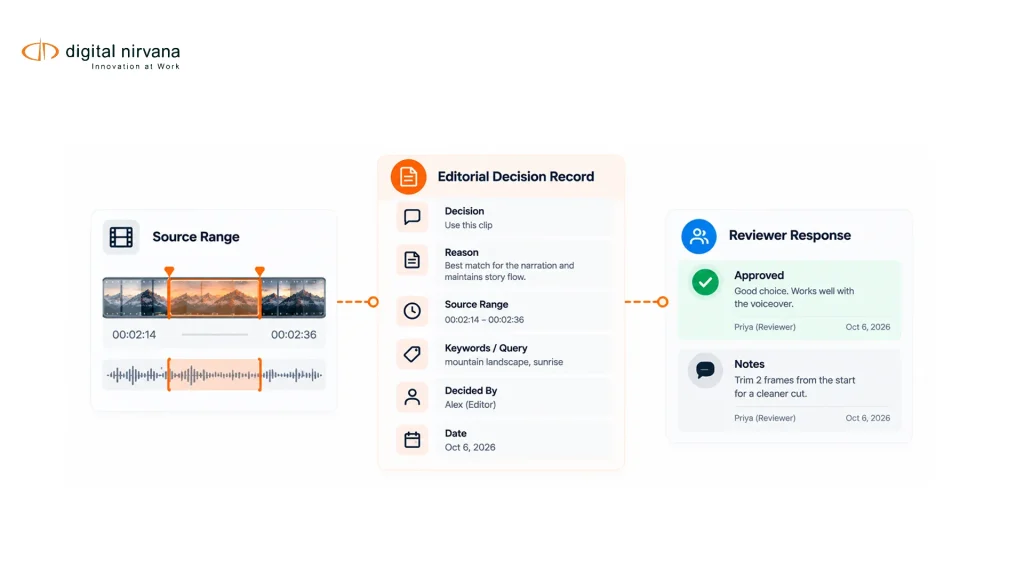
Digital Nirvana integrates accessibility into broader media operations through media enrichment services. This platform allows teams to align audio descriptions with metadata, all supported by enterprise-grade cloud engineering to handle enormous volumes of content preparation.
This allows organizations to:
- Manage and index accessible content.
- Align audio descriptions with time-coded metadata.
- Combine accessibility features with transcription and translation.
- Streamline content preparation for multiple platforms.
This approach helps teams maintain consistency while handling large volumes of media.
Uses for Broadcast & OTT
Integrating automated audio descriptions, synchronized subtitles, and localized metadata with media enrichment, these technologies help organizations meet global accessibility standards while expanding audience reach.
- Broadcast Compliance: Simplifies meeting FCC and international regulatory mandates for required audio-described airtime.
- OTT Inclusivity: Boosts streaming platform growth by providing accessibility options to a broader, more diverse subscriber base.
- Inclusive Learning: Enables educational institutions to make video-based coursework and training accessible to all students.
- Global Distribution: Facilitates seamless localization by providing synchronized descriptions across multiple regional languages.
Making video-based learning accessible within learning management systems so everyone can participate equally.
Features of Enterprise Accessibility
Combining professional narration, AI-driven synchronization, and intelligent metadata workflows, these systems ensure that every piece of content meets global accessibility standards while maintaining creative integrity.
- Context-Aware Narration: Expertly describes critical visual cues during natural pauses in dialogue to maintain narrative flow.
- Precision Synchronization: Uses MetadataIQ to perfectly align audio narrations with frame-accurate timestamps.
- Regulatory Compliance: Simplifies adherence to global mandates, such as the CVAA, through automated, audit-ready workflows.
- Global Localization: Facilitates localized audio descriptions to reach diverse, international audiences in their native languages.
- Scalable Managed AI: Combines professional scriptwriting with managed AI processing to handle massive content libraries efficiently.
Together, these features enable enterprises to achieve accessibility across languages, platforms, and content types.
Digital Nirvana’s Audio Description Services
Digital Nirvana’s audio description acts as a bridge for inclusive storytelling, instantly converting visual nuances, like expressions and scene changes, into a rich, narrated experience.
- Universal Reach: Expands your audience to include visually impaired viewers and eyes-free multitaskers globally.
- Legal Compliance: Ensures full adherence to global mandates, mitigating litigation and licensing risks.
- Brand Integrity: Shows a concrete commitment to DEI, fostering trust and long-term loyalty across all demographics.
- Enhanced Retention: Clarifies complex visual storytelling to keep viewers engaged and improve content completion rates.
- Operational Scale: Standardizes the production of accessible assets, replacing manual bottlenecks with a high-speed, unified workflow.
By replacing manual scripting with professional AI-assisted workflows, you ensure your content is globally compliant and accessible to all.
FAQs
Audio description services provide spoken explanations of what you see in your video content, making it accessible to people who are visually impaired.
They make a big difference by helping us focus on describing the visual elements in your videos and making them much more accessible. The intent of conveying becomes easier.
Actually, yes: in quite a few countries, broadcasters and streaming platforms have to provide content that’s quite accessible, often including audio descriptions.
Media Enrichment really helps with structured workflows and time-coded metadata, which makes it loads easier to manage and actually deliver very accessible media content.
Absolutely, audio description can be added during the editing process to both brand-new content and archive material.
Conclusion
Accessibility is becoming a core part of modern media workflows. As audiences grow more diverse, content must be designed to include everyone.
Audio description services help bridge the gap by turning visual information into meaningful audio, ensuring that no viewer is left out. Digital Nirvana provides the high-fidelity tools and services to ensure no viewer is left behind, transforming compliance into a powerful driver of audience growth.
Key Takeaways
- Audio description services make video content accessible by converting visual information into spoken narration, ensuring that no viewer is excluded from understanding on-screen action.
- Video description services complement this by clearly explaining visual elements such as gestures, scene changes, and expressions, enriching the experience for audiences with visual impairments.
- Together, these services support compliance across broadcast and OTT platforms, helping media organizations meet global accessibility standards and regulatory requirements.
- Integrated with media enrichment services, accessibility workflows become more efficient, automating synchronization, metadata tagging, and quality checks to maintain precision across large content libraries.
- Accessibility isn’t just a compliance measure; it’s a strategic advantage that expands reach, enhances user experience, and reinforces inclusivity as a cornerstone of modern media production.