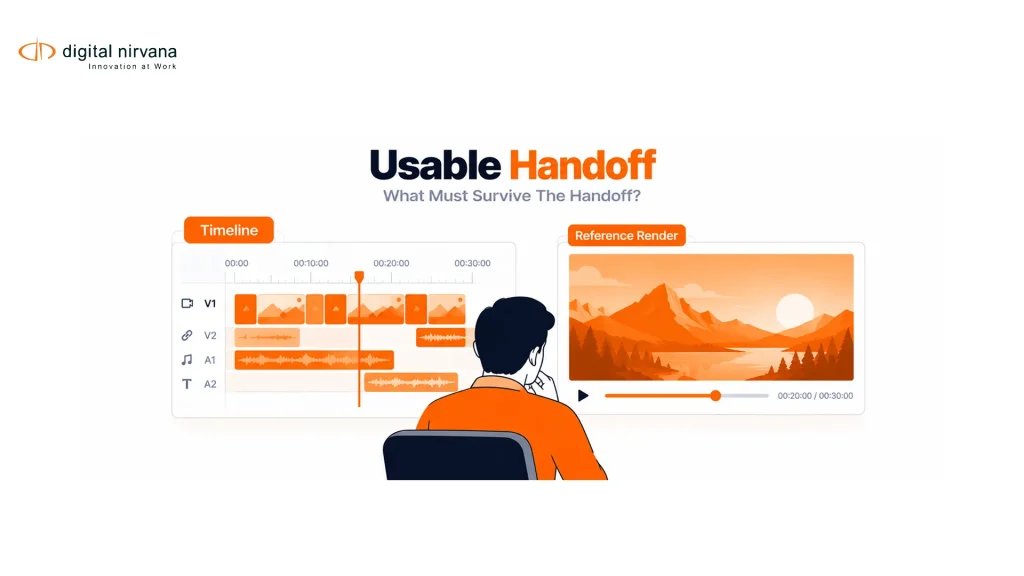
A post-production coordinator gets a request on a Friday afternoon. A client needs every scene featuring a specific product placement, across 40 hours of raw footage, by Monday morning. She searches the archive. The metadata says the product appears in twelve scenes. Only seven are correct. The other five are false positives from an object detector that mistook a similar-looking item for the client’s brand.
Now she is watching all 40 hours manually anyway. The AI didn’t save her weekend. It just moved the problem.
This is the quiet failure mode of media AI in 2026. Everyone has automated metadata generation. Far fewer have automated metadata accuracy. And that gap is exactly where searchable archives, compliant broadcasts, and monetizable content libraries either hold up or fall apart.
The Core Problem: Metadata Accuracy Breaks Down Exactly Where You Need It Most
Metadata accuracy rarely fails on easy content. It fails on the edge cases: low-light footage, overlapping speakers, fast cuts, regional accents, brand logos partially obscured by graphics. These are also the moments most likely to matter for compliance review, sponsor reporting, or a legal hold.
The pain compounds at scale. A single mistagged clip is a minor annoyance. Thousands of mistagged clips across a growing archive become a trust problem. Once a media ops team stops trusting the metadata, they go back to manual verification, and the entire point of automation disappears.
Three failure patterns show up most often:
- False positives that make search results noisy and unreliable
- False negatives that hide content that should have surfaced, which is worse because no one knows what they missed
- Inconsistent tagging across similar assets, usually caused by model drift or unclean training data
Why This Matters More Now Than It Did Three Years Ago
Media organizations are producing and archiving more video than ever, and audiences (along with regulators) expect more from it. Streaming platforms enforce stricter caption and accessibility conformance. Broadcasters face tighter proof-of-performance and loudness compliance expectations. Sports and news teams are under pressure to turn raw footage into monetizable clips within minutes, not hours.
At the same time, AI models used for tagging, transcription, and scene detection are being deployed faster than governance practices can keep up with them. A model that performed well in a vendor demo does not automatically perform well on a station’s actual archive, with its specific camera equipment, lighting conditions, and content mix. Accuracy has to be measured and maintained in production, not assumed from a spec sheet.
Where Traditional Metadata Workflows Fall Short
Most legacy approaches to metadata fall into one of two camps, and both have real limits.
Fully manual logging is accurate but does not scale. A logger working through hours of footage frame by frame simply cannot keep pace with live news cycles, same-day sports highlights, or growing OTT catalogs.
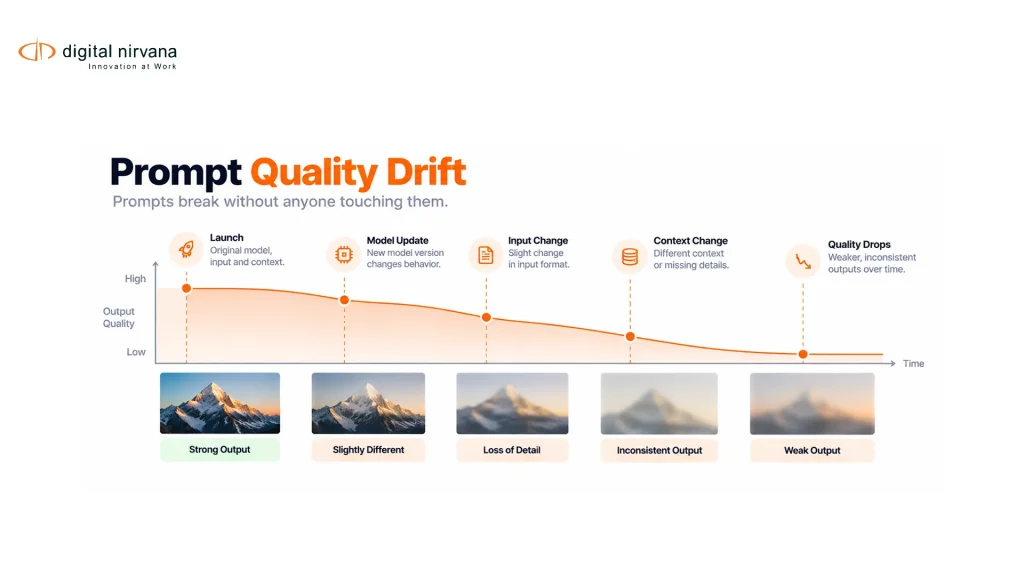
Fully automated tagging scales beautifully but degrades quietly. Without ongoing quality checks, an AI model’s accuracy can drift as content changes, and no one notices until a search fails or a compliance audit turns up gaps. Teams that treat automated metadata as “set it and forget it” are usually the ones who discover the problem during a crisis, not during a routine review.
The middle path, and the one most media operations teams are converging on, pairs AI-generated metadata with structured human review. This is often called human-in-the-loop AI, and it’s less about slowing automation down and more about giving it a feedback mechanism.
How AI Production Metadata Accuracy Actually Works
Accurate production metadata is not a single output. It’s a pipeline with checkpoints.
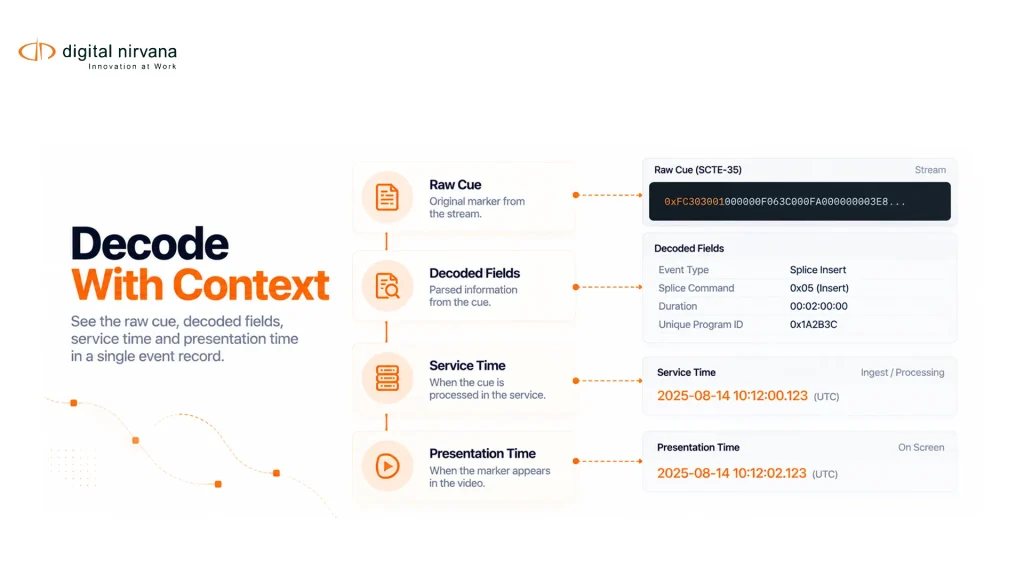
First, the AI model generates initial metadata: transcripts, scene descriptions, object and logo detection, speaker identification, timecodes. This is the fast, high-volume layer that most media indexing tools are built to automate across live and archival content within MAM and PAM ecosystems.
Second, confidence scoring flags uncertain results. Not every AI-generated tag deserves equal trust. A transcript segment with a low confidence score, or an object detection hit on a partially obscured logo, should be routed differently than a clean, high-confidence match.
Third, human reviewers verify the flagged content, not everything. This is where accuracy actually gets protected without recreating the scale problem of manual logging.
Fourth, corrections feed back into the system. A model that never learns from its mistakes will keep making the same ones. Feedback loops are what separate metadata accuracy that improves over time from metadata accuracy that quietly decays.
A Real-World Workflow: From Ingest to Searchable Asset
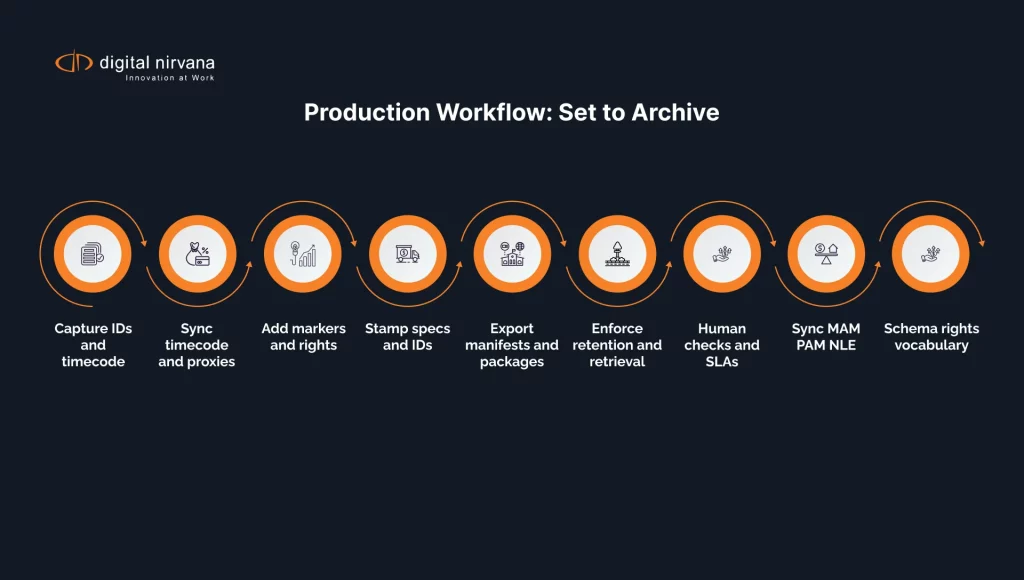
Picture a regional news operation covering a live city council session. Footage ingests automatically, and AI metadata tools generate a rough transcript, tag speakers, and flag key moments like votes and public comments.
Within minutes, an assignment editor searches the transcript for a specific policy discussion instead of scrubbing through two hours of footage. A confidence flag shows one segment where two speakers’ voices overlapped, and a quick human check confirms the correct attribution before the clip goes into a package.
That same footage later becomes part of the searchable archive. Months from now, when a reporter needs a specific quote for a follow-up story, accurate metadata is the difference between finding it in seconds and re-watching the entire session.
This same pattern applies whether the content is a sports broadcast needing fast highlight generation, an OTT platform managing caption and subtitle conformance, or a compliance team running broadcast monitoring and proof-of-performance checks. The workflow scales, but the accuracy checkpoint stays constant.
Measuring the Impact of Accurate Metadata
| Area Affected | Impact of Poor Accuracy | Impact of Verified Accuracy |
| Archive search | Staff re-search manually, losing the time AI was meant to save | Assets are found in seconds, not hours |
| Compliance | Gaps surface during audits, creating risk exposure | Logs and tags hold up under regulatory review |
| Monetization | Licensing teams miss usable footage buried under bad tags | Archives become sellable, searchable assets |
| Ad verification | Mismatched logo or scene detection leads to disputed makegoods | Clean proof-of-performance reduces disputes |
| Team trust | Staff quietly stop using the tool | Adoption increases, manual workarounds decrease |
What to Prioritize When Evaluating a Metadata Accuracy Solution
Before choosing or upgrading a metadata workflow, check for these capabilities:
- Confidence scoring on every AI-generated tag, not just a binary yes/no output
- A defined human review workflow for low-confidence results
- Feedback loops that retrain or recalibrate the model over time
- Integration with existing MAM, DAM, or PAM systems rather than a standalone silo
- Audit trails showing who reviewed or corrected which tags, and when
- Reporting that shows accuracy trends over time, not just a one-time benchmark
Common Objections, Answered
“Our AI tool already claims high accuracy.” Vendor-reported accuracy is usually measured on curated test sets, not your actual archive. Accuracy has to be validated against your real content, your real cameras, and your real edge cases.
“Manual review defeats the purpose of automation.” Reviewing every tag would. Reviewing only flagged, low-confidence results does not. That’s a small fraction of total output, not a return to manual logging.
“We don’t have budget for another layer of QA.” Consider what inaccurate metadata already costs: staff time re-searching content, missed licensing opportunities, and compliance risk during an audit. A verification layer usually pays for itself in reclaimed hours.
How Digital Nirvana Approaches Metadata Accuracy
This is the exact problem Digital Nirvana was built around: automation that doesn’t sacrifice trust for speed. MetadataIQ handles the high-volume tagging, indexing, and search layer for live and archival content, while MediaServicesIQ powers the underlying AI/ML microservices, including ASR, OCR, and object and logo detection, that make that metadata possible in the first place.
The accuracy layer comes from Managed AI, which applies human-in-the-loop review, model evaluation, and drift monitoring so that confidence scores mean something and corrections actually improve the system over time. For teams dealing with messy, unstructured source data before it even reaches the tagging stage, Data Intelligence supports the labeling and validation work that keeps models grounded in reality rather than a vendor’s demo footage.
Why This Matters for Media Operations Teams Long Term
Metadata accuracy is not a one-time project. It’s an operating discipline, the same way compliance logging or caption conformance is. Teams that treat accuracy as a continuous practice, reviewing flagged content, tracking drift, and feeding corrections back into the system, are the ones whose archives stay searchable and whose compliance logs hold up under scrutiny years later.
Digital Nirvana’s broader work across media enrichment and documented outcomes in its success stories reflects the same underlying principle across the full product and services portfolio: AI should extend a team’s capacity, not replace their judgment. That philosophy applies whether the workflow involves live broadcast monitoring, archive enrichment, or production metadata tagging.
FAQ
How is metadata accuracy measured? Accuracy is typically tracked through precision (how many tags are correct) and recall (how much relevant content the system actually found), validated against a sample of human-reviewed content from your own archive.
Does human review slow down AI metadata workflows? Only marginally, since review is targeted at low-confidence flags rather than the entire output, which keeps most of the speed benefit of automation intact.
How often should metadata models be re-evaluated? Most media operations teams benchmark accuracy quarterly, or immediately after any significant change in content type, camera equipment, or production workflow.
Conclusion
AI made metadata generation fast. It did not automatically make it accurate, and those are two different problems with two different solutions. The media organizations getting real value from automated metadata are the ones who built a verification layer into the workflow instead of treating AI output as a finished product. Get the accuracy checkpoint right, and everything downstream, search, compliance, monetization, actually works the way it was supposed to.
Key Takeaways
- Metadata accuracy fails most often on edge-case content, exactly where compliance and search matter most
- Confidence scoring and targeted human review protect accuracy without recreating manual-logging bottlenecks
- Feedback loops matter more than initial accuracy; models without correction cycles drift silently
- Accuracy should be validated against your own archive, not a vendor’s demo dataset
- Treat metadata accuracy as an ongoing operational discipline, not a one-time implementation