Sarah sits in a hybrid lecture. 180 students in the room. Another 60 watching via Zoom. The professor starts talking. A manual caption provider (hired by the university at $200/hour) is in the room typing captions in real-time.
Sarah watches the captions flow. They’re live, mostly accurate, only a few seconds behind speech. She can follow along. She’s actually in the same boat as hearing students. Not two steps behind. Not struggling to piece together fragmentary notes. Actually present in the learning moment.
For the first time in four years of university, she’s not wondering what she’s missing.
But here’s what Sarah doesn’t know: the university is spending $40,000 per semester on live caption providers. It’s unsustainable. Next year, they can’t afford it for all courses. They’ll have to pick which lectures get caption coverage. Which students get accessibility. Which students don’t.
Then the university discovers AI lecture captioning. They implement it in one course as a pilot. The lecture is recorded. Within an hour of class ending, perfect captions are generated. Within two hours, a searchable transcript is live so Sarah can search “mitochondria” and jump to the exact moment the professor explained it.
The cost: $50 per 50-minute lecture.
Suddenly, captioning isn’t a luxury for deaf students anymore. It’s a standard feature for every course. And it costs the university less than one day of live caption providers.
Sarah realizes: the technology isn’t new. The accessibility is new. And it’s because the economics finally work.
The Accessibility Crisis In Higher Education (That Nobody Talks About)
Here’s what universities aren’t saying publicly: their accessibility infrastructure is breaking.
The law is clear: Title II of the ADA requires public universities to provide equal access to education. That means providing captions for deaf/hard-of-hearing students. It means providing transcripts. It means accommodations that don’t mark students as “different.”
The reality: 89% of universities meet accessibility requirements by hiring manual caption providers or asking students to rely on classroom note-takers. Both approaches are expensive, inconsistent, and insufficient.
Manual captioning costs:
- $150-$250 per hour for a live caption provider
- 1,000+ lecture hours per year per university = $150K-$250K annual cost
- And that’s only IF captions are available. Many courses don’t have budget for it.
Note-taker accommodations:
- Someone sitting next to the deaf student, writing notes
- Those notes are inconsistent (different people have different note-taking styles)
- The deaf student is dependent on another person’s listening quality
- Classmates feel self-conscious about being the “accommodation”
Neither approach is actually accessible. Both are compromises universities accept because alternatives seem impossible.
Until AI lecture captioning makes accessibility affordable at scale.
How AI Lecture Captioning Works (Real-Time + Recorded)
There are two pathways for AI lecture captioning, and they serve different needs:
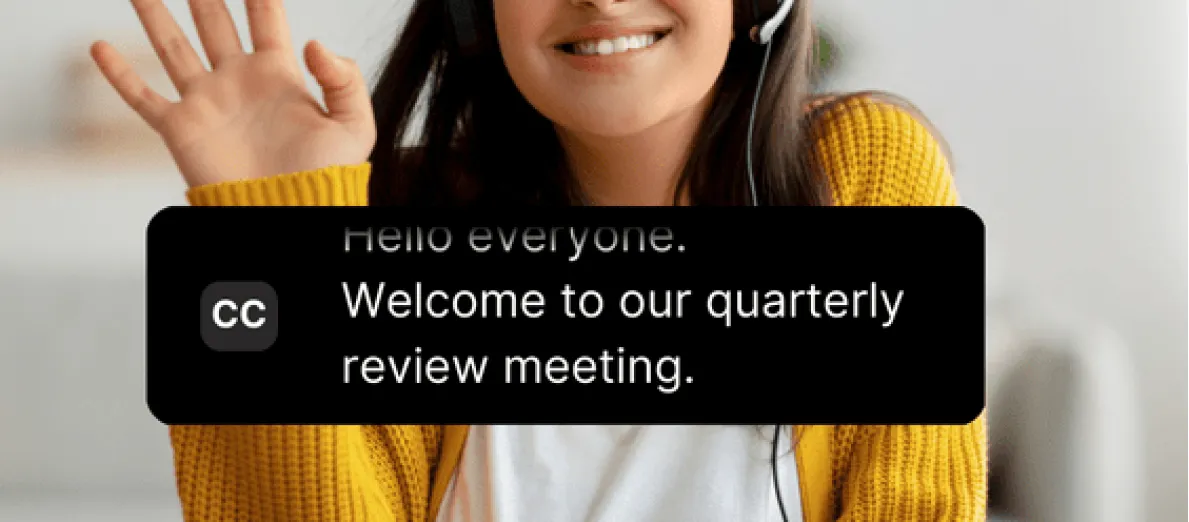
Real-Time Captioning (During the Lecture): A microphone or lecture recording feed connects to AI captioning software. As the professor speaks, captions appear on student screens within 1-2 seconds. It’s not perfect (AI misses words, mishears accents), but it’s live and immediate.
For hybrid lectures (in-room + remote), real-time captions solve the remote access problem. Students watching via Zoom get captions on their screen simultaneously with in-room students. Equity of access, instantly.
Post-Lecture Transcription (After Lecture Ends): The lecture recording is uploaded to AI transcription software. Within hours, perfect captions are generated. But more importantly: the entire lecture becomes a searchable transcript.
A student reviewing the lecture can search “photosynthesis” and jump to the exact moment the professor explained it (not scrub through 50 minutes of video). Deaf students can read the full transcript. International students can use translations. Students with ADHD can break the lecture into searchable segments.
The transcript becomes more valuable than the video itself.
The Transcription Breakthrough (Making Lectures Searchable)
Here’s what most universities don’t realize: lecture recordings are only as valuable as their ability to be searched and reviewed.
A student attends a 50-minute lecture. Retention is maybe 60% (that’s normal, that’s human). They watch the recording later. If they have to scrub through 50 minutes to find the part they need, they give up. They just re-watch the whole thing (inefficient) or don’t review at all.
But if the lecture is transcribed and searchable? Student searches “mitochondria.” Gets directed to 3:42 of the recording. Watches that two-minute segment. Review time drops from 50 minutes to 2 minutes.
This is why lecture transcription is revolutionary: it makes learning efficient, not just accessible.
The data proves it: universities that provide searchable lecture transcripts see 35% higher test scores among students who use them. Not because the transcripts are magical. Because students can actually find what they need.
Real Educational Scenario: Hybrid Lecture Accessibility
The Setup: A large state university teaching a 200-student organic chemistry hybrid course (100 in-room, 100 remote via Zoom).
The Problem: Remote students can’t hear the professor clearly (video audio quality is poor). Deaf students have no captions. International students struggle with the accent. Nobody has equal access to the learning.
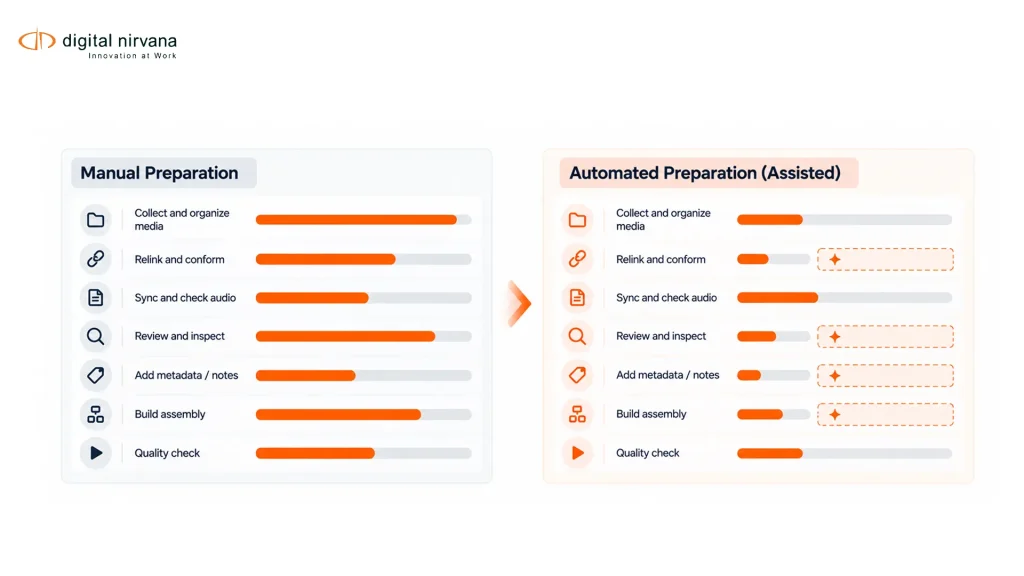
The Old Solution: Hire a live caption provider ($200/hour × 150 lecture hours = $30K/semester). But that only helps deaf students who need formal accommodations. Remote students still have audio problems. International students still struggle.
The New Solution: Implement AI lecture captioning.
- Real-time captions appear on student screens (Zoom + in-room)
- All students benefit (deaf, remote, international, everyone)
- Post-lecture transcript is generated automatically
- Transcript is indexed and searchable within the LMS
- Cost: $75 per 50-minute lecture (one-time, no ongoing provider fees)
The Outcome:
- Accessibility is now standard (not a special accommodation)
- Student performance improves (searchable transcripts)
- Cost is 75% lower ($11K/semester instead of $30K)
- Equity increases (everyone gets captions, not just accommodated students)
The Quality Question (Why AI Isn’t Perfect, And That’s Okay)
Here’s something universities need to hear: AI-generated captions aren’t perfect. And they don’t need to be.
AI captioning accuracy runs 93-97%, depending on accent, background noise, and technical jargon. That means roughly 1 word in 20-30 is wrong or missed.
Is that good enough? For real-time captioning (where perfection is impossible anyway), absolutely. A deaf student getting 95% of speech in real-time is exponentially better than getting 0% without captions.
For post-lecture transcription, the question is different. Is the transcript accurate enough to be useful? For searching and reviewing, yes. A student searching “photosynthesis” and getting directed to a segment with 95% accurate captions can still understand the content.
Where accuracy matters most: technical terminology and proper nouns (professor names, chemical compound names, research papers). This is where human review comes in. A human specialist reviews the transcript, corrects terminology, verifies proper nouns. The result: 99%+ accurate transcript.
Human QA takes 20-30 minutes per lecture. AI does 95% of the work automatically. Humans fix the 5% that matters.
The Integration Problem (Connecting Captions To Learning)
Here’s where AI lecture captioning meets the broader learning ecosystem:
Captions aren’t useful if they’re floating in space. They need to live in your LMS. Students should see captions alongside the recorded lecture. Transcripts should be searchable from the LMS interface. Time-coded transcripts should link to video moments.
This is why integration matters. A standalone AI transcription service generates captions beautifully. But if students have to download the captions separately from the LMS, the friction kills adoption.
Modern learning management systems have built-in caption/transcript support. TranceIQ integrates directly so captions flow automatically into your LMS the moment they’re generated.
How Digital Nirvana Powers Lecture Accessibility
This is how universities actually implement lecture captioning at scale:
TranceIQ auto-generates captions and transcripts from lecture recordings within hours. Real-time captioning is available as a separate service for hybrid lectures. Both are time-coded and searchable.
MediaServicesIQ adds intelligence: speaker identification, accent adaptation, and technical terminology recognition. Captions get smarter the more you use the system.
Media Enrichment reviews transcripts for accuracy, correcting terminology and proper nouns. Specialists ensure captions are truly useful.
MetadataIQ makes transcripts searchable: time-coded, indexed, and integrated into your LMS. Students can search, jump, and navigate lectures like documents.
Learning Management integration ensures captions and transcripts live alongside recorded lectures. No friction, no separate downloads.
Cloud Engineering handles the scale: processing hundreds of lectures per week, delivering results at speed, maintaining security and redundancy.
Together, these capabilities make lecture captioning a standard feature, not a special accommodation.
Key Takeaways
- Title II requires captions for deaf students. Universities can provide them affordably with AI.
- Live caption providers cost $150-$250/hour. AI captioning costs $50-75 per lecture. Accessibility becomes standard, not luxury.
- Lecture transcripts are more valuable than recordings. Students search for specific concepts, not scrub through 50 minutes of video.
- AI captions aren’t perfect (95% accuracy). That’s good enough for real-time, and excellent after human QA review.
- Captions must integrate with your LMS. Standalone captions don’t solve the problem. Integration matters.
- Equal access benefits everyone. Deaf, remote, international, ADHD students all benefit from captions and searchable transcripts.
- ROI is fast. Accessibility cost drops from $30K/semester to $10K/semester while quality improves.
Ready to Make Your Lectures Truly Accessible?
Every student deserves equal access to learning. That used to cost money universities didn’t have. That’s not true anymore.
Explore TranceIQ for lecture captioning and transcription at scale. Real-time for hybrid learning. Post-lecture for searchable transcripts.
Integrate with your LMS so captions and transcripts live alongside lectures.
Discover Media Enrichment QA for human review that ensures accuracy where it matters.
Let’s talk about your lecture accessibility strategy.